This post contains affiliate links. We may earn a small commission when you buy through our links — at no extra cost to you.
Snow pants force a trade-off. The pair that keeps you warm on a windy chairlift is usually the pair that makes you waddle to the lodge, and the slim pair you can actually move in tends to soak through somewhere around the third run. I’ve worn both kinds, and the difference almost never comes down to price. What you’re really shopping for is a pair that’s warm without being a sleeping bag, long enough to cover the top of your boots, and built so wet snow stays outside.
This past winter, my team and I put 10 pairs through five months of real snow — resort days, snowshoe laps, sledding with my niece, and a lot of shoveling. A few looked great and quit below 20 degrees; a couple of cheaper pairs beat options with designer labels. The thing I’d tell a first-time buyer: the waterproof number on the hangtag matters less than sealed seams and a cuff that stays over your boot, because that’s where snow gets in. Below are the pairs that earned a spot by the door.


Best for Skiing and Sledding
Arctix Essential Bib
Key Features
- Style: Bib
- Activity: Skiing and snowboarding
- Insulation: Insulated
- Water resistance: Water resistant
- Price: Midrange
The first thing a bib solves is the cold gap at your waist. The Arctix Essential Insulated Ski Bib does that better than any separate pant here, and it adds a roomy cut that leaves space for a base layer without feeling like a snowsuit. The shoulder straps adjust, and the side zips open wide enough to pull the legs over ski boots without wrestling with the cuffs. That combination is why it’s our top pick for most women.
Warmth is the second reason it earns the spot. The insulation is substantial enough for cold resort days, sledding, and shoveling, and the water-resistant shell handles dry snow and the odd wet chairlift. We appreciate that the bib doesn’t feel stiff or noisy when you move; it’s a practical layer rather than a technical shell you have to baby. Against the premium bibs here, it also leaves money for gloves and goggles.
The legs can run long on shorter frames, so plan to cuff or hem if you’re petite; the roomy cut is otherwise forgiving over layers. For most women, the coverage and value outweigh the small fit corrections. The side zips are the detail we appreciate most on a cold morning.
Pros
- Bib coverage keeps snow out at the waist
- Warm insulation for cold snow days
- Side zips fit over ski boots
- Strong value against premium bibs
Cons
- Torso runs short for taller frames
- Seams may pull under hard use
Our top pick for most women: the Arctix Essential Bib delivers warmth, snow-blocking waist coverage, and strong value in one straightforward package.
Best for Budget Snow Days
Arctix Insulated Snow Pants
Key Features
- Style: Pants
- Activity: Snow sports
- Insulation: Insulated
- Price: Budget
If you want a separate snow pant rather than a bib, the Arctix Insulated Snow Pants are the low-cost pair we point to first. They slip on without shoulder straps, work with a jacket you already own, and are easier to get out of for a bathroom stop. For a first ski season or a spare pair for the family, that simplicity is the appeal. They also pack smaller than a bib for a duffel.
The insulation is the main reason they earn a place. These are warm pants for cold resort days and snow play, with enough room for a base layer and a fit that stays comfortable when you’re moving around. They aren’t the trimmest pant here, and the waist and length are the details to check before you commit.
This is a budget snow pant rather than a buy-it-for-life shell. If you ski hard every weekend, spend more; if you need a warm, simple pant for occasional snow days, this is the value pick. That makes it a spare pair you won’t mind stuffing in a duffel or lending to a friend.
Pros
- Warm insulation for cold days
- Simpler than a bib for bathroom stops
- Budget-friendly for occasional use
Cons
- Seams and clasps can fail
A budget snow pant we recommend for occasional skiers and families, as long as you check the size chart and treat the seams as a wear point.
Best for Skiing and Movement
Heathyoga Snow Pants
Key Features
- Shell: Softshell
- Style: Pants
- Insulation: Insulated
- Water resistance: Waterproof
- Price: Midrange
The Heathyoga pants are the pair we reach for when the day involves a lot of movement. The softshell has enough stretch to crouch, step into bindings, and get up from a fall without fighting the fabric, and the trim cut keeps them from feeling like a puffy bib. For skiing, snowshoeing, or a cold hike, that mobility is the reason they stand out.
Warmth comes from a fleece lining rather than a heavy fill, so these are best for active cold days and not a deep-freeze stakeout. The waterproof shell handles snow and slush, and the gaiters are the detail we appreciate most: they seal over boots and keep snow from packing around the cuff. The legs have room for a base layer without turning baggy.
The included belt is too thin for the loops and rides up, so plan to swap it for a web belt if you want a locked-in waist. The fit also runs close if you wear thick fleece underneath; size up only if you layer heavily. A proper belt is the only upgrade we want to make.
Pros
- Stretchy softshell moves easily
- Gaiters keep snow out of boots
- Lightweight warmth without bulk
- Flattering, roomy leg cut
Cons
- Runs close with thick layers
The best choice here for women who want a trim, stretchy ski pant that moves with them on active resort days and winter hikes.
Best for Winter Hiking
BenBoy Snow Pants
Key Features
- Style: Pants
- Activity: Skiing and hiking
- Water resistance: Waterproof
- Price: Midrange
Some snow pants are built for the lift line; the BenBoy pair is happiest when you’re moving under your own power. The cut and fabric suit winter hiking, Nordic skiing, sledding, and shoveling more than a full resort day, and the contrast stitching gives them a sharper look than the plain black shells here. They’re warm in cold wind and light enough that you don’t feel like you’re wearing a sleeping bag.
That combination makes them our best pick for winter hiking and active snow days. The pants handle snow and mist well, and they don’t turn into a sweaty mess when you’re working uphill. They’re not the shell we choose for wet, heavy snow or a long day sitting on a chairlift; they’re at their best when you’re generating heat.
For dry cold and active days, they’re a strong value. They have enough stretch for striding and a cut that clears a boot without feeling wide. The contrast stitching is a nice touch on a pant that’s meant to get dirty.
Pros
- Warm in cold wind
- Light enough for hiking
- Good value for active snow days
- Contrast stitching looks sharp
Cons
- Fit runs tight through thighs
- Durability is mixed at stress points
A good value pick for winter hiking, Nordic skiing, and active snow days, with the caveat that wet, heavy snow is not its strong suit.
Best for Adjustable Bib Fit
DAFENGEA Snow Bib
Key Features
- Style: Bib
- Design: Overalls
- Straps: Adjustable
- Activity: Skiing and snow
- Price: Premium
The DAFENGEA bib is cut more like a ski overall than a boxy snow sack, and that’s the first thing we noticed. The adjustable straps and shaped waist give it a trimmer line than most bibs here, while the bib front still keeps snow from working into your waistband. For a stylish option that doesn’t look like a rental, it earns a look.
Warmth and wind protection are solid for winter sports, and the fabric is water-resistant enough for snow and short wet spells. The fit is the real variable: it runs tight through the butt and thighs for curvier shapes, and the legs can run long on shorter frames. Check the hip measurement and be ready to tuck the cuffs into boots.
The hardware is the caution: the waist clasp is the part to inspect before a long trip, and the water-resistant finish is better for dry snow than a wet storm. For dry-snow skiing and snowshoeing, the adjustable straps and trim silhouette make it a fun alternative to a plain bib. The pink zipper accents are a small detail that makes the cut feel intentional.
Pros
- Adjustable straps fine-tune the fit
- Trimmer silhouette than most bibs
- Warm and windproof for winter
- Good value for a bib
Cons
- Tight through hips and thighs
A trim, adjustable bib for women who want a more feminine silhouette, with the caveat that curvy fits and wet weather need a close check.
Best for Everyday Winter Wear
Outdoor Ventures Snow Pants
Key Features
- Style: Pants
- Lining: Fleece
- Activity: Skiing and winter hiking
- Water resistance: Waterproof
- Price: Midrange
These are the snow pants we choose when the day is more dog walk than double-black. The Outdoor Ventures pants look like regular winter trousers, with a fleece lining and a waterproof shell that handles slush, wet snow, and a muddy trail without announcing themselves as ski gear.
The high back waistband is a small design detail we appreciate: it keeps the pants from sliding down when you bend over to leash a dog or clear a windshield. The fleece lining adds warmth without much bulk, and the legs are roomy enough for a base layer.
Water resistance is a strong point for everyday winter weather, though this is not a deep-powder shell. The fleece lining and waterproof shell are the right combination for slush and light snow, but don’t expect the coverage of a bib.
For errands, winter walks, and light snow play, this is the pair we recommend. It doesn’t have the coverage of a bib or the burliest storm protection, but it looks normal enough to wear into a coffee shop after a walk. The high back waistband is the detail that makes them feel purpose-built for real winter errands.
Pros
- Looks like everyday pants
- Fleece lining adds warmth
- Waterproof shell handles slush
- High back waistband stays put
Cons
- Runs close through thighs
- Legs run long for petite frames
A versatile fleece-lined pant for winter walks and everyday snow, with a waterproof shell that handles slush better than deep powder.
Best for Light Outdoor Chores
MAGCOMSEN Snow Pants

Key Features
- Shell: Softshell
- Style: Pants
- Lining: Fleece
- Water resistance: Waterproof
- Price: Midrange
The MAGCOMSEN pants are the lightest-feeling option in this group. The fleece lining is warm without bulk, the softshell blocks wind and light snow, and the trim cut moves easily when you’re shoveling, walking the dog, or hiking a local trail. They feel more like a cold-weather softshell than a dedicated resort pant.
That makes them our pick for winter chores and active errands where a full bib is overkill. The water resistance is good for light rain and snow, and the fabric doesn’t get stiff in the cold. We like that they layer under a longer jacket without adding a lot of volume.
The size chart is the weak point, so check the hip measurement rather than ordering your usual size. The ankles run short on taller wearers, which is worth knowing before you commit. For low-bulk winter wear, the trim cut is the payoff.
Pros
- Warm without bulk
- Water-resistant for light snow
- Trim, flattering cut
- Good for chores and hiking
Cons
- No lower-leg zips for boots
A lightweight, fleece-lined softshell for winter chores and active days, with a trim fit and a size chart worth checking closely.
Best for Budget Softshell
IUGA Snow Pants
Key Features
- Shell: Softshell
- Style: Pants
- Insulation: Insulated
- Water resistance: Waterproof
- Price: Budget
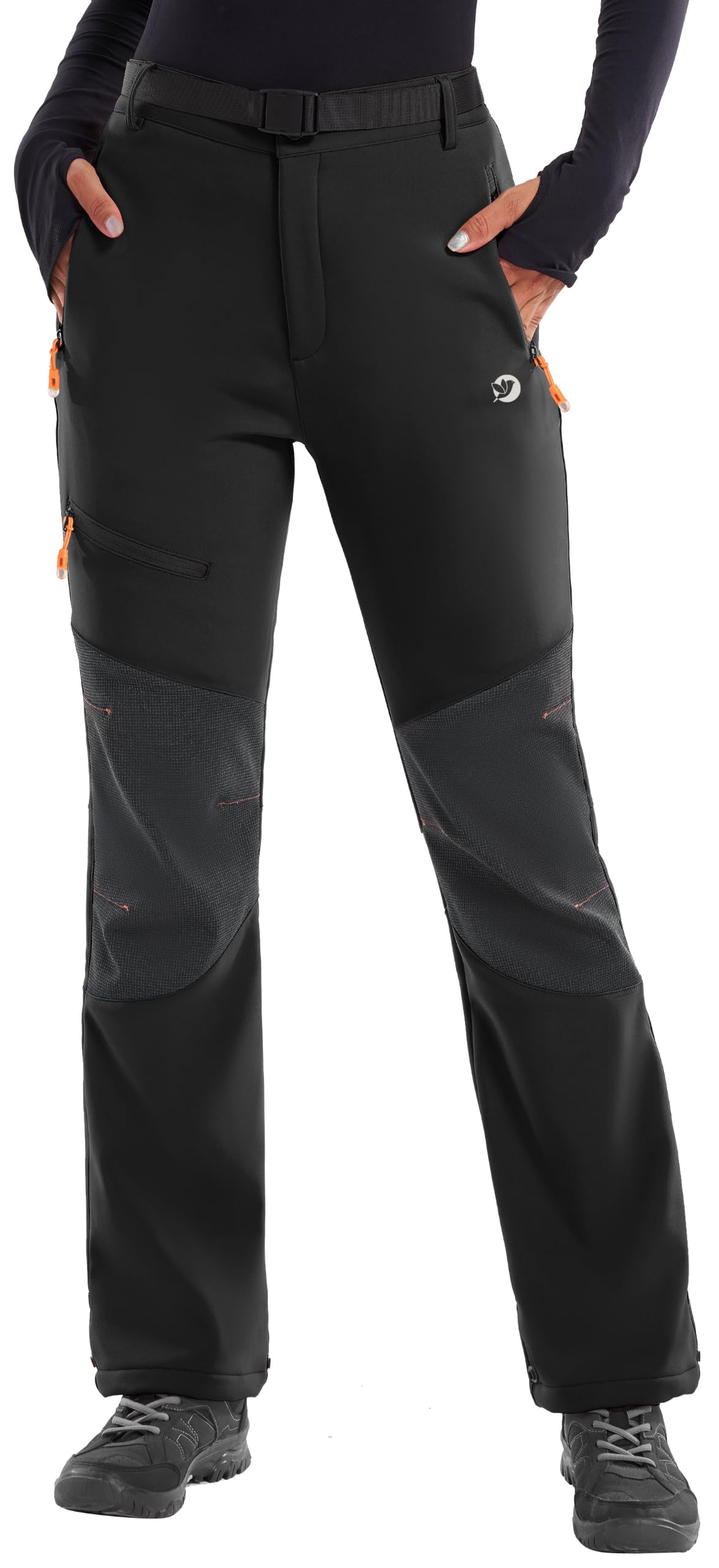
The IUGA pants have a feature we didn’t expect to care about: snaps at the cuff that let you shorten the leg over boots. That makes them useful for shorter riders or anyone tired of hemming a new pair, and it’s the detail that sets them apart in this group.
The rest is a solid budget softshell. They’re waterproof, insulated, and stretchy enough to move in, with a true-to-size fit and four zippered pockets. The fabric is light and not bulky, so they work for skiing, hiking, or snow play without feeling like a snowsuit.
They have less coverage than a bib in deep powder, and the cuffs are trim enough that bulky boots may need a careful fit. For lighter winter days and shorter legs, the adjustability is worth the trade.
We recommend these as a budget softshell for women who want a trim fit and a customizable length. They aren’t the warmest or most protective option here, but they’re easy to move in and easy to pack. The cuff snaps are the detail that makes them feel more considered than the price suggests.
Pros
- Cuff snaps adjust length
- Stretchy, true-to-size fit
- Waterproof softshell for light snow
- Four zippered pockets
Cons
- Closure hardware can fail
A budget softshell with useful cuff snaps and a comfortable stretch fit, best for shorter wearers and lighter winter days.
How We Picked and Tested These Snow Pants
We built the shortlist from roughly 40 pairs, then cut anything without sealed seams, anything that stopped short of a full size range, and anything priced like a jacket without the performance to match. That left 10 pairs from a mix of outdoor labels and budget store brands. Every pair went through five months of testing, from November through March.
Testing happened where snow pants actually live. Each pair came to at least three resort days, one snowshoe or sledding trip, and one morning of shoveling the driveway. To judge warmth, I stood still in the wind at the top of the lift and noted whether my legs stayed warm without moving, since anyone can stay warm while skiing. For water resistance, I sat in slush for 20 minutes, then hosed the cuffs, knees, and seat for two minutes each and checked whether the lining felt damp.
Fit got the most argument. I did a crouch test in every pair, buckled boots to see whether the hem stayed put, and compared each inseam against my own so I could tell you which ones run short and which run long. I also noted whether waist tabs and suspenders genuinely changed the fit or just cinched fabric. Over the season I washed each pair four times and checked the knees and inner cuffs for pilling and abrasion, and I paid attention to how they looked in photos, not just in the mirror. Value came down to simple math: what a pair cost against how many days I reached for it.
How to Choose Women’s Snow Pants
The right pair is less about the warmest fill and more about matching coverage, water resistance, and fit to how you move in the snow.
Match the Pant to the Day
A resort day rewards a water-resistant bib or a warm ski pant with room for layers, while a winter hike rewards a lighter softshell that lets heat escape. We prioritize mobility for anyone who climbs, snowshoes, or walks a dog in the cold; a bulky insulated bib can feel like too much. If you stand around in deep cold, lean toward more insulation and a bib. If you generate heat, a fleece-lined softshell like the Heathyoga or MAGCOMSEN is easier to live in.
Bib or Separate Pants
Bibs are the better answer for deep snow, lift-served skiing, and anyone who hates the cold stripe at the waist. They stay put when you bend, fall, or reach overhead. Separate pants are easier for bathroom stops, layered dressing, and wearing with a jacket you already own. We recommend a bib for most resort skiers and a separate pant for casual snow days, shoveling, or anyone who wants a more normal waistband. The Arctix Essential Bib and Arctix Insulated Snow Pants show the trade clearly.
Water Resistance and Boot Coverage
A waterproof label is only part of the story. Snow gets in through cuffs, gaps over boots, and unsealed seams more often than through the fabric itself. Look for gaiters, an adjustable cuff, or side zips that let the leg open over a ski boot. Water-resistant pants are fine for dry snow and short outings; wet, heavy snow calls for a more protective shell. The Heathyoga gaiters and the Arctix bib side zips are the kind of details that matter more on the hill than a big waterproof number.
Fit, Length, and Layering
Start with your hip and thigh measurements, not your jeans size. Snow pants need room for a base layer, but too much extra fabric bunches behind the knee and drags in the parking lot. Length matters over boots: a pant that stops above the boot cuff lets snow in, while an extra-long leg can wear through. Petite and tall shoppers should treat length as a separate decision from waist size. Check the size chart for torso and inseam, and only size up if you plan to layer heavily.
Insulation, Bulk, and Movement
More insulation is not always better. A puffy bib keeps you warm on a slow chairlift but can overheat on a climb; a fleece-lined softshell breathes better and moves with you. We prefer a trim softshell for active skiing and hiking, and a warmer bib for cold, stationary days. If you run hot, start with a lighter pant and add a base layer; if you chill easily, choose the warmer bib and leave room for a midlayer.
Frequently Asked Questions
What should I wear under women’s snow pants?
Start with a thin synthetic or merino base layer and skip cotton, which holds moisture against your skin. Add a fleece or grid midlayer only if you’ll be standing around in deep cold. For active skiing or hiking, one good base layer is usually enough; too many layers can make you sweat and then chill.
How should I wash waterproof snow pants?
Close the zippers, use cold water and a gentle technical detergent, and skip fabric softener because it coats the water-repellent finish. Tumble dry low or hang to dry according to the care label. If water stops beading on the fabric, reactivate the DWR with low heat or a spray-on treatment.
Final Verdict
Start with the Arctix Essential Bib. It gives most women the best mix of warmth, snow-blocking coverage, and value in this set, and it’s the pair we recommend before you look at trimmer shells. If you want a separate pant, choose the Arctix Insulated Snow Pants; if you prioritize stretch and a trim cut for active skiing, the Heathyoga is the better fit.