This post contains affiliate links. We may earn a small commission when you buy through our links — at no extra cost to you.
The last time I wore the wrong boots in a storm, I spent the rest of the day in wet socks. Rain boots exist to prevent exactly that, but the difference between a pair that keeps your feet dry and a pair that ends up at the back of the closet comes down to unglamorous details: how the sole grips a wet metal grate, whether the shaft is short enough to walk in, and whether you can kick them off at the door without sitting down to wrestle them. Get those right and they become the boots you grab for slush, yard work, and a muddy walk to the mailbox — not just a downpour.
Since February, my team and I have pulled on 12 pairs for commutes, dog walks, and a few miserable afternoons of yard work, and the differences had less to do with looks than you’d expect. One thing nobody tells a first-time buyer: most rain boots are cut on a roomy last, so a pair that feels right in thin socks will pinch in thick wool ones. The picks below got both the fit and the puddle right.
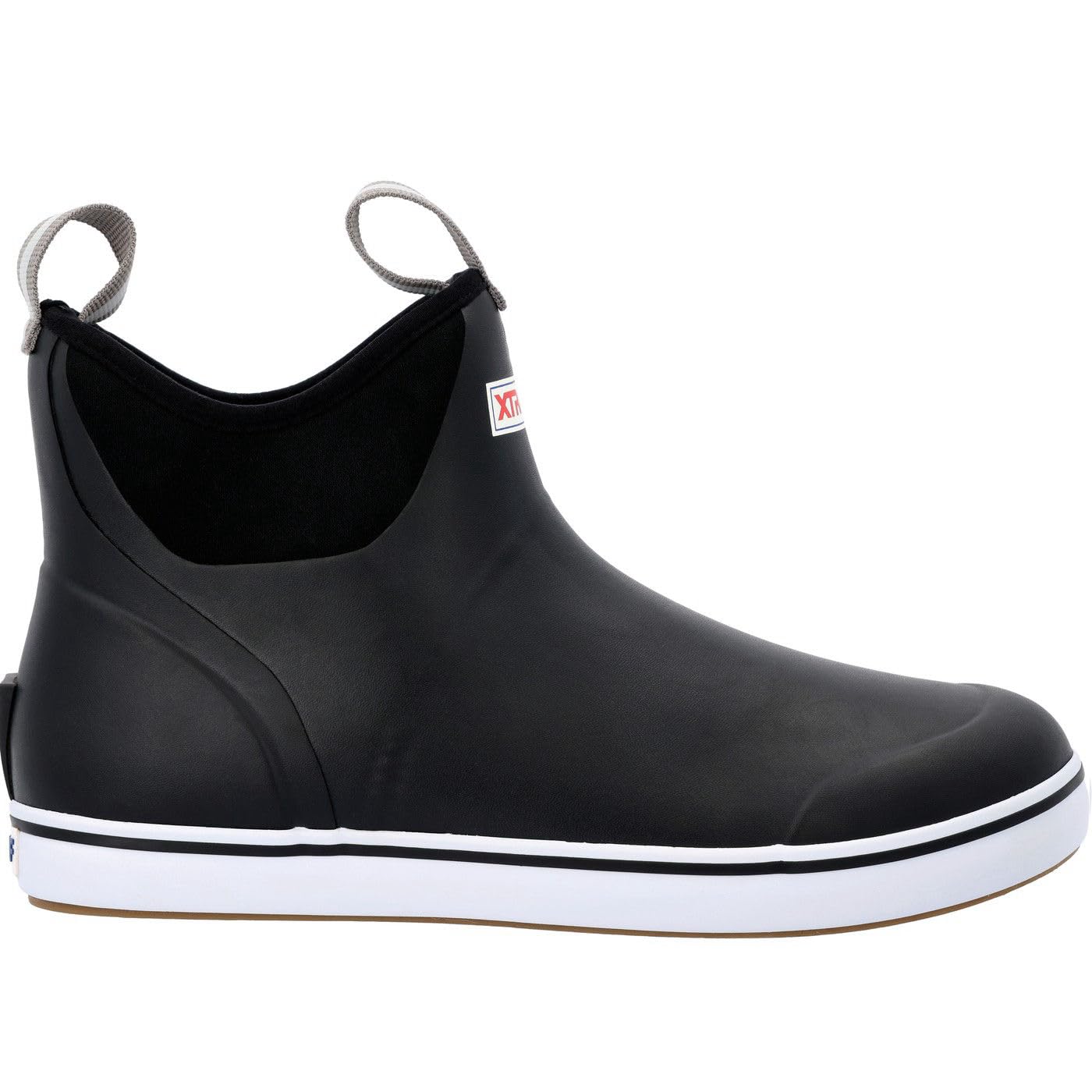


Best for Everyday Wet Weather
XTRATUF Ankle Deck Boot
Key Features
- Model: 22736
- Height: Ankle
- Water resistance: Waterproof
- Price: Midrange
The boot that stays by our back door is this one. XTRATUF’s Ankle Deck Boot is the easiest wet-weather pair here to live with: pull it on, walk the dog across a soaked field, rinse it under the tap, and forget about it. Ankle height means you are not clomping around in a full wellington for a two-minute errand, and the tab at the heel does most of the work of getting it over a sock.
What surprised us is how much ground it covers. Wet pavement, a muddy path, a boat ramp, a rainy walk into town — it handles all of them without feeling like work footwear, and the grip on wet pavement and decking is reassuring. Its limits show up on packed snow and ice, where the tread is out of its depth. This is a rain boot, not a winter one.
The sole is the part we watch. Separating from the upper is the failure these deck boots are known for after hard, repeated use, so we keep an eye on the seam where the rubber meets the tread rather than assuming an ankle boot is a forever boot. For the wear most of us put them through, that has not been a problem yet.
Pros
- Pulls on and off in seconds
- Keeps feet dry through wet commutes and chores
- Ankle height suits errands, dog walks and decks
Cons
- Whole sizes only, no wide option
The pair we reach for on most wet days: quick to pull on, dry through a soaked walk, and comfortable enough to keep wearing. If you want one boot for errands, dog walks and wet chores, start here.
Best for Yard and Mud
Dunlop Chesapeake PVC
Key Features
- Upper: 100% PVC
- Height: Mid-calf
- Closure: Slip-on
- Calf fit: Wide opening
- Price: Budget
The Dunlop Chesapeake is the least expensive boot in this guide, and it is the one we hand someone who needs dry feet in the yard and does not want to think about rain boots again. It is plain PVC in black, with a shaft wide enough to pull on over jeans and a tread that holds on wet grass and mud.
For yard work, it is the smartest buy here. Hosing out a chicken coop, edging a wet border, walking the dog around a soggy field — the Chesapeake does all of it for less than anything else on this page, and the smooth PVC rinses clean in seconds. What it is not is a distance boot. PVC does not breathe, so a warm afternoon in them leaves your socks damp from the inside, and the shell is stiff enough that a long walk feels like work. Twenty minutes of chores is its home ground.
Sizing runs to whole sizes, so a half-size foot picks between snug and roomy — roomy is the better error here, since a thick sock fills the gap and doubles as insulation on a cold morning. That is the whole buying decision: pick your size, then stop thinking about it.
Pros
- Lowest price of any pick here
- Wide shaft pulls on over jeans
- Waterproof through mud and wet grass
Cons
- No insulation for cold mornings
The cheapest boot here that does the job properly: wide enough to pull over work pants, dry in mud and wet grass, and affordable enough to leave by the shed. Buy it for chores, not for long walks.
Best for Garden Days
MUCK Muckster II Ankle
Key Features
- Height: Ankle
- Package weight: 4.5 lb
- Water resistance: Waterproof
- Price: Midrange
The Muckster II is the boot we put on for a whole Saturday in the garden. The rubber is soft, the ankle cut stops short enough that kneeling does not drive a shaft into your calf, and the pull loop is big enough for two fingers — which matters more than it sounds when you are stepping out of them with muddy hands.
That softness is the point. A stiff PVC wellington makes you walk like you are wearing buckets; this one flexes with your foot, and a morning of weeding, hosing the patio and walking in and out of the kitchen leaves you comfortable. Water stays out through wet grass, puddles and a garden hose. The sole is what we treat gently: the tread is shallow next to a work boot, and the bottom is where these wear out first.
Our reservation is sizing. They run generous — ordering down is usually right — and with no half sizes you split the difference with sock thickness. For a boot that lives within sight of the house, though, this is the most comfortable pair in the guide, and the one that is easiest on your feet after six hours standing at a bench.
Pros
- Soft upper flexes when you kneel and walk
- Slips off at the door in one motion
- Keeps water out in wet grass and puddles
Cons
- Shallow tread on wet slopes
For a boot that spends its life between the back door and the vegetable patch, this is the comfortable choice: soft, light, and easy to kick off with muddy hands.
Best for Wet Work
XTRATUF Legacy 15-Inch
Key Features
- Weight: Approximately 5.15 lb
- Shaft height: 15 inches
- Outer material: Neoprene
- Shaft circumference: 16.5 inches
- Price: Premium
These run big — a full size down is the usual correction, and there are no half sizes to soften that — but once they are on, the Legacy is the most capable wet-work boot in this guide. Fifteen inches of shaft, a 16.5-inch calf opening wide enough to tuck jeans into, and a soft chevron sole that holds on a wet boat deck.
We noticed the height before anything else. Standing water, mud, spray from a hose, the puddle at the bottom of the ramp: all of it stays outside the boot, and the neoprene lining is forgiving against a bare calf. It is also a lot of boot — heavy on the foot and slower to get on than an ankle-height pair, so this is not the one you keep by a city front door.
The open question is longevity. A hand-layered rubber boot is built to flex at the stress points, but any boot this tall eventually cracks where it creases; ours have held up so far and we keep an eye on the instep. Between the sizing and the bulk, it suits people who work in water more than people who walk through it.
Pros
- Fifteen inches of coverage
- Roomy calf takes tucked-in jeans
- Sole grips wet decks
Cons
- Heavy and bulky to pull on
The most coverage here: knee-high, wide enough to tuck jeans into, and built for decks and standing water. Buy it for wet work, not for the school run.
Best for Rainy Commutes
Comwarm Mid-Calf Rain Boot
Key Features
- Height: Mid-calf
- Package weight: 2.75 lb
- Water resistance: Waterproof
- Price: Budget
Shiny, with a yellow sole, the Comwarm mid-calf looks more like a festival boot than a farm one. That is part of its appeal: it is the pair here that looks deliberate with jeans rather than merely functional.
The lightness is what sells it. A mid-calf boot that does not drag changes the ten-second decision at the door — you put it on instead of sneakers, which is half the battle with rain boots. Waterproofing holds in rain, wet grass and shallow puddles, the shaft is tall enough for a soaked walk to the shop, and mud rinses off with a thumb.
Where it gives ground is grip and cold. The tread is honest rather than aggressive, which is fine on wet pavement and a soggy lawn and less reassuring on a muddy slope, and the shell is thin enough that a cold snap goes straight through it. For town rain and light yard work, that is a fair trade.
Pros
- Light enough to forget you have them on
- Wipes clean after mud
- Mid-calf coverage for town rain
Cons
- Close fit through the foot, whole sizes only
A light, shiny mid-calf boot that handles rain, wet grass and a quick rinse, and looks tidy with jeans. The fit is close and the tread modest, so it suits town rain more than steep ground.
Best for Budget Deck Wear
Furuian Deck Boot

Key Features
- Model: db002
- Height: Ankle
- Water resistance: Waterproof
- Price: Budget
If the idea of an ankle deck boot appeals and the XTRATUF price does not, this is the alternative: same shape, same slip-on ease, much less money.
Comfort is where it punches above its price. The upper is soft, there are tabs at the heel to help it on, and it fits true to size for most feet — a full day standing on a dock or in a wet yard does not leave you aching. Rain, wet grass and shallow standing water stay outside.
The sole is the compromise. It is flat and firm rather than grippy, and smooth wet surfaces — a painted ramp, a tiled step, the edge of a pool — are where it loses hold. Treat it as a wet-weather boot rather than a boat shoe, keep a pair by the door, and it earns its place.
Pros
- Deck-boot comfort for far less money
- Soft upper that fits true to size
- Easy to pull on and rinse off
Cons
- Flat sole slips on smooth wet surfaces
The budget version of the deck boot: soft, comfortable and dry in rain, with a flat sole that gives up on smooth wet surfaces. Good as a second pair for the car or the shed.
Best for Deep Mud
TIDEWE Rubber Boot
Standing in ankle-deep mud is the test this boot was built for. The 15-inch neoprene shaft gives you something to pull against, and the boot stays on when the mud tries to keep it — the rubber shell shrugs off the rest and a hose finishes the job.
Construction explains most of it. A 6mm neoprene upper bonded to a rubber shell is warm, which makes this the pair we reach for on a cold, wet morning and the last one we want on a mild afternoon. Neoprene holds heat, and your feet notice.
Fit is the sticking point. It is narrow through the midfoot and runs small, so wide feet and half-size feet have a real decision to make — measure against the size chart instead of guessing, and size up if you plan on thick socks. The rubber sole has good depth for mud and wet grass.
What we watch is water at the top. Wet ground and shallow water stay out; standing water above the shaft, or a seam flexed too many times, is where feet can get wet. For cold mud, flooded ground and messy outdoor work that is a fair trade, but for a wet walk into town the deck boot is the easier answer.
Pros
- Stays on in deep mud
- Warm 6mm neoprene upper
- Tall shaft keeps legs clean
Cons
- Heavy compared with ankle-height boots
A warm, tall neoprene boot for deep mud and cold wet work, with a narrow midfoot that rules out wide feet. Buy it for flooded ground, not for the commute.
How We Tested a Dozen Pairs of Rain Boots
To build the shortlist, we started with the boots that keep surfacing in staff recommendations and customer reviews, then filtered for what actually matters in a men’s rain boot: a true rubber or rubber-blend upper rather than a coated fabric, a lugged outsole with real depth to it, and a price that stays reasonable for something seasonal. That left 12 pairs, which we wore from late winter through early fall — roughly eight months of commutes, dog walks, and yard work.
Water resistance got the least glamorous test. I stood in puddles deep enough to cover the seam where the upper meets the sole for ten minutes at a stretch, then checked my socks, and I walked each pair through soaking wet grass to see whether damp crept up the shaft or worked in through the stitching. Traction was judged on wet concrete, a metal loading-dock ramp, and a muddy slope; two pairs that felt perfectly stable on pavement slid noticeably on the ramp.
Comfort and sizing were checked on a two-mile walk on the first wear and again a month in, noting heel slip, arch pressure, and whether the rubber had softened or collapsed. I timed pulling each pair on and kicking them off at the door, once with cold hands and once while carrying groceries. Durability showed up at the flex point across the top of the foot, where cheap rubber cracks first, so we checked those spots at the start and again at the end. Value came down to construction: lug depth, whether the lining pulled out with your foot, and how the sole was attached.
How to Choose Men’s Rain Boots
The right rain boot is the one you actually put on for a two-minute trip outside, so start with where it will live and how deep the water gets, not with the longest list of features.
Start with shaft height, not the brand
An ankle boot such as the XTRATUF deck boot is the easiest to live with: it goes on one-handed, works with jeans, and covers wet pavement, wet grass and a soaked walk to the car. What it will not do is deep water. A flooded gateway or a rutted track calls for a mid-calf boot like the Dunlop or the Comwarm, and standing water at a job site is where a 15-inch shaft like the Legacy’s earns its weight.
The trap is buying coverage you never use. A tall boot costs you in weight and in time at the door, and if nearly all of your wet is pavement and puddles, it ends up at the back of the closet while the ankle pair does the work.
PVC, rubber or neoprene: match the material to the weather
All three keep water out; they differ in what happens on the inside. PVC, which is what the Dunlop and the Comwarm use, is cheap, stiff and unbreathable — fine for twenty minutes of yard work, less fine for a long walk on a warm day. Rubber flexes more and holds better on smooth wet surfaces, which is why deck boots are built from it.
Neoprene, the foam-lined material in the TIDEWE and the Muckster II, is warm and soft; we think it is the right call for cold, wet work and the wrong one for summer. Anything lined holds heat, so match the lining to the season you will actually be outdoors in.
Fit is where rain boots go wrong
Half sizes are rare, and that is where most rain-boot purchases go wrong. Boots that run generous — the Legacy, the Muckster II — leave you choosing between a size down and a thick sock, while boots that fit close, like the Furuian and the Comwarm, punish wide feet.
Two rules make it easier. Try them with the socks you will actually wear, and check the calf opening if you plan to tuck trousers in. The Dunlop’s wide shaft is the difference between a two-second pull-on and a wrestling match at the door.
Soles, grip and how long they last
Tread depth matters most in mud and on wet grass. On painted concrete, tile and boat decks, what saves you is softer rubber rather than a deeper lug, and a hard, worn tread is worse there than a shallow one that still has grip.
Expect the sole to go first. Separation and cracking where the upper meets the tread are the failures that end a rubber boot’s life, so look at that seam before you buy and keep an eye on it afterwards. Store them out of direct sun between seasons and the rubber lasts longer.
Frequently Asked Questions
Can you drive in rain boots?
Usually, but a thick rubber sole muffles the pedals and a wide shaft catches on the seat. An ankle boot with a defined sole, like the XTRATUF deck boot, is much easier behind the wheel than a knee-high wellington, which is why so many people keep a short pair in the car.
Do rain boots keep your feet dry in snow?
The waterproofing does; the grip and the warmth usually don’t. Rubber stiffens in the cold and a water tread packs with snow, so a rain boot is fine for a slushy walk to the car and poor for a long walk in drifts. Below freezing, an insulated winter boot is the right tool.
How do you dry rain boots without ruining them?
Tip them out, pull the insoles if they come free, stuff the foot with newspaper or a dry cloth, and stand them upright where air moves. Keep them away from radiators and never put rubber or neoprene in a dryer, because heat is what turns a soft boot brittle. A neoprene-lined boot takes longer to dry inside than a plain PVC shell.
Final Verdict
Buy the XTRATUF Ankle Deck Boot if you want one pair for wet pavement, dog walks and the occasional muddy errand. It is the easiest of these to live with, and the one that stays by the door.
If your boots live by the shed and the budget is the deciding factor, the Dunlop Chesapeake does the same job for the least money here. If you work in standing water, the Legacy’s fifteen inches and roomy calf are worth the weight.