This post contains affiliate links. We may earn a small commission when you buy through our links — at no extra cost to you.
Hiking pants ask you to pick a side: the burly pair that survives granite and scrub oak, or the featherweight pair that disappears in your pack. Choose wrong and you’re wearing a tarp by mile two, or patching a blown seam by August. The better outcome is one pair that handles a cold trailhead, a sweaty climb, and the drive home for burgers without anyone looking twice. Get that right and the pants stop being a decision — no waistband tugging, no phone sliding out of a pocket on the descent.
I’ve hiked in stiff canvas and in pants that felt like wax paper, and the lesson I keep relearning is that fit and size are separate conversations: a 32 inseam means something different at every brand, and a waistband that rides wrong ruins an otherwise great pair. Over the past six months my team and I have worn 14 pairs on day hikes, through a wet week in the mountains, and on all the errands afterward, and the ones that won were the ones we forgot we had on. Below, they’re sorted by what you actually need them to do.



Best for Trail All-Rounder
MAGCOMSEN Hiking Pants
Key Features
- Drying: Quick dry
- Fabric: Ripstop
- Pockets: 6
- Weather resistance: Water resistant
- Price: Midrange
The six-pocket layout and ripstop shell are the first things we noticed, and they are why the MAGCOMSEN sits at the top of this set. The front pockets are deep enough for a phone and a few snacks, and one side has a mesh-like lining that seems designed to drain and dry faster after a sweaty climb. The fabric has a dry, light feel rather than a slick plastic one.
What convinced us is how little the pant asks of you. The stretch moves through the seat and thighs without going baggy at the ankle, the quick-dry finish handles a rinse or a light shower, and the six pockets stay useful without turning into bulky cargo flaps. The seams and zippers are the parts that usually fail first on a lightweight hiking pant, and this is one of the few pairs here whose durability reads as a strength rather than an open question.
The mesh-backed pocket is the detail we keep coming back to: it is a small piece of design that makes the pant feel thought through. That, and the flat cargo layout, is why it edges out the more feature-heavy convertibles for a straightforward trail day.
Pros
- Six useful pockets, including deep front pockets
- Fast-drying ripstop fabric
- Durability reads as a strength here
- Stretch that moves without bagginess
Cons
- Limited color selection
We recommend the MAGCOMSEN as the default trail pant in this set: six pockets, fast-drying ripstop, and a cut that works on long hikes.
Best for Travel Convertibles
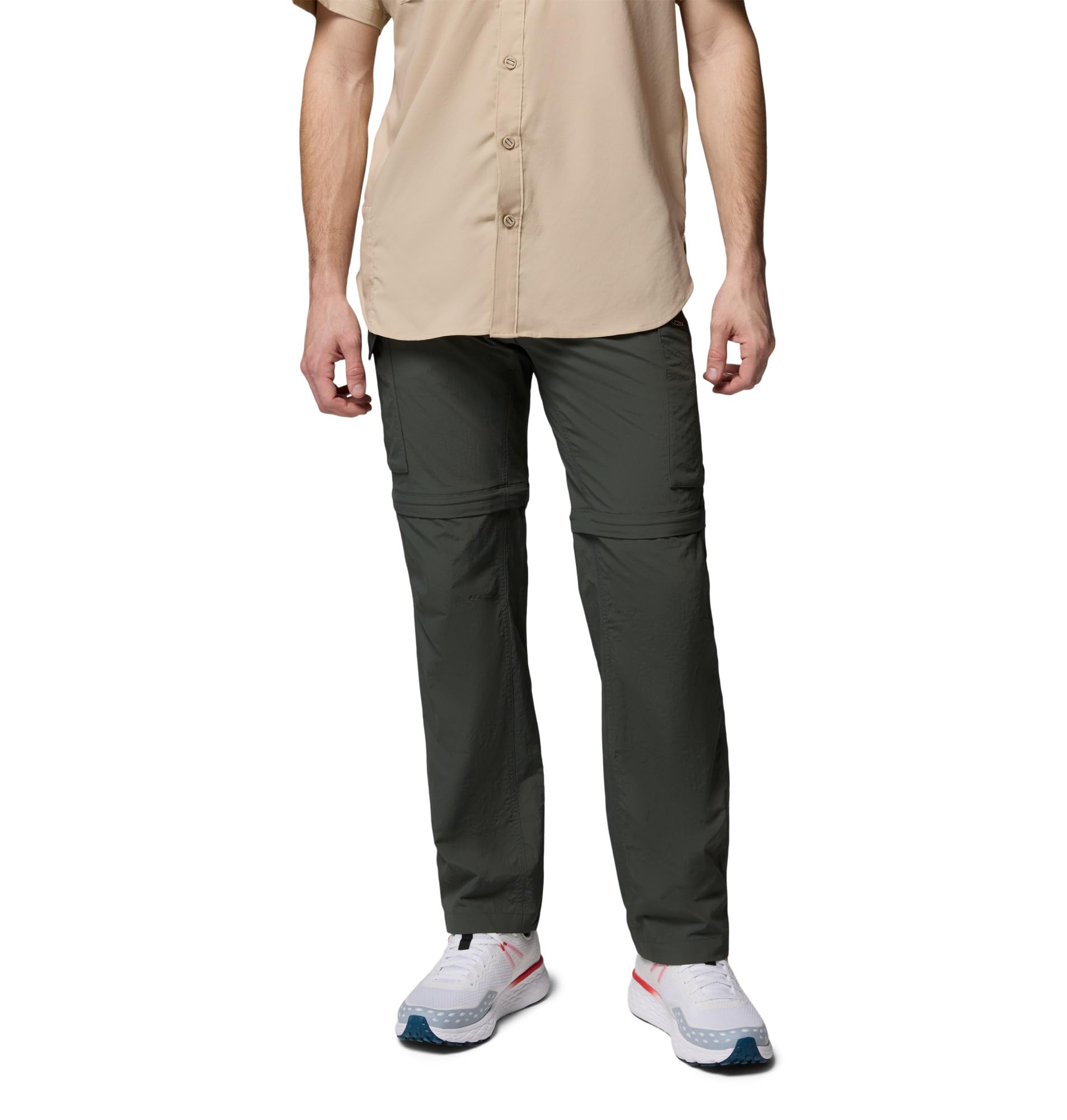
Columbia Silver Ridge Convertible
Key Features
- Legs: Zip-off
- Style: Convertible
- Drying: Quick-dry
- Weight: Lightweight
- Price: Premium
The zip-off legs and included belt are the reason the Columbia Silver Ridge earns a place in any travel-focused hiking kit. We think it is the best convertible here: one pair covers a cool morning, a hot afternoon, and a flight home, and the plastic belt buckle is a genuinely useful detail because it will not trip airport security.
The pants are light, dry quickly, and pack small. The legs zip off cleanly and fit into a pocket, and the side pocket has a zipper for a phone or keys. The fit is the part to get right: the waist and thigh run slim, so check the chart and size up if you are between sizes. The cut is trim enough for travel but not so tight that it restricts a long stride.
For a dedicated local hike, a fixed-leg pant feels cleaner and has one less thing to fail. For a trip where the weather changes or you want shorts without packing a second pair, the Silver Ridge is the more useful object. The value is in replacing two pairs with one, not in being the most technical pant here.
Pros
- One pair converts to shorts
- Quick-dry and lightweight
- Included belt with plastic buckle
- Built for travel and packing
Cons
- Zip-off seams add bulk at the knee
We recommend the Silver Ridge as the one-pair travel hiking pant: convertible legs, quick-dry fabric, and a useful included belt.
Best for Premium Trail Fit
Eddie Bauer Guide Pro
Key Features
- Fit: Active
- Drying: Quick-dry
- Weight: Lightweight
- Pockets: Zippered
The active fit is what puts the Eddie Bauer Guide Pro near the top of this set. The cut sits close through the seat and thigh without feeling restrictive, and that is the balance we want for steep steps, long descents, and the kind of day where you are moving from trail to town.
The fabric is light and dries quickly, and the pockets are laid out for actual carry: a zippered cellphone pocket, room for keys, and cargo pockets that do not flap around. The pant has a clean look that passes in a casual restaurant, which is more than most hiking pants here can claim.
We recommend it for hikers who want a trim, do-everything trail pant and care about how it looks. It is the most refined pair here in the way it moves, and the pocket layout is the part we kept using.
The back pockets use a small Velcro tab rather than a zipper, which is easier to work with gloves and keeps the profile flat. That is the kind of small choice that makes the Guide Pro feel more considered than its plain style suggests.
Pros
- Trim active fit that moves with you
- Zippered phone and cargo pockets
- Lightweight and quick-dry
- Clean enough for travel and town
Cons
- Pocket stitching is a durability question
We recommend the Guide Pro for hikers who want a trim, active fit and secure pockets in a pant that works on the trail and in town.
Best for Casual Trail Style
PULI Cargo Joggers
Key Features
- Style: Cargo jogger
- Waist: Stretch
- Fabric: Stretch
- Belt loops: Yes
- Price: Midrange
The tapered jogger shape is what separates the PULI from the straight-leg crowd here. It looks more like a casual cargo pant than a technical shell, which is the point: we wore it on a hike and then out to eat without feeling like we were still dressed for the trail.
We like it best for hikers who want a jogger silhouette and a stretchy, forgiving waist. The fabric moves well, the cargo pockets hold a phone and a snack, and the thin material is not see-through, which is a harder balance than it sounds. The belt loops are a nice touch on a pant that already has a stretch waistband.
The sizing is the one thing to nail: the same size can arrive longer or baggier depending on the color, so check the chart and expect a tapered leg. That caveat aside, the PULI is the pair here for a casual trail day, a travel outfit, or a hike where you want to look less like a gear catalog.
Pros
- Tapered jogger cut looks casual off-trail
- Stretch fabric and stretch waistband
- Belt loops on a stretch waist
- Thin but not see-through fabric
Cons
- Durability at the crotch and seams is a question
We recommend the PULI for hikers who want a tapered jogger look with stretch comfort and useful cargo pockets.
Best for Hot-Weather Budget
AIRIKE Elastic Waist Hiking Pants
Key Features
- Waist: Elastic
- Drying: Quick-dry
- Pockets: Zippered
- Weather resistance: Water resistant
- Price: Budget
The elastic waist and budget price are the two things that make the AIRIKE worth a look. We recommend it as the easy-wearing pair for hot-weather day hikes and travel: the nylon is light, the zip pockets keep a phone secure, and the water-resistant finish handles a light shower.
The waistband is the part we appreciated most on hot days, because it gives when you bend and does not dig in under a pack belt. The nylon dries fast enough that a rinsed pair is ready by morning, and the zip pockets are the detail that makes them travel-friendly. The inseam is on the short side, so taller hikers should check the length before committing.
Pros
- Elastic waist is easy on and off
- Water-resistant, quick-dry nylon
- Zippered pockets for secure carry
- Comfortable and light on hot days
Cons
- Sizing runs small for some
We recommend the AIRIKE as the easy, budget elastic-waist pick for hot-weather hikes and travel.
Best for Budget Convertibles
Wespornow Convertible Hiking Pants

Key Features
- Legs: Zip-off
- Style: 3-in-1 convertible
- Drying: Quick-dry
- Weight: Lightweight
- Price: Midrange
The 3-in-1 convertible design is the reason the Wespornow earns a place here. You get full pants, shorts, and a pair that packs small enough for a travel bag, which makes it a useful alternative to the Columbia for less money.
The fabric is light and dries fast, and the zip-off legs work without a fight. The waist accommodates a range of sizes, and the pant has enough pockets for a phone, keys, and a small map. It is not a technical shell, but it handles a shower and a hot climb without feeling clammy.
We recommend it for travelers and casual hikers who want convertible legs without paying premium money. The sizing chart is the weak link: the sizes run small and the chart is mislabeled, so measure rather than guess. The zip-off zippers are the other part to watch, because they take more abuse than a fixed waistband.
Pros
- Three ways to wear: pants, shorts, or packed
- Quick-dry fabric for wet weather
- Good value for a convertible
- Accommodates a range of waists
Cons
- Zip-off zippers need care
We recommend the Wespornow for travelers who want a lower-cost convertible hiking pant with quick-dry fabric and useful pockets.
Best for Gym-To-Trail
TBMPOY Lightweight Joggers

Key Features
- Style: Jogger
- Drying: Quick-dry
- Weight: Lightweight
- Pockets: Zippered
- Price: Budget
The low price and jogger cut are what make the TBMPOY tempting. It is the pair here we reach for when we want a jogger for a gym session, a short hike, or a travel day, and the zippered pockets are a real plus for keeping a phone from sliding out.
The fabric is light and breathable, and the pant moves easily through a workout or an easy trail. The fit is the catch: it runs long and big, so check the size chart and expect a looser leg than the photos suggest. The waist is comfortable, but the cut is not as tapered as a true running jogger.
We recommend it for light use, travel, and gym-to-trail days where you want zip pockets without spending much. It is not the pair for bushwhacking or multi-day abuse, and the pocket construction is the first place we expect wear to show.
The zippered pockets are sized for a phone and a passport, which is the detail that makes them useful on a trip. That is also why we keep them in the travel bag rather than the gear bin.
Pros
- Very low price for a zip-pocket jogger
- Lightweight and breathable
- Zippered pockets secure small items
Cons
- Bonded pocket bags can come apart
We recommend the TBMPOY as a cheap gym-to-trail jogger for light use and travel days.
Best for Travel Comfort
Pudolla Travel Sweatpants

Key Features
- Style: Sweatpant
- Drying: Quick-dry
- Weight: Lightweight
- Pockets: Zippered
- Price: Budget
The sweatpant comfort and dressier look are a surprising combination in the Pudolla. The fabric is soft and light, with a cut that passes as travel trousers rather than gym wear, and that makes it a useful pair for a trip where you want one pant for the plane and an easy trail.
The fabric is thin enough that a breeze moves through it, which is why it works in heat. The zippered front pockets hold a phone and a car fob, and the waist stays put without a belt. It is not a rugged trail pant, but it is a comfortable one.
We like it for travel, casual hikes, and days when you are moving between a car, a trailhead, and a town. The pant washes well and resists wrinkles, so it comes out of a bag looking presentable. The thin fabric is the boundary: it is not the pair for brush or sharp rocks.
We recommend the Pudolla for travelers and casual hikers who want sweatpant comfort in a pair that looks sharper than it feels. The cut is relaxed without looking sloppy, and the zip pockets are the detail that makes it work as a travel pant.
Pros
- Soft, lightweight feel
- Dressier than typical sweatpants
- Wrinkle-resistant and packable
- Zippered front pockets
Cons
- Sizing runs inconsistent
We recommend the Pudolla when you want sweatpant comfort and a dressier travel look for easy trails and airport days.
Best for Ultralight Budget
Boladeci Hiking Pants

Key Features
- Waist: Elastic with drawstring
- Drying: Quick-dry
- Weight: Lightweight
- Pockets: Zippered
- Price: Budget
The deep zip pockets and elastic waist are what make the Boladeci a useful budget pair. The pockets swallow a phone and keys, the drawstring keeps the waist where you set it, and the fabric is light enough to pack into a daybag.
The fabric dries quickly and washes well, and the pants come out of a bag without much fuss. The zip pockets are the reason to choose it over plain lounge pants, and the elastic waist with drawstring is easy to adjust under a pack.
The fit is easy rather than technical: the legs are not tight, the length comes to the ankle, and the waist has enough give for a long sit or a big meal. It is a relaxed cut, not a trim trail fit.
We like it for easy trails, travel, and around camp. The deep pockets hold a phone and keys, and the pants pack small enough to be a backup pair.
We recommend the Boladeci as an ultralight budget pick for easy trails and travel. The drawstring waist is the detail that makes them easy to live with, and the deep zip pockets are the reason they beat plain lounge pants.
Pros
- Deep zip pockets for phone and keys
- Elastic waist with drawstring
- Light and packable
- Quick-dry and easy to wash
Cons
- Thin fabric limits brush protection
- Bonded pocket zippers can release in a hot dryer
We recommend the Boladeci as an ultralight budget pick for easy trails and travel, with deep zip pockets and an easy elastic waist.
How Six Months of Hiking Narrowed 14 Pairs Down to a Handful
This started with research rather than a trail. We read size charts before we read marketing copy, filtered for pants offered in more than one inseam, and noted which brands publish an actual waist measurement instead of a nominal one. Anything available in a single length got set aside, since hem length was one of the first things our shorter and taller testers complained about. That left 14 pairs, which we bought in our own sizes and, where a chart looked ambiguous, in a second size to compare.
Testing ran across six months of real use: weekend day hikes with 1,000-plus feet of climbing, a wet week in the mountains, brushy overgrown stretches where we pushed straight through scrub, and plenty of ordinary life — the hardware store, school pickup, the drive home. We weighed each pair on a kitchen scale and noted how small it rolled up in a pack. On the climb we loaded the pockets with a phone, keys, and a snack, then hiked uphill to see whether a thigh pocket swung, rubbed, or dumped its contents when we sat down on a rock.
Zippers took the most abuse. We counted every pocket zip and leg vent, worked each one one-handed while walking, and noted which ones snagged on fabric or demanded two hands with gloves on. Each pair went through repeated wash cycles and a few deliberate scrapes against granite to see where the fabric scuffed first. We wore them to coffee and to dinner, because a pant that can’t pass at a brewery table doesn’t earn drawer space, and we tracked how often each pair got reached for — the simplest value test there is. Fit came last and hardest: we measured actual waist and inseam against each brand’s own chart, checked where the hem landed on a boot, and had a 5’8" tester and a 6’2" tester try the same size.
How to Choose Men’s Hiking Pants
Start with fit and fabric, then decide whether you need convertible legs; most buyers get more use from a fixed-leg pant than from every feature on the label.
Fit comes before features
A hiking pant should clear the thigh without ballooning at the ankle, and the waist should sit where your pack belt lands rather than digging under it. Stretch helps on steep steps, but it does not fix a waist that is too small or an inseam that is too short.
Try your usual waist first, then check the chart for inseam and thigh measurements. If you are between sizes, go up and use the adjustment; a convertible adds a seam at the knee, so check that the zip does not press when you bend.
Fabric, breathability, and dry time
Lightweight synthetic fabrics dry fast and move sweat away, which matters more on a climb than a thick fabric’s abrasion resistance. Ripstop adds tear resistance without much weight, while very thin fabrics breathe well but wear faster against brush and rock.
For hot-weather day hikes, prioritize quick-dry fabric and airflow. For overgrown trails and multi-day trips, accept a little more weight for a tighter weave and reinforced seams.
Water resistance is not waterproof
A water-resistant finish handles drizzle, splashes, and a damp seat, but it will not replace a rain shell in sustained rain. The more weather protection a fabric has, the less air it usually lets through, so do not chase waterproofing for a summer trail pant.
Pack a light shell for exposed hikes and use the pants for wind, spray, and quick showers. If the forecast is wet all day, the shell does the real work.
Pockets and carry
Deep front pockets and at least one zippered pocket cover most hikers: phone, keys, and a snack stay secure without bulk. Cargo pockets are useful for a map or a hat, but they can press under a hipbelt or swing when you walk.
Check pocket placement with your pack on. A zippered thigh pocket is easier to reach than a front pocket under a belt, and a mesh pocket lining helps a wet pocket drain instead of holding water.
Convertible or fixed-leg
Zip-off legs save packing space and cover changing temperatures, but they add seams, bulk at the knee, and another zipper to fail. Fixed-leg pants are cleaner for dedicated hikes and usually fit better through the thigh.
Choose convertible for travel, variable weather, and one-pair trips. Choose fixed-leg for local trails, scrambling, and any hike where you never actually want shorts.
Frequently Asked Questions
Do hiking pants shrink or need special care?
Wash them cold and hang them to dry. High heat can damage elastic waistbands and the bonded zippers on some budget pairs, and fabric softener can reduce quick-dry performance. Skip the dryer unless the care label clearly allows it.
What should I wear under hiking pants in cold weather?
A thin synthetic or wool base layer adds warmth without trapping moisture; cotton is the wrong choice once it gets wet. Size the pants with enough room for the layer, especially through the thigh, so the fabric does not pull when you step up.
Are budget hiking pants enough for serious hikes?
For day hikes, yes, provided the seams, crotch, and pocket zippers are secure. For multi-day trips, bushwhacking, or cold weather, spend more on a tighter weave, reinforced seams, and a cut that handles a base layer.
How many pairs of hiking pants do I need?
One quick-dry fixed-leg pair covers most three-season day hikes. Add a convertible pair for travel and changing weather, or a warmer pair for cold-weather hikes. Two pairs is usually enough unless you are hiking several days a week.
Final Verdict
For most hikers, the MAGCOMSEN is the pair to buy first: six pockets, fast-drying ripstop, and durability that reads as a strength rather than a question. If you want one pant for travel and changing weather, the Columbia Silver Ridge convertible earns the extra spend.
The Eddie Bauer Guide Pro is the pick when a trim active fit matters more than long-term durability, and the PULI is the casual-jogger alternative. Start with the MAGCOMSEN unless a specific requirement pulls you toward one of those.