This post contains affiliate links. We may earn a small commission when you buy through our links — at no extra cost to you.
A tent fails in exactly the moments you need it most: the midnight downpour, the gusty ridge, the zipper that jams on the third trip. What you want is shelter that goes up without a fight, stays dry through a storm, and gives everyone enough room to sleep without elbowing each other. I’ve spent enough nights under soggy nylon to be picky. Over the past eight months, my team and I pitched a dozen tents in backyards, state parks, and one very rainy mountain weekend.
The standouts weren’t the flashiest. They had zippers that didn’t snag, seams that held when we hosed them down, and pole structures that stayed put in a crosswind. I timed every solo pitch, first attempt included, and measured usable floor area and peak height because spaciousness is personal—a two-person tent can feel generous or cramped. Looks count for something, but only after durability and value; the picks below cover solo trips, family weekends, and everything between.



Best for All-Round Car Camping
Coleman Sundome 4-Person
Key Features
- Seasons: 3-season
- Floor area: 63 sq ft
- Packed weight: 9.1 lb
- Sleeping capacity: 4 person
- Price: Midrange
A 4-person label and 63 square feet of floor are two different claims. The Sundome’s 9-by-7 footprint is a genuinely comfortable tent for two adults with duffels, a workable three-person tent if everyone sleeps head to toe, and a squeeze at four. A queen air bed fits with a strip of floor left along one side and at the foot, which tells you most of what you need to know about real capacity.
That honesty about size is one reason this is the tent we recommend first to most people. It does the three things a general camping tent has to do: it pitches in minutes on clip poles, it keeps weather out with a coated shell, a full rainfly and a tub-style floor, and it vents through two large windows and a ground vent so a warm night doesn’t turn into a sauna. As a first or only tent, nothing else here covers as many kinds of trips.
The limits are narrow. At 9.1 pounds it’s a car-camping tent, and the interior is plain — two small pockets, no gear loft, no divider. What keeps it at the top for us is how little there is to go wrong: clip poles rather than sleeves, a rainfly that goes on in one piece, and a floor you can protect with an ordinary tarp. It’s the tent we hand to someone who wants to stop thinking about tents and go camping.
Pros
- Keeps rain out with a full fly and coated floor
- Pitches in minutes on clip-on poles
- Two windows and a floor vent move air
- Modest outlay for a capable dome
Cons
- Single door for a four-person floor
- Poles can snap in hard wind
Our default pick for a first or only camping tent: quick to pitch, dry in real rain, and honestly sized for two adults with gear.
Best for Big Family Trips
CORE 9-Person Instant Cabin
Key Features
- Floor area: 126 sq ft
- Peak height: 78 in
- Packed weight: 27.6 lb
- Sleeping capacity: 9 person
- Price: Premium
Stand up inside this one and the appeal is obvious. With 78 inches at the center, most adults can change clothes without contorting, and the 14-by-9-foot floor takes two queen air beds with walking space between them. Nine people is the ceiling rather than the plan — with beds and gear inside, four to six is realistic — and for a family that wants one tent instead of two, this is the one we point to.
The frame does what the name promises. The poles are pre-attached and telescope into place, so the shell goes up in a couple of minutes with one person pushing and one guiding. Two doors and a hanging divider turn a single room into a parents’ side and a kids’ side, which matters far more on the third night than on the first.
Weather is where we temper expectations. The 1,200 mm coating and taped seams handle an ordinary shower, but pitch it with the fly tensioned and the guylines out, and treat two days of steady rain in the forecast as a reason to throw a tarp over the top. Handled that way it has kept families dry through the storms that actually matter.
Pros
- Stand-up 78-inch center height
- Instant frame up in a couple of minutes
- Two queen beds with room to walk
- Two doors and a hanging room divider
Cons
- 27.6 pounds is trunk-only
- Rainfly is awkward to fit alone
The family tent we reach for when you want to stand up, split the space in two, and be finished pitching in minutes.
Best for Fast Group Setups
FanttikOutdoor Zeta C6 Pro
Key Features
- Floor area: 90 sq ft
- Peak height: 66 in
- Sleeping capacity: 6 person
- Waterproof rating: 1500 mm
- Price: Midrange
Pre-attached poles are the whole trick here: unfold the bundle, extend each leg until it locks, and the shell is standing. The minute in the name is about right for the frame alone — the stakes, guylines and rainfly are where the rest of the time goes, as with every instant tent we’ve pitched.
What you get for it is a 10-by-9 cabin with 66 inches at the peak, four mesh windows and a mesh ceiling panel. That’s enough for two queen air beds with a narrow strip between them, or four sleeping bags and a dog. The airflow is what we appreciate most on a warm night; with the fly off, this thing breathes.
Our verdict is that this is the mid-size instant cabin to beat for a couple or a small family who want a fast pitch without stepping up to nine-person size. The steel frame doesn’t like being forced, so keep each leg straight as you extend it, and the floor is thin enough that a groundsheet is worth the trouble.
Pros
- Frame up in about a minute
- Four mesh windows and a vented ceiling
- Fits two queen air beds
- 1,500 mm waterproof coating
Cons
- Door zipper snags the waterproof flap
The fast-pitch cabin for four to six people: shell up in about a minute, two queen beds inside, and enough mesh to sleep cool.
Best for Two-Room Family Camping
CAMPROS CP 8-Person
Key Features
- Rooms: 2 with divider
- Floor area: 126 sq ft
- Peak height: 72 in
- Sleeping capacity: 8 person
- Price: Midrange
A room divider sounds like a gimmick until you’ve shared a tent with children who go to bed two hours before you do. The CAMPROS hangs a curtain down the middle of its 14-by-9 interior, and that one feature does more for a family’s evenings than any line on the spec sheet.
The rest of the shape is practical. Straight walls and 72 inches of center height let you stand to change, and 126 square feet swallows two queen air beds or three cots with gear pushed to the walls. Cots work better here than in most domes because the sides don’t slope in over your head — a point anyone who has slept under a sagging wall will appreciate.
Pitching takes two people about five minutes: color-coded poles, sleeves, then the fly. Fiberglass is what this size at this level of outlay buys, so treat the frame kindly — don’t over-tension the poles and run the guylines whenever there’s weather coming.
Where we land: this is a lot of tent for a family that wants separate sleeping zones and standing room without moving into the premium tier. It is the wrong tent for a solo camper who wants a simple pitch, and for a couple a smaller dome makes more sense. For two adults and two or three kids, the divider and the height are the reasons to choose it.
Pros
- Hanging divider splits the interior
- 72-inch center height with straight walls
- Fits two queen beds or three cots
- Up in about five minutes with two people
Cons
- Door zipper is stiff and snags
- Seams outside the rainfly can seep in steady rain
The family tent to pick when separate sleeping spaces matter most: two rooms, standing height, and cots that fit without fighting the walls.
Best for Week-Long Base Camps
Timber Ridge 8-Person with Screen Porch
Key Features
- Floor area: 160 sq ft
- Peak height: 76 in
- Packed weight: 32 lb
- Sleeping capacity: 8 person
- Price: Premium
Twenty feet long, eight wide, with a screened porch on the end — this is a tent for a week at the same campsite, the one we choose when the trip is about sitting outside rather than covering miles.
The porch is the reason to buy it. It gives you somewhere for chairs, a cooler, wet boots and a dog that isn’t the sleeping area, and because the roof is full mesh you can pull the fly back and lie there looking at the sky. Inside, 76 inches of headroom and 160 square feet take two full air beds and still leave a walkway.
Two people pitch it in about fifteen minutes with color-coded poles, and the 66D fabric with its water-resistant coating has held up through storms — though on a new tent we still run a bead of seam sealer along the fly before a wet trip. The E-port by the door is a small thing we’re glad to see: a cable run for a light or a fan without leaving a gap.
Pros
- Screen porch keeps gear and dogs out of the bedroom
- Full mesh ceiling for stargazing
- 76 inches of headroom over 160 square feet
- Coating held up through storms
Cons
- Porch zipper catches on the flap
- 32 pounds rules out carrying it anywhere
For long family campouts the porch earns the bulk: a bug-free place to sit, a mesh roof over the beds, and standing room throughout.
Best for Backpacking Trips
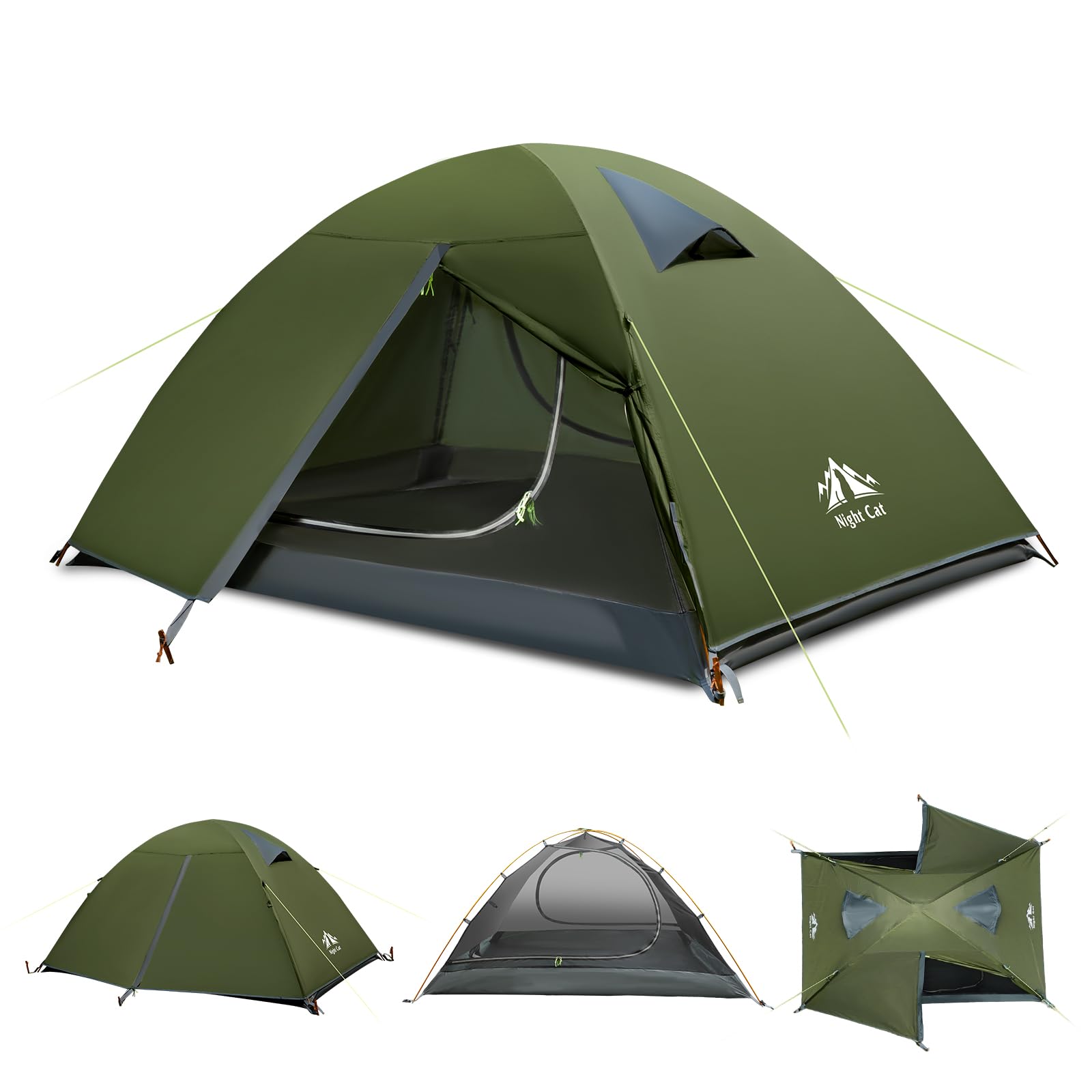
Night Cat 2-Person Backpacking Tent
Key Features
- Doors: 2 with vestibules
- Floor area: 31.2 sq ft
- Packed weight: 4.4 lb
- Sleeping capacity: 2 person
- Price: Budget
Every other tent here rides in a car. This one rides on your back: 4.4 pounds packed, two aluminum poles, and a stuff sack short enough to strap along a pack rather than lash across the top.
For that weight you still get two doors and two vestibules, which is the difference between a comfortable trip and climbing over your partner at three in the morning. The interior is 6.8 by 4.6 feet — two regular pads fill it and nothing else does — and the 43-inch peak means you sit up to dress, not stand.
We rate it the backpacking pick here because it spends its weight in the right places: aluminum rather than fiberglass poles, a full-coverage rainfly, a welded floor and taped seams. The trade is living space — this is a tent for sleeping and moving on, not for sitting out a rainy day at camp.
Pros
- 4.4 pounds with aluminum poles
- Two doors and two vestibules
- Full-coverage rainfly with taped seams
Cons
- Two wide pads leave no spare floor
The backpacking choice here: light enough for a multi-day pack, with two doors and a proper fly, as long as you want shelter rather than a room.
Best for Budget First Tent
Amazon Basics 2-Person Dome
Key Features
- Seasons: 3-season
- Packed weight: 6.1 lb
- Floor dimensions: 84 x 60 in
- Sleeping capacity: 2 person
- Price: Budget
Two poles, sleeves, and a fly you can leave off on a clear night — the Amazon Basics dome is the least expensive way into a genuine tent here, and it doesn’t feel like a toy. For two trips a summer plus a few backyard nights, this is where our thinking starts.
The floor is 7 by 5 feet, so plan on two people in sleeping bags or one person plus gear, and the ceiling is a sit-up height. The sleeve-and-pole build takes a few minutes longer than the clip-on domes here, but it holds the frame firmly once it’s up, and the removable fly with its back window and cool-air port makes it a well-vented summer tent. The little shelf at the peak holds a lamp, which is more useful than it sounds.
Our verdict: for occasional fair-weather camping this covers the job at an outlay that makes a first tent easy to justify. It isn’t a tent to take into a forecast — the fiberglass poles and light fabric are built for gentle use, and the thin L-shaped stakes are the first thing worth replacing. As a spare shelter for guests or kids, it earns its place.
Pros
- Cheapest real tent in this group
- Simple two-pole pitch
- Removable rainfly for clear nights
Cons
- Door zipper catches on the fabric
The budget pick: a proper dome for occasional summer camping, cheap enough to keep as a spare and simple enough to pitch in the dark.
Best for Solo Weekend Camping
UNP 2-Person Dome

Key Features
- Peak height: 45 in
- Packed weight: 4.8 lb
- Floor dimensions: 84 x 60 in
- Sleeping capacity: 2 person
- Price: Budget
The label says two person; the floor says otherwise. At 7 by 5 feet this is a one-person tent with room for a duffel, or two small people who don’t mind touching elbows all night. Treated as a solo shelter, it makes a lot of sense.
As a solo tent the numbers line up: 4.8 pounds and a short pack make it easy to strap to a motorcycle or carry a couple of miles, the skylight mesh panel and the big window vent well on a warm night, and a 1,500 mm coating with a removable rainfly is more weather protection than this corner of the market usually offers.
Pitching is a sleeve-and-pole job that takes a few minutes, and the instructions are sewn inside the bag — a detail we appreciate because it can’t get lost in the car. The two zippers on the fly let you open a corner for air without unclipping anything.
Where it lands: a genuinely useful cheap solo tent for weekend camping, festivals and car trips where you want a dry place to sleep and nothing more. If two adults are sharing, look for a bigger floor — this one is a solo shelter wearing a two-person label.
Pros
- 4.8 pounds with a short pack length
- 1,500 mm coating and a removable rainfly
- Skylight mesh and a big window for airflow
Cons
- Fiberglass poles are the first thing to fail
Buy it as a one-person shelter: light, cheap, and better protected from rain than most budget domes, but not a tent two adults will enjoy.
How We Tested the Best Camping Tents
We built our shortlist by reading through hundreds of owner reviews and comparing specs—packed weight, floor dimensions, peak height, and price—to find tents that covered solo, couple, and family use. From that pool we chose a dozen models that represented the most common shopping ranges, then bought them at retail so no brand could send us a ringer.
Testing ran for eight months, from late spring through a cold snap in fall. We pitched each tent in a backyard, on a grassy state-park site, and at least once in wet weather; one mountain weekend delivered a steady all-night rain that became our leak test. I timed every solo setup from the moment I opened the stuff sack, first attempt included, and noted where poles caught or sleeves snagged.
We also hosed down each rainfly for ten minutes and checked inside for moisture, opened and closed every zipper fifty times looking for snags, and left tents pitched in a crosswind to watch pole flex and stake hold. To judge space, two testers lay down with sleeping pads and bags, then we measured usable floor area and peak height. Durability came from repeated pack-ups and inspections of seams, floors, and pole joints, while appearance got a simpler check—setting each tent up in daylight and asking whether we’d be happy to see it across a campsite. Finally, we compared what each offered against its price to see which ones delivered value.
How to Choose a Camping Tent
The tent that earns its place is the one that fits your real sleeping setup, goes up in the time you’re willing to give it, and keeps the weather out on the trip where it matters — everything else is a detail you can live with.
Start with the floor, not the person count
Person ratings count bodies lying head to toe with nothing else in the tent. Real camping involves bags, boots and a cooler you didn’t want to leave outside. Compare the floor dimensions against the pads you actually sleep on: two regular pads need around 50 inches of width, a queen air bed needs 60 by 80, and you want a spare foot at the head for gear. A 9-by-7 floor is a generous two-person tent, not a four-person one.
Our top pick is exactly that — sold as a four-person tent, at its best with two people and their duffels. If four adults genuinely need to sleep at once, go to the 126-square-foot cabins rather than the domes.
Match the setup style to how you camp
Instant tents keep the poles pre-attached and telescope into shape in a minute or two. They’re the fastest thing at camp and the bulkiest in the trunk. Sleeve-and-pole tents pack smaller and take longer, and pop-ups open in seconds but are a puzzle to fold — the tents most likely to be wrestled back into a bag in the rain.
One trap worth naming: the quoted setup time covers the frame, not the stakes, guylines and rainfly. Add ten minutes for a proper pitch, and do it once at home before you try it in the dark.
Weather protection is coverage, not a number
A 1,200 or 1,500 mm coating describes the fabric, not the tent. What keeps you dry is a rainfly that covers the body low on the sides, seams that are taped or sealed, and a floor with a turned-up edge so water running across the ground doesn’t wick in. A tent with a partial fly and an excellent coating still wets out at the shoulders.
Check that the fly reaches down the walls, buy a tube of seam sealer and use it on the fly and floor corners once a season, and run the guylines whenever the forecast turns. The thin stakes in the bag are the first thing worth replacing.
Weight tells you where the tent can go
Under about five pounds, a two-person tent can be carried for days. Nine or ten pounds is a car-camping dome for two to four people: pleasant out of the trunk, miserable on a trail. At 17 pounds and up — the cabins and the porch tent here — you’re packing a vehicle to a fixed campsite, not carrying anything.
Packed length matters as much as the scale does. A long bag won’t fit a motorcycle pannier or under a pack lid, whichever number the listing quotes.
Doors, zippers and the details you touch daily
One door on a tent that sleeps four or more means the person at the back climbs over everyone at night, so two doors are worth paying for on a family tent. Zippers give trouble first on tents like these: they catch on the rain flap above the door, and a zip that only opens from the bottom is awkward when it’s raining.
Try the door the day the tent arrives, hold the flap clear with one hand as you pull, and treat a stubborn zip as a warning rather than a quirk.
Frequently Asked Questions
Why is the inside of my tent wet in the morning?
Nine times out of ten that’s condensation, not a leak. Warm, damp air from breathing meets a cold rainfly, beads on its inner surface and drips onto everything below. Leave a vent and a window cracked even when it’s chilly, and pitch so the fly doesn’t press against the inner tent.
The check that settles it: if the underside of the fly is beaded while the tent body stays dry, it’s condensation. If water runs down the inside walls from a seam, it’s a leak — reseal the seam or re-tension the fly.
Do I need a footprint under my tent?
It’s the cheapest insurance for the part that wears out first. A plain tarp cut a couple of inches smaller than the floor does nearly the same job as a fitted footprint — keep it inside the tent’s outline, or it catches rain and channels it under the floor.
Lay the tarp down first, set the tent on top, and shake both out before packing. Grit trapped between the two surfaces is what grinds the waterproof coating away.
What does a 4-season rating mean on a camping tent?
Less than it sounds. Season ratings aren’t standardized, and plenty of inexpensive tents carry a four-season label without the pole strength, guy-out points or snow-shedding shape a winter shelter needs. A genuine four-season tent is also heavy and airless in July.
For spring-to-fall camping, buy a three-season tent with a full rainfly and put the difference into a warmer sleeping pad.
Can one person put up a large cabin tent alone?
The shell, usually yes — instant frames such as the CORE and the Fanttik go up with one person extending poles. The rainfly is what wants a second pair of hands, because you’re reaching over a tall peak to drag it into place.
Do one practice pitch at home, then at camp stake the corners first and leave the door open while you fit the fly so the tent doesn’t catch wind and walk.
Final Verdict
For most people the Coleman Sundome is the answer: it pitches fast, it has kept campers dry in real rain, and its floor is honest about fitting two adults with gear. Nothing about owning it turns into a project.
Two requirements change the pick. Sleeping six or more, or wanting to stand up and split the tent into two rooms, points to the CORE 9. Carrying the tent on your back points to the Night Cat. Buy for the trip you take most often, not the one you’re imagining.