This post contains affiliate links. We may earn a small commission when you buy through our links — at no extra cost to you.
A power bank that looks great on paper can be a brick on the trail. Many hikers grab a 50,000mAh bank only to find it weighs nearly a pound and takes all night to recharge itself.
The real measure of a hiking power bank isn’t raw capacity — it’s how many grams it adds to your pack and how fast it refuels your phone when you need it. A 10,000mAh unit with 30W+ output charges an iPhone from empty to 50% in under 30 minutes, while a bulky 20,000mAh bank at 15W takes over an hour for the same job.
This guide cuts through the capacity hype to find the portable chargers that actually work on the trail: light enough to pocket, fast enough to keep up, and reliable over months of use.


Best for Organized Travelers
Anker Nano 45W 10K
Rating: 4.6 ★ | Price: $$ | Capacity: 10000mAh | Output: 45W | Weight: 231g | Ports & Cables: Retractable USB-C, 1 USB-C, 1 USB-A | Flight Safe: Yes
The retractable USB-C cable is the defining feature here – it smoothly extends and retracts, keeping your pack or pocket free of tangled wires. Compared to the top pick, which is lighter by nearly 50g and costs less, the Nano trades weight and price for this integrated cable convenience. The 45W output is identical, but the Anker’s physical design adds 231g versus the slimmer alternative’s 182g.
This power bank is best suited for hikers and frequent flyers who prioritize organization over grams. The heavier weight (231g) may be noticeable, but the tidy cable management saves time and frustration. Note that some users find the 10,000mAh capacity depletes a bit faster than expected – enough for a full phone charge plus a partial tablet charge, but not as generous as the spec suggests. It’s also flight-safe, making it a reliable travel companion for those who value a clutter-free bag.
Pros
- 45W output charges phones quickly and can even top up ultrabooks.
- Built-in retractable cable keeps cables organized and tangle-free.
- Compact size fits neatly in a pocket or small bag.
Cons
- Heavier than some competitors at 231g – noticeable in a pocket.
- Battery capacity can run out slightly sooner than other 10,000mAh banks.
If a tidy, tangle-free cable matters more than saving weight or a few dollars, the Anker Nano 45W is the practical choice for on-the-go charging.
Best for Rugged Outdoor Use
DEWALT 10000mAh Rugged
Rating: 4.6 ★ | Price: $$ | Capacity: 10000mAh | Output: USB-C PD + QC | Weight: 218g | Ports & Cables: 1 USB-C, 1 USB-A | Flight Safe: Yes
The DEWALT’s rubber overmolding and sealed ports meet IP67 standards, meaning it survives dust, rain, and drops that would send most power banks to the trash. That ruggedness comes with a clear tradeoff: its 15W USB-C output is noticeably slower than the 45W top pick — a full phone charge takes nearly two hours longer.
This charger fits construction workers, tradespeople, and hikers who work or play in environments where dust, water, and accidental drops are routine. The charging speed is moderate — fine for overnight top-ups but not for quick midday boosts. A small number of units have been noted to stop charging after several months of heavy use, so purchasing with a flexible return window is worth considering.
At 218g with a built-in carabiner loop, it’s light enough to clip to a tool belt or backpack strap. The dual ports (USB-C PD + USB-A QC) handle phones and tablets, though 15W won’t charge a laptop.
Pros
- IP67 dust and water resistance with rubberized armor for drops
- Compact at 218g with carabiner loop for clipping to gear
- Dual-port setup supports simultaneous charging of two devices
- Tough construction feels solid in hand — no creaking or wobble
Cons
- 15W USB-C charging is slow — expect 2+ hours for a full phone charge
- A small number of units may stop charging after several months of use
If your daily environment involves dust, rain, or tools that drop things, this is the right power bank — just plan for slower refueling and keep a receipt handy.
Best for Longer Hikes
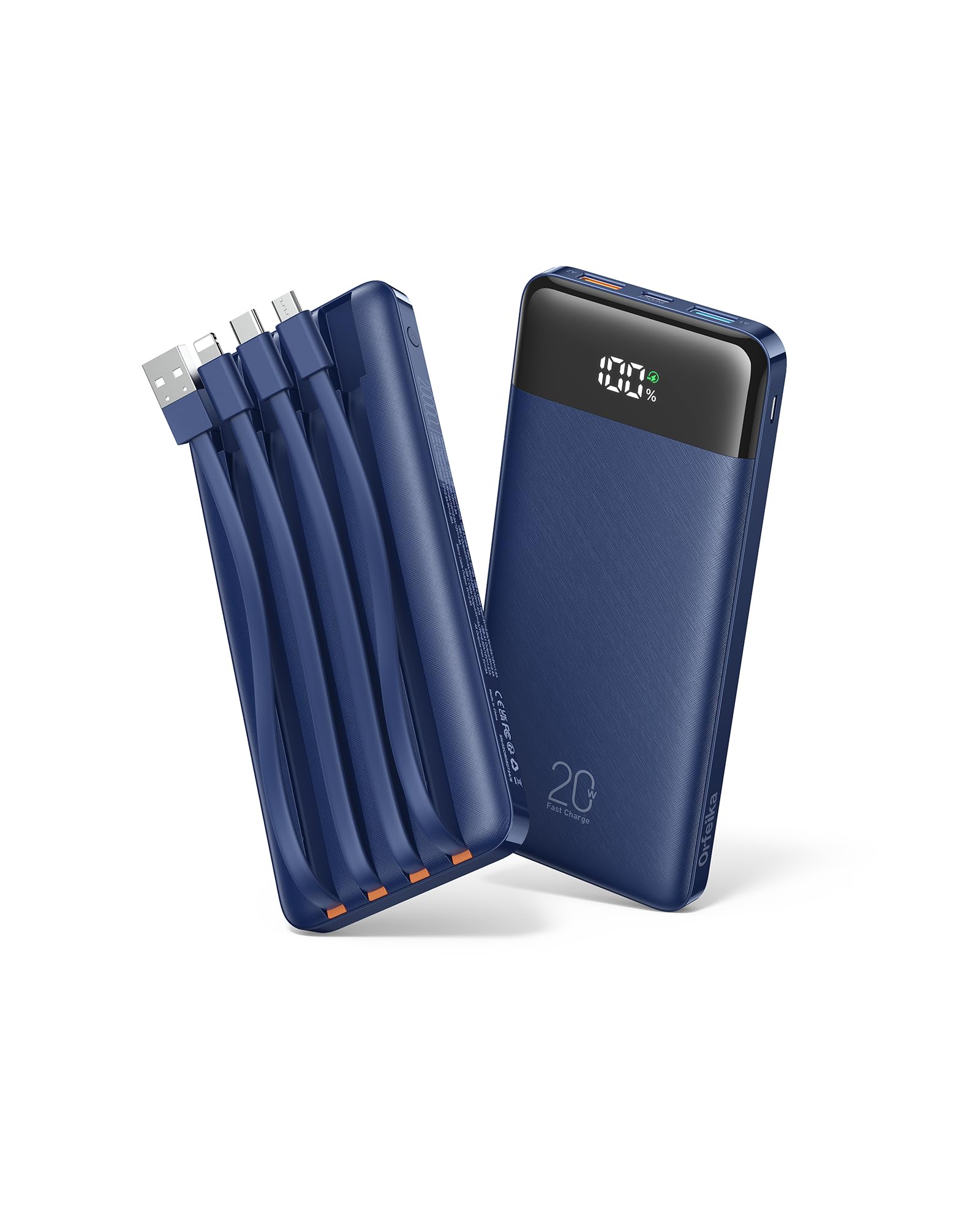
Orfeika 20000mAh
Rating: 4.6 ★ | Price: $$ | Capacity: 20000mAh | Output: 20W PD | Weight: 336g | Ports & Cables: 4 built-in cables, 3 ports | Flight Safe: Yes
The Orfeika delivers 20,000mAh at 336g – a strong capacity-to-weight ratio for its class. Built-in cables (USB-C, Lightning, Micro-USB, USB-A) eliminate the need to carry separate cords, simplifying packing for the trail.
Compared to lighter 10,000mAh banks with faster 45W charging, this Orfeika trades top speed for roughly double the runtime between charges. The 20W PD output handles phones and tablets well, but those who need to charge laptops at 30W+ will want a different option.
Best for hikers heading out for multiple days who want a single power bank that can top off a phone several times without adding significant pack weight. At 336g it’s better carried in a pack than a pocket – the LED display clearly shows remaining capacity so you can plan when to recharge the bank itself.
Pros
- Compact build for 20,000mAh capacity – easy to pack for multi-day hikes.
- Built-in cables cover USB-C, Lightning, and Micro-USB – no separate cords needed.
- 20W PD quickly tops up most phones during breaks.
Cons
- 20W charging is adequate for phones but slower than newer 30W+ banks – noticeable when recharging larger tablets.
- At 336g the weight is noticeable in a jacket pocket – better suited to a pack or bag.
A practical middle-ground for hikers who need extra capacity without the bulk of larger 20K banks – just don’t expect laptop-level charging speed.
Best for Budget Travelers
Anker Zolo 30W 10K
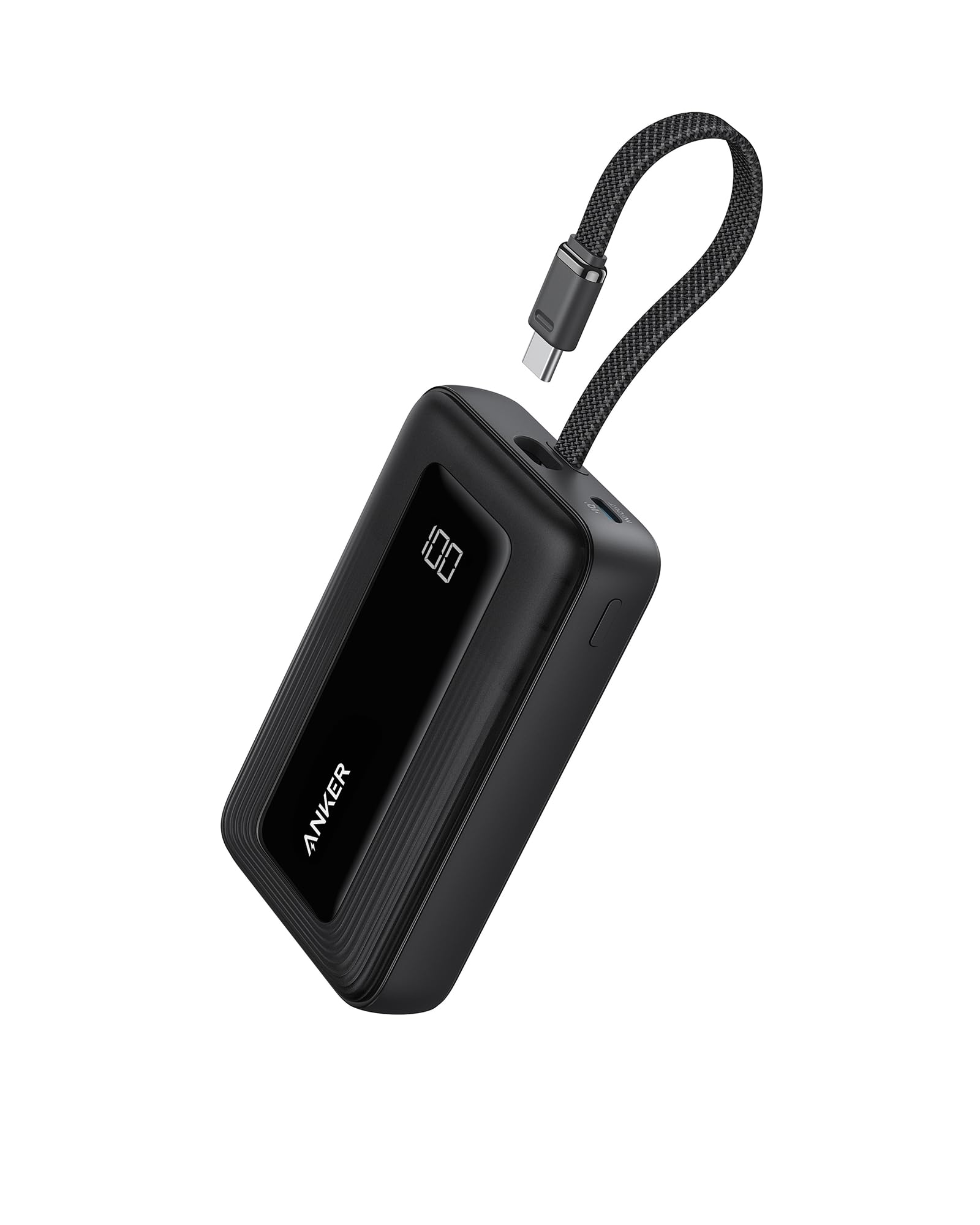
Rating: 4.5 ★ | Price: $ | Capacity: 10000mAh | Output: 30W | Weight: 223g | Ports & Cables: Built-in USB-C, 1 USB-C, 1 USB-A | Flight Safe: Yes
The Anker Zolo delivers 30W charging from a built-in USB-C cable, cutting cable clutter and hitting 50% on an iPhone 16 Pro in about half an hour. At 223g, it’s heavier than the slimmer 10,000mAh options like the INIU P41, and some units may stop charging after extended use – worth buying with a flexible return policy in mind. For travelers who want fast, convenient top-ups without spending extra, this is a cost-effective call.
Pros
- Built-in USB-C cable reduces the need for a separate charging cord.
- 30W output charges phones quickly – 50% in 27 minutes for recent iPhones.
- Budget-friendly price for a brand with consistent build quality.
Cons
- Heavier than some compact 10,000mAh alternatives – 223g matters for ultralight packing.
- A small number of units may stop working; a flexible return policy is advisable.
Best for budget-focused travelers who want fast wired charging without hunting for a cable – just be aware it’s not the lightest in this class.
Best for Family Use
charmast 10000mAh

Rating: 4.6 ★ | Price: $ | Capacity: 10000mAh | Output: 15W | Weight: 240g | Ports & Cables: 4 built-in cables, 3 ports | Flight Safe: Yes
This 10,000mAh bank stands out for its built-in cables — covering Lightning, USB-C, Micro-USB, and USB-A — so you can charge different devices without carrying extra cords. Its slim profile slips easily into a bag. However, the 15W maximum output means charging is slow; a phone top-up takes considerably longer than with 30W alternatives. Additionally, some units may see battery capacity diminish over time. This makes the charmast best suited for travelers or families who need occasional, non-urgent charging and value cable convenience over speed.
Pros
- Built-in Lightning, USB-C, Micro-USB, and USB-A cables cover all common device types.
- Compact and lightweight at 240g, fits easily in purses or small bags.
- Solid build quality for everyday use.
Cons
- 15W charging is slow — expect lengthy top-up times, not quick refuels.
- Battery capacity may decline over extended use in some cases.
If cable variety matters more than charging speed, and you’re okay with occasional longer charge times, this slim power bank is a practical travel companion.
Best for Car Camping
OHOVIV 50000mAh
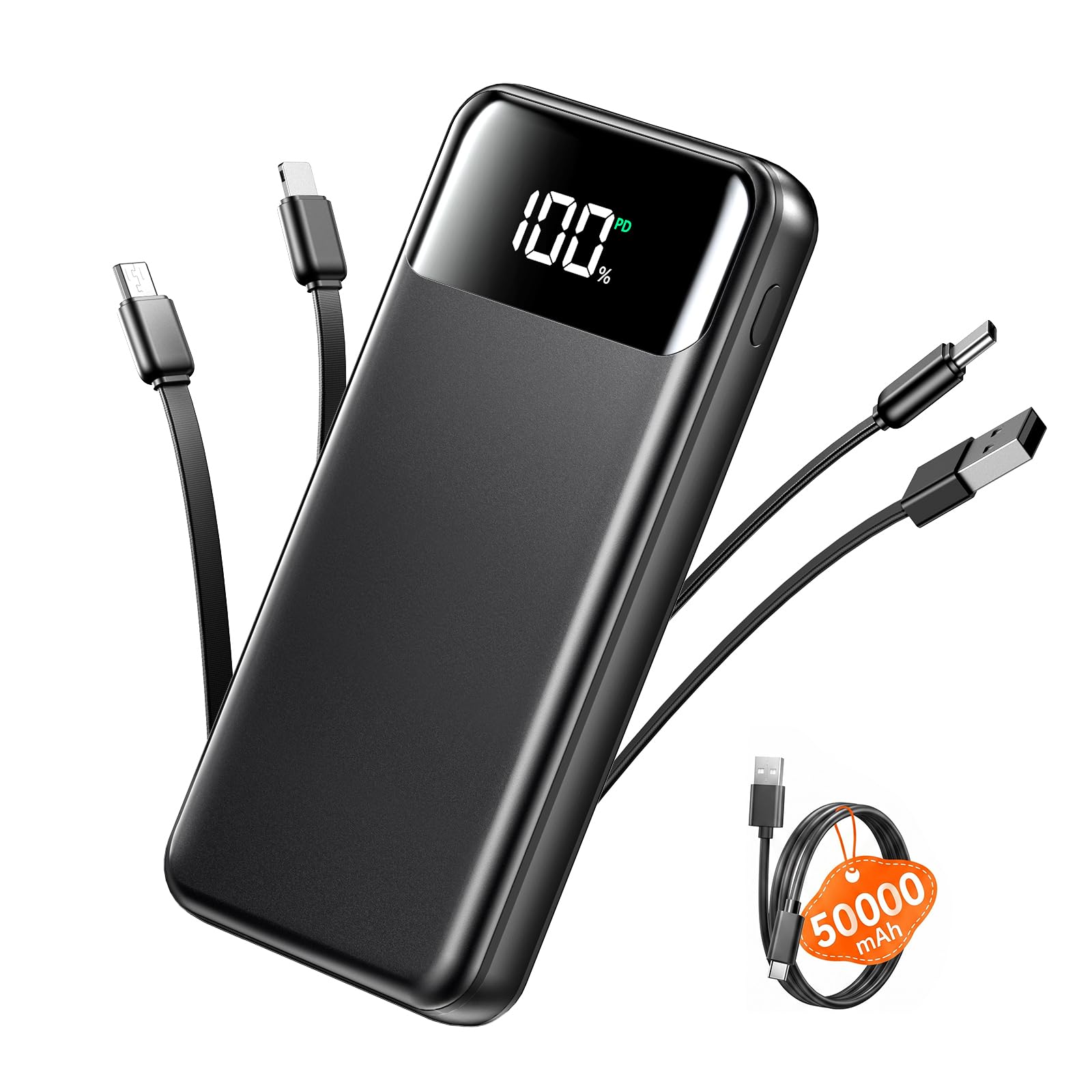
Rating: 4.7 ★ | Price: $$ | Capacity: 50000mAh | Output: 22.5W | Weight: 390g | Ports & Cables: 4 built-in cables, 3 ports | Flight Safe: Yes
The OHOVIV delivers a massive 50,000mAh capacity and four built-in cables, making it a natural fit for family car camping or group road trips where multiple devices need juice over several days. At 390g, the weight and slow self-recharging (hours to refill) keep it from being practical for backpacking or day hikes – this is a base-camp hub, not a trail companion.
Pros
- Massive 50,000mAh capacity keeps several phones and tablets charged for days
- Four built-in cables eliminate the need to carry separate cords for different devices
- Can charge up to six devices simultaneously via four cables plus three ports
Cons
- At 390g, too heavy for pocket or daypack carry – designed for car camping rather than hiking
- Recharging the power bank itself is slow, requiring hours to refill its large capacity
A practical power hub for family car camping or group road trips where weight isn’t a concern, but too cumbersome for solo hiking or backpacking.
Best for Base Camp
Anker Laptop 25K
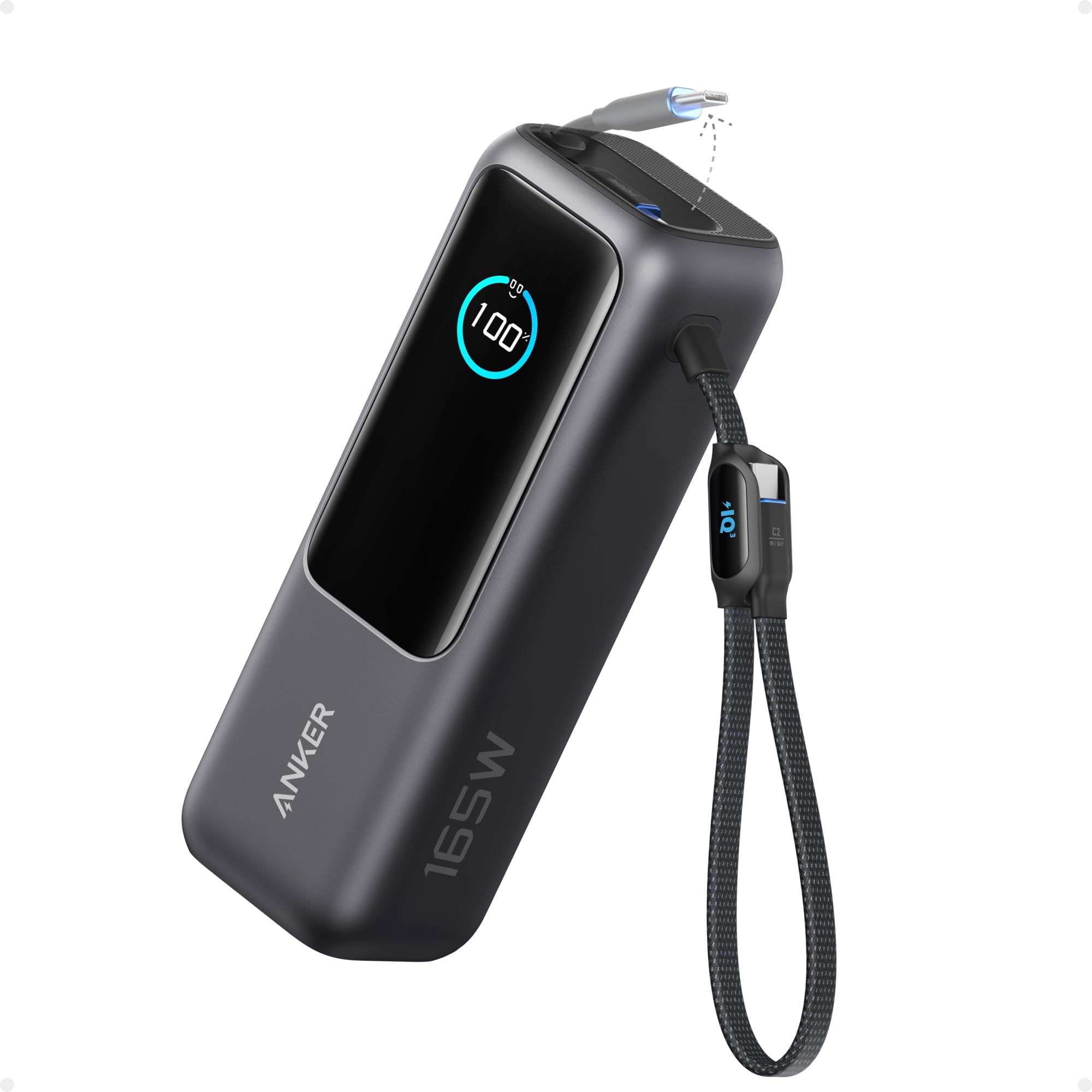
Rating: 4.5 ★ | Price: $$$ | Capacity: 25000mAh | Output: 3x 100W USB-C | Weight: 595g | Ports & Cables: 3 USB-C, 1 USB-A, 2 built-in cables | Flight Safe: Yes
This power bank delivers full-speed laptop charging from any of its three USB-C ports, and the retractable cables keep your workspace tidy. At 595g and with a 25,000mAh capacity, it’s built for car camping and remote work sessions rather than trail use. Some units may develop issues after months of regular use, so a flexible return policy is sensible.
Pros
- Charges laptops at full speed with 100W USB-C output
- Premium build quality with thoughtfully integrated cables
Cons
- At 595g, this is a burden for any hike or long carry
- Reliability can vary between units; some may stop charging after months
This power bank is the right call for digital nomads who need laptop-level power from a car or campsite — just not for carrying on foot.
Best for Ultra-Light Hikers
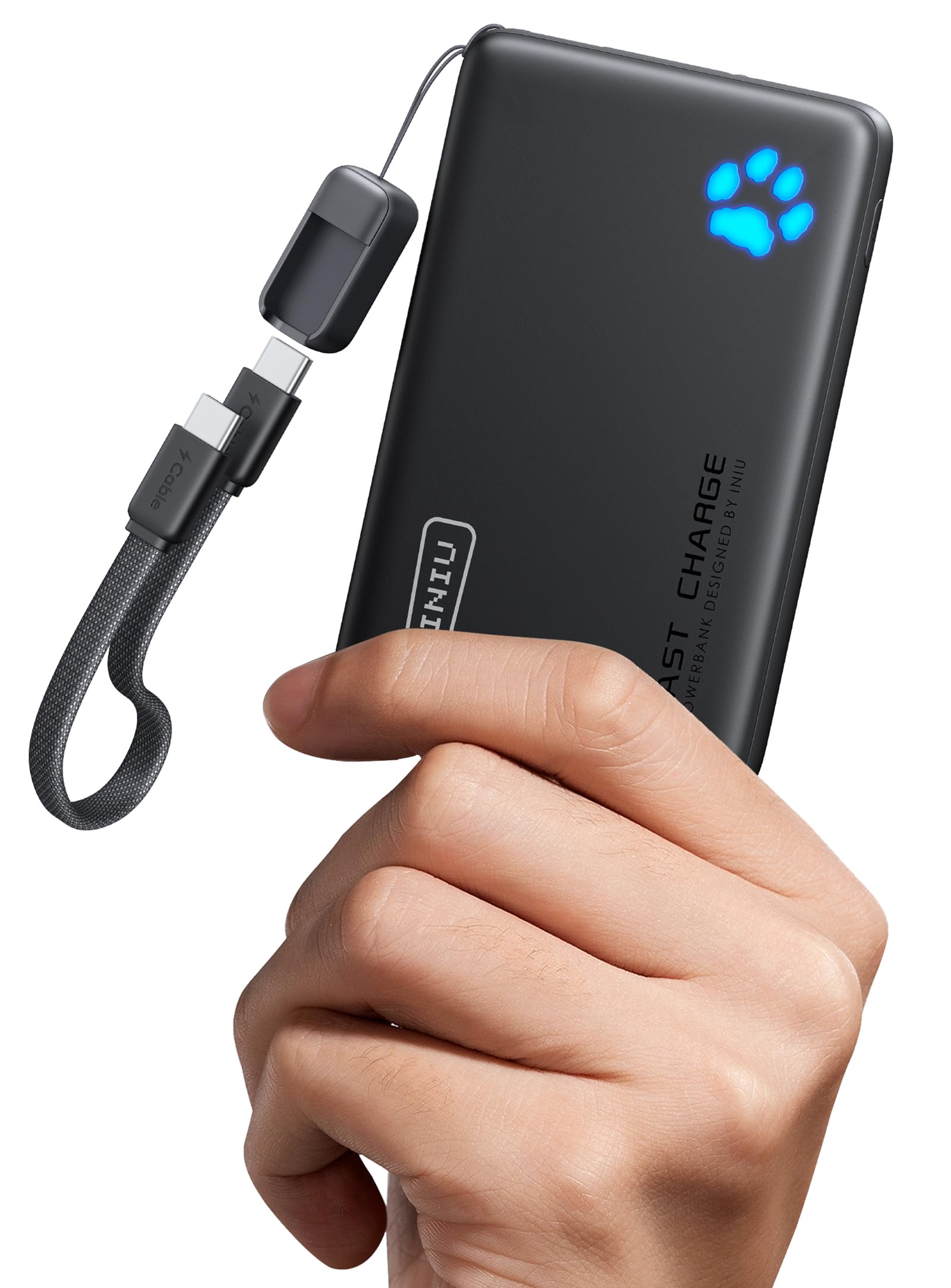
INIU 45W 10000mAh
Rating: 4.5 ★ | Price: $ | Capacity: 10000mAh | Output: 45W | Weight: 182g | Ports & Cables: 2 USB-C, 1 USB-A, detachable | Flight Safe: Yes
At 182g, the INIU 45W 10000mAh is unusually light for a 10,000mAh power bank with 45W output. That matters if you are trying to keep a hiking pack, sling bag, or travel pouch lean while still getting meaningfully faster charging than basic 15W banks.
The 10,000mAh capacity is the practical sweet spot for smartphone-heavy days: enough backup power for commuting, travel delays, day hikes, and emergency top-ups without moving into bulky high-capacity territory. The flight-safe format also makes it easier to treat as an everyday carry item rather than a trip-specific brick.
The port layout is more useful than its size suggests, with two USB-C ports and one USB-A port. The detachable cable adds convenience without locking you into a permanently attached lead, which is helpful if you replace cables, switch phones, or prefer packing a shorter cord.
Charging speed is the main reason to choose this over a basic budget bank. The 45W ceiling gives phones and some tablets room to charge quickly, though actual speed still depends on the device, cable, and charging standard. It is not the right tool if your priority is powering laptops for remote work.
This fits buyers who want a compact, cost-effective power bank for smartphones, tablets, earbuds, and other small USB devices, especially for hiking or travel where weight matters. A quality-control variance has been noted: in some cases, the battery may lose its ability to hold charge after months, so the best fit is someone who values the size-speed-price balance and can buy through a seller with a reasonable return process.
Pros
- Easy to carry in a pocket, sling, or hiking hip belt
- Fast enough for phones and some tablets without a bulky body
- Premium-feeling build with a clean, travel-friendly layout
- Three ports give you more flexibility than single-output pocket banks
- Detachable cable keeps packing tidy while remaining replaceable
Cons
- Laptop charging is outside its comfort zone despite the 45W rating
- Battery capacity retention can vary between units after months of use
For buyers searching for a high-quality power bank mainly for phones and tablets, this is the most convincing lightweight budget option here. It makes the strongest case when portability and fast wired charging matter more than laptop-grade capacity.
Best for Tech Professionals
Anker Prime 26K

Rating: 4.7 ★ | Price: $$$$ | Capacity: 26250mAh | Output: 300W total | Weight: 600g | Ports & Cables: 2 USB-C, 1 USB-A | Flight Safe: Yes
The Anker Prime 26K is built around laptop-grade charging rather than pocket backup power: 300W total output, two USB-C ports capable of 140W each, one USB-A port, and 26,250mAh capacity. That makes it a strong fit for buyers who need one battery for phones, tablets, cameras, drones, and laptops away from an outlet. The smart display and app control also make it easier to see charging status instead of guessing from basic LED dots. It sits lower here because its 600g weight and premium pricing make it overbuilt for typical hiking or casual phone charging, and some reliability flags have been noted around port behavior or unit consistency.
Pros
- Runs demanding laptop and multi-device charging setups from one battery.
- Smart display gives detailed charging and battery status at a glance.
- Fast dual-input recharging reduces downtime between off-grid work sessions.
Cons
- At 600g, pack weight becomes noticeable for minimalist hiking setups.
- Premium pricing makes less sense if you mainly charge phones and tablets.
- Port errors or unit consistency issues may occur in some cases.
Choose the Anker Prime 26K if you need serious USB-C wattage for laptops and creator gear off grid. For basic phone backup, a lighter lower-cost bank is the smarter fit.
How to Choose
Don’t let large mAh numbers fool you – for hiking, weight and charging speed matter more than raw capacity.
Battery Capacity (mAh)
A 10,000mAh bank adds about 180-240g and can fully charge a modern smartphone 1.5-2 times. A 20,000mAh bank doubles that weight to 330-400g. For a weekend hike, 10,000mAh is usually sufficient – enough to top off a phone and a headlamp.
Higher capacity banks (50,000mAh) push well past 500g and often require overnight charging. They also exceed the 100Wh airline limit (27,000mAh at 3.7V), which grounds them for air travel.
Output Wattage
Output wattage determines how fast your devices charge. A 15W bank takes about 2 hours to fully charge an iPhone 15 Pro. A 30W bank cuts that to under an hour, and 45W can charge some ultrabooks in parallel.
The catch: faster charging generates more heat, which can reduce battery lifespan. For hiking, 20-30W is the sweet spot – fast enough for quick trail stops without overheating the power bank itself.
Weight and Dimensions
Every gram matters on the trail. A 182g bank slips into a hip belt pocket; a 600g bank is a brick in your pack. The difference between a 10,000mAh and 20,000mAh is often 100-150g – enough to decide between a day hike and an overnight trip.
Compactness also affects how it fits: some banks are flat and wide, others tall and narrow. Check dimensions against your pack’s pockets before buying.
Ports and Built-in Cables
Built-in cables save weight and clutter, but they add a failure point – if the cable breaks, the entire bank may become unusable. Detachable cables (like the INIU P41) let you replace just the cord.
Multiple ports are useful for charging a phone and a headlamp simultaneously, but each additional port adds bulk. For solo hikers, 1-2 ports with one built-in cable is enough.
Airline Compliance
Power banks over 100Wh (roughly 27,000mAh) are banned from carry-on luggage. Many 50,000mAh banks exceed this, making them unsuitable for flyers. Always check the label – if it says ‘100Wh’ or less, it’s flight-safe.
Some banks list both mAh and Wh. If you see only mAh, multiply by 3.7V and divide by 1000 to get Wh. Anything over 100Wh must stay on the ground.
FAQ
Why does my portable charger take forever to recharge itself?
Most power banks recharge at a fraction of their output speed. A 10,000mAh bank with 15W input takes 3-4 hours to fill. To speed up self-charging, look for banks that support 30W+ bidirectional USB-C input – they can refill in under 2 hours. Avoid using a low-output wall adapter.
Can I bring a 50,000mAh power bank on a plane?
Generally no. The FAA and IATA limit power banks to 100Wh (roughly 27,000mAh at 3.7V). A 50,000mAh bank is about 185Wh, well over the limit. It will be confiscated at security. Stick to 20,000mAh or less if you fly.
How many times will a 10,000mAh power bank charge my phone while hiking?
Expect 1.5 to 2 full charges for a modern smartphone (e.g., iPhone 15 Pro or Samsung Galaxy S24). Real-world losses from heat and cable resistance reduce the theoretical 2.5 charges. If you need more, step up to 20,000mAh – but prepare for extra weight.
Is it safe to leave a power bank charging overnight while camping?
Yes, if the bank has overcharge protection (most modern ones do). The risk is not the bank overheating but draining your camp battery or generator. For safety, use a quality wall adapter and keep the bank on a non-flammable surface. If the bank feels hot, unplug it.