This post contains affiliate links. We may earn a small commission when you buy through our links — at no extra cost to you.
Fishing waders are supposed to keep you dry, but a surprising number of highly-rated models let water in after a few trips. Leaks are the most common frustration among anglers, regardless of price point.
The real difference isn’t between cheap and expensive — it’s between matching the material to your environment. Neoprene offers insulation and puncture resistance, while breathable nylon keeps you cool on long hikes to a remote stream. Each has a trade-off in comfort versus protection.
Knowing which design quirks to expect — like boots that run small or seams that fail in brush — is the difference between a season of dry wading and a soggy surprise.




Best for All-Around Cold Water
Foxelli 4mm Neoprene Waders
Key Features
- Material: 4mm Neoprene
- Boot Type: Bootfoot
- Insulation: Neoprene (4mm)
- Leak Reports: 16% leak reports
- Price: $$
The Foxelli 4mm neoprene waders deliver consistent warmth in cold water and hold up well season after season. Thick neoprene and reinforced stitching give them a solid feel that competes with waders at twice the cost. The included waterproof phone case and carrying bag add practical value without inflating the price.
In freezing conditions, these waders keep the body dry and comfortable without relying on additional insulation layers. The bootfoot design integrates sturdy boots, though the boots may fit snugly — ordering one size up is a practical adjustment for wearing thick socks. Some users note that occasional leaking can develop after extended use, a possibility that exists across most waders at this price point.
These are best suited for anglers and hunters who spend time in cold water — think duck hunting in winter or fishing rivers in early spring. The neoprene material retains heat but does not breathe, so this is not the right choice for warm-weather wading or long hikes to the water. If you need a wader for hot climates and long walks, a breathable model would be a better fit.
Pros
- Keeps you warm and dry in cold water without added insulation.
- Thick neoprene and well-sealed stitching hold up to regular use.
- Mid-range price with build quality that rivals more expensive options.
Cons
- Boots may fit snugly; selecting a size up is worth considering for comfort with thick socks.
- After extended use, some waders can develop leaks in high-stress areas.
A reliable cold-water wader that balances warmth and construction quality at a fair price — just account for the boot sizing and it will serve well for years of seasonal use.
Best for Occasional Budget Trips
TIDEWE Bootfoot PVC Waders
Key Features
- Material: Nylon/PVC
- Boot Type: Bootfoot
- Leak Reports: 54% leak reports
- Price: $
TIDEWE’s nylon/PVC wader weighs about 35% less than rubber alternatives and folds small enough for a daypack, making it the go-to option for anglers who wade only a few times a season. The bootfoot design removes the need for separate boots, and the adjustable suspenders with quick-release buckles allow a secure fit without much fuss.
Designed for budget-conscious anglers, it works well on gentle streams and ponds where brush and rocks are minimal. However, the material can puncture against sharp debris, and water may seep in after repeated use — this is a warm-weather, light-duty wader only, not suited for cold water or rugged river bottoms.
Pros
- Lightweight PVC wader folds small for easy packing.
- Comfortable for standing and walking in streams during long sessions.
- Exceptional value at a budget-friendly price for occasional use.
Cons
- In rocky or brushy water, the PVC material can tear or puncture.
- Water can seep in after repeated use, making this best for light duty.
A smart pick for the occasional angler who needs a lightweight, affordable wader — skip it if you fish regularly or deal with rough terrain.
Best for Warm Weather Fly Fishing
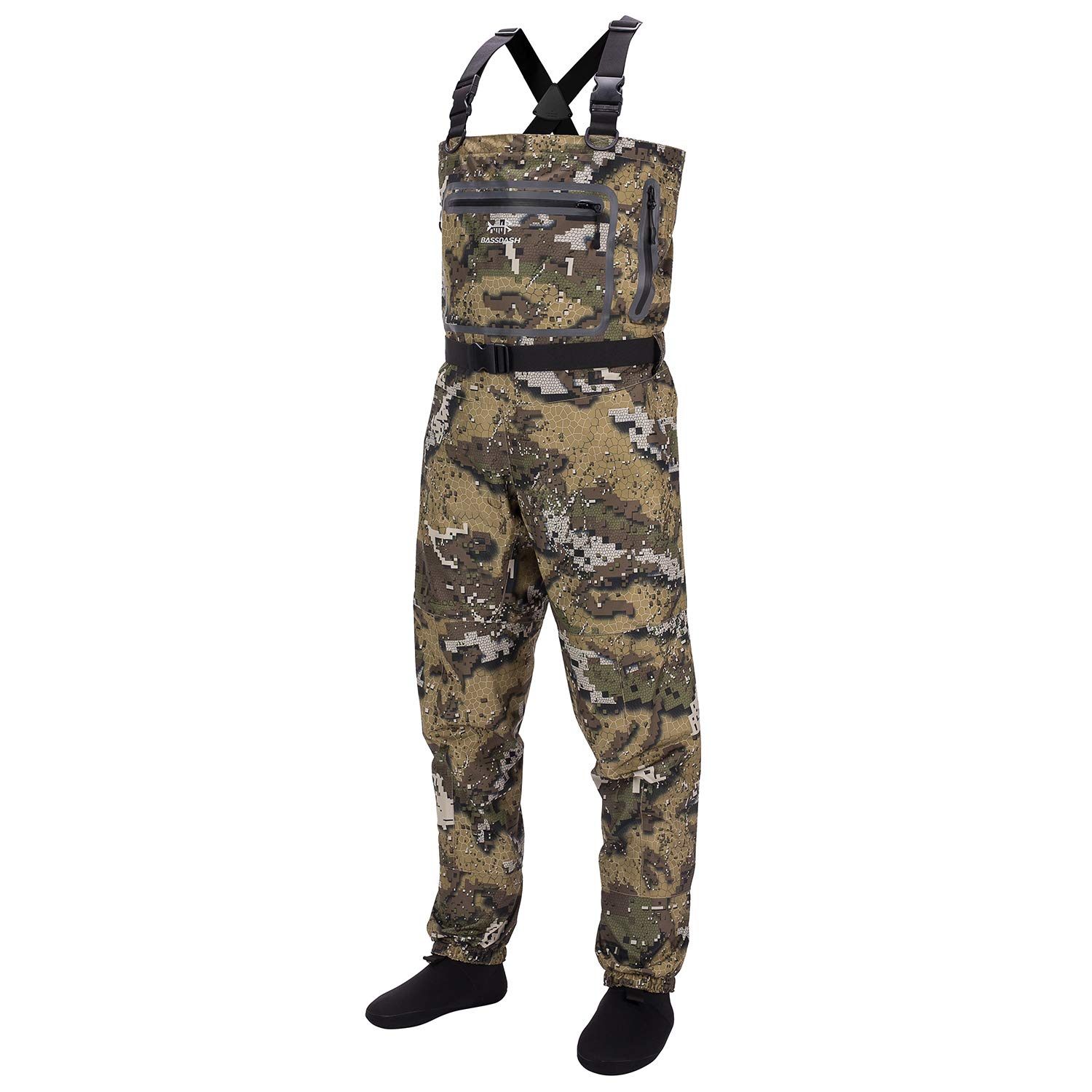
BASSDASH Breathable Waders
Key Features
- Material: 3-layer breathable nylon
- Boot Type: Stockingfoot
- Leak Reports: 43% leak reports
- Price: $$
This stockingfoot wader uses a 3-layer breathable nylon that hits 15,000mm water resistance, enough for sustained wading in moderate conditions. Unlike thicker neoprene options, it folds down small and weighs little, making it the better choice for hiking into backcountry spots. Leaks are possible with any breathable fabric, but this model manages moisture better than most — just note that durability trails neoprene in abrasive environments.
Ideal for fly fishers and warm-weather anglers who cover ground on foot. The breathability prevents overheating on sunny days, but it lacks insulation for cold water — you will need wading pants or layers for early spring. Fit can vary; if you have disproportionately large calves or thighs, try before committing.
The YKK zippers and fleece hand-warmer pocket add convenience — the pocket is useful for phone or leader spools, though it sits low on the chest. A repair kit is included for field patching.
Pros
- Lightweight build reduces fatigue on long hikes to fishing spots.
- YKK zippers and fleece pocket provide durable, accessible storage.
- Competitive price for a breathable wader with this level of waterproofing.
Cons
- For heavier or taller frames, sizing may not accommodate comfortably — check measurements.
- In rocky water, the breathable fabric can develop leaks over time — less durable than neoprene.
A capable breathable wader for warm-weather adventurers who value mobility — just do not expect it to handle heavy abuse or extreme cold.
Best for Extreme Cold Hunting
TIDEWE 800G Insulated Waders
Key Features
- Material: 3.5mm Neoprene
- Boot Type: Bootfoot
- Insulation: 800g Thinsulate
- Leak Reports: 66% leak reports
- Price: $$$
With 800 grams of Thinsulate insulation and a rugged 3.5mm neoprene build, these waders are purpose-built for sub-freezing water and late-season hunts where warmth is the priority. Reinforced knees and a hand-warmer pocket add practicality, while the bootfoot design eliminates the need for separate wading boots. The tradeoff is that a portion of units can develop leaks, making it less suitable for anyone who cannot accept occasional water intrusion.
These waders are best for anglers and hunters who need maximum insulation and are willing to accept the possibility of leakage. Boot sizing can be inconsistent, so trying on with intended socks is wise. At a mid-range price, this is a cost-effective way to get the highest insulation level available in waders.
Pros
- Exceptional warmth keeps you comfortable in sub-freezing water.
- Robust neoprene construction holds up to rugged use.
- Cost-effective compared to other high-insulation waders.
Cons
- Boot sizing may be inconsistent, requiring careful measurement or returns.
- Leaks have been noted in some units, which can be a concern for long days in the water.
For those who need the highest warmth level and can accept the leakage risk, these waders deliver unmatched cold-weather performance per dollar spent.
Best for Shallow Stream Wading
FROGG TOGGS Rana II Hip Waders
Key Features
- Material: PVC
- Boot Type: Bootfoot
- Leak Reports: 54% leak reports
- Price: $
The FROGG TOGGS Rana II Hip Waders are a lightweight PVC option that slip on quickly for shallow water fishing. Unlike bulky chest waders designed for deep wading, these hip waders prioritize portability and ease of entry at a budget-friendly price.
This model suits anglers who need a backup pair or a quick-access solution for wading into streams and ponds where the water stays below the waist. The PVC construction keeps costs down, but the thin material can snag on branches and seams may allow water intrusion over time. These are best considered a low-commitment wader for occasional use rather than a rugged daily driver.
Pros
- Lightweight design makes them easy to carry and put on at the water’s edge.
- Good value for a hip wader, offering functional performance at a low entry price.
Cons
- In brushy terrain or around submerged branches, the thin PVC material may tear during use.
- Seam and boot areas can allow water entry in some cases, worth checking before longer wading sessions.
A functional hip wader for shallow, calm water fishing where lightweight and low cost matter more than long-term durability.
Best for Fly Fishing, Hiking
Paramount Deep Eddy Waders
The Paramount Deep Eddy offers a well-constructed, breathable stockingfoot wader at a mid-range price. The 4-ply nylon fabric feels lightweight and durable, and the ergonomic neoprene booties help reduce fatigue during long days on the water. However, sizing can be inconsistent—some anglers may need to exchange for a different size to get a proper seal around the booties. Leakage has also been noted in a minority of units, so a thorough pre-use check is advisable. For those who get a good fit, this wader delivers strong value without the premium price tag of established brands.
Pros
- Lightweight and durable 4-ply nylon fabric for all-day comfort.
- Strong value for a breathable stockingfoot wader at a mid-range price.
Cons
- Sizing can be inconsistent, requiring exchanges for some buyers.
- Some units may develop leaks over time; pre-use inspection is recommended.
Worth a look for anglers who value build quality and comfort and can handle a possible sizing adjustment.
Best for Cold-Weather Hunting
HISEA 600G Insulated Waders
The HISEA 600G delivers solid warmth for cold-weather fishing thanks to 4.5mm neoprene and Thinsulate insulation, and the neoprene feels well-constructed. However, seam and boot integrity can allow water entry, and boot sizing varies between units, which limits its dependability for regular outings. Compared to the 800G Thinsulate option, this model is better suited for occasional use where budget is the main concern.
Pros
- Provides reliable warmth in cold conditions
- Neoprene construction feels well-made
Cons
- Boot seams may allow water entry in some cases
- Sizing of boots can be inconsistent
A warm choice for budget-minded cold-weather anglers who can tolerate occasional water entry and verify boot fit before heading out.
Best for Budget Camo Use
Foxelli PVC Camo Waders

Key Features
- Material: 2-Ply Nylon/PVC
- Boot Type: Bootfoot
- Leak Reports: 61% leak reports
- Price: $
This Foxelli wader delivers an attractive camo pattern and lightweight comfort at a budget price, ideal for hunters who value appearance. However, water can enter through seams in wet conditions, and boot sizing may not match foot size consistently. Only choose this camo wader if the pattern is essential – otherwise, a neoprene alternative offers better water protection.
Pros
- Distinctive camouflage pattern at a budget price.
- Lightweight and comfortable for all-day wear.
Cons
- Material can tear when snagged on brush or rough terrain.
Best for occasional pond or stream fishing where camo appearance matters and the terrain is free of snags.
Best for Extreme Budget Occasional
OXYVAN PVC Waders

Key Features
- Material: 70D Nylon/PVC
- Boot Type: Bootfoot
- Leak Reports: 57% leak reports
- Price: $
The OXYVAN wader offers an ultra-lightweight 70D nylon/PVC build at a budget-friendly price, making it easy to pack for spontaneous trips. However, the same material tradeoffs seen in other low-cost PVC waders apply: seams can let in water and the thin fabric may tear on snags or rough terrain. This is a wader for calm ponds or light stream use where a dry suit is more of a preference than a necessity — not for rocky rivers or frequent outings where reliable waterproofing matters.
Pros
- Exceptionally affordable and light to carry or stow away.
- Decent fit range for both men and women across typical body types.
Cons
- Seams and fabric may tear under moderate use, especially around brush or sharp objects.
- In deeper water or when kneeling, water entry can occur through the boot or seams.
Best reserved for occasional pond fishing or bank wading where getting wet is a minor inconvenience rather than a dealbreaker.
How to Choose
No wader is guaranteed leak-proof, but choosing the right material and boot type for your primary use dramatically increases your odds of staying dry.
Material: PVC vs Neoprene vs Breathable
PVC waders are the cheapest and lightest, but they are also the most prone to punctures and seam leaks. The thin material works for smooth-bottomed ponds but fails quickly in rocky streams or brush.
Neoprene waders are thicker and more forgiving of abrasion, providing insulation even without added Thinsulate. They are heavier and trap heat, making them a poor choice for summer hiking.
Breathable nylon waders are ideal for warm-weather fly fishermen who walk miles to a spot. They weigh less and vent moisture, but the fabric is easier to tear on snags and requires careful patching.
Boot Type: Bootfoot vs Stockingfoot
Bootfoot waders have boots permanently attached. They are convenient and often cheaper, but the boot sizing is fixed and often runs small. If the boot doesn’t fit, the whole wader is unusable.
Stockingfoot waders have neoprene socks that go inside separate wading boots. This gives you control over fit and allows you to upgrade boots independently. The trade-off is added cost and the hassle of lacing boots.
Insulation: How Much Warmth Do You Need?
Insulation is measured in grams of Thinsulate per boot. 200g works for moderate spring/fall water, 600g for cold winter wading, and 800g for sub-freezing ice fishing. Going higher adds bulk and cost.
Uninsulated neoprene (3.5–4mm) provides enough warmth for cool water without the extra weight, but it won’t keep you dry in prolonged ice conditions. Match insulation to the coldest water you’ll wade.
Weight: Portability for Hiking
A pair of lightweight PVC waders can weigh under 3 pounds, easy to strap to a pack. Neoprene waders are 5–7 pounds, noticeable on a long hike. Breathable stockingfoot waders are the lightest option for backcountry access.
If you hike more than a mile to fish, weight matters more than insulation. Choose breathable or PVC for mobility and accept the trade-off in puncture resistance.
Leakproof Expectations
Leaks are the most common complaint across all materials and price points. Even mid-range models with thousands of positive reviews have a meaningful percentage of users reporting water intrusion within the first few uses.
The material itself isn’t always the culprit — seam failure, boot attachment separation, and micro-punctures from small gravel are frequent. A repair kit and a brand with a generous warranty are as important as the waders themselves.
FAQ
Do cheap fishing waders leak?
Yes, cheap PVC waders under $50 have a high probability of leaking within a few uses. Seam failure and boot separation are common. If you fish more than a few times a year, consider spending $60–$100 for a neoprene or breathable pair that typically fares better.
What is the most durable material for fishing waders?
Neoprene is the most puncture- and abrasion-resistant material available for waders. 4mm or thicker neoprene handles rocky riverbeds and brush far better than PVC or thin breathable nylon. The trade-off is weight and heat retention, making it best for cold water.
How long should a pair of fishing waders last?
With light use on smooth bottoms, budget PVC waders may last one season. Neoprene waders from mid-range brands often last 2–3 seasons before leakage sets in. Breathable waders vary widely; many fail within 6 months. A repair kit and careful inspection after each trip extend life.
Should I buy neoprene or breathable waders for hiking to fishing spots?
If you hike more than 20 minutes to your fishing spot, choose breathable waders. They weigh half as much as neoprene and prevent overheating. For short walks or cold-weather wading, neoprene’s durability and warmth are superior.