This post contains affiliate links. We may earn a small commission when you buy through our links — at no extra cost to you.
A fishing reel’s spec sheet can promise 40 pounds of drag, but without a solid frame to handle it, that number means little. Many anglers discover after a trip that their budget reel’s handle snaps or the bail fails under a modest fight — a frustration that turns a good day on the water into a gear repair session.
The real challenge is finding a reel that matches both the fish you chase and the way you get there. A heavy surf reel that excels at the pier becomes dead weight on a hike-in trout stream. This guide cuts through the marketing numbers to highlight reels that actually deliver smooth drag, reliable construction, and a weight that won’t slow you down.
Whether you’re casting into salt spray or wading a mountain creek, the right reel balances power, durability, and portability. We’ve prioritized reels that hold up to regular use without demanding constant maintenance, so you can focus on the catch.



Best for Saltwater All-Rounder
Penn Battle IV Spinning
Key Features
- Max Drag: 15 lbs
- Bearings: 5+1 stainless
- Frame Material: Aluminum
- Weight: 11.6 oz
- Gear Ratio: 6.2:1
- Price: Mid-Range
The Battle IV’s drag system engages smoothly from the first run, and the aluminum frame keeps the reel tracking straight under load. With a 6.2:1 gear ratio, it picks up line quickly enough for surf fishing without sacrificing torque for heavier fish.
Weighing 11.6 ounces in the 3000 size, the reel is heavier than many competitors. That heft contributes to a solid feel when fighting fish, but it becomes noticeable during long hikes to remote spots. The handle can loosen after repeated use, and the drag may stiffen after saltwater exposure if the reel isn’t rinsed — a routine maintenance step that any saltwater angler should expect.
This reel suits anglers who fish inshore saltwater bays and surf regularly, as well as those who want one reel for freshwater lakes and coastal trips. It’s not a fit for ultralight backpacking or trips where every ounce matters. The tradeoff is a reel that delivers consistent performance season after season without the durability gamble found in many budget reels.
Compared to lighter reels like the Daiwa Regal LT, the Battle IV feels heavier on the rod but offers more real-world validation in saltwater. Its aluminum frame and sealed drag give it an edge over budget models that advertise high drag numbers but use flexible frames that can flex under load.
Pros
- Solid all-around reel for freshwater and saltwater.
- Smooth retrieve with a drag system that holds up under pressure.
- Cost-effective choice for a long-term reel.
- Corrosion-resistant aluminum frame extends lifespan in saltwater.
Cons
- Handle can loosen over time; drag may stiffen after saltwater use if not rinsed.
- Heavier than comparable reels at 11.6 oz – noticeable during long walk-in sessions.
For inshore and surf anglers who prioritize consistent performance over lightweight portability, the Battle IV is a straightforward choice that won’t need replacing next season.
Best for Freshwater Finesse
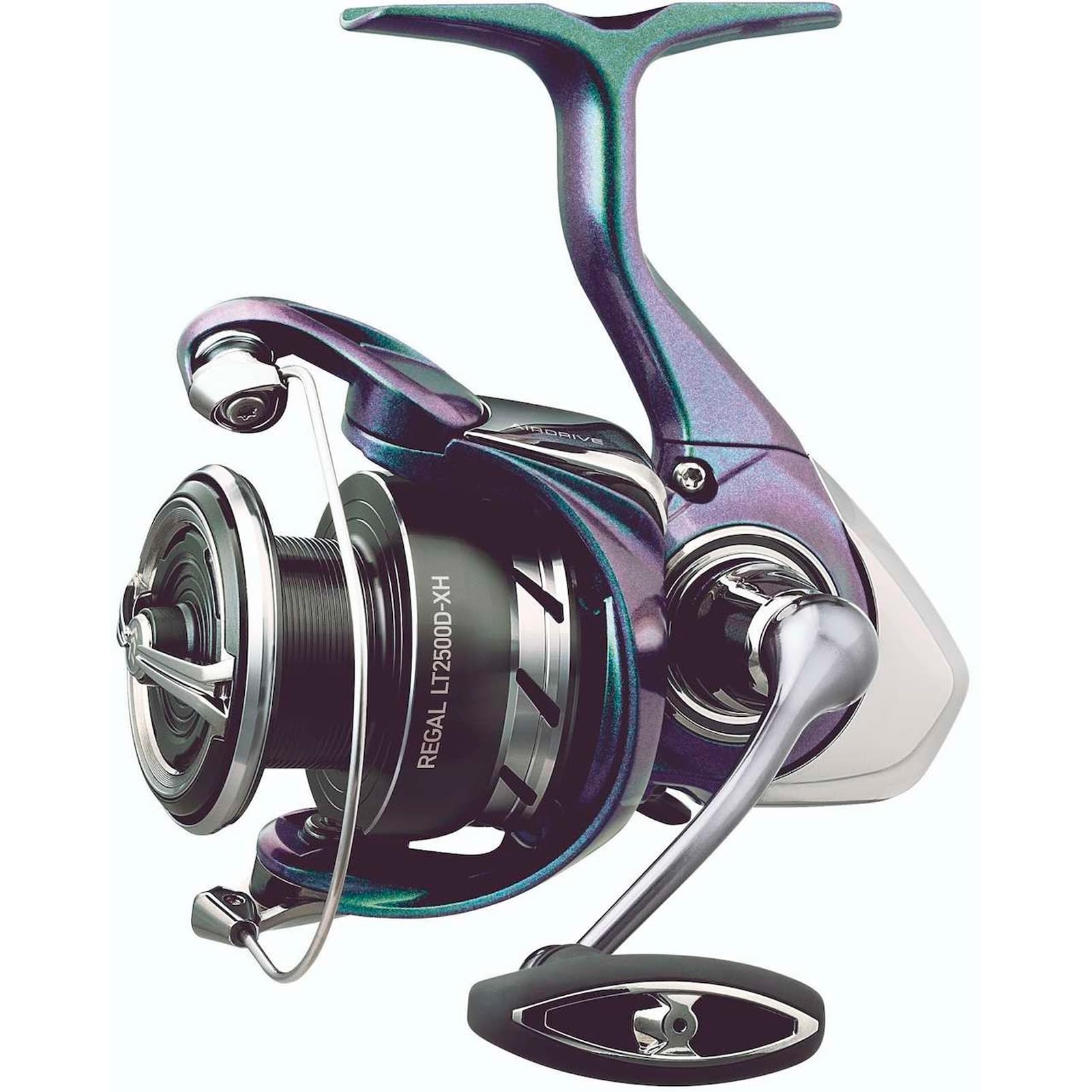
Daiwa Regal LT Spin
Key Features
- Bearings: 10
- Frame Material: Carbon resin
- Weight: 11.2 oz
- Gear Ratio: 6.2:1
- Price: Mid-Range
The Daiwa Regal LT delivers a smoothness that feels more premium than its mid-range price suggests. Its lightweight 11.2-ounce frame reduces casting fatigue on long days, and the 10-bearing system stays silky even after multiple seasons — a clear advantage over heavier competitors like the Penn Battle IV when finesse fishing is the goal.
This reel suits anglers focused on feel and brand heritage — bass, trout, panfish, and light inshore species like speckled trout or flounder. The drag handles typical runs without hesitation, but it’s not fully sealed against saltwater intrusion, so a freshwater rinse after salt exposure is necessary. Some units have shown spool alignment inconsistencies worth checking on arrival.
The ATD drag provides smooth, consistent tension for fish up to medium size, and the high-speed 6.2:1 gear ratio speeds up line pick-up on slack-line presentations. Push it into heavy surf or big game, though, and the lack of a published drag rating becomes a practical boundary — this reel is optimized for finesse, not brute force.
Pros
- Smoothness rivals reels at double the price — ideal for finesse techniques requiring light touch.
- Lightweight and well-balanced for its size, reducing fatigue during all-day fishing trips.
- Strong value from a major brand, delivering premium feel without premium cost.
Cons
- Spool alignment can vary between units; a quick visual check upon receipt is advisable.
- Not sealed against saltwater; requires rinsing after salt exposure to prevent corrosion.
If smoothness and lightness matter more than heavy-duty sealing, the Regal LT is a joy to fish with for finesse applications.
Best for Saltwater Budget
KastKing Sharky III Spin
Key Features
- Max Drag: 39.5 lbs
- Bearings: 10+1 stainless
- Frame Material: Graphite with sealing
- Weight: 15 oz
- Gear Ratio: 5.2:1 / 6.2:1
- Price: Budget
The Sharky III’s 39.5lb drag and 10+1 stainless steel bearings produce a retrieve that rivals reels costing twice as much. Its graphite frame keeps weight low (15 oz in the 3000 size), making it comfortable for long days on the water. This is the reel to reach for when you need high stopping power without emptying your wallet.
Where it falls short of the top pick (the Penn Battle IV) is in long-term heavy-use durability. Some units experience bail assembly or handle failure when pushed hard on big fish or in frequent saltwater sessions. That tradeoff is manageable for anglers who fish inshore or light surf a few times a month and are comfortable with occasional maintenance.
Pros
- Smooth retrieve with powerful drag that handles 30lb+ fish without stuttering
- Lightweight for its size, reduces fatigue during all-day fishing trips
- Costs less than half of comparable saltwater reels with similar specs
Cons
- Bail assembly and handle can loosen or fail under sustained heavy loads
A high-value inshore reel that trades a bit of long-term durability for a dramatic price advantage — best for budget-minded saltwater anglers who don’t fish every weekend.
Best for Hiking Ultralight
Piscifun Carbon X II
Key Features
- Max Drag: 22 lbs
- Bearings: 10+1 stainless
- Frame Material: Carbon fiber
- Weight: 5.5 oz
- Gear Ratio: 6.2:1 / 5.2:1
- Price: Mid-Range
The Piscifun Carbon X II delivers a spinning reel that weighs just 5.5 oz in size 1000, yet boasts a 22 lb drag – a combination that makes it one of the lightest reels capable of handling moderate freshwater fish. Compared to dedicated ultralight reels that max out around 10 lb drag, this reel gives backpacking anglers the option to target larger species without adding weight.
This reel suits anglers who prioritize portability for hike-in fishing or long treks, where every ounce matters. The carbon frame keeps weight down while providing enough rigidity for finesse techniques like drop-shotting or Ned rigs. It is not intended for heavy saltwater or fish over 15 lbs. Additionally, some units have exhibited inconsistent bail closure – a quality-control variance worth checking before each trip.
The 22 lb drag is remarkably smooth for a reel at this price, with a consistent feel from light to heavy pressure. The 10+1 stainless steel bearings contribute to a refined retrieve, making the Carbon X II a genuine weight advantage without sacrificing drag performance.
Pros
- Extremely lightweight at 5.5 oz, reducing fatigue on long hikes.
- Smooth 22 lb drag system provides control for finesse presentations.
- Carbon fiber frame offers good value for the weight savings.
Cons
- Some units may experience handle loosening over extended use.
- Reverse lock mechanism can fail in certain cases, affecting one-handed operation.
The Piscifun Carbon X II earns its place among ultralight specialists – it delivers true 22 lb drag at a sub-6 oz weight, but the bail mechanism and other small QC points mean a quick inspection is prudent before relying on it for a backcountry trip.
Best for Budget Baitcaster
KastKing Royale Legend II
Key Features
- Max Drag: 17.6 lbs
- Bearings: 6 (5+1)
- Frame Material: Aluminum alloy
- Weight: 7.2 oz
- Gear Ratio: 7.2:1
- Price: Budget
The KastKing Royale Legend II sets itself apart from other budget baitcasters with a smooth, fast retrieve that feels more refined than its price suggests. Its 7.2:1 gear ratio and aluminum alloy frame give it a solid, responsive feel that encourages confident casting.
The magnetic braking system is easy to dial in, reducing backlashes for someone learning to pitch and flip. The retrieve remains consistent across multiple outings, though the internal gears and thumb bar can show occasional wear under sustained heavy pressure – a reminder that this is built for moderate use rather than constant hard pulling.
This baitcaster is a good match for anglers focusing on freshwater bass, panfish, and similar species under 10 pounds. It is not designed for heavy saltwater or years of daily abuse; those who push it hard against large fish may encounter durability limits over time.
Considering the cost, the KastKing Royale Legend II delivers a level of smoothness and speed that typically requires spending two to three times as much. At 7.2 ounces, it won’t cause fatigue during a full day on the water, making it a budget-friendly option that performs well within its intended range.
Pros
- Smooth retrieve and casting that rivals reels costing three times as much
- Easy-to-adjust braking system helps beginners avoid backlashes
- Fast 7.2:1 gear ratio speeds up lure recovery
- Lightweight aluminum frame reduces arm fatigue on long trips
Cons
- Gears can strip under sustained heavy load
- Thumb bar may break during use
The KastKing Royale Legend II offers impressive smoothness and speed for the price, but its durability ceiling makes it a seasonal freshwater reel rather than a long-term workhorse.
Best for Freshwater Light
Shimano 23 Sedona Spin

Key Features
- Max Drag: 24.3 lbs
- Bearings: 3+1
- Frame Material: Blend (graphite/metal)
- Weight: 11.2 oz
- Gear Ratio: 6.2:1
- Price: Mid-Range
The Shimano Sedona delivers a smooth retrieve and durable construction from a brand respected in freshwater and light saltwater circles. However, the 3+1 bearing setup means it won’t feel as smooth under heavy load as the Daiwa Regal LT, and occasional QC issues with drag or bail assembly can appear. This makes it a safe choice for anglers who prioritize brand consistency over maximum specs, but it’s outclassed on paper by similarly priced reels.
Pros
- Smooth retrieve from a well-known brand
- Durable construction for the price
- Good value for a name-brand reel
Cons
- Under heavy load, the 3+1 bearing setup can feel less smooth than reels with more bearings
- Some units may experience drag or bail assembly issues
Best for anglers who value brand familiarity and fish freshwater or light saltwater, where the smoothness tradeoff under heavy load is less noticeable.
Best for Occasional Freshwater
Piscifun Flame Spinning

Key Features
- Max Drag: 19.8 lbs
- Bearings: 9+1 stainless
- Frame Material: Graphite
- Weight: 6.1 oz
- Gear Ratio: 5.2:1
- Price: Budget
The Piscifun Flame Spinning Reel delivers a noticeably smooth retrieve and lightweight feel for under $25, making it a good match for panfish or trout from the bank. Its 6.1-ounce body pairs well with ultralight rods for backpacking or as a spare. However, the graphite frame and internal components show limits under frequent use — the handle and bearings may wear after several months of regular fishing. This places the Flame as a sensible choice for casual outings but not a substitute for more durable options in the same price bracket.
Pros
- Smooth, fluid retrieve for a reel at this price
- Lightweight at 6.1 oz, good for ultralight rods and hiking
- Cost-effective entry point for new anglers or as a backup reel
Cons
- Handle and bearings may wear after months of regular use, limiting long-term durability
Best reserved as a budget backup reel or for light, infrequent fishing trips where the low initial cost outweighs long-term durability.
How to Choose
The most important decision is matching the reel’s construction and drag to the fish you target and the environment you fish in.
Maximum Drag
Drag rating tells you the maximum resistance the reel can apply before slipping, but a high number on paper means little if the reel’s frame flexes under load. A graphite frame on a budget reel may struggle to hold a heavy drag setting without warping, causing inconsistent performance. For inshore saltwater fishing, 15-20 lbs of drag from a metal or carbon frame is more reliable than 30+ lbs from a flexing plastic body.
Bearings
More bearings don’t always mean smoother operation if they aren’t shielded from dirt and water. Stainless steel double-shielded bearings resist corrosion and maintain smoothness longer in saltwater. A reel with 5+1 bearings made of stainless steel often outlasts a 10+1 model with unprotected bearings.
Frame Material
Aluminum and carbon frames offer rigidity without excess weight, critical for preventing flex under heavy loads. Graphite is lighter and cheaper but can bend or crack over time, especially in larger sizes. For hike-in trips where every ounce counts, a carbon fiber frame balances weight and strength better than pure aluminum.
Weight
A reel’s weight directly impacts fatigue on long hikes and all-day casting sessions. Under 10 oz is ideal for backpacking; over 15 oz suits pier or boat fishing where portability isn’t a concern. Many anglers underestimate how much a heavy reel on a light rod affects balance — a 12 oz reel can make a 3 oz rod feel tip-heavy.
Gear Ratio
Gear ratio determines how fast you retrieve line per crank. High ratios (7:1+) let you reel in quickly for lures that need speed, but sacrifice torque for pulling big fish. Low ratios (5:1) provide more cranking power, ideal for deep cranking or fighting large fish. For all-around use, a 6.2:1 ratio is a versatile middle ground.
FAQ
Why do cheap fishing reels break so easily after a few trips?
Cheap reels often use plastic internal gears and low-quality bearings that wear quickly under stress. The frame may flex under moderate drag, causing parts to strip. Spending $50-80 on a reel with a metal or carbon frame and sealed stainless bearings dramatically increases lifespan.
What is the best fishing reel for hiking and backpacking?
For hiking and backpacking, look for a spinning reel under 10 oz with a carbon or aluminum frame and smooth drag around 10-22 lbs. The Piscifun Carbon X II at 5.5 oz and the KastKing Zephyr at 5.3 oz are excellent lightweight options that don’t sacrifice performance.
Is a baitcasting reel better than a spinning reel for beginners?
Spinning reels are generally easier to learn with because they have fewer controls and are less prone to backlashes. Baitcasters offer greater accuracy and control once mastered, but require practice. Beginners should start with a spinning reel unless they plan to focus on bass fishing techniques.
How much drag do I really need for inshore saltwater fishing?
For inshore saltwater targeting species like redfish, stripers, or sea trout, 15-20 lbs of drag is sufficient. Higher drag ratings (30+ lbs) are needed for larger fish like tarpon or sharks, but require a reel with a rigid frame to handle the force.