This post contains affiliate links. We may earn a small commission when you buy through our links — at no extra cost to you.
Winter jackets often force a choice between packable warmth and reliable build quality. Many affordable puffers deliver on weight but fail on zippers after a few trips; rugged canvas jackets last for years but weigh you down on the trail.
The best winter jacket for most hikers and commuters is a lightweight synthetic puffer with proven hardware. This guide focuses on models that balance warmth, packability, and fit — so you can stay warm without worrying about a broken zipper half a mile from the car.



Best for Budget Travel Layering
Amazon Essentials Men’s Puffer
Key Features
- Warmth vs Weight: Synthetic puffer, lightweight
- Water Resistance: Water-resistant
- Fit Consistency: Inconsistent, size up
- Packability: Stuffs into pouch
- Price: $
The Amazon Essentials Men’s Puffer delivers genuine warmth without the bulk, using synthetic fill that keeps you comfortable in cold weather down to around 15°F with proper layering. The outer shell offers water resistance for light rain or snow. Its packable design stuffs into its own pouch, making it a practical choice for travel or stashing under a shell. The price undercuts comparably warm jackets by a wide margin, offering a warmth-to-cost ratio that’s hard to beat.
This jacket is best suited for men who need an affordable, lightweight winter layer for everyday commutes, outdoor activities, or occasional cold-weather trips. Big & Tall sizing expands the fit range, but the sizing itself is inconsistent – sleeve length can be short for longer arms, and some find the body runs large while others small. Check recent reviews for your specific size and consider ordering accordingly. For extreme cold below 15°F, add a mid-layer or look at heavier options. It’s a straightforward pick for budget-conscious shoppers who value packable warmth.
Pros
- Warm for its weight – comfortable in cold weather without being bulky
- Great value – comparable warmth to jackets costing 3x more
- Lightweight and packable for easy travel or layering
Cons
- Sizing can be inconsistent – sleeve length may be short for longer arms, and the body fit varies
A budget-friendly puffer that nails the basics – warmth, packability, and value – provided you check sizing carefully.
Best for Extreme Cold Work
Carhartt Bartlett Jacket
Key Features
- Warmth vs Weight: Fleece-lined, heavy
- Fit Consistency: Runs large, size down
- Packability: Not packable
- Price: $$$
Carhartt’s duck canvas construction and fleece lining deliver exceptional warmth and durability for harsh winter conditions. This jacket is heavy (4.6 lbs) and stiff when new, requiring a break-in period. It suits outdoor workers and anyone in very cold climates who prioritizes long-term toughness over mobility.
Pros
- Durable duck canvas shell stands up to years of heavy use and abrasion.
- Warm fleece lining provides reliable insulation well below freezing.
- Classic workwear style with functional pockets that looks good off the job.
Cons
- Stiff material when new requires several wears and washes to soften.
- Heavy 4.6-pound weight limits portability and makes it unsuitable for active use.
For those who need a jacket that can handle daily abuse and extreme cold over years, the Bartlett delivers – just don’t expect to pack it in a backpack.
Best for Urban Commuting Style
Columbia Heavenly Jacket
Key Features
- Warmth vs Weight: Down alternative, lightweight
- Water Resistance: Omni-Tech
- Fit Consistency: True to size
- Price: $$
The Columbia Heavenly Long Hooded Jacket offers Omni-Tech water resistance and a seat-covering cut that keeps you dry and warm during urban commutes. Its synthetic insulation provides warmth without the bulk of a traditional puffer, making it comfortable for moderate cold days. The long silhouette flatters while covering the hips and seat – a detail rare in mid-range women’s jackets. This jacket suits women who want a stylish, functional winter coat for daily errands and commuting, not for hiking or extreme cold.
Pros
- Warm without the bulk of traditional puffers – comfortable for cold commutes.
- Flattering long cut covers the seat, a rare feature in this price range.
Cons
- Zipper may stick or require careful alignment when zipping – most noticeable when rushing.
A long, water-resistant winter coat with a flattering fit for urban women – the zipper is a manageable quirk at this price.
Best for Budget Skiing Snowboarding
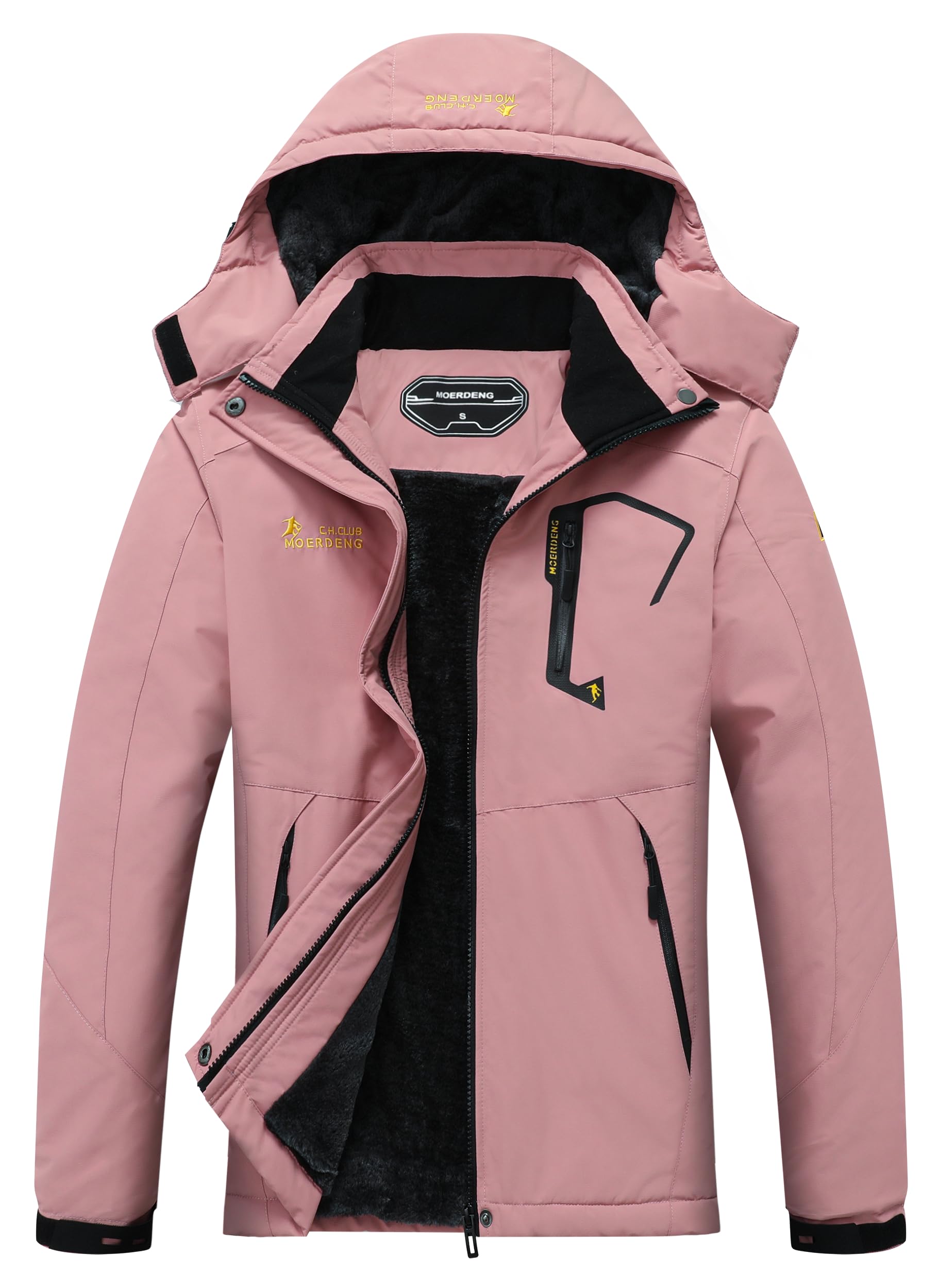
MOERDENG Ski Jacket
Key Features
- Warmth vs Weight: Synthetic fill, insulated
- Water Resistance: Waterproof
- Fit Consistency: Inconsistent, size up
- Packability: Not packable
- Price: $
This jacket delivers waterproof warmth at a price that undercuts most ski-specific options. The synthetic insulation keeps you comfortable in cold weather, and the multiple zippered pockets add convenience on the slopes or around town. However, the fit is inconsistent — some buyers find it runs large, others small — so check recent reviews before ordering. It is best suited for casual winter use and occasional skiing rather than daily commuting or extreme cold.
Pros
- Keeps you warm in cold weather with synthetic insulation
- Affordable price for the features offered
- Multiple zippered pockets for secure storage
Cons
- Sizing can be unpredictable; some buyers need to size up, others size down
A solid value for occasional winter outings, provided you nail the sizing.
Best for Travel Hiking Women
Outdoor Ventures Puffer
Key Features
- Warmth vs Weight: Synthetic puffer, lightweight
- Water Resistance: Water-resistant
- Fit Consistency: Varies, check reviews
- Packability: Packs into pocket
- Price: $
At under a pound, this jacket compresses into its own pocket, freeing up pack space for other gear. It provides reliable warmth for cool mornings and mild winter days, making it a practical layer for hiking and travel. However, the synthetic insulation isn’t sufficient for single-digit temperatures, and sizing can be inconsistent — some find the fit too snug while others have extra room.
Pros
- Lightweight warmth that packs down to palm size for easy storage.
- Insulation retains heat well for cool weather without adding bulk.
Cons
- Sizing can be inconsistent depending on the batch, requiring careful attention to recent reviews.
A smart choice for hikers and travelers who prioritize packing efficiency over extreme cold protection.
Best for Budget Women Mild
Amazon Essentials Women’s Puffer

Key Features
- Warmth vs Weight: Synthetic puffer, lightweight
- Water Resistance: Water-resistant
- Fit Consistency: Runs small, size up
- Packability: Stuffs into pouch
- Price: $
Amazon Essentials delivers a women-specific puffer with plus sizes and color variety at a budget price — ideal for mild daily wear. The lightweight, packable design suits commuting and travel. However, the fit runs small through the hips, often requiring a size up for layering, which prevents it from matching the top pick’s consistency.
Pros
- Lightweight and warm without bulk
- Strong value for the price
Cons
- Fit runs small in the hips, requiring a size up for layering
A good pick for women who want multiple color and size options and don’t mind adjusting sizing up — best for mild winters with light layering.
Best for Mild Winter Layering
Carhartt Active Jac

Key Features
- Warmth vs Weight: Blanket lined, light
- Fit Consistency: Runs large, size down
- Packability: Not packable
- Price: $$$
The Carhartt Active Jac offers durable washed duck cotton and blanket lining at a lower price than the Bartlett, making it a practical choice for moderate cold when layered over a hoodie. Its loose fit runs large (size down recommended) and it lacks insulation for frigid temperatures — best suited for mild winters or as a work layer.
Pros
- Durable washed duck cotton and blanket lining for long-lasting wear.
- Warm enough for moderate cold with a hoodie underneath.
Cons
- Loose fit can run large; sizing down may be needed for a better fit.
For mild winter climates or as a layering piece under a shell, this Carhartt delivers workwear durability at a lower cost than heavier alternatives.
Best for Men Hiking Daily
Columbia Powder Lite

Key Features
- Warmth vs Weight: Omni-Heat synthetic
- Water Resistance: Omni-Shield
- Fit Consistency: Runs large, size down
- Price: $$
Columbia’s Omni-Heat reflective lining adds warmth without extra weight, making this jacket effective for mild cold days and daily wear. The synthetic down fill and water-resistant shell match many mid-range puffers. However, the jacket runs large, so sizing down is needed for a trim fit. Its mid-range price is higher than the top pick’s budget offering, and the fit quirk places it as a secondary option.
Pros
- Warm and lightweight – stays effective on cold days without bulk.
- Good value for a reputable brand at mid-range pricing.
Cons
- Sizing runs large – buyers may need to size down for a proper fit.
Consider this if you want a lightweight puffer with reflective insulation from a known brand and are willing to size down; the higher price and fit quirks make it a secondary choice for budget-minded shoppers.
Best for Fashion Cold Winters
Orolay Down Jacket

Key Features
- Warmth vs Weight: Thickened duck down
- Fit Consistency: Runs small, size up
- Packability: Not packable
- Price: $$
This jacket delivers exceptional warmth and a flattering silhouette with plenty of pockets for cold weather. The thickened duck down handles moderate to cold climates well. However, the fit can be tricky—sleeves run short and the body feels small, often requiring a size up—and the zippers may stick or break. These fit and zipper inconsistencies make it a riskier choice than more predictable options.
Pros
- Thickened down provides outstanding warmth for cold winters.
- Stylish design with multiple pockets for everyday convenience.
Cons
If you can find the right size and don’t mind occasional zipper quirks, this jacket offers trend-setting style and warmth for cold winters.
Best for Cold Climates Women
BINACL Long Parka

Key Features
- Warmth vs Weight: Thickened synthetic
- Fit Consistency: Tight arms, size up
- Packability: Not packable
- Price: $
For women who need a long, warm parka on a budget, this coat delivers effective insulation and a flattering design. However, the fit runs tight in the arms and chest, so sizing up is advised — especially for those with a larger bust. That fit issue keeps it from being a top recommendation for a broader audience.
Pros
- Keeps you warm in freezing temperatures with thickened insulation
- Attractive design and solid materials for the price
Cons
- Fit can be tight in the arms and chest; sizing up recommended
A solid budget option for women who need a long winter parka and are willing to size up for a comfortable fit.
Best for Ultimate Budget Travel
Amazon Essentials Hooded Puffer

Key Features
- Warmth vs Weight: Synthetic puffer, lightweight
- Water Resistance: Water-resistant
- Fit Consistency: Sleeves short, size up
- Packability: Stuffs into sack
- Price: $
This hooded puffer from Amazon Essentials costs less than any comparable jacket and packs into its included stuff sack. The fill keeps you warm in mild to cool conditions without the bulk. But sleeves run short on taller body types, and the cut can bind when reaching overhead. Given intermittent stock, it works best as a spare or travel layer rather than a daily driver.
Pros
- Budget-friendly price for a hooded packable puffer
- Packs into included stuff sack for travel convenience
Cons
- Sleeves may be too short for taller builds, and the cut can feel tight when raising arms
Best suited as a backup or travel jacket for mild climates, not a primary winter coat for cold regions.
How to Choose
Weight and warmth are trade-offs: a lightweight puffer requires layering below 20°F, while a heavy canvas jacket sacrifices mobility.
Warmth vs. Weight
Insulation type determines how warm a jacket is for its weight. Down offers the best warmth-to-weight ratio but loses insulating power when wet. Synthetic fills like PrimaLoft retain heat when damp but are bulkier for the same warmth.
For hiking and travel, a lightweight synthetic puffer (10-20 oz) is ideal for moderate cold with layering. For static use in extreme cold, a heavier fleece-lined canvas jacket (4+ lbs) traps more heat but restricts movement.
Water Resistance
Most winter jackets use a DWR (durable water repellent) coating that sheds light snow and rain. Over time, DWR wears off and must be reactivated with a spray-on treatment. A fully waterproof membrane (like Columbia’s Omni-Tech) adds cost but lasts longer.
If you expect wet snow or rain, prioritize a jacket with a sealed membrane rather than just a DWR coating. Ski jackets typically include this, while budget puffers rely on DWR alone.
Fit Consistency
Sizing varies significantly between brands because they target different body shapes and uses. Workwear brands like Carhartt cut roomy for layering; many hikers need to size down. Budget ski jackets often have inconsistent sizing across the same size run.
Always read recent reviews for your specific size and note comments about sleeve length, chest room, and whether the jacket fits snugly or loosely. This is the single most common cause of buyer regret.
Packability
Packable jackets use thin fabrics and lightweight insulation to compress into a pouch or pocket. This is ideal for travel and day hikes where you might shed layers. The trade-off is reduced durability: thin shells are prone to tearing on brush or sharp zippers.
If you need a jacket that lives in your backpack, look for one with a stuff sack or self-stowing pocket. If you expect rough use, prioritize thicker face fabrics over packability.
FAQ
Why do budget ski jacket zippers break so quickly and how can I avoid it?
Budget jackets often use plastic zippers with thin teeth that jam under tension or in cold weather. To avoid this, look for jackets with metal zippers or larger plastic teeth. Brands like Columbia and Carhartt tend to have more reliable zipper hardware than unbranded budget options.
Can I use a packable puffer for winter hiking in sub-zero temperatures?
Not alone. A packable puffer typically provides warmth down to 20-30°F. Below that, you need a base layer, mid layer (fleece or synthetic), and a shell over the puffer to trap heat and block wind. The puffer acts as an insulating layer, not a standalone arctic coat.
How should I choose between a Carhartt duck jacket and a lightweight down puffer for outdoor work?
If you move constantly and need to lift, bend, or climb, a lightweight puffer allows freedom of movement and layers easily under a shell. For stationary work in windy, extreme cold, the Carhartt’s heavy canvas blocks wind and resists abrasion. The puffer is better for active work; the Carhartt for static cold.
Which winter jacket holds up best for frequent machine washing?
Synthetic puffers and canvas work jackets handle washing best. Down jackets require special detergent and low-heat drying to avoid clumping. Budget ski jackets with glued seams may delaminate after several washes. For easy care, choose a synthetic puffer or a cotton duck Carhartt.