This post contains affiliate links. We may earn a small commission when you buy through our links — at no extra cost to you.
Soft coolers are a staple for camping, but many leak through the zipper the moment ice starts melting. The real workaround isn’t chasing a mythical leakproof zipper—it’s using frozen ice packs instead of loose ice. Once you adopt that, the field opens up to dozens of affordable, lightweight options.
This guide focuses on which soft coolers excel with ice packs, balancing insulation, portability, and durability for different camping styles. Whether you’re day hiking or car camping with the family, the right cooler keeps things cold without soggy gear.



Best for Budget Campers
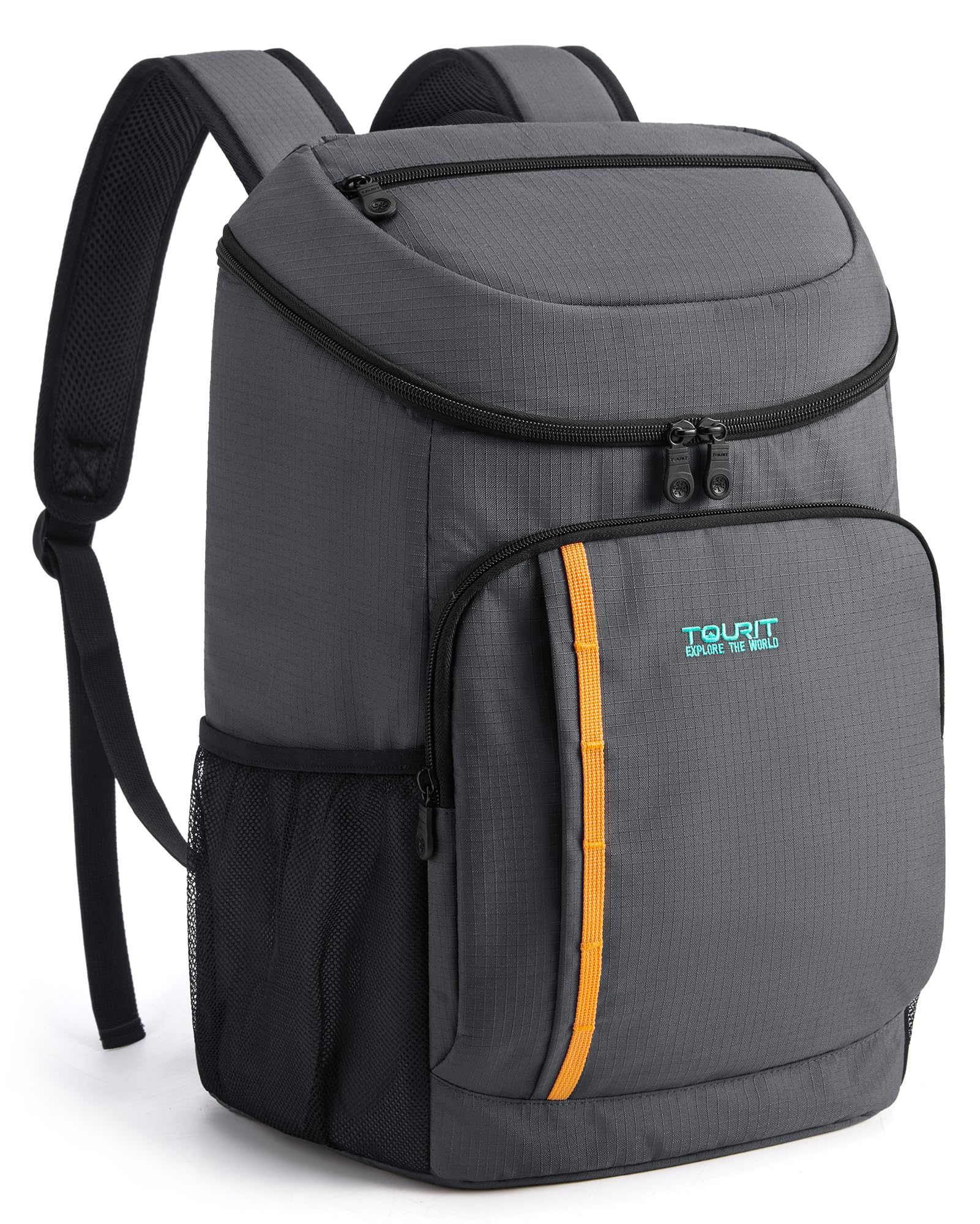
TOURIT 30-Can Backpack Cooler
Key Features
- Capacity with Ice: ~24 cans
- Leakproofness: Zipper not leakproof
- Type: Backpack
- Price: Budget
The TOURIT Backpack Cooler delivers on build quality and insulation performance. Weighing only 1.1 pounds and holding up to 30 cans (28 liters), it combines high-density foam insulation with a PEVA liner to keep contents cold for a full day. The backpack design is well-executed with multiple storage pockets, making it easy to carry on hikes or trips to the beach.
In extended use, the insulation holds temperature well over several hours. The main limitation is the zipper: like most coolers in this price range, it is not fully leakproof. If you pack loose ice, some water may seep out as the ice melts. Using ice packs eliminates this issue entirely and allows the cooler to perform without leakage concerns.
This cooler is best for budget-conscious campers, day hikers, and beachgoers who want a portable, lightweight solution. If you rely exclusively on loose ice and need absolute leakproof construction, consider a sealed-zipper or rotomolded cooler. For everyday use with ice packs, the TOURIT offers strong cold retention and a comfortable carry at an affordable price.
Pros
- Build quality holds up well across varied conditions
- Insulation keeps contents cold for a full day
- Spacious 30-can capacity in a lightweight backpack form
Cons
- Zipper allows water seepage when using loose ice
For anyone who uses ice packs instead of loose ice, the TOURIT provides exceptional cold retention and portability at a budget-friendly price.
Best for Leakproof Reliability
UA Sideline Pro 24-Can
Key Features
- Capacity with Ice: ~18 cans
- Leakproofness: No leakage complaints
- Type: Tote
- Price: Mid-Range
The Under Armour Sideline Pro Cooler stands out for its rugged outer fabric and rigid interior liner that together deliver a cooler with no reported leakage issues. Temperature retention is solid for a soft-sided model, and the smooth zipper, side pockets, and quick-access lid add everyday convenience.
At 1.76 pounds, this cooler is heavier than backpack-style options, and the 24-can capacity suits personal or two-person use rather than group camping. The extra weight comes from the durable construction that eliminates the zipper seepage common in budget coolers.
Best for campers who treat leakproof reliability as a non-negotiable and don’t mind a tote-style cooler that stays in camp or on a vehicle seat. Not ideal for backpacking or longer trips where every ounce and cubic inch matters.
Pros
- Build quality is noticeably tougher than most soft coolers at this price
- Maintains cold temperatures well for a foam-insulated cooler
- Side pockets and lid access make grabbing drinks easy without fully opening the bag
Cons
- Heavier than backpack coolers – noticeable when carrying any distance
- Priced slightly above what some buyers expect for a 24-can capacity cooler
If leakproof construction and durability matter more than weight or max capacity, this Under Armour cooler delivers where most budget options fail.
Best for Family Car Camping
SMIRLY 48-Can Tote
Key Features
- Capacity with Ice: ~38 cans
- Leakproofness: No leakage reported
- Type: Tote
- Price: Mid-Range
The SMIRLY 48-Can Tote holds a substantial amount without the leakage concerns that plague many soft coolers. Its polyurethane foam insulation and collapsible design make it a practical choice for car camping, picnics, and transporting groceries. Build quality feels robust, with thick fabric and strong handles.
This tote suits families who drive to a campsite and want a reliable cooler that won’t drip water in the trunk. However, it’s a tote – there are no backpack straps, so carrying it any distance by hand is cumbersome. If you need hands-free portability for hiking, consider a backpack-style cooler instead.
Pros
- Durable construction and materials
- Very good quality
- Huge capacity for its size
Cons
- Seam or stitching weaknesses may appear in some units, especially under heavy loads.
- Tote-only design lacks backpack straps, making it less practical for foot travel.
For car camping and everyday use where you drive to the site, the SMIRLY tote delivers on capacity and leakproofing at a mid-range price.
Best for Road Trips
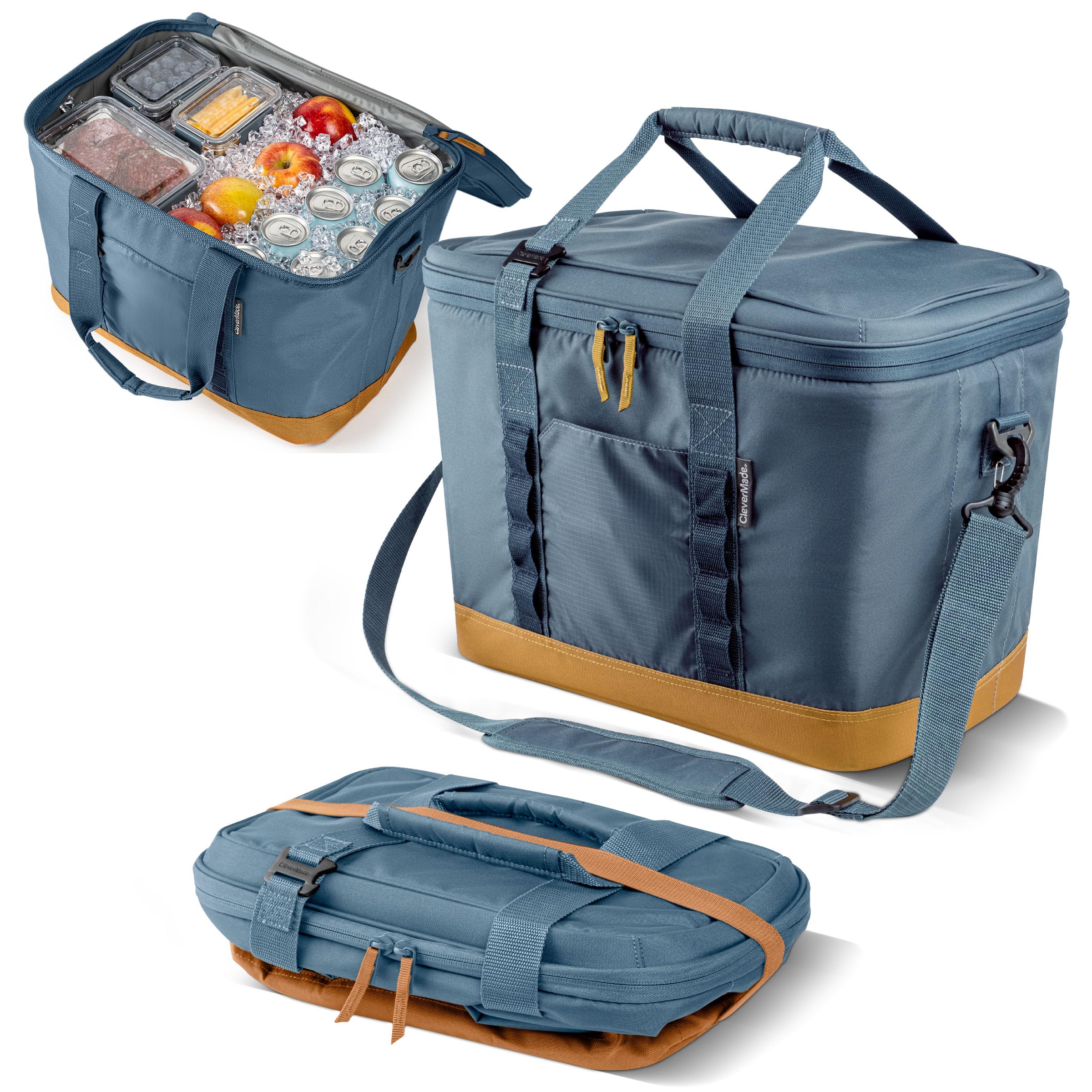
CleverMade Pacifica 50-Can
Key Features
- Capacity with Ice: ~40 cans
- Leakproofness: Zipper leaks sometimes
- Type: Tote
- Price: Mid-Range
The CleverMade Pacifica folds completely flat, turning a 50-can cooler into a slim rectangle that stores easily in a closet or car trunk. At just 2.3 pounds, it’s light enough to carry loaded. A built-in bottle opener and zippered pockets add convenience for tailgates and beach trips. This fold-flat design sets it apart from fixed-shape coolers of similar capacity.
Best for car campers and road trippers who want a large, storable cooler — not for backpackers (no straps provided). The zipper is not leakproof; melted ice can weep through, so plan on ice packs or drained ice. Some users note liner tearing after repeated heavy loads, but for occasional group use the durability is acceptable. The insulation keeps contents cold for a full day in moderate conditions.
Pros
- Folds flat for storage — saves space when not in use.
- Large capacity holds 50 cans — enough for group outings.
- Lightweight with built-in bottle opener and pockets for accessories.
Cons
- Liner can tear after repeated heavy use — occasional use recommended.
A practical choice for car campers who value flat storage and group capacity over absolute leakproofness.
Best for Budget Hikers
SPARTER 33-Can Backpack
Key Features
- Capacity with Ice: ~24 cans
- Leakproofness: Zipper not leakproof (honest)
- Type: Backpack
- Price: Budget
SPARTER delivers a lightweight backpack cooler that stands out for its transparency – the brand explicitly states the zipper is not leakproof, which is refreshingly direct for this price bracket. The 8mm foam insulation with PEVA liner holds temperature well when packed with ice packs, and the dual compartments plus external pockets keep gear organized for day hikes or short camping trips.
Where this backpack differs from the top pick is that its zipper can seep water when loose ice melts, so campers relying on melt-free coolers should stick with ice packs. The SPARTER is best for budget-conscious campers who appreciate honest specs and want a functional, lightweight pack for day trips or overnights where a little moisture inside the bag is manageable.
Pros
- Solid cold retention for the price when using ice packs.
- Well-organized pockets and compartments for separating food and tools.
- Lightweight construction at 1.13 lbs – easy to carry loaded.
Cons
- Zipper leaks water when ice melts – a usability tradeoff that limits loose-ice use.
- Strap or seam issues may appear after several months of regular camping use.
A cost-effective option for campers who plan to use ice packs and want a transparent, well-organized backpack cooler – just be aware that the zipper will let water out if you use loose ice.
Best for Budget Day-Trippers
MIYCOO 40-Can Backpack

Key Features
- Capacity with Ice: ~30 cans
- Leakproofness: Zipper leaks reported
- Type: Backpack
- Price: Budget
The MIYCOO backpack offers two leakproof compartments at a budget-friendly price, with good insulation for short trips. However, the zipper may allow seepage when using loose ice, and some units show seam wear after moderate use. For multi-day camping where leakproofness and durability are critical, this backpack is a compromise — better suited for day hikes, picnics, and beach outings.
Pros
- Insulated compartments keep contents cold for several hours without ice packs.
- Two separate leakproof compartments help separate food from drinks for better organization.
Cons
- Zipper may leak when carrying loose ice; using ice packs reduces this risk.
- Seams and fabric can show wear after a few heavy uses, especially when overstuffed.
Best for budget day trips where ice packs are used instead of loose ice — not a companion for multi-day camping due to leakage and durability limits.
Best for Short Day Trips
Lifewit 18-Can Tote

Key Features
- Capacity with Ice: ~12 cans
- Leakproofness: Zipper leaks common
- Type: Tote
- Price: Budget
The Lifewit tote offers good temperature retention and plenty of storage pockets in a lightweight, compact package. However, its 18-can capacity is too small for multi-day trips, and the zipper can allow water seepage when using loose ice, making it best reserved for day adventures, lunches, or quick grocery runs rather than camping.
Pros
- Good temperature retention for a budget cooler
- Plenty of external and internal storage pockets
Cons
- Zipper may allow water seepage when using loose ice
Works well as a personal lunch bag or for short grocery trips, but not recommended for camping due to small capacity and potential leakage.
Best for Day Outings
Stanley All Day Julienne 20-Can

Key Features
- Capacity with Ice: ~12 cans
- Leakproofness: Not leakproof
- Type: Tote
- Price: Premium
Stanley’s All Day Julienne brings the brand’s solid build and a refined look that suits daily lunches or a day hike. The foam insulation holds cold well for several hours. However, the 20-can capacity and premium pricing limit it to short outings rather than overnight camping trips. For campers needing a larger, more affordable cooler, this is a use-case mismatch.
Pros
- Foam insulation keeps food cool for hours during short outings.
- Durable exterior and stylish design hold up well to daily use.
Cons
- Zipper can be stiff to operate, especially when the bag is full.
Best for style-conscious day hikers and daily lunch packing rather than overnight camping.
Best for Occasional Picnics
Vankor 30-Can Backpack

Key Features
- Capacity with Ice: ~20 cans
- Leakproofness: Zipper leaks common
- Type: Backpack
- Price: Budget
This budget-friendly cooler backpack feels lightweight and spacious enough for a day outing. The insulation holds cold adequately when paired with ice packs. However, the zipper can allow seepage as ice melts, and the liner may separate from the shell over time. It works for occasional picnics or short trips where you can manage the limitations, but it is not suited for multi-day camping or regular use.
Pros
- Very low price for a backpack-style cooler
- Lightweight and easy to carry
Cons
- Liner and seams may fail with repeated use
- Zipper can leak when ice melts, requiring ice packs instead of loose ice
Only worth considering for the occasional picnic or short outing where you use ice packs and accept the risk of minor leakage.
Best for Car Camping Groups
Maelstrom 75-Can Flip Top

Key Features
- Capacity with Ice: ~60 cans
- Leakproofness: Zipper leaks common
- Type: Tote
- Price: Mid-Range
The Maelstrom 75-Can cooler offers a massive 13-gallon capacity at a mid-range price, easily fitting drinks for a large group. However, the zipper is not leakproof – moisture can seep through when using loose ice, and the bottom can sag under heavy loads. This makes it better suited for car camping with ice packs than for rugged outdoor use.
Pros
- Massive 75-can capacity fits large group outings without breaking the bank.
- Lightweight and collapsible design makes transport and storage easy.
Cons
- Using loose ice may cause moisture to seep through the zipper – ice packs solve this.
- The bottom can collapse under heavy loads, so placing it on a flat surface is best.
Best for short car camping trips where you can keep it on a table and rely on ice packs to avoid leakage.
How to Choose
The single most important thing to understand about soft coolers is that advertised can counts assume no ice, and zipper leakage is a design trade-off, not a defect.
Capacity (Cans Held with Ice)
Most brands count empty can space. A 30-can cooler typically holds 20-24 cans when you add the ice needed to keep them cold. Ice occupies about a third of the volume.
For a single day, figure on one cooler per two people. Multi-day trips require a larger tote or multiple units, because ice melts and you lose capacity over time.
Leakproofness (Zipper Seal)
The term ‘leakproof’ on a soft cooler refers to the liner, not the zipper. Water easily seeps through the toothed track once ice melts. This is a physical limitation of zippers, not a defect.
Frozen ice packs eliminate the liquid water problem entirely. They stay solid for hours and contain melt water until you open the pack. If you must use loose ice, expect some seepage and plan accordingly (e.g., pack a towel).
Insulation Retention (Hours of Cold)
Insulation quality depends on foam thickness and density. Cheaper coolers use thin foam that can’t hold cold beyond 4-6 hours in direct sun. Higher-end models with closed-cell foam or multiple layers maintain ice for 8-12 hours.
Pre-chilling the cooler and using a high ratio of ice to contents extends performance. Avoid opening the lid frequently, especially in hot weather.
Weight and Portability
Backpack coolers free your hands but typically max out around 30 cans. Tote-style coolers offer larger capacity but require carrying by handle or shoulder strap. The trade-off is weight distribution: a loaded backpack feels lighter than a tote of the same weight.
For hikes longer than a mile, a backpack cooler is the practical choice. For car camping and picnics, a tote is easier to load and access.
Pockets and Organization
External pockets separate dry items (phone, keys, sunscreen) from cold storage. Some coolers have zippered compartments for utensils or condiments. These add convenience but also weight and bulk.
If you plan to carry the cooler on your back, extra pockets can shift the center of gravity. For car camping, more pockets are almost always better.
FAQ
Why does my soft cooler leak from the zipper when ice melts?
Zippers are not waterproof by design. The waterproof liner keeps liquid inside the bag, but the zipper track is a channel where water can escape. Using frozen ice packs instead of loose ice prevents liquid formation and stops the leak.
Can I use loose ice in a soft cooler backpack without it leaking?
Not reliably. Almost all soft coolers with a zipper will leak when the ice melts. If you absolutely need loose ice, choose a cooler with a HydroLok zipper (like the YETI Hopper) or switch to ice packs.
How many cans will a 30-can soft cooler actually hold with ice?
Typically 20 to 24 cans. The advertised count assumes no ice. For a day trip, plan on 20 cans plus 8-10 pounds of ice. A 30-can cooler is realistic for one person for a day.
Are YETI soft coolers worth the price for camping?
YETI coolers are 100% leakproof and extremely durable, but a 12-can model costs $250. For most campers, a $40 cooler with ice packs performs nearly as well. Only buy YETI if you prioritize absolute dry gear and have the budget.