This post contains affiliate links. We may earn a small commission when you buy through our links — at no extra cost to you.
Finding flat pedal shoes that actually grip without punishing your feet is harder than it should be. Many top-rated models run narrow or small, forcing riders to size up or suffer. The best pair for you comes down to foot shape and how much you prioritize walking off the bike.
These picks address the real-world complaints riders face — outsoles that separate, laces that catch in drivetrains, and inconsistent grip across pedal types. If you have wide feet, plan to order a half-size up and stick with models that offer that flexibility.


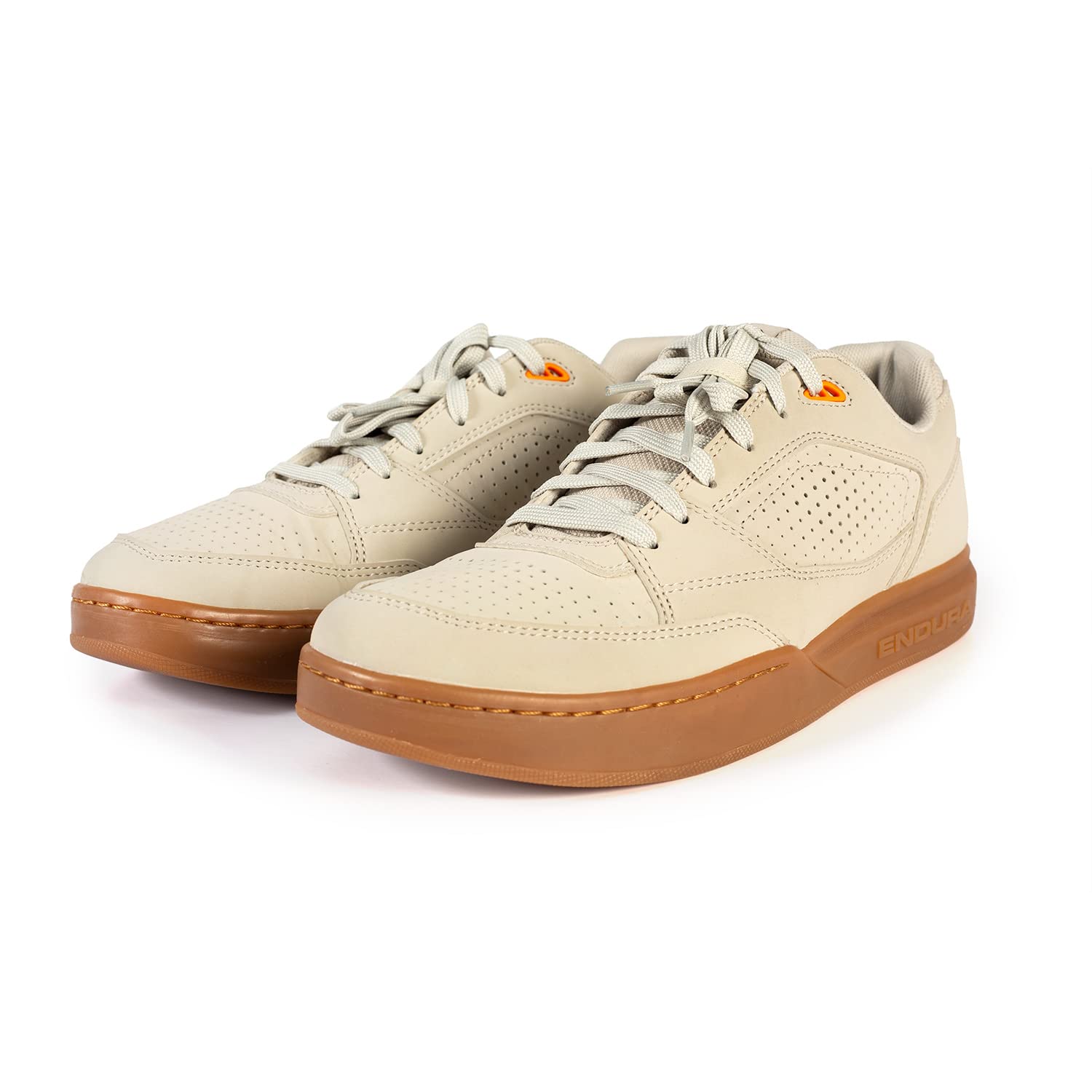
Best for Aggressive Trail
Five Ten Trailcross LT
Key Features
- Sole Rubber: Stealth Phantom
- Fit & Sizing: Narrow, size up half
- Closure Type: Lace with lace cover
- Outsole Durability: Solid build, long-lasting
- Pedal vs Walk Stiffness: Balanced, hikeable
- Price: $$
The Trailcross LT delivers the stickiest grip available on flat pedals, using Stealth Phantom rubber that keeps you locked in through technical climbs and descents. The build quality holds up to rocky trails and hike-a-bike sections, and the breathable mesh upper keeps feet comfortable during long, warm rides. All-day comfort extends from the saddle to walking, making it a true do-it-all shoe.
This shoe is best for riders with narrow to normal feet who prioritize maximum pedal grip and all-day comfort. The lace cover keeps laces tucked away, and the wide toe box option accommodates varied foot shapes. Riders with wider feet should expect to size up by half to full size, as the fit runs narrow.
Pros
- Stickiest grip on the market for confident pedal connection.
- Durable build withstands rocky trails and hike-a-bike abuse.
- Comfortable for all-day riding and walking off the bike.
Cons
- Narrow fit may require sizing up, especially for wider feet.
For flat pedal riders who want the best possible grip without compromise, the Trailcross LT is the most reliable choice at a mid-range price. Just account for the narrow fit when ordering.
Best for Grip + Lace Pocket
Crankbrothers Stamp Lace
Key Features
- Sole Rubber: Sticky rubber compound
- Fit & Sizing: Narrow, size up half
- Closure Type: Lace with lace pocket
- Outsole Durability: Delamination risk
- Pedal vs Walk Stiffness: Stiff, less walkable
- Price: $$$
The Stamp Lace stands out for its integrated lace pocket and tenacious grip that feels locked onto pedals. The well-padded construction keeps feet comfortable on long trail rides. However, the fit runs short — many riders need to go up a full size — and a subset of users report sole separation after extended use.
Best suited for riders with narrow to normal feet who don’t mind sizing up and prioritize pedal connection over long-term outsole durability. Those with wide feet or who expect a bombproof sole should look elsewhere.
Pros
- Grip that holds like Velcro on flat pedals, inspiring confidence on aggressive trails.
- Comfortable, well-padded interior for all-day riding without foot fatigue.
- Lace pocket tucks laces away securely, keeping them out of the drivetrain.
Cons
- Sizing runs small in length, so ordering a full size up is necessary for most feet.
- Some pairs see the outsole separate from the upper after months of regular trail use.
A capable flat pedal shoe for trail riders who value grip and lace management, provided you size up and accept the possibility of sole separation over time.
Best for Boa Convenience
Crankbrothers Stamp BOA
Key Features
- Fit & Sizing: Narrow, size up
- Closure Type: BOA L6 + Velcro
- Outsole Durability: Good build quality
- Pedal vs Walk Stiffness: Stiff, ok walking
- Price: $$$
The BOA L6 dial paired with a Velcro strap makes entry and exit effortless while offering fine-tuned tension mid-ride — a convenience traditional laces can’t match. The sole matches Crankbrothers Stamp pedals for a secure platform, though the rubber compound doesn’t feel as sticky on aggressive pins as Five Ten shoes or even the lace-up Stamp Lace. This tradeoff suits riders who value adjustability and walkability over raw grip, especially those with narrow to normal width feet who won’t find the fit overly snug.
Pros
- BOA dial allows quick, precise tension adjustments without stopping
- Sturdy build and comfortable padding for all-day rides
- Sole flex pattern makes walking easier than many stiff MTB shoes
Cons
- Fit runs narrow — may cause discomfort for riders with wider feet
- Pedal grip on sharp pins may feel less secure compared to stickier rubber compounds
For riders who prioritize on-the-fly adjustability and easy foot entry over absolute pedal grip, the Stamp BOA delivers a focused, well-built option.
Best for Premium Style
Five Ten Freerider Pro Canvas
Key Features
- Sole Rubber: Stealth S1
- Fit & Sizing: Narrow for some
- Closure Type: Lace with lace cover
- Outsole Durability: Durable construction
- Pedal vs Walk Stiffness: Moderate stiffness
- Price: $$$$
The Freerider Pro Canvas wraps the same Stealth S1 rubber sole found on the classic Freerider Pro in a lighter canvas upper with suede overlays, giving it a more casual look without sacrificing the pedal grip riders expect from Five Ten.
This shoe suits riders with narrow to normal feet who want the proven grip and feel of the Freerider Pro in a breathable, style-forward build. The premium pricing and narrower fit mean it’s not a budget choice nor appropriate for wide feet.
Pros
- Stealth S1 rubber delivers tenacious pedal grip that inspires confidence.
- Canvas upper with suede overlays offers a distinctive lifestyle look.
- True-to-size fit with good comfort for most riders.
Cons
- Premium price tag puts it well above comparable flat pedal shoes.
- Narrow fit can be problematic for riders with wider feet.
If the classic Freerider Pro feel in a canvas style matches your aesthetic and foot shape, this shoe delivers — just be ready for the price and narrow last.
Best for Budget Trail
Endura Hummvee
Key Features
- Sole Rubber: Sticky rubber compound
- Fit & Sizing: Narrow fit
- Closure Type: Lace closure
- Outsole Durability: Solid build
- Pedal vs Walk Stiffness: Flexible for walking
- Price: $
The Endura Hummvee uses a sticky rubber sole that grips flat pedals well, paired with a durable build that holds up to regular riding and walking. While the cheapest flat pedal shoes often sacrifice grip and quality, this one keeps both intact at a budget-friendly price. The narrow last limits the fit to riders with narrow or normal feet — those with wider feet should check other options.
Pros
- Sticky rubber sole provides confident grip on flat pedals.
- Durable construction withstands regular riding and hiking.
Cons
- Narrow fit can be uncomfortable for riders with wider feet.
For budget-conscious riders who don’t need a wide toe box, the Hummvee offers real value without compromising on grip or durability.
Best for Ultra-Budget
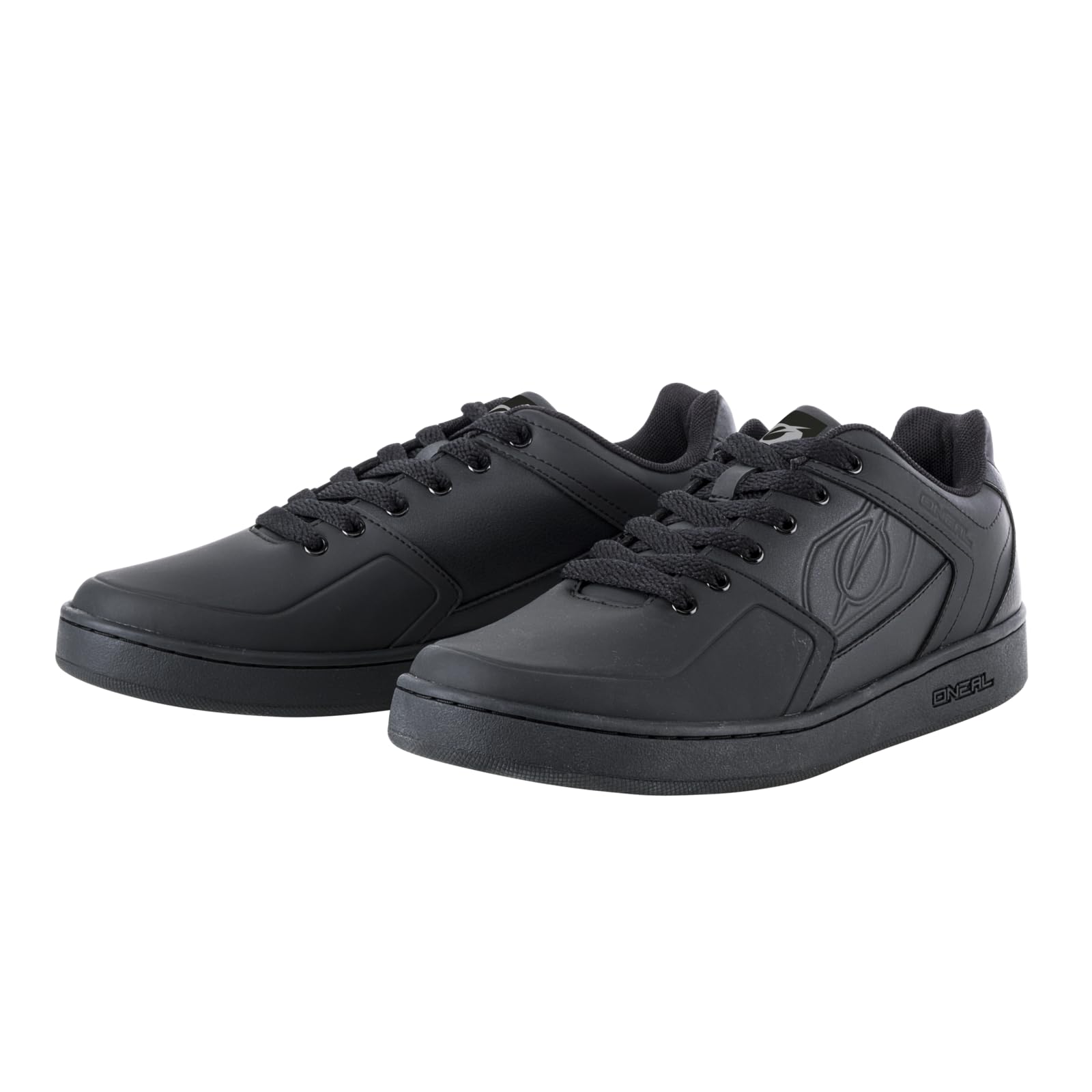
O’Neal Pinned
Key Features
- Sole Rubber: Honeycomb structure
- Fit & Sizing: Runs small, size up
- Closure Type: Lace-up
- Outsole Durability: Average build
- Pedal vs Walk Stiffness: Average stiffness
- Price: $
The O’Neal Pinned offers budget-friendly pedal grip with decent engagement, ideal for beginners on a tight budget. Fit runs small — sizing up recommended — and grip is adequate but not comparable to stickier premium options. This makes it a capable entry-level shoe, though better value exists at a slightly higher price from competitors like the Endura Hummvee.
Pros
- Great value for the budget-conscious buyer with solid build quality.
- Comfortable fit for many riders when sized correctly.
Cons
- Fit runs small — sizing up may be necessary for a comfortable fit.
Best for riders on a tight budget who prioritize low cost over maximum grip and are willing to size up for proper fit.
Best for Stiff Sole
Giro Tracker Fastlace

Key Features
- Sole Rubber: Stiff platform
- Fit & Sizing: Wider toe box
- Closure Type: Fastlace quick-pull
- Outsole Durability: Lace loops may break
- Pedal vs Walk Stiffness: Very stiff, efficient
- Price: $$
The Giro Tracker Fastlace delivers a stiff platform and wide toe box that suits riders who pedal hard and want room for wider feet. Its lace system may loosen during longer rides, and occasional lace loop breakage has been noted. This stiffness and fit make it a better match for focused trail riding than for casual use or hike-a-bike.
Pros
- Stiff sole provides efficient power transfer for hard pedaling.
- Roomy toe box offers comfort for wider feet.
Cons
- Lace system may loosen during longer rides, requiring retightening.
Best for riders who value a stiff sole and wide fit over convenient lacing and premium grip.
How to Choose
The biggest mistake flat pedal buyers make is ignoring their foot width and the shoe’s last shape, because a sticky sole means nothing if the shoe doesn’t fit.
Sole Rubber Grip
Sole rubber compound directly determines how well your foot stays planted on the pedals. Softer rubber like Five Ten’s Stealth Phantom offers maximum grip but wears faster on rough surfaces. Harder compounds last longer but sacrifice stickiness.
Your pedal pins also matter: aggressive pins dig into soft rubber for a locked-in feel, while rounded pins work better with firmer soles. Choose a compound that matches your typical terrain and how often you hike sections.
Fit Width and Sizing
Most flat pedal mountain bike shoes run narrow or small, especially Five Ten and Crankbrothers models. A shoe that fits properly must hold your heel without slip and allow toe splay without pressure points.
If you have wide feet, expect to order a half to full size up. Some brands like Giro offer wider toe boxes in specific models. Ignoring fit leads to numb toes, hot spots, and reduced control on the trail.
Closure System
Laces are simple and lightweight but can catch in the drivetrain without a lace pocket. BOA dials provide tool-free micro-adjustment and quick release, ideal for riders who frequently stop and remove shoes. Velcro straps add security but can create pressure points.
The best closure for you depends on how often you adjust mid-ride. Lace pockets (Crankbrothers Stamp Lace) keep laces tidy without the complexity of a dial. BOA is worth the extra cost if you value convenience over simplicity.
Outsole Durability
The rubber outsole takes the brunt of pedal pin wear and trail abrasion. Softer compounds grip better but can chunk or separate from the midsole after months of use. Some Crankbrothers models have reported sole delamination, especially when exposed to heat and mud.
Look for shoes with reinforced toe caps and molded rubber that wraps the heel. If you ride rocky terrain frequently, prioritize a replaceable outsole or a brand known for long-term adhesion like Five Ten.
Pedal vs Walk Stiffness
A stiffer sole transfers pedaling power more efficiently but feels clunky when hiking or walking. Flexible soles are comfortable off the bike but can cause foot fatigue on long rides. The sweet spot is a mid-stiffness shoe like the Five Ten Trailcross LT.
If you spend significant time hike-a-bike, avoid very stiff models. For dedicated trail riding with minimal walking, the efficiency gain from a stiff platform is worth the trade-off.
FAQ
Do flat pedal mountain bike shoes work with clipless pedals?
No, flat pedal shoes have smooth soles without cleat mounting holes. They are designed for flat pedals with pins. For clipless pedals, you need a shoe with a 2-bolt SPD cleat attachment.
How do Crankbrothers Stamp shoes compare to Five Ten for pedal grip?
Five Ten’s Stealth rubber generally offers stickier grip, especially on aggressive trails. Crankbrothers Stamp soles are still very good but may feel less glued on certain pedal pins. For all-out grip, Five Ten wins; for a lace pocket or BOA convenience, Crankbrothers is a strong alternative.
Why does my flat pedal shoe sole wear out so fast?
Soft rubber compounds that maximize grip also wear faster on rough surfaces like rock or concrete. Hiking sections accelerate abrasion. Some models like the Crankbrothers Stamp Lace have also reported sole delamination. For longevity, choose a shoe with a tougher rubber blend if you frequently walk off the bike.
Are flat pedal shoes good for hiking sections on mountain bike trails?
Yes, many flat pedal shoes are designed with tread patterns and rubber that provide decent traction off the bike. Models like Five Ten Trailcross and Freerider Pro are built specifically for hike-a-bike. However, very stiff soles like the Giro Tracker are less comfortable for extended walking.