This post contains affiliate links. We may earn a small commission when you buy through our links — at no extra cost to you.
Monoculars promise to bring distant wildlife up close, but many cheap models inflate magnification numbers while using tiny objective lenses. The result: a dim, shaky image that’s useless in the early morning or late evening when animals are most active. For hikers and birders, the real choice isn’t between 8x and 12x – it’s between a larger lens that gathers enough light and a smaller one that fits in a pocket.
A 42mm objective delivers visibly brighter views at dawn than a 25mm, but adds weight. A 32mm strikes a middle ground for day hikes. The trade-off is straightforward: carry more ounces for better low-light performance, or keep it ultralight and accept limitations in dim conditions.
This guide cuts through the marketing by focusing on objective size, coating quality, and focus mechanism – the three specs that determine whether a monocular delivers when you need it. No hype, just the right tool for your hiking style.
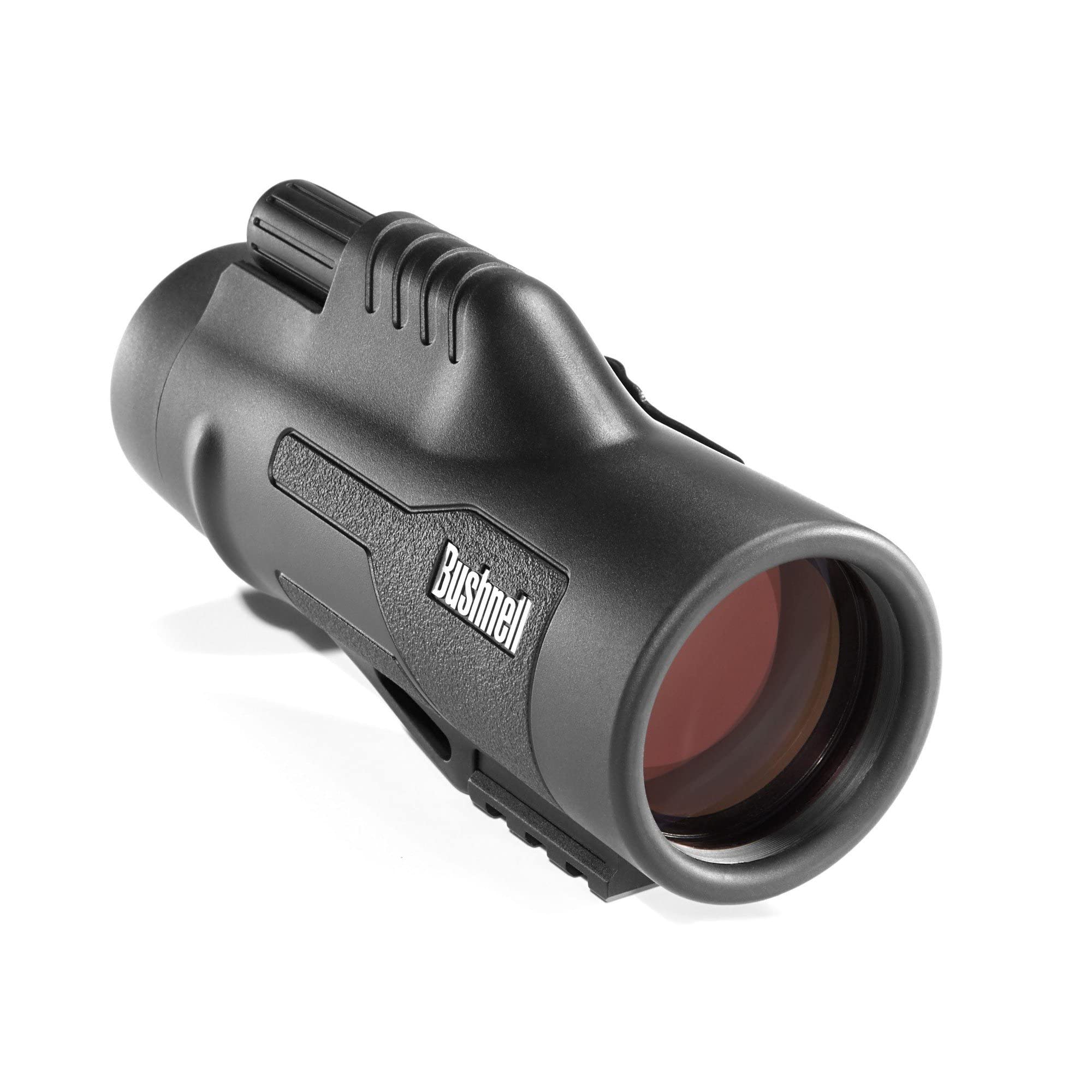


Best for Dawn/dusk Wildlife
Bushnell Legend 10×42
Key Features
- Magnification: 10x
- Objective: 42mm
- Coating: ED Prime, multi-coated
- Waterproof: O-ring sealed
- Weight: 13.2 oz
- Price: Mid-Range
The Bushnell Legend 10×42 uses ED Prime glass and Ultra Wide Band coatings to produce bright, high-contrast images with minimal color fringing. Even in dawn or dusk conditions, this monocular maintains clarity that cheaper optics lose quickly, making it a strong choice for early-morning or late-evening wildlife watching.
The focus wheel operates smoothly with one hand, and the body feels solid without being clunky. At 13.2 ounces, the weight is balanced for its 42mm objective class, though it is noticeably heavier than compact alternatives. The tripod mount adds stability for prolonged glassing sessions.
This monocular suits wildlife observers who prioritize image quality over the lightest possible carry. Hikers willing to accept a few extra ounces for better low-light reach will find the Legend a dependable companion. Ultralight backpackers should look at smaller objectives or fixed-focus options instead.
The mid-range price reflects the ED glass and multi-coated optics, which pay off in dim light where budget models fall short. Some buyers may find cheaper alternatives acceptable for daytime use, but the Legend’s optical advantage in challenging light justifies the investment for dedicated users.
Pros
- Exceptional optical clarity with accurate color rendering
- Crisp, bright image even in low-light conditions
- Smooth one-hand focusing with precise focus wheel
- Solid build that feels balanced despite its weight
Cons
- For ultralight hikers, the 13.2 oz weight may be noticeable in a pack
- The mid-range price can feel high to buyers who don’t need ED glass for low-light use
For wildlife watchers who spend early mornings or late evenings in the field, the Bushnell Legend’s optical clarity in dim light is a clear advantage over lighter, lower-cost alternatives.
Best for Wide-Field Birding
FEEMIC 8×42
Key Features
- Magnification: 8x
- Objective: 42mm
- Coating: Fully multi-coated, BAK-4
- Waterproof: Nitrogen filled
- Weight: 10 oz
- Price: Budget
While the Bushnell Legend uses ED glass for sharper low-light images, the FEEMIC 8×42 relies on fully multi-coated BAK-4 prisms that deliver bright, crisp daytime views for a fraction of the price. Its 42mm objective gathers enough light for typical sunrise-to-sunset hikes, and the 360-foot field of view at 1000 yards makes tracking moving birds easier than many narrower 10x options.
The build feels solid — a rubberized body with good grip, nitrogen-filled for waterproofing, and compact enough at 10 ounces to hang from a strap without bouncing. The included carry pouch, lens cloth, and lanyard add genuine value, and the tripod mount allows steady hands-free use when you need it.
This is a sensible choice for families, beginners, or budget-conscious hikers who want a waterproof monocular that performs well in full daylight. The 8x magnification is ideal for mid-range wildlife like birds in trees or deer at field edge, but it won’t resolve distant raptors or shorebirds at extreme range. If your primary viewing happens at dawn or dusk, you’ll notice the image dims noticeably compared to larger objective or ED glass alternatives.
Pros
- Bright, crisp views for daytime wildlife — optics perform well above the price point.
- Packed with useful accessories that make it feel like a more expensive optic out of the box.
- Compact and lightweight for a 42mm monocular — easy to carry on any hike.
Cons
- Low-light performance falls short — views dim noticeably at dawn, dusk, or under heavy canopy.
- 8x magnification limits reach for distant wildlife — can’t resolve far-off birds or animals clearly.
A cost-effective pick for casual day hikers and families, as long as you’re not chasing distant subjects or working in low light.
Best for Everyday Carry
Vortex Solo 10×25
Key Features
- Magnification: 10x
- Objective: 25mm
- Coating: Fully multi-coated
- Waterproof: Nitrogen purged
- Weight: 5.6 oz
- Price: Budget
The Vortex Solo 10×25 takes an uncompromising approach to portability – fewer than six ounces and small enough to disappear into a shirt pocket. The fully multi-coated lenses deliver a crisp image in good daylight, making distant birds or trail markers easy to pick out. Compared to the more tactical monocular in this lineup, the Solo trades a reticle and heavy build for sheer carry-anywhere convenience.
This monocular fits the hiker or birder who wants a lightweight backup for daytime use and values pocketability above all else. The fixed-focus design means you set the diopter adjustment once for your eyesight; after that, the focus remains locked at a specific distance. For quick shifts between a bird at fifty feet and a distant ridge, you will need to refocus using the eyepiece ring – a process that takes patience. Buyers who require rapid refocusing should look elsewhere.
The rubber armor provides a secure grip even with wet hands, and the nitrogen-purged body keeps fog at bay during temperature changes. Vortex backs this monocular with an unconditional lifetime warranty – a rare promise at this price point that removes the usual anxiety about a lost lens cap or a drop on the trail.
Pros
- Remarkably sharp image for a monocular this small
- Fits inside a shirt pocket; easy to carry daily
- Backed by a lifetime, no-questions-asked warranty
- Rubberized armor protects against drops and scrapes
Cons
- Fixed focus requires careful diopter adjustment; not suited for quick refocusing between near and far subjects
- 25mm objective limits brightness in low light; a trade-off for compact size
For daytime hikes and casual wildlife viewing where every ounce matters, the Vortex Solo delivers clarity and peace of mind at a budget-friendly price — just don’t expect to flip between distances in a hurry.
Best for Dedicated Birding
Nocs Field Tube 10×32
Key Features
- Magnification: 10x
- Objective: 32mm
- Coating: Fully multi-coated, BaK-4p
- Waterproof: IPX7 submersible
- Weight: 8.1 oz
- Price: Mid-Range
The Nocs Field Tube 10×32 stands out among compact monoculars for its full IPX7 waterproofing — submersible to 3 feet for 30 minutes — combined with a lightweight 8.09-ounce build. The BaK-4 prism and fully multi-coated lenses deliver a sharp, color-accurate image across most lighting conditions.
Dedicated birdwatchers and hikers who encounter rain or river crossings will appreciate the peace of mind this waterproofing provides. The 32mm objective, however, gathers less light than 42mm alternatives, so early-morning or twilight viewing won’t be as bright as with the Bushnell Legend. Additionally, the Nocs Field Tube is newer to the market, so its long-term durability under heavy use is less documented compared to longer-established competitors.
The focus wheel operates smoothly with one hand, and the textured grip keeps the monocular secure even in wet conditions. Optics are bright and contrasty, with accurate colors that birders will find useful for identification.
Pros
- Premium build quality with metal housing and tactile rubber armor feels solid in hand.
- Sharp, color-accurate image with good contrast for bird feather detail.
- Lightweight at 8.09 ounces and fully waterproof to IPX7, ideal for all-weather hiking.
- Smooth one-handed focus wheel allows quick adjustments without shifting grip.
Cons
- Long-term durability under heavy, frequent use is less documented compared to longer-established competitors like the Bushnell Legend.
- The 32mm objective lens limits low-light performance, making early-morning or dusk viewing noticeably dimmer than 42mm alternatives.
For birders who value all-weather reliability and portability over maximum light-gathering, the Nocs Field Tube is a capable choice — just remember its long-term track record is shorter than the competition.
Best for Tactical Use
Vortex Recce Pro 8×32
Key Features
- Magnification: 8x
- Objective: 32mm
- Coating: HD, XR, extra-low dispersion
- Waterproof: Waterproof
- Weight: 10 oz
- Price: Premium
The Vortex Recce Pro HD delivers sharp, high-contrast views through its HD optical system with extra-low dispersion glass. Unlike pocket-sized fixed-focus options, this monocular prioritizes precise ranging and deliberate observation over quick deployment. The MRAD reticle with ranging silhouettes gives hunters and tactical users a clear advantage for estimating distance without extra gear.
Where this monocular stumbles for wildlife watchers is the focus mechanism. The ring requires more force than typical general-purpose optics, making rapid refocusing between near and far targets a deliberate action. In a static hunting position this is manageable, but for scanning birds in flight it becomes a constraint. The $399 price also sits well above most wildlife-focused monoculars, and without a built-in rangefinder the value proposition narrows to those who specifically need the reticle.
This is a tool for shooters, hunters, and military/LE personnel who need a compact ranging optic that doubles as a high-quality monocular. Casual birdwatchers or hikers wanting a lightweight, fast-focus glass will find better options in the Bushnell Legend or Nocs Field Tube lines. The unconditional warranty and rugged build mean it can handle field abuse, but the focus ring and price tag demand a specific buyer profile.
Pros
- HD glass with extra-low dispersion provides outstanding clarity and contrast
- Rugged tactical build with utility clip and MOLLE pouch for secure carry
- Compact at ~10 oz and easy to deploy from pouch or pocket
- Lifetime unconditional warranty covers any damage or defect
Cons
- Focus ring stiffness can slow down rapid refocusing in the field
- Premium price for a fixed 8x monocular without a laser rangefinder
This monocular delivers top-tier glass and a practical ranging reticle for those who need it, but the stiff focus and high cost limit its appeal to a narrow audience of tactical users or hunters who prioritize reticle functionality over general wildlife performance.
Best for Day Hikes
Celestron Nature 10×25
Key Features
- Magnification: 10x
- Objective: 25mm
- Coating: Multi-coated, BaK-4
- Waterproof: Nitrogen purged
- Weight: 6 oz
- Price: Budget
The Celestron Nature 10×25 is a waterproof monocular that costs well under $40 and delivers sharp daytime images. The multi-coated optics and BaK-4 prism gather enough light for clear views in fair weather, and the twist-up eyecup accommodates eyeglass wearers. Its 304-foot field of view at 1000 yards is appropriate for scanning open terrain.
This monocular is best suited for first-time buyers, kids, or hikers who want a low-cost backup for daylight trips. The focus wheel is stiff and requires two hands to turn — a design that prioritizes durability over smoothness. For casual use where subjects are stationary or moving slowly, this is a minor inconvenience. However, birders or wildlife watchers who need quick focus adjustments will find it frustrating.
Weighing just 6 ounces, the Nature slips easily into a jacket pocket or daypack. The nitrogen-purged body is fully waterproof, making it usable in light rain. The tradeoff for its budget price is the focus mechanism; it performs well when you have time to dial in, but tracking moving animals is slower. For its intended audience — those new to optics or seeking an affordable spare — the Celestron is a capable choice.
Pros
- Delivers clear, bright images in daytime conditions.
- Lightweight 6-ounce build makes it easy to carry on hikes.
- Great value as a budget-friendly waterproof monocular.
Cons
- When tracking moving subjects, the stiff focus wheel can require two hands and patience to adjust.
For casual daylight use and first-time buyers, the Celestron Nature offers decent daytime optics at a low cost — just be prepared for a deliberate focus experience.
Best for Day Hikes
Nocs Zoom Tube 8×32

Key Features
- Magnification: 8x
- Objective: 32mm
- Coating: Fully multi-coated, BaK-4p
- Waterproof: IPX4 splash-proof
- Weight: 9.5 oz
- Price: Mid-Range
The Nocs Zoom Tube 8×32 delivers crisp images and a comfortable grip in a compact, lightweight form that suits casual day hikes. Its stylish Indigo Blue design stands out, and the lifetime warranty adds peace of mind. However, the IPX4 splash resistance limits use in heavy rain, and the 8x magnification restricts detail at longer distances. For dedicated birders or those needing waterproofing, the Nocs Field Tube is a better fit; this monocular is best for fair-weather outings and moderate-distance observation.
Pros
- Crisp, color-accurate images from fully multi-coated BaK-4 optics
- Compact and lightweight at 9.5 oz, fits easily in a daypack
- Lifetime warranty provides long-term coverage
Cons
- IPX4 splash resistance means it’s not suitable for heavy downpours
- 8x magnification may not provide enough detail for distant wildlife
A good choice for fair-weather day hikes and casual birding where style and portability matter more than all-weather durability or long-range reach.
Best for Long-Range
Gosky 12×55

Key Features
- Magnification: 12x
- Objective: 55mm
- Coating: Fully multi-coated, BAK-4
- Waterproof: IPX7
- Weight: 24.7 oz
- Price: Mid-Range
The 12x magnification and 55mm objective pull in distant targets with sharp clarity — a solid performer for static observation from a blind or tripod. Fully multi-coated BAK-4 prisms and a waterproof build support use in changing weather. However, the 700-gram weight and large body push it outside the portable wildlife sweet spot (25-42mm). The included phone adapter can be fiddly to align and may shift under heavier smartphones. This is a capable high-power monocular for situations where reach matters more than packing light, but not the right fit for hikers or birders who need one-hand carry.
Pros
- Sharp, clear views at 12x for distant subjects
- Solid build with IPX7 waterproofing and included tripod
- Good value given the magnification and accessory kit
Cons
- Heavy at 700g and bulky for a monocular — best with a tripod
- Phone adapter can be unstable and requires patience to align
If you need 12x reach and plan to shoot from a fixed position, this is a cost-effective choice — skip it for one-handed wildlife walks.
How to Choose
The single most important buying insight: objective lens size determines low-light performance more than magnification – a 10×42 will outperform a 12×25 at dawn every time.
Magnification: 8x vs 10x vs 12x
Higher magnification doesn’t always mean closer views. At 12x, hand shake becomes more noticeable without a tripod, and the field of view narrows. For wildlife, 8x provides a wider, steadier view that’s easier to track moving animals. 10x is a good compromise. 12x is best for static targets or when using a tripod.
Objective Lens Size
The objective lens diameter (in mm) determines how much light enters. A 25mm lens works in bright daylight but struggles under tree canopy or at dusk. A 42mm gathers over twice the light, making details visible 30 minutes earlier in the evening.
The trade-off is weight – 42mm monoculars typically weigh 10-13 oz vs 5-6 oz for 25mm.
Lens Coatings and Prism
Fully multi-coated lenses reduce glare and improve contrast. BaK-4 prism glass transmits more light than BK-7, resulting in brighter images. Inexpensive monoculars often skip coatings or use BK-7. Look for ‘fully multi-coated’ and ‘BaK-4’ on the spec sheet.
Waterproof and Fogproof Ratings
An IPX7 rating means the monocular can be submerged in 1 meter of water for 30 minutes. IPX4 is splash-proof. For hiking in rain or near water, IPX7 is worth the extra cost. Nitrogen purging prevents internal fogging in temperature changes – critical for early morning hikes when warm air meets cold glass.
Weight and Portability
Weight directly affects how often you’ll carry the monocular. Under 10 oz, it slides into a jacket pocket. Over 12 oz, it’s better stored in a hip belt or pack. Consider your typical hike length – a few ounces matter less on a day hike than on a multi-day backpacking trip.
FAQ
Why is my monocular so hard to focus even after turning the wheel?
A stiff focus wheel often results from poor lubrication or a tight manufacturing tolerance. Some monoculars have a separate diopter adjustment on the eyepiece – if yours does, set it first for your vision. Fixed-focus models like the Vortex Solo require careful initial adjustment of the eyepiece ring; once set, they don’t need refocusing. If the wheel is genuinely stiff and doesn’t smooth out, it may be a defect worth returning.
Is 8x or 10x magnification better for bird watching?
8x provides a wider field of view, making it easier to spot and track birds in flight or thick brush. The image is also steadier without a tripod. 10x delivers more detail on stationary birds but can be shaky. For most handheld birding, 8x is preferred. If you often shoot from a rest or tripod, 10x is a fine choice.
Do I really need a smartphone adapter for my monocular?
Not for everyday viewing. Bundled adapters are often flimsy and hard to align, causing frustration. If you want to share photos, a dedicated adapter or phone scope mount (around $20) works much better. For casual digiscoping, you can also just hold your phone’s camera to the eyepiece – it works in a pinch.
How can I tell if a monocular’s advertised magnification is real?
Check the objective lens size: a legitimate 12x monocular typically has an objective of at least 42mm. If a cheap model claims ’80x’ with a lens that looks like a pea (around 21mm), the spec is fake. Stick to trusted optics brands and read reviews that confirm real-world performance. A quick test: compare the view through the monocular to a known 10x binocular – if the magnification difference is negligible, the claim is inflated.