This post contains affiliate links. We may earn a small commission when you buy through our links — at no extra cost to you.
Finding a hiking sandal that actually fits can feel like a gamble. Many run narrow, forcing wide-footed hikers to size up only to discover the straps don’t adjust enough. Others look rugged but wear out after a single season. The challenge isn’t just finding a sandal that works on the trail – it’s finding one that fits your foot without guesswork. This guide cuts through the sizing confusion and material trade-offs to focus on models that deliver reliable performance where it matters: arch support, traction, and longevity.
The hiking sandal market is crowded with look-alike designs, but not all are built the same. Budget options often mimic premium features with cheaper materials that fail faster. Meanwhile, well-known brands like Teva and KEEN have earned reputations for specific strengths – but even they have fit quirks. The key is knowing which model matches your foot shape and typical use, not just picking a name or a price point.


Best for Narrow to Medium
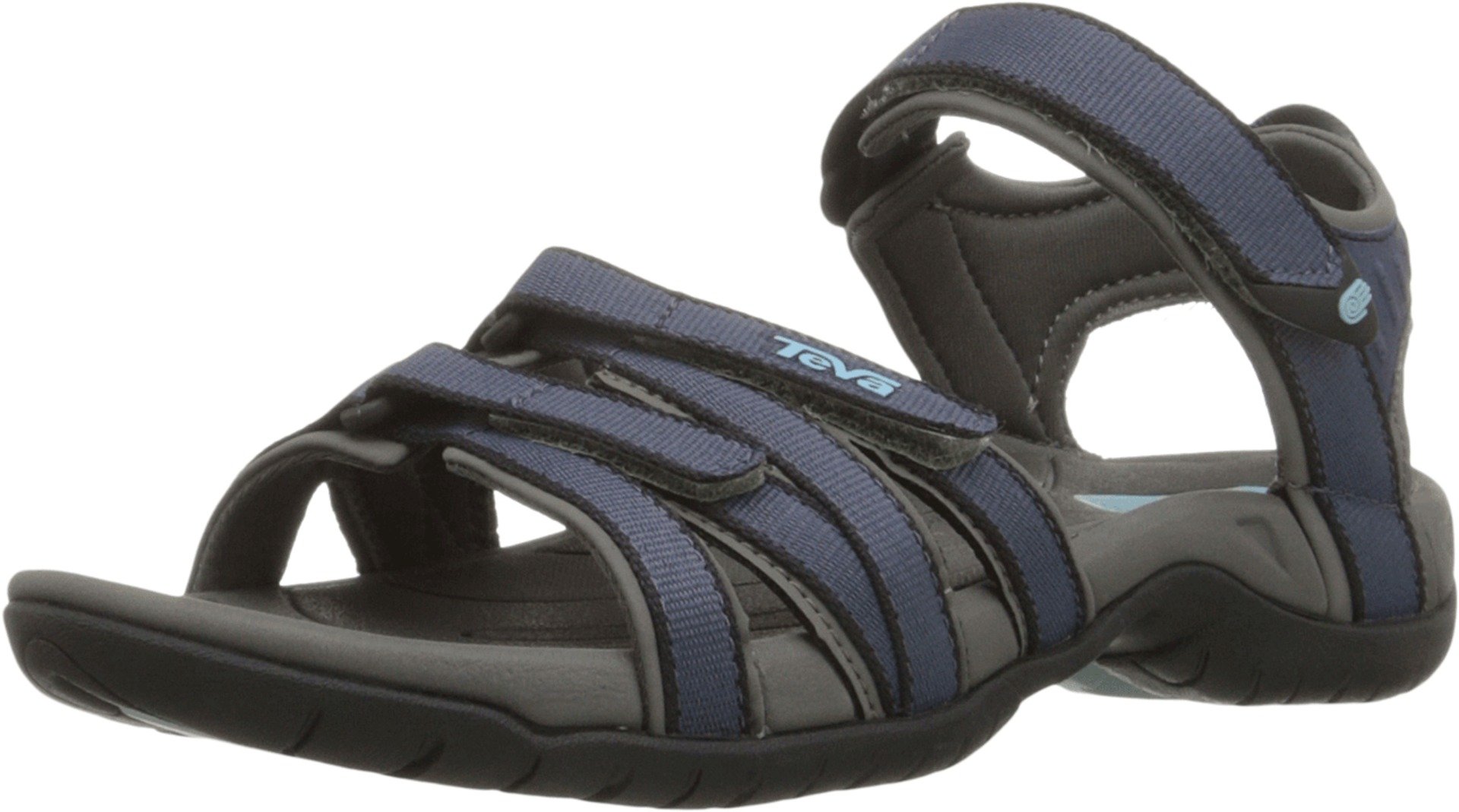
Teva Tirra Sport Sandal
Key Features
- Traction: Rubber with traction
- Arch Support: Molded EVA arch
- Adjustability: 3-point hook-and-loop
- Toe Coverage: Open
- Weight: Lightweight
- Price: Mid-Range
The Teva Tirra delivers the kind of arch support that makes a real difference for anyone dealing with plantar fasciitis or general foot fatigue. The molded EVA footbed holds the foot in a stable position, and the three-strap system allows enough adjustment to dial in a secure fit. This is a sandal that stays comfortable all day, whether you are walking paved paths or rocky singletrack.
This sandal is best suited for hikers with narrow to medium feet who need strong arch support without a closed toe. The fit runs narrow, so those with wider feet or a high instep will likely find it too restrictive. The ankle strap can also ride high and cause irritation for some — worth trying on with the socks you plan to wear or adjusting the heel strap first.
Pros
- Molded arch support that reduces foot fatigue on long walks.
- Three adjustable straps allow a customized fit for different foot shapes.
- Durable rubber outsole and strap construction hold up over multiple seasons.
Cons
- Narrow fit limits options for wider feet or high insteps.
- Ankle strap may ride high and cause irritation for some wearers.
For women with narrow to medium feet who prioritize arch support over closed-toe protection, the Teva Tirra is a dependable choice for day hikes and everyday walking.
Best for Rocky Wet Trails
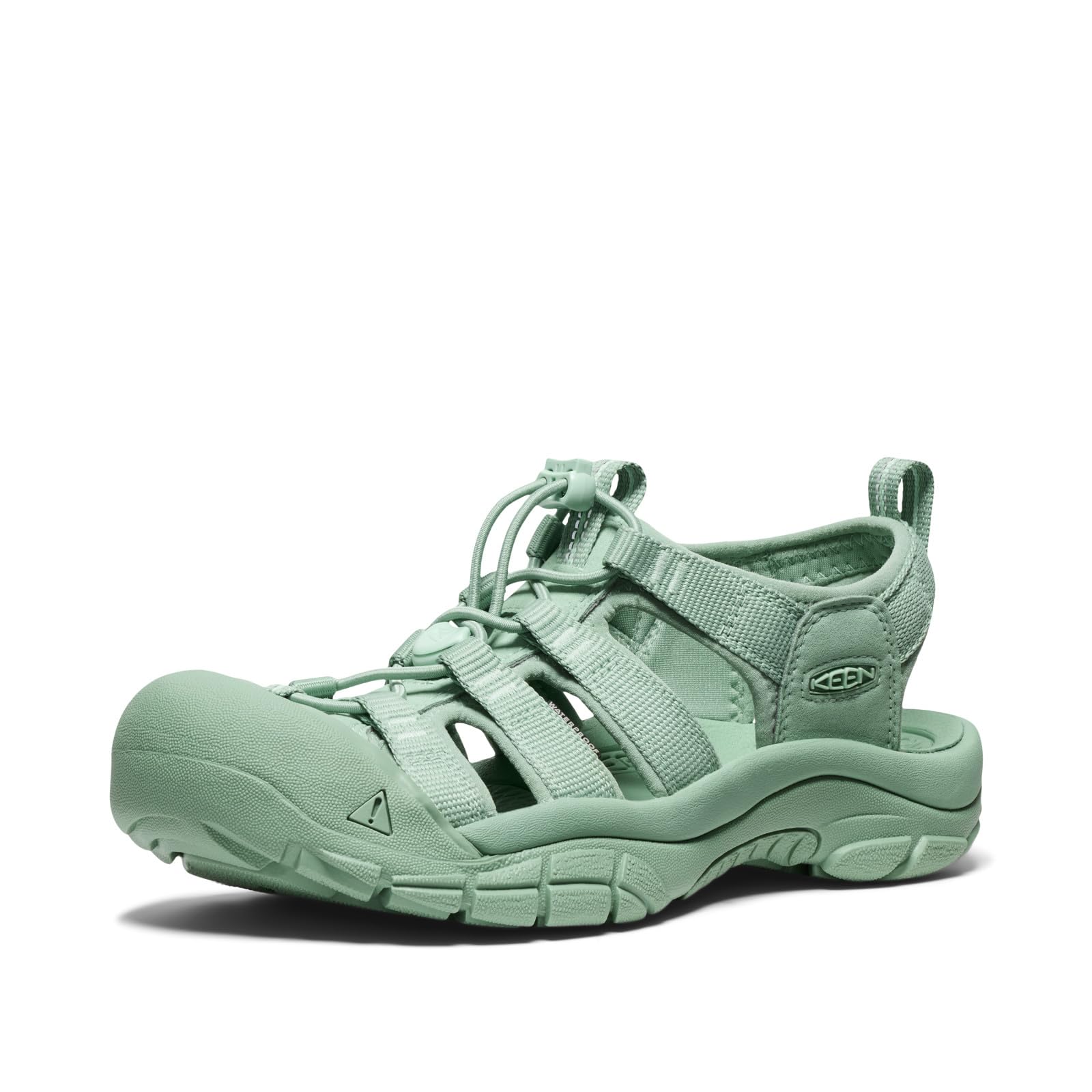
KEEN Newport H2 Sandal
Key Features
- Traction: Razor-siped rubber
- Arch Support: Metatomical EVA arch
- Adjustability: Bungee lace cord lock
- Toe Coverage: Closed-toe
- Weight: 1.3 lbs
- Price: Premium
The Newport H2 prioritizes protection over packability: the closed-toe rubber bumper and razor-siped outsole give it an edge on slippery, rocky terrain that open-toe sandals can’t match.
This sandal suits hikers who tackle wet, technical trails and want peace of mind from stubbed toes. However, the fit runs narrow and small — expect to size up by half to a full size, and at roughly 1.3 pounds it’s heavier than open sandals, so ultralight backpackers may prefer a slimmer closed-toe option.
Pros
- Closed-toe rubber bumper protects toes from rocks and underwater hazards
- Razor-siped outsole grips wet rock and slippery surfaces securely
- Arch support and metatomical footbed reduce foot fatigue over long days
Cons
- Sizing can run narrow and small; sizing up by half to a full size may be needed
- Heavier than open-toe sandals; the weight may be noticeable during all-day use
Best for hikers who value toe protection and wet-rock grip over weight savings — just be prepared to size up.
Best for Secure Adjustable Fit
Teva Hurricane XLT 2
Key Features
- Traction: Rubber with Durabrasion
- Arch Support: Molded EVA, Shoc Pad
- Adjustability: Three adjustable straps
- Toe Coverage: Open
- Weight: 1.3 lbs
- Price: Mid-Range
The Hurricane XLT 2’s three-strap system delivers a custom fit that adapts to foot width and instep height, backed by a grippy outsole for light to moderate trails and water crossings. The supportive EVA footbed holds up for full-day walks. Some cases of sole separation or strap breakage after months of use mean this sandal is best for hikers who prioritize adjustability and plan for moderate, not heavy, hiking duty.
Pros
- Customizable three-strap system fits a wide range of foot shapes
- Comfortable arch support and cushioning for all-day walking
- Grippy sole provides traction on varied terrain
Cons
- Construction may show wear with heavy use – sole separation or strap breakage can occur after months
- Fit may feel loose for narrow feet, with possible heel slippage
The Hurricane XLT 2 is the go-to sandal for hikers who need a truly adjustable fit and plan to use it for lighter trails and water play, with the acceptance that longevity may not match the top pick.
Best for Breathable Toe Protection
KEEN Whisper Sandal
Key Features
- Traction: Non-marking rubber tread
- Arch Support: Metatomical EVA
- Adjustability: Bungee lace system
- Toe Coverage: Closed-toe
- Weight: Lightweight
- Price: Mid-Range
The KEEN Whisper combines toe protection with an open mesh upper that drains and dries quickly, making it a solid choice for warm-weather hikes and creek crossings. The bungee lace system and metatomical footbed provide immediate comfort and noticeable arch support — no break-in period needed. Fit runs narrow, so those with medium feet may need to go up half a size, and the fabric at the seams can wear through after extended, rough use. This sandal suits hikers who want a closed toe for trail debris but prefer a lighter, more airy feel than the heavy-duty Newport H2, and who value the ability to toss them in the washing machine.
Pros
- No break-in needed — wear them from the first hike without blisters
- Arch support that holds up on moderate trails and all-day walks
- Machine-washable construction keeps them fresh after muddy outings
Cons
- Narrow fit may require sizing up by half a size for medium-width feet
- Fabric at the seams can wear through after heavy, extended use
Best for hikers who want closed-toe protection without the bulk, and who are willing to adjust sizing for a secure fit.
Best for Budget Toe Protection
Dannto Closed-Toe Hiking Sandal
Key Features
- Traction: Non-slip rubber
- Arch Support: Cushioned arch support
- Adjustability: Adjustable hook-and-loop
- Toe Coverage: Closed-toe
- Weight: Lightweight
- Price: Budget
The Dannto delivers closed-toe protection and plush cushioning with arch support at roughly half the price of comparable hiking sandals from Keen or Teva. The adjustable straps accommodate most foot shapes, and the lightweight build dries quickly after water use. This makes it a strong option for budget-conscious hikers and day-trippers on moderate terrain. However, the flexible sole loses stability on rocky, technical trails, and sizing can be inconsistent — some may need to size up or down. For light hikes, water activities, and casual walking, it offers surprising value.
Pros
- Plush cushioning with genuine arch support for all-day comfort on moderate trails.
- Sturdy closed-toe design protects toes from rocks and roots during hikes and water activities.
- Costs about half of name-brand alternatives while delivering comparable cushioning and support.
Cons
- Sizing can be inconsistent — some find the fit runs large or small, requiring an exchange.
- Sole is more flexible than stiff-soled models, which may feel less supportive on rocky, uneven terrain.
A capable budget sandal for light to moderate hiking and water use, provided you verify sizing and stick to trails that don’t demand a rigid sole.
Best for Lightweight Travel Sandal
Plaka Explore Sandals
Key Features
- Traction: Rubber with traction
- Arch Support: Cushioned arch support
- Adjustability: Adjustable velcro straps
- Toe Coverage: Open
- Weight: Very lightweight
- Price: Budget
Weighing almost nothing and compressing flat, the Plaka Explore delivers a level of packability that sandals twice its price struggle to match, while the cushioned footbed provides arch support that feels right from the first wear.
This is a solid choice for light walking, sightseeing, and airport days, but the heel strap can cause irritation for some, and the sole shows wear under frequent heavy hiking — better suited to casual use than rugged trails.
Pros
- Extremely lightweight and packs flat for easy travel storage
- Arch support and cushioning are comfortable straight out of the box
Cons
- Back heel strap can rub and cause blisters for some wearers
- Durability is moderate — sole wear may appear with frequent heavy hiking
If you need a lightweight travel sandal with good arch support and don’t plan to tackle rough terrain, the Plaka Explore delivers impressive value.
Best for Wide Feet Budget
UBFEN Hiking Sport Sandals

Key Features
- Traction: Non-slip rubber
- Arch Support: Cushioned arch support
- Adjustability: Adjustable hook-and-loop
- Toe Coverage: Open
- Weight: Lightweight
- Price: Budget
These sandals deliver good comfort and arch support for the price, with adjustable straps that accommodate wide feet. The cushioning feels comparable to pricier options. However, the wide fit won’t suit narrow feet, and the soles may show wear after a season of regular hiking — best for light trails, beach, and casual wear.
Pros
- Very comfortable with a soft, cushiony footbed
- Great arch support for long walks and foot pain relief
Cons
- Soles may show noticeable wear after a season of frequent trail use
A cost-effective option for wide-footed hikers who mostly walk easy terrain and want plush cushioning without the mid-range price tag.
Best for Customizable Wide Fit
Viakix Sport Sandal

Key Features
- Traction: Non-slip rubber tread
- Arch Support: Arch support soft insole
- Adjustability: Multiple velcro straps
- Toe Coverage: Open
- Weight: Lightweight
- Price: Mid-Range
The Viakix Sport Sandal delivers precise fit control through its three-point velcro closure, allowing full customization for narrow, wide, or high-instep feet. Soft insoles provide instant comfort with no break-in. However, velcro grip may weaken over extended use, and some foot sliding occurs in wet conditions. This sandal suits hikers who prioritize adjustability and plan to use it mainly on dry trails.
Pros
- Soft insoles offer immediate comfort with zero break-in.
- Three-point velcro straps allow full tension and width customization.
Cons
- Velcro grip can weaken over time, and wet conditions may cause foot sliding.
Best for dry trail hiking where precise fit adjustability matters more than long-term velcro grip.
Best for Budget Classic Style
CAMEL CROWN Hiking Sandals

Key Features
- Traction: Non-slip rubber
- Arch Support: Arch support
- Adjustability: Adjustable hook-and-loop
- Toe Coverage: Open
- Weight: Lightweight
- Price: Budget
This budget-friendly sandal offers dependable grip and a classic Teva-like style that works well on light trails and beach walks. However, the toe strap placement can feel odd, and the fit may not suit narrow or very wide feet, making it less consistent than pricier alternatives.
Pros
- Provides confident grip on wet and dry surfaces for light trail hiking.
- Comfortable sole cushions against gravel and uneven terrain.
Cons
- Toe strap positioning may cause an inward pull that feels unnatural.
Best for light recreational use where budget is the priority and the fit works for medium-width feet.
Best for Stylish Casual Walking
MEGNYA Hiking Sandals

Key Features
- Traction: Rubber
- Arch Support: Arch support
- Adjustability: Hook-and-loop straps
- Toe Coverage: Open
- Weight: Lightweight
- Price: Budget
The braided design and plush cushioning make these a stylish option for casual beach days or short walks. However, the fit runs small and narrow, which may require sizing up, and the arch support can feel insufficient for high arches. For narrow to medium feet seeking an affordable summer sandal for light use, these deliver good value – just don’t expect them to handle serious hiking or accommodate wide feet.
Pros
- Cushioned footbed with arch support for comfortable walking
- Stylish braided design that works for casual outings
Cons
- Fit runs small and narrow, often requiring sizing up for a comfortable fit
A budget-friendly pick for narrow to medium feet wanting a cute summer sandal for light walks and beach outings, not for wide feet or serious trail use.
Best for Light Casual Walking
DREAM PAIRS Hiking Sandals

Key Features
- Traction: Rubber with traction
- Arch Support: Cushioned arch support
- Adjustability: Three-point hook-and-loop
- Toe Coverage: Open
- Weight: Lightweight
- Price: Budget
The cushioned footbed and adjustable straps make this sandal comfortable for all-day wear at theme parks or on errands. It dries quickly after water exposure and packs easily for travel. However, sizing runs inconsistent – some find it too large or too narrow, and arch support is moderate, so it’s not suited for uneven trails or serious hiking.
Pros
- Cushioned footbed keeps feet comfortable through long days of walking.
- Hook-and-loop straps allow easy customization for a secure fit.
Cons
- Sizing can be inconsistent – some find the fit too large or too narrow.
Best for theme park days and light errands where quick-drying and lightweight matter more than precision fit.
Best for Wide Feet Comfort
Viakix Walking Sandal

Key Features
- Traction: Rubber with traction
- Arch Support: Cushioned arch support
- Adjustability: Stretchy fabric slip-on
- Toe Coverage: Open
- Weight: Lightweight
- Price: Mid-Range
The Viakix Walking Sandal delivers extreme comfort with soft stretchy straps that won’t rub, plus solid arch support for all-day wear. The slip-on design suits wide feet and sensitive toes. However, those straps can loosen with regular use, making the fit less secure on uneven terrain, and sizing can be inconsistent between units.
Pros
- Extremely comfortable soft straps that don’t rub or irritate sensitive toes.
- Great arch support for long walks and standing.
Cons
- Stretchy straps may loosen over time, leading to a less secure fit on uneven trails.
Best for casual walkers and those with wide feet who prioritise comfort over trail security.
Best for Occasional Water Use
YOCCI Sport Sandals

Key Features
- Traction: Rubber
- Arch Support: Yoga mat insole arch
- Adjustability: Adjustable velcro three-point
- Toe Coverage: Open
- Weight: Lightweight
- Price: Budget
The YOCCI Sport Sandals offer a soft yoga-mat footbed and adjustable straps for a custom fit, making them comfortable for short walks or water use. However, the outsole can wear through quickly and breakage is possible with regular use, so they are not suited for hiking or extended walking – best reserved for infrequent, budget-conscious buyers.
Pros
- Soft yoga-mat footbed for immediate comfort.
- Adjustable straps allow a custom fit for varied foot shapes.
Cons
- With regular use on pavement or trails, the outsole can wear through quickly and the sandals may break at the sole.
Best for occasional short walks or water use where budget is the top priority and replacement is acceptable.
How to Choose
The most important factor when choosing a hiking sandal is understanding that fit varies dramatically between brands — and even between models from the same brand.
Traction and Outsole Grip
The outsole material and tread pattern determine how secure your footing is on wet rock, loose gravel, or muddy trails. Rubber compounds vary widely: softer rubber grips better on slick surfaces but wears faster, while harder compounds last longer but can slip. Razor-siped treads (like those on Keens) channel water away and provide superior wet-surface traction.
For hikers who cross streams or hike after rain, a sandal with a designated ‘non-marking’ or ‘razor-siped’ outsole is worth the extra cost. On dry dirt or pavement, a basic rubber sole is enough.
Arch Support and Footbed Cushioning
Arch support is not just about comfort – it prevents foot fatigue and conditions like plantar fasciitis on long hikes. Molded EVA footbeds offer a balance of cushioning and support, while removable insoles let you swap in orthotics. Be wary of ‘yoga-mat’ footbeds: they feel soft initially but can compress quickly, reducing support over time.
For all-day hiking, look for a contoured footbed with defined arch support rather than a flat cushioned slab. Brands like Teva and KEEN use metatomical shapes that match the foot’s natural curve.
Adjustability of Straps
Multiple adjustable straps allow you to dial in the fit for different foot shapes and activities. Three-point hook-and-loop systems (as on many Tevas) let you tighten the forefoot, arch, and heel independently. Bungee lace systems (common on Keens) are quick but offer less granular control. Velcro straps can lose grip over time, especially when wet.
For wide feet or high insteps, prioritize sandals with at least three separate adjustment points. Slip-on stretchy straps are convenient but may not hold securely on uneven terrain.
Toe Coverage (Open vs Closed)
Closed-toe sandals with a rubber bumper protect toes from rocks and roots on technical trails, but they are heavier and less breathable. Open-toe sandals cool faster and dry quickly, making them better for water crossing and hot days – but they leave toes exposed. If you hike on rocky or rooty terrain, a closed-toe design like the KEEN Newport H2 dramatically reduces stubbing risks.
For casual walking or light trails, open-toe sandals are lighter and pack smaller. The trade-off is protection vs. weight and ventilation.
Weight and Packability
Every ounce matters when you’re carrying sandals in a backpack for a day hike or travel. Lightweight models (under 10 oz per sandal) can be stuffed into a pack without a penalty, but they often sacrifice sole stiffness and durability. Heavier sandals (1.3 lbs and up) provide more structure and traction for rugged use but are less convenient to carry. The sweet spot for most hikers is a mid-weight sandal that balances packability with performance.
For travelers, consider a sandal that packs flat (like the Plaka Explore). For serious hiking, accept the extra weight in exchange for stability and protection.
FAQ
Why do my Teva sandals keep breaking at the strap?
Teva sandals use hook-and-loop straps that can wear out over time, especially if exposed to sand and salt water. The strap material itself can also fatigue from repeated bending. To extend life, rinse straps after saltwater use and avoid over-tightening. If breakage occurs within months, it may be a batch defect – some Teva models (like the Original Universal) have more reported breakage than others.
Are Keen sandals true to size?
Keen sandals consistently run small and narrow. Most users need to size up by half a full size, and sometimes a full size for wider feet. The closed-toe designs (Whisper and Newport H2) are particularly tight in the toe box. If between sizes, go larger – you can always adjust the straps.
Can hiking sandals be used for water activities?
Yes, most hiking sandals are designed for water use if they have quick-drying straps and non-slip outsoles. Open-toe sandals drain water instantly, while closed-toe models like the KEEN Newport H2 are purpose-built for rafting and kayaking. Avoid sandals with leather or thick padding that stays wet. For frequent water use, look for ‘water sandals’ or models with razor-siped tread.
What is the best budget hiking sandal for women?
The Dannto Closed-Toe Hiking Sandal offers the best combination of comfort, arch support, and toe protection for under $45. For open-toe on a budget, the Plaka Explore is extremely lightweight and packable with good arch support. If you have wide feet, the UBFEN sandal provides adjustable straps at a low price. Avoid ultra-cheap options like YOCCI for anything beyond occasional light wear – their soles wear through quickly.