This post contains affiliate links. We may earn a small commission when you buy through our links — at no extra cost to you.
Many climbers discover a hangboard’s value only after a few sessions — when wood splinters, screws pull from drywall, or holds feel too shallow to progress. This guide focuses on boards that avoid those frustrations, balancing build quality with the right amount of hold variety for home training.
The core trade-off in the category is between portability and full-wall versatility. Portable blocks are excellent for warm-ups on the trail, but they can’t replace a mounted board for serious strength work. The picks below cover both use cases without compromising safety.
Instead of chasing the cheapest option, it’s worth investing in wood that’s properly dried and finished — because a cracked board is not just wasted money, it’s a dropped workout.



Best for Progressive Training
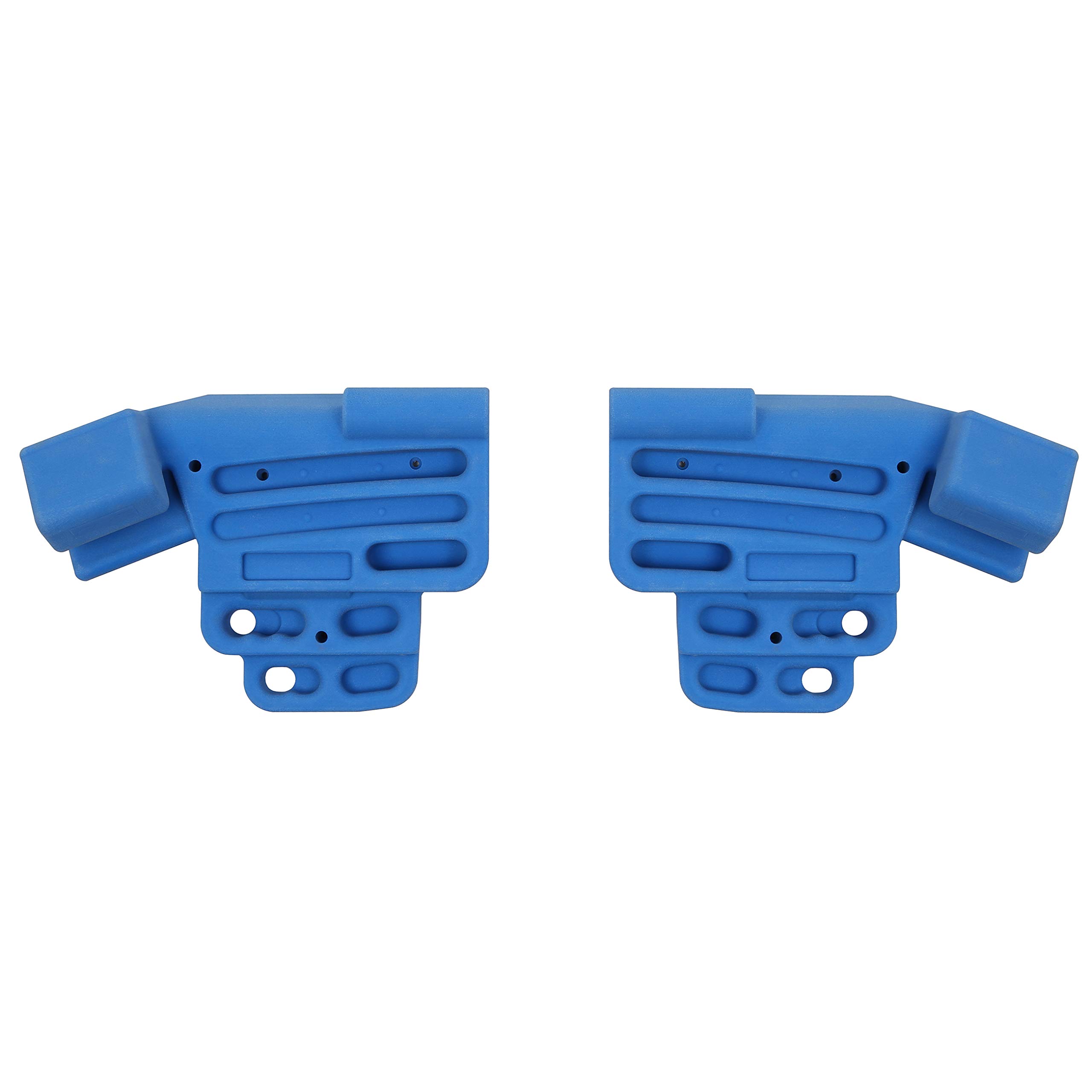
YY Vertical Board
Key Features
- Grip Types: 15 progressive, magnetic inserts
- Material: Poplar wood
- Mounting: Wall-mounted
- Portability: Wall-mounted
- Price: $$
Smooth poplar wood finish and a magnetic depth-adjustment system set this board apart from fixed-grip alternatives. The magnetic inserts allow reducing pocket depth by 2mm increments, providing a structured path from beginner to advanced without buying additional accessories. Install is straightforward with included hardware, and the build quality shows no rough edges or cracking under load.
Best suited for climbers who want a dedicated training board at home and value a progressive system that scales with their strength gains. The board mounts permanently, so it won’t work for travel or quick warm-ups at the gym — that tradeoff is clear from the start.
Pros
- Smooth poplar wood finish with no rough edges — comfortable for long hang sessions.
- Magnetic insert system provides 2mm depth increments for structured progression without buying additional holds.
- Straightforward installation with included hardware — mounts securely on standard walls.
Cons
- Requires permanent wall mounting — not an option for renters or anyone who needs to take their board down regularly.
For climbers who train at home and want a board that adapts as their fingers get stronger, the YY Vertical delivers a clean progression path without the clutter of separate accessories.
Best for Advanced Training
TRANGO Rock Prodigy
Key Features
- Grip Types: 36 grips, adjustable width
- Material: Polyurethane
- Mounting: Wall-mounted
- Portability: Wall-mounted
- Price: $$$
With 36 distinct holds — variable-depth edges, pockets, pinches, and slopers — this board gives advanced climbers a broader training range than the magnetic-depth competitor. The adjustable width design allows you to set shoulder spacing for comfort and injury reduction. That depth of variety and ergonomic flexibility makes it a natural fit for climbers following structured programs like the included app. Keep in mind that mounting hardware is not included; you will need to source bolts and anchors separately, adding a step before installation.
Pros
- 36 hold options allow progressive overload without buying add-ons
- Adjustable width reduces shoulder strain and fits different body types
- Companion app provides a ready-to-follow training methodology
Cons
- Mounting hardware not included — requires separate purchase of bolts and anchors
Serious climbers after the widest hold variety and a guided training plan get real value here, provided they accept the extra purchasing step for mounting.
Best for Budget Wall Mount
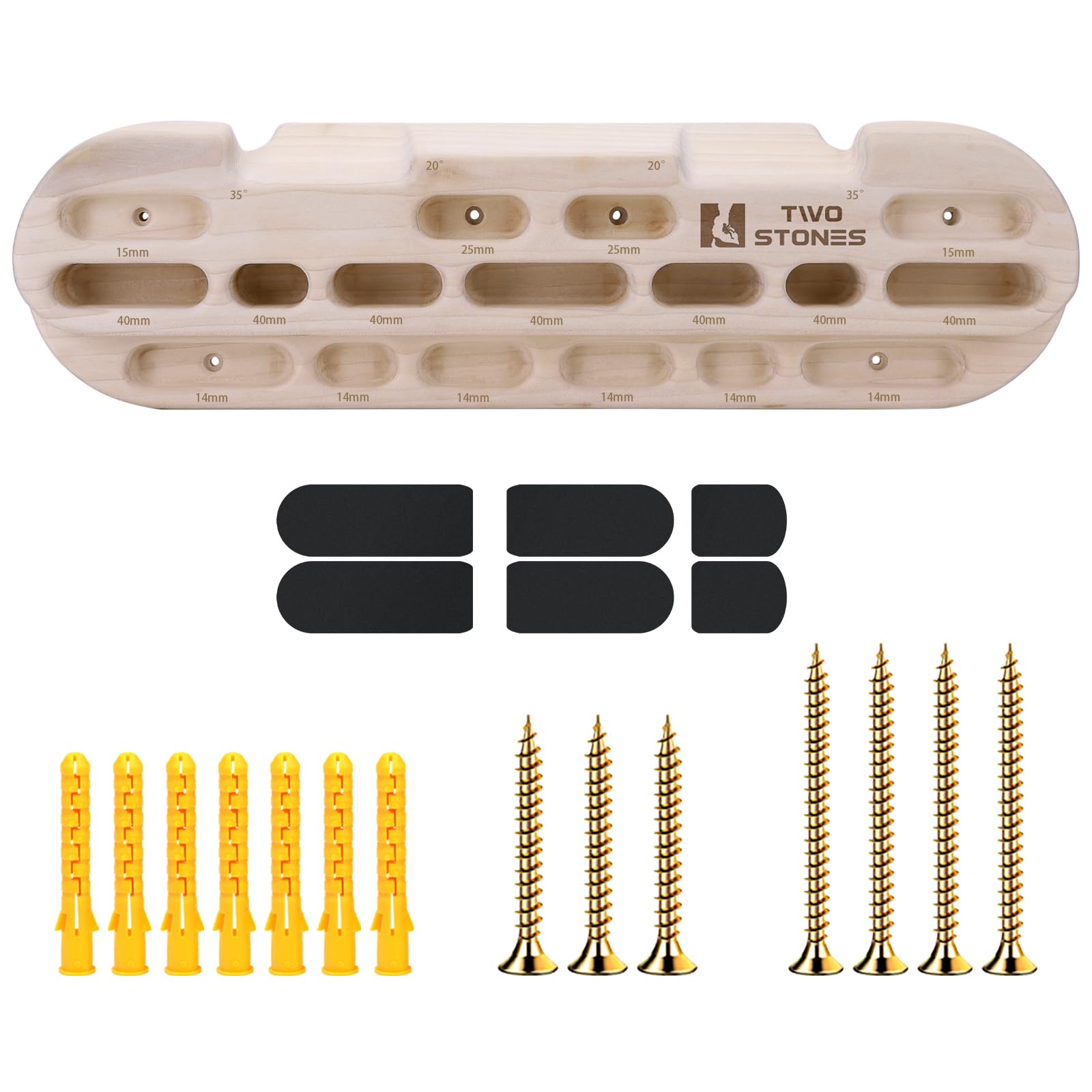
TWO STONES Hangboard
Key Features
- Grip Types: Jugs, slopes, pockets
- Material: Solid wood (boxwood)
- Mounting: Wall-mounted
- Portability: Wall-mounted
- Price: $$
The TWO STONES Hangboard delivers a solid wood surface with a smooth finish that feels comfortable on the fingers during hangs. It includes a standard set of jugs, slopes, two- three- and four-finger pockets, and edges — enough variety for beginners to build basic strength. Where it differs from the top pick is the lack of progressive depth adjustment: holds are fixed depth, so you won’t get the incremental overload that magnetic inserts provide.
This board suits budget-conscious climbers who want a wall-mounted training tool without spending over $60. Mounting hardware is included, but the kit may not fit every doorframe or wall configuration — some setups may require additional screws or anchors. The hold shapes are functional but less ergonomic for longer sessions compared to premium wood boards, a tradeoff users notice after 20+ minute training blocks.
Pros
- Solid wood construction with smooth finish feels pleasant on the skin.
- Essential hold shapes cover jugs, slopes, and pockets for basic training.
Cons
- Hold edges may feel less comfortable for prolonged training sessions compared to ergonomic premium boards.
For a budget-friendly wood board that covers the basics without extras, the TWO STONES Hangboard offers a solid foundation for entry-level training at a price that leaves room in your gear budget.
Best for Portable Warm-Ups
YY Vertical Penta
Key Features
- Grip Types: 7 grips, 360° rotate
- Material: Birch and poplar wood
- Mounting: Portable
- Portability: Portable
- Price: $$
Seven grip depths plus a handle in a compact rotating block that fits in any bag. The wood construction and 360-degree rotation let you switch between edge sizes and pockets without re-rigging — ideal for quick warm-ups or short no-hang sessions between climbs.
Best suited for climbers who want a supplementary finger-strength tool to carry to the gym or crag, not a wall-mounted board for progressive overload. Some units may have splinters or rough edges — worth a quick sanding before first use.
Pros
- High-quality portable hang holds with excellent ergonomics for fingertip comfort.
- Compact size and rotating design make it easy to pack and use anywhere for warm-ups or quick hangs.
Cons
- Occasional splinters or rough edges on some units; a quick sanding resolves the issue.
A practical warm-up companion for climbers who travel frequently and need a compact block that packs a range of grip depths.
Best for Budget Portable
Bellaroca Portable
Key Features
- Grip Types: 5 hold types, adjustable plates
- Material: Solid beech wood
- Mounting: Portable
- Portability: Portable
- Price: $
This portable hangboard stands out among travel-friendly options for its solid beech wood construction and adjustable rubber plates that let you vary pocket depth. Unlike wall-mounted boards, it is designed for warm-ups and light training on the go – not for adding weight or full-body hangs. The two small blocks fit easily in a gym bag, making it a practical tool for climbers who need a quick finger-strength session before hitting the boulders. Budget-conscious climbers and beginners will appreciate the value, though those seeking serious progressive overload should look to a wall-mounted board with more load capacity.
Pros
- Solid beech wood with five distinct hold types for variety
- Adjustable rubber plates allow fine-tuning of pocket depth
- Lightweight and compact design fits in a gym bag for travel
Cons
- Two small blocks limit load capacity – not meant for weighted hangs or full-body training
A smart choice for climbers who prioritize portability and budget, but not a substitute for a wall board when you need to build serious finger strength.
Best for Travel Warm-Ups
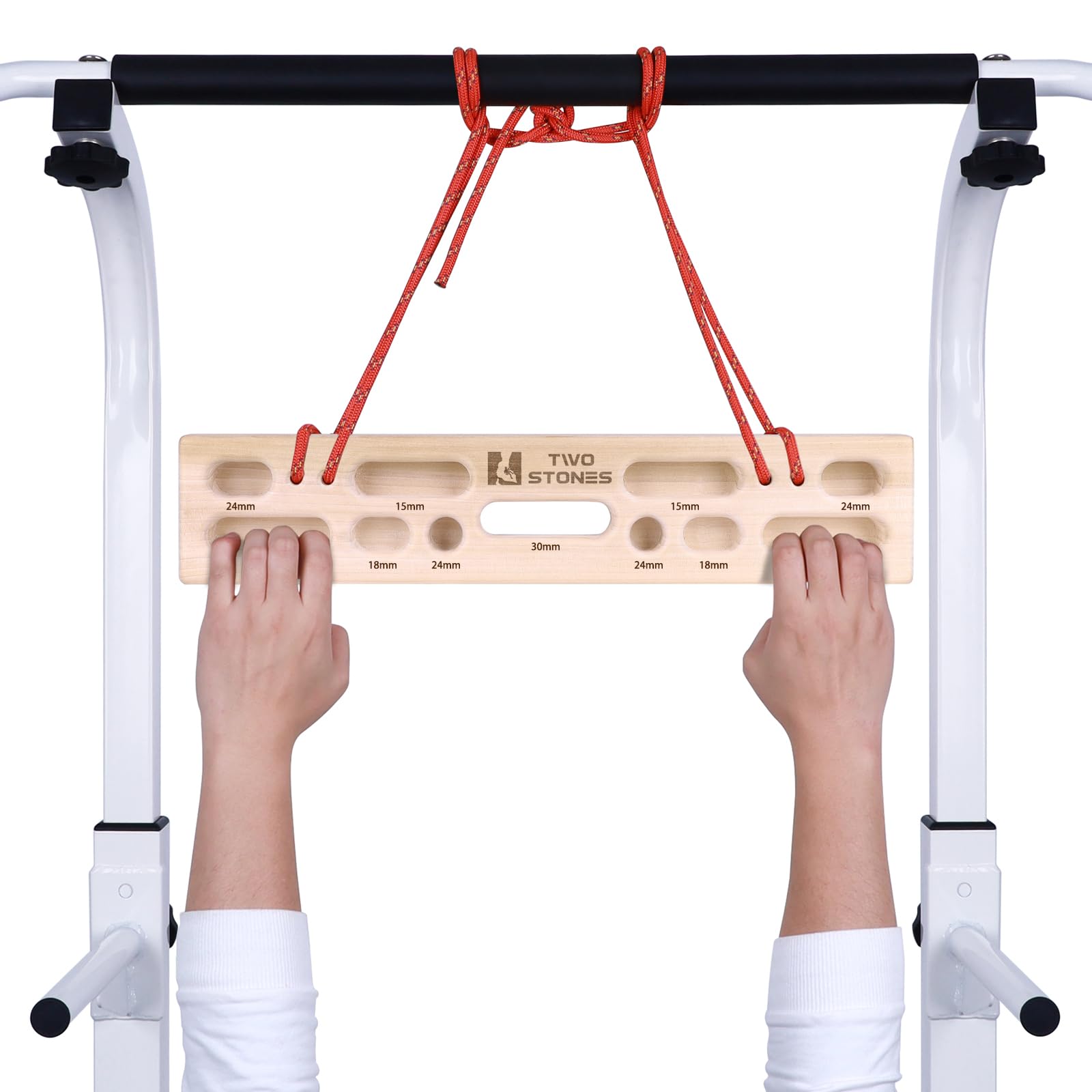
TWO STONES Portable
Key Features
- Grip Types: Finger pockets, edges
- Material: Natural wood
- Mounting: Portable
- Portability: Portable
- Price: $
This compact wood block offers essential finger pockets and edges for warm-ups and travel. Its low weight and easy portability suit climbers who need a quick hang before a session. Compared to more feature-rich boards like the YY Vertical Penta, grip options are fewer and the finish less refined. One unit reportedly cracked under heavy load, so this block is best for light warm-up hangs rather than full bodyweight training.
Pros
- Lightweight design (1.65 lbs) packs easily in a gym bag or backpack.
- Natural wood construction feels comfortable for short hangs and warm-ups.
Cons
- One unit reportedly cracked under heavy load, so this block suits light warm-up hangs rather than full bodyweight training.
A practical portable option for climbers who need a warm-up tool on trips or at the crag, but not a substitute for a wall-mounted training board.
Best for Adjustable Depths
ESTROSO Adjustable

Key Features
- Grip Types: Adjustable rubber fillers
- Material: Wood
- Mounting: Wall-mounted
- Portability: Wall-mounted
- Price: $$
Rubber fillers let you set pocket depth for progressive overload, and the included mounting hardware makes installation straightforward. Build quality feels solid for the mid-range price. The trade-off: wood texture can be rough on the skin in some cases — fine for climbers who don’t mind a little extra grip or who use chalk regularly.
Pros
- Adjustable rubber inserts allow progressive depth reduction without buying separate holds.
- Mounting hardware is included and installation is easy for a home wall setup.
Cons
- Climbers doing long hangs may find the wood texture rough on fingertips — less of an issue with chalk or shorter sessions.
Worth considering if adjustable depth is your priority and you’re willing to inspect the finish upon arrival.
How to Choose
The best hangboard for you comes down to how you climb: portable for warm-ups and travel, wall-mounted for progressive strength building.
Grip Variety
More grip types let you target specific finger positions and progress from jugs to shallow edges. Beginners need at least a few jugs and slopes to build baseline strength, while advanced climbers require variable-depth pockets and pinches to push through plateaus.
The hidden trade-off: a board with 30+ holds is larger and heavier, often requiring a dedicated wall space. Smaller boards (8-15 holds) are easier to mount and still offer sufficient progression for most intermediate climbers.
Material
Wood boards feel natural on the skin and absorb sweat better than polyurethane, but they require proper drying and finishing to avoid splinters. Cheap wood can crack under repeated load if it has high moisture content. Polyurethane (like on the TRANGO) is more durable and won’t split, but some climbers find its texture less comfortable for long sessions.
For wood boards, look for poplar, birch, or beech — they balance weight and hardness. Avoid boards with visible knots or rough edges; these are signs of poor quality control.
Mounting System
Wall-mounted boards transfer your full body weight into the wall. That force can pull screws out of drywall unless they are anchored into studs or a thick plywood backboard. Many budget boards include flimsy hardware that strips easily, leading to dangerous failures.
Portable hangboards avoid this issue entirely — they rely on your grip strength alone and can be used anywhere with a doorframe or rope. The trade-off is you can’t hang your full weight for long sets, limiting strength gains.
Load Rating
Weight capacity is rarely advertised, but it matters. A board rated for 200 lbs may snap if a 180 lb climber hangs dynamically. Most budget boards don’t specify load, so the safest bet is to choose a model with many positive reviews over time or a known brand that tests its products.
If you plan to add weight via a belt, look for boards with metal insert nuts or reinforced screw holes. Wood alone can split at the mounting points under heavy static loads.
Portability
Portable hangboards are light enough to toss in a backpack and can be used on doorframes, tree branches, or with a strap. They are ideal for warm-ups, travel, or supplemental no-hang training. But their small size limits the number of hold shapes and they cannot be used for full-body hanging (e.g., pull-ups).
If you only have space for one board, a wall-mounted model offers far more versatility. Portable blocks are best as a secondary tool for rest days or trips.
FAQ
Why did my wooden hangboard crack after a few uses?
Most wooden hangboards crack because of moisture content — wood that isn’t properly dried shrinks and splits as it acclimates to your home’s humidity. Also, mounting screws placed too close to edges can create stress points. To avoid this, choose boards made from kiln-dried poplar, birch, or beech, and always pre-drill screw holes if possible.
Can I mount a hangboard on drywall without studs?
Drywall alone cannot support the dynamic force of hanging. You must either screw into wall studs or install a 3/4-inch plywood backboard that spans at least two studs. Drywall anchors will pull out under load and likely cause injury. If you cannot access studs, consider a portable hangboard instead.
Are portable hangboards good enough for daily finger training?
Portable hangboards are excellent for warm-ups, staying fresh on trips, and no-hang training, but they are not a replacement for a wall-mounted board if your goal is serious finger strength gains. Their limited hold variety and lack of full-body weight load make them less effective for progressive overload. Use them as a supplement, not your primary tool.
What is the best wood for a climbing hangboard?
Poplar, birch, and beech are the most common high-quality woods. Poplar is lightweight and holds edges well, birch is harder and more durable, beech sits in between. Avoid softwoods like pine, which dent easily, or boards with visible knots that weaken the structure.