This post contains affiliate links. We may earn a small commission when you buy through our links — at no extra cost to you.
Every backpacker learns the hard way: cheap gaiters snap at the under-foot strap or slide down after a mile. The difference between a $15 pair and a $35 pair isn’t just hype — it’s the difference between a dry day and a wet, frustrating hike.
This guide cuts through the price noise. We focus on the specific trade-offs that matter: strap material, fabric denier, and closure reliability. The goal is to find gaiters that deliver real snow and mud protection without requiring a second mortgage.
Whether you’re snowshoeing in powder or bushwhacking through wet brush, the picks here balance durability and cost so you can spend less time adjusting gear and more time on trail.



Best for Snow & Mud
Unigear 1000D
Key Features
- Height: Mid-calf
- Closure: Buckle + velcro
- Strap: Nylon
- Price: $
The Unigear leg gaiters use 1000D fabric with over 8000mm waterproofing, keeping boots dry in deep snow and mud without the premium price tag. The build quality holds up well on rocky trails and through brush, matching what you’d expect from name brands at twice the cost.
This pair suits budget-conscious backpackers and winter hikers who want reliable snow protection without spending extra. The calf area runs snug over thick winter pants — sizing up resolves that for most, but those with very large calves or who wear insulated snow pants should look elsewhere. Under-foot straps stay put during miles of snowshoeing or hiking.
Pros
- Keeps boots dry in deep snow and slush
- Build quality feels far above the price point
- Costs less than many 600D options while using 1000D fabric
Cons
- Velcro closure may lose grip over time with regular use
- Size chart measurements can mislead — exchanging for a different size may be needed
For hikers who need effective snow and mud protection without the premium markup, the Unigear delivers 1000D durability and real waterproofing at a price that’s hard to beat.
Best for Winter Backpacking
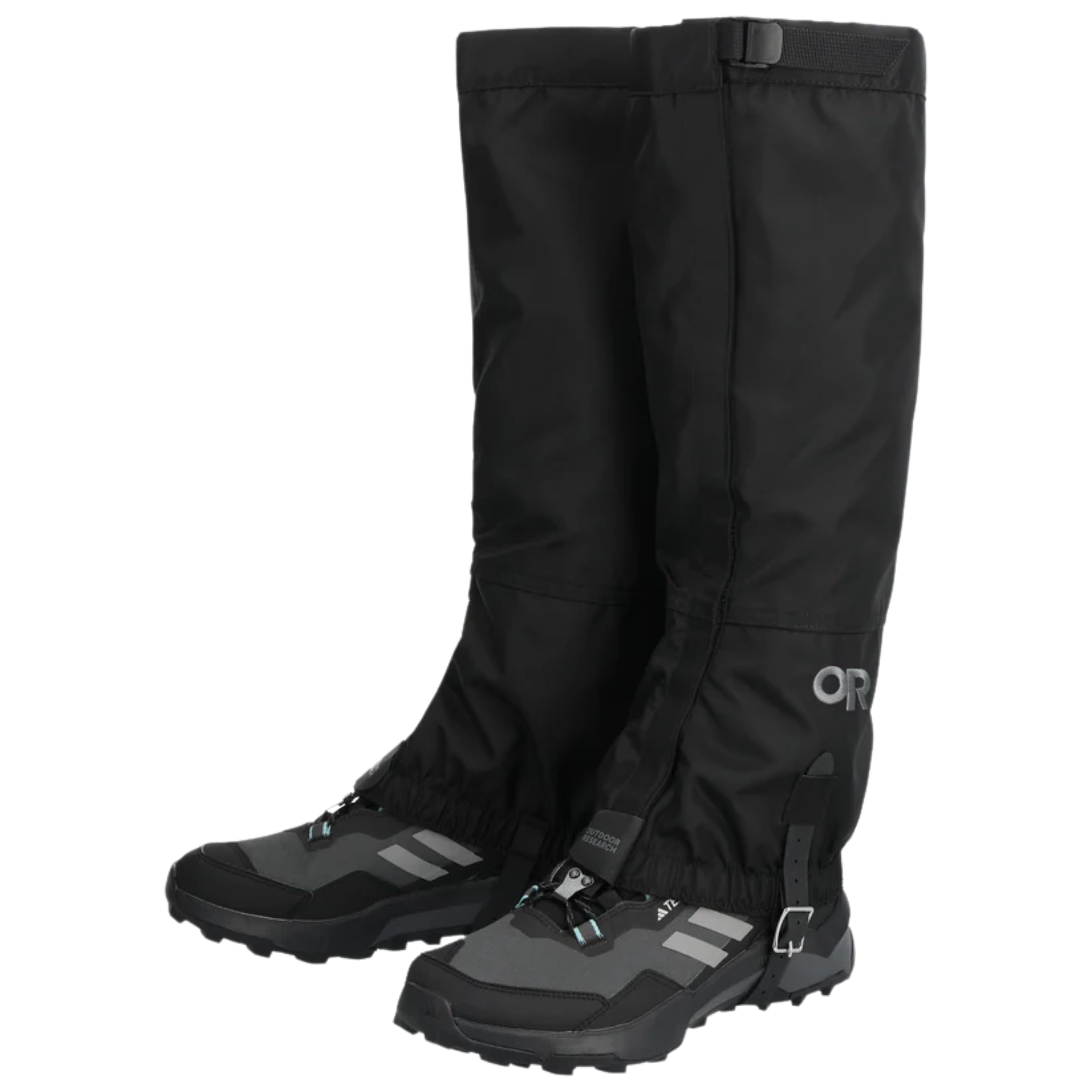
OR High Gaiters
Key Features
- Height: Mid-calf
- Closure: Snaps + velcro
- Strap: Leather
- Price: $$$
The Outdoor Research Rocky Mountain High Gaiters deliver superior snow protection and rugged build quality, ideal for winter backpackers and snowshoers. The calf fit runs snug, especially with bulky snow pants, and the price is premium. This is the right choice for those who prioritize absolute powder protection and are willing to pay for durable construction.
Pros
- Keeps boots dry in deep powder with a secure seal.
- Well-stitched, rugged materials hold up to repeated use.
- Easy on/off with snap and Velcro closure, no fumbling.
Cons
- Calf fit may feel tight with heavy layering, less adjustable than alternatives.
- Leather instep straps can fray if machine washed.
For winter backpackers who face deep snow and want a gaiter that holds up season after season, this premium option is worth the investment — but check the calf fit before buying.
Best for Water Protection
Frelaxy High-Perf
Key Features
- Height: Mid-calf
- Closure: Buckle + velcro
- Strap: Rubber
- Price: $$
The Frelaxy gaiters combine 900D fabric with a rubber instep strap that provides dependable protection in snow and wet conditions at a mid-range price. The buckle and drawstring hardware can give out under tension, and larger calves may find the fit tight. These suit hunters and budget-conscious backpackers who prioritize water protection over long-term component durability.
Pros
- Waterproofing keeps legs dry in deep snow
- Good value for the performance
- Sturdy 900D fabric construction
Cons
- Fit may be snug for larger calves – sizing up can address this
- Buckle and drawstring may break under tension in some cases
A capable gaiter for budget-conscious hikers who can accept occasional hardware issues.
Best for Day Hiking
Pike Trail Trekpro
Key Features
- Height: Mid-calf
- Closure: Velcro + buckles
- Strap: Nylon
- Price: $$
The Pike Trail is the most-reviewed lightweight gaiter for day hikers who want quick on/off convenience and a carry bag. Its Velcro and buckle closure allows stepping in and out without unbuckling boots, and the nylon fabric handles light moisture on maintained paths.
This gaiter suits hikers on well-maintained trails where the under-foot strap isn’t stressed — it can snap on rough terrain. With a fit that may feel loose or tight depending on leg shape, it works best for casual day hikes rather than multi-day trips in harsh conditions.
Pros
- Materials and stitching hold up well for the price.
- On/off design works with boots on — no need to unbuckle.
- Solid value for day hiking without heavy gear demands.
Cons
- Velcro and buckle closure can lose hold during extended use.
For casual day hikes on smooth trails, the Pike Trail offers convenient protection at a fair price — but choose a sturdier option if you encounter rocky terrain regularly.
Best for Occasional Snow
TRIWONDER Gaiters
Key Features
- Height: Mid-calf
- Closure: Hook & loop
- Strap: Thin nylon
- Price: $
The TRIWONDER Gaiters deliver solid snow protection at a budget-friendly price, undercutting the top pick by nearly half. Made with 600D Oxford fabric and hook-and-loop closure, they keep snow and mud out of boots effectively. However, the fit runs small — sizing up is essential for average legs — and the thin under-foot strap may wear more quickly than on pricier models. This makes them best suited for occasional hikes in light snow or mud, not for backpackers who expect a gaiter to last multiple seasons.
Pros
- Good value for the price — performs above its cost for occasional use.
- Works well in light snow, keeping pants and boots dry.
- Build quality is solid for the price point, with clean stitching.
Cons
- Sizing runs small — medium fits snugly on average legs, so ordering up is needed.
- Under-foot strap is thin and may wear with regular use.
For an occasional winter day hike on a tight budget, these gaiters are a smart buy — just size up and accept that the strap may not last multiple seasons.
Best for Dry Terrain
OR Low Gaiters
Key Features
- Height: Low (ankle)
- Closure: Snaps + elastic
- Strap: Nylon
- Price: $$$
The Outdoor Research Rocky Mountain Low Gaiter delivers premium build quality and effective debris protection for alpine scrambling. Its rugged construction keeps sand, pebbles, and scree out of boots, making it a go-to for dry, dusty trails and rocky terrain.
This gaiter is best for hikers with slim calves who prioritize durability and lightweight performance in summer conditions. The calf opening is snug – those with average or larger legs may find it too constricting. It sits at ankle height, so don’t expect snow or deep mud protection.
Pros
- Durable construction withstands repeated use on rocky trails.
- Effectively blocks sand and small rocks from entering boots.
Cons
- Calf fit can be constricting for anyone with average or larger legs – slim calves will find it secure.
A premium low gaiter for summer hiking – only if your calves are slim.
Best for Snow Protection
Azarxis Hiking Gaiters
The Azarxis uses quality 600D Oxford fabric that keeps snow, thorns, and sand out effectively. However, the cut runs short and narrow — users with average calves or wearing thick trousers should size up, and occasional drawstring or under-foot strap failures have been noted.
Pros
- Well-made 600D Oxford fabric blocks snow and debris.
- Affordable protection for occasional wet-weather day hikes.
Cons
- Runs small — sizing up may be necessary for a comfortable fit over thicker pants.
Best for slim-legged hikers on a budget who need occasional snow protection — but expect to size up.
Best for Trail Running
Altra Trail Gaiter

Key Features
- Height: Low (ankle)
- Closure: Velcro (stick-on)
- Strap: Elastic
- Price: $$
This gaiter is about as light as they come — ideal for trail runs where every gram matters and the main concern is sand or small stones getting into low-cut shoes. The nylon/spandex blend seals well around the ankle and does a solid job of blocking debris on well-maintained paths. However, the self-adhesive Velcro hook strip can lose its grip after rain or extended miles, and the thin material may develop tears under rough use. For backpacking or any hike involving brush, rocky terrain, or multi-day exposure, the construction simply isn’t robust enough — the top pick in this guide offers far more durability for similar money.
Pros
- Weighs almost nothing — easy to forget you’re wearing them on a run.
- Seals out sand and small stones effectively at the ankle opening.
Cons
- Velcro adhesive can lose grip after rain or extended miles, causing the gaiter to detach from the shoe.
Suitable for ultralight trail runners who stick to clean, groomed trails and accept that the gaiter may need replacement after a season of regular use.
Best for Debris Protection
Leg Shield Low

Leg Shield Low gaiters are easy to pull on and off with a hook-and-loop wrap — no under-foot strap. They keep sand and small debris out of low shoes for day hikes or yard work. At 6.5 inches tall, they won’t stop snow or mud, and the Velcro heel can ride up during walking.
Pros
- Easy on/off with hook-and-loop wrap, no under-foot strap to adjust.
- Keeps sand and small debris out of low shoes on dusty trails.
Cons
- Velcro heel may ride up during walking, requiring occasional adjustment.
Best for day hikes on dry, dusty trails or gardening — not for snow, mud, or backpacking.
Best for Occasional Use
Pasanava One Size

Key Features
- Height: Mid-calf
- Closure: Velcro + TPU band
- Strap: TPU
- Price: $
At a budget-friendly price, these gaiters keep feet dry in wet grass and light snow. However, the one-size-fits-all design can allow sliding during hikes, and the Velcro stitching and buckles may tear or come undone after a few uses. This suits a single wet hike rather than regular backpacking.
Pros
- Good quality material for the price
- Effective at keeping feet dry in wet grass and light snow
Cons
- Velcro stitching can tear and buckles may detach after a few uses; the elastic may not keep gaiters in place.
A viable option if you need gaiters for a single wet hike or light snow outing and don’t mind limited durability.
Best for Extreme Budget
MAGARROW Gaiters

This entry-level gaiter uses 600D Oxford fabric to keep snow and debris out during yard work and light hikes. The tradeoff: sizing runs short and narrow (plan to order one size up), and the Velcro closure may lose grip over time. Best suited for occasional brush use rather than long backpacking trips.
Pros
- Very affordable – great bang for buck
- Durable enough for daily use in brush
Cons
- Sizing runs short and narrow – ordering one size up is recommended
A solid pick for weed whacking and yard work if you size up – not intended for multi-day backpacking.
Best for Sandy Trails
OrrinSports Low

Key Features
- Height: Low (ankle)
- Closure: Elastic + front hook
- Strap: Rubber (HYPALON)
- Price: $$
This low gaiter does a solid job blocking sand and pebbles from sneaking into trail runners or low hiking shoes, and the breathable fabric keeps feet cool on warm days. But the under-foot elastic can be fiddly to get on over boots, and the lower strap may shred if you push through rocky or brushy terrain. It’s a good match for dry, sandy trails, not for snow, mud, or rough ground where durability matters more.
Pros
- Keeps sand and small rocks out of low shoes effectively.
- Lightweight and breathable for hot-weather hiking.
Cons
- Lower strap may shred on rough or abrasive terrain.
A lightweight option for sandy trails and beach hikes, but not suited for rocky or overgrown terrain where strap durability is critical.
Best for Trail Running
Salomon Trail Low

Key Features
- Height: Low (ankle)
- Closure: Velcro + elastic
- Strap: Elastic
- Price: $$$
This low gaiter keeps sand and small rocks out of trail runners effectively, and its lightweight build suits warm-weather runs. However, the Velcro adhesive may loosen during activity, and the material can tear after a few outings — limitations that make it a poor fit for backpacking where durability under load matters.
Pros
- Keeps sand, rocks, and dirt out of trail runners effectively.
- Lightweight and breathable for warm-weather use.
Cons
- Velcro adhesion may detach during activity and stitching can tear after a few runs.
Best for trail runners on short, clean courses who prioritize weight and breathability over long-term durability.
How to Choose
The single most important buying insight: the under-foot strap is the first thing to fail, so prioritize models with rubber or TPU straps over nylon or plastic.
Height: Low vs. Mid vs. High
Low gaiters (ankle height) are for dust and small rocks on dry trails. They offer zero snow protection — snow will spill over the top in a few steps. Mid-calf gaiters are the standard for backpacking, covering deep mud and light powder. High gaiters (calves) are for deep snow and winter conditions, but they restrict calf space and can feel tight with thick pants.
Material Denier
Denier measures fabric thickness: 600D is entry-level and adequate for occasional use, 900D resists abrasion better, and 1000D is the toughest you’ll find at a consumer price. The trade-off is weight and stiffness — 1000D gaiters are heavier but shrug off brush and rocks. For regular backpacking, aim for 900D or above; below that the fabric may tear on sharp branches.
Closure Type
Full-length Velcro is simple and fast, but the adhesive can fail in wet conditions. Buckles add security and adjustability but are another failure point. Snap buttons (like Outdoor Research) are the most durable, though less common. The best approach for backpacking is a combination: a secure top closure (buckle or snap) plus a Velcro front for easy on/off.
Under-Foot Strap Durability
The strap under your boot takes the most abuse. Nylon straps fray and snap; plastic buckles crack. Rubber and TPU straps hold up far longer and stay elastic. Some low gaiters skip the under-foot strap entirely, relying on a heel cup or Velcro — these are fine for dry terrain but will fail in mud or snow. Look for a replaceable strap if you plan on multi-season use.
FAQ
Why do my gaiters keep slipping down during a hike?
Slipping usually means the top elastic or drawstring is too loose, or the under-foot strap is not tight enough. High gaiters with a secure top closure (buckle or snap) stay up better than Velcro-only designs. Also check calf fit — if the gaiter is too wide, it will sag. Some brands need a size down for a snugger grip.
Can I use low gaiters for snowshoeing?
No. Low gaiters only cover the ankle and are designed for debris, not snow. In powder, snow will fill your boots within minutes. For snowshoeing or winter backpacking, use mid-calf or high gaiters with a waterproof coating and a tight top closure.
How tight should hiking gaiters be around my calf?
Snug enough that they don’t slide down when you bend your knee, but not so tight that they restrict circulation or pinch. You should be able to fit two fingers between the gaiter and your calf. If you wear thick pants, try the gaiter over them before buying. Many brands recommend sizing up for layering.
Are expensive gaiters really worth the money for backpacking?
For occasional day hikes, budget models under $25 can work if you size up and accept that the strap may fail after a season. For multi-day backpacking or winter trips, a $40–50 pair with a rubber strap and robust closure is worth it — the reliability difference is night and day. One broken strap on a remote trail ruins a trip.