This post contains affiliate links. We may earn a small commission when you buy through our links — at no extra cost to you.
A full-face helmet offers obvious protection, but not all are built for the forces of real mountain bike descents. Many budget options skip ASTM F1952 certification, the standard for downhill riding, leaving riders exposed during high-speed impacts. That’s a gap you can’t ignore.
Weight and ventilation are the main trade-offs in a full-face helmet. A heavy, stuffy helmet can turn a climb into a sweaty slog, while a well-vented lightweight design preserves energy for the descent. The best full-face designs now combine MIPS rotational protection with sub-700g weights and ample airflow, making them viable for long days on the trail.
This guide focuses on helmets that deliver certified safety without turning your ride into an ordeal. Whether you hit bike parks or backcountry trails, you’ll find the right balance of protection and comfort.



Best for Downhill & Enduro
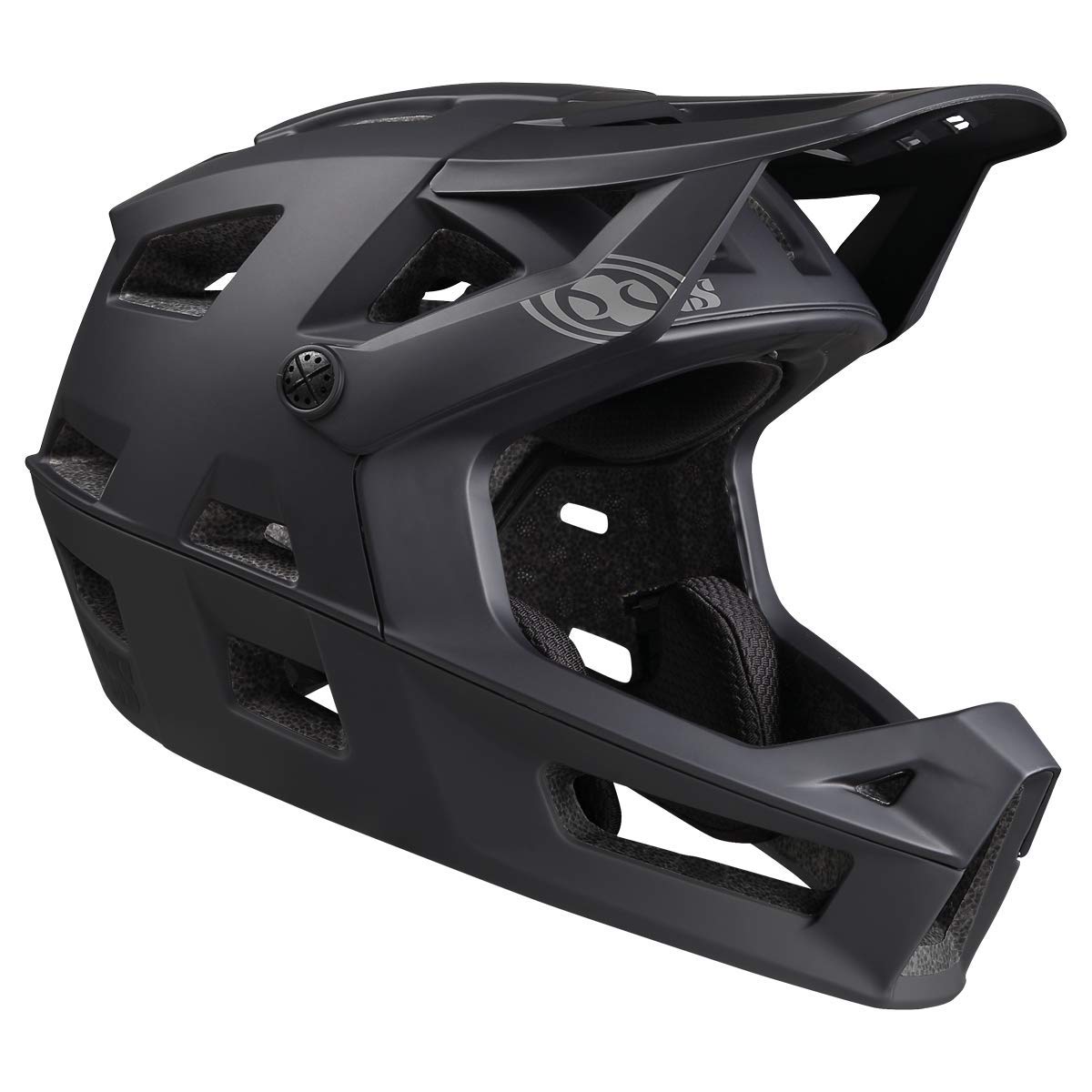
iXS Trigger FF MIPS
Key Features
- Safety Certifications: ASTM F1952, CPSC
- Weight: 595g
- Ventilation: Channeled vents
- Fit Adjustability: Dial + pads
- Price: Premium
Weighing just 595 grams, the iXS Trigger FF MIPS is the lightest full-face helmet to carry ASTM F1952 downhill certification and MIPS impact protection. Its internal and external ventilation channels maintain airflow even on sustained climbs, a capability rarely seen in a DH-rated helmet. The helmet also meets CPSC and EN1078 standards, covering use across U.S. and European markets.
The Ergo-Fit Ultra dial system and multiple pad options allow a precise, secure fit that holds steady through rough descents. The magnetic Fidlock-style buckle makes fastening quick and easy with gloves. Chin bar clearance is generous for breathing and eating on long rides. On the downside, the standard cheek pads run snug for riders with wider faces, so a test fit is advisable before purchase.
This helmet is designed for enduro and downhill riders who need to climb as much as they descend — the low weight reduces fatigue on long uphills. It suits average to narrow face shapes best; riders with very wide faces may need to source thinner pads if available. For park-lift riders who don’t pedal up, heavier and cheaper certified helmets exist, but the Trigger fills a specific niche for pedaling DH riders.
Pros
- Incredibly lightweight at 595g
- Excellent ventilation for a DH helmet
- Comfortable and secure fit
- Top-level safety with MIPS and DH certification
Cons
- Cheek pads may be too tight for riders with wider face shapes
The iXS Trigger FF MIPS is the go-to choice for riders who want to pedal a downhill-certified full face without the weight penalty — it delivers where others compromise.
Best for Enduro & Trail
TLD Stage MIPS
Key Features
- Safety Certifications: ASTM F1952, CPSC
- Weight: 690g
- Ventilation: 25 vents
- Fit Adjustability: Multiple pad sets
- Price: Premium
At 690g with 25 vents and a Fidlock magnetic buckle, the Stage MIPS delivers premium features without the weight penalty common in many DH-certified helmets. While the iXS Trigger FF MIPS shaves grams for weight-obsessed riders, the Stage offers broader airflow and a more user-friendly closure system that works well with gloves.
This helmet suits enduro and trail riders who pedal for miles and want a full face that breathes like a half-shell. The chin bar sits closer to the face than some designs, which may be an issue for very round or large heads — check fit before committing. A few units have shown padding adhesive separation out of the box, so inspect yours on arrival.
Pros
- Lightweight build reduces neck fatigue on long climbs and descents.
- 25 vents provide generous airflow, keeping you cool on hot trail days.
- Fidlock magnetic buckle allows one-handed operation even with gloves.
Cons
- Chin bar clearance may be tight for riders with very round or large faces, limiting head tilt.
- Pad adhesive can separate from the shell in some units, requiring reattachment or replacement.
A solid choice for riders who prioritize ventilation and convenience over the lightest possible weight — just verify fit before buying.
Best for Downhill Racers
Smith Mainline
Key Features
- Safety Certifications: ASTM F1952, NTA8776
- Weight: ~750g
- Ventilation: 21 fixed vents
- Fit Adjustability: Multiple pad kits
- Price: Luxury
The Mainline uses a Koroyd honeycomb core paired with MIPS to absorb impact energy in a way that feels distinctly solid on high-speed descents. Its 21 fixed vents move air aggressively, making it one of the cooler full-face options for hot-weather riding. Multiple pad kits let you dial in the fit around the cheeks, crown, and neck, which helps offset the slightly higher weight compared to the sub-600g class leaders.
This helmet targets competitive downhill racers and e-bike riders who need ASTM F1952 and NTA8776 certifications in one package. The MIPS liner does produce a creaking noise when you turn your head, which is most noticeable on quiet trails or climbs — riders sensitive to helmet noise may find it distracting. Budget-conscious buyers should note the premium price, though the combined certifications and unique protection justify the investment for serious use.
Pros
- Koroyd honeycomb with MIPS provides impact absorption that inspires confidence on steep, high-speed terrain.
- 21 fixed vents deliver strong airflow, keeping you cooler during climbs in hot climates.
- Included pad kits allow fine-tuning the fit to your head shape for long days on the trail.
Cons
- Premium pricing limits this helmet to dedicated riders willing to invest in top-tier protection.
- MIPS liner can produce creaking noise when turning your head, noticeable in quiet environments.
For aggressive riders who prioritize impact protection and e-bike certification over weight, the Mainline delivers a unique safety package that justifies its premium price.
Best for Bike Park
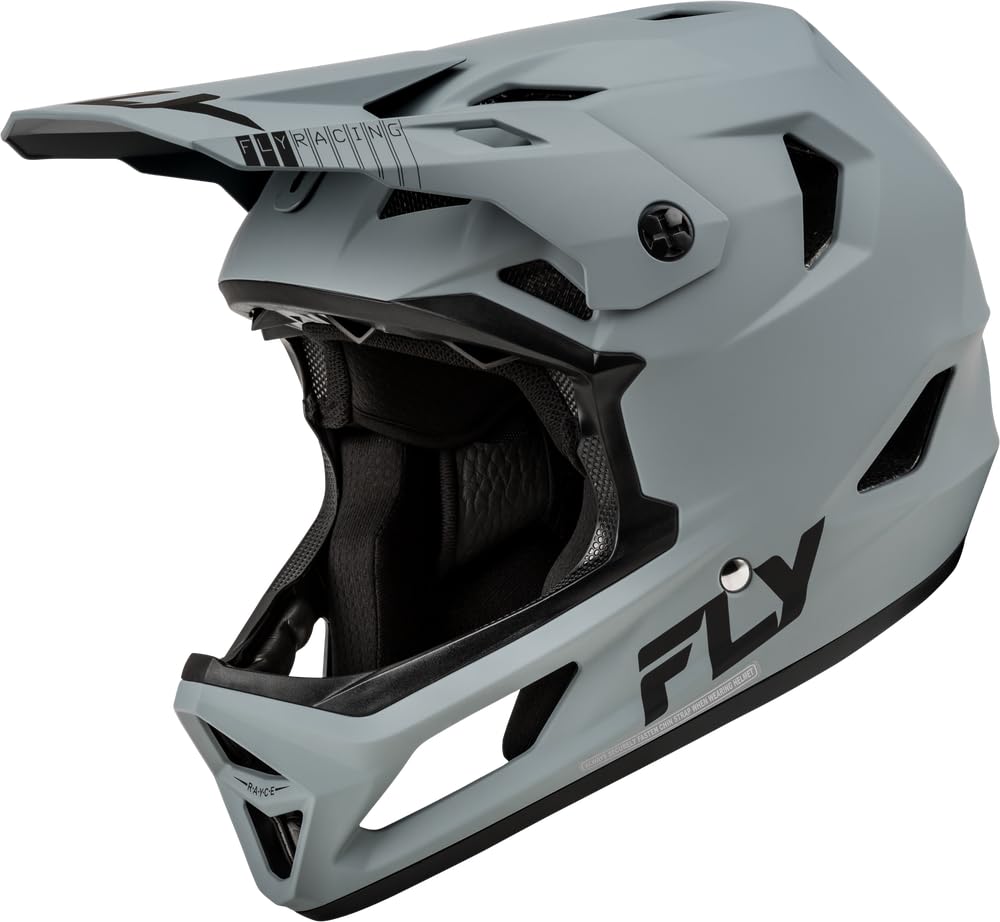
Fly Racing Rayce
Key Features
- Safety Certifications: ASTM F1952, CPSC
- Weight: 930g
- Ventilation: TFV vent system
- Fit Adjustability: Removable cheek pads
- Price: Mid-Range
The Fly Racing Rayce is one of the few full-face helmets that offers ASTM F1952 downhill certification at a mid-range price. It undercuts many premium options while still delivering a solid build and a comfortable fit. Riders upgrading from an entry-level full face without DH certification will notice a substantial step up in protection and finish.
This helmet is best suited for bike park enthusiasts who ride lifts or shuttle runs — the 930g weight is heavier than the top pick, and there is no MIPS layer for rotational impact protection. For those who don’t pedal long climbs or need MIPS, the Rayce provides certified safety without the premium price tag. The fit works well for most head shapes, though some may find the sizing runs small.
Pros
- Durable shell and clean finish hold up well to repeated park and jump use.
- Snug fit with removable cheek pads accommodates a range of head shapes.
- Effective ventilation and comfortable liner keep you cool during long bike park sessions.
Cons
For riders who need DH certification on a budget and can accept the added weight and absence of MIPS, this helmet delivers real-world protection at a compelling price.
Best for Entry-Level
Demon United Podium
The Demon United Podium delivers a lightweight 960g build with 13 vents that keep airflow moving on climbs — a rare combination under $80. The D-ring closure and adjustable fit system provide a secure feel for slim oval head shapes. However, it lacks MIPS and any ASTM certification, so it is not rated for high-speed or technical descents.
This helmet suits entry-level mountain bikers who ride casual trails and want face protection without spending heavily. Riders with slim oval head shapes will appreciate the snug, lightweight fit. Those needing MIPS or DH certification for aggressive descending should look at the DH-certified Fly Racing Rayce instead.
Pros
- Lightweight design reduces neck fatigue on longer rides
- Well-placed vents keep airflow moving during climbs
- Adjustable fit system secures the helmet without pressure points
Cons
- Lacks MIPS and ASTM F1952 certification, limiting its suitability to casual trail riding rather than aggressive downhill
- Slim oval shape may feel narrow for riders with rounder head profiles
A practical entry-level choice for casual trail riders who prioritize low cost and low weight over advanced safety tech, but not the helmet for park laps or aggressive descending.
Best for Budget Riders
OutdoorMaster Grizzly

Key Features
- Weight: 750g
- Ventilation: 27 vents
- Fit Adjustability: Adjustable cheek pads
- Price: Budget-Mid
The OutdoorMaster Grizzly undercuts many full-face helmets on price while keeping weight under 750g and offering 27 vents for airflow. Its removable chin bar gives BMX and park riders flexibility, and the adjustable cheek pads improve comfort. However, sizing inconsistencies mean some buyers need to size down, and the plastic visor screws are prone to snapping during normal use. These issues prevent it from competing with more refined options like the Demon United for riders seeking a hassle-free setup.
Pros
- Weighs only 750g, making it one of the lightest full-face options at this price point.
- Delivers solid impact protection in crashes, with many riders crediting it for preventing injury.
Cons
- Sizing can run large, so some riders may need to order a size down for a secure fit.
- Plastic visor screws may snap during normal use or arrive damaged from the factory.
Best suited for casual trail riders on a tight budget who prioritize low weight and don’t require DH certification or fuss-free hardware.
Best for Beginners
ILM ZL-B068

Key Features
- Safety Certifications: ASTM-F1447
- Weight: 700g
- Ventilation: Multiple vents
- Price: Budget
At 700g, the ILM ZL-B068 is lighter than many similarly priced helmets while keeping the price extremely low. It carries ASTM-F1447 certification for basic cycling but not the ASTM F1952 standard required for downhill riding. The fit runs small, so sizing up is recommended. This makes it best suited for casual BMX or scooter use where weight and cost matter more than downhill certification.
Pros
- Lightweight 700g build reduces fatigue during extended wear.
- Budget-friendly price makes full-face protection accessible to beginners.
Cons
A viable option for casual BMX or scooter use where weight and cost are priorities over downhill certification.
How to Choose
The most important first step is verifying ASTM F1952 downhill certification — without it, a full-face helmet is not rated for the impacts common in mountain biking.
Safety Certifications
ASTM F1952 is the downhill-specific standard that tests helmets at higher impact speeds and for multiple impacts. CPSC certification alone covers only basic bicycle helmet performance. A CPSC-only full face may crack or fail to protect your head during a high-speed crash on a bike park trail. For any aggressive descending, choose a helmet with ASTM F1952 on the label.
Weight
Every gram matters when you pedal uphill. Helmets under 700g dramatically reduce neck fatigue and make climbing feel less like a workout. Models over 900g are fine for lift-access or short shuttle runs, but on long enduro loops you will feel the extra mass with every head turn. Lighter shells often use thinner EPS, but MIPS and in-mold construction maintain protection without the bulk.
Ventilation
More vents and internal channeling determine how much airflow reaches your head. Helmets with 20+ fixed vents tend to stay cool on hot climbs, but the openings can also let in debris on dusty trails. Strategically placed channels direct air over your forehead and out the back, reducing the stuffy feeling that plagues many full faces. If you ride in hot climates, prioritize ventilation over aero shells.
Fit Adjustability
A dial system at the back lets you fine-tune circumference while riding, keeping the helmet snug without pressure points. Interchangeable pads (cheek, crown, neck) allow you to fill gaps for different head shapes. A helmet that shifts during a crash or leaves a gap can compromise protection. Look for at least two pad sets included to dial in the fit.
Chin Bar Clearance
The chin bar must sit close enough to protect your jaw but not so close that your chin touches it when you tilt your head. Insufficient clearance can cause discomfort with goggles and may reduce impact energy absorption. Riders with longer faces or those who wear glasses should look for models with adjustable pads or a taller chin bar profile.
FAQ
Why does my MIPS helmet creak when I turn my head?
MIPS uses a low-friction layer that allows the outer shell to rotate independently during impact. On some helmets, that layer can produce a creaking noise against the EPS foam, especially on sunny days when materials expand. The noise is cosmetic and does not affect protection. If it bothers you, apply a small amount of silicone lubricant between the MIPS liner and the foam.
Is a full-face mountain bike helmet too hot for summer riding?
Not necessarily. Modern full faces with 20+ vents and internal air channels often breathe as well as half-shells. The iXS Trigger FF and TLD Stage both stay comfortable on long climbs. The key is choosing a helmet with large, open intake vents and a well-designed exhaust system. Avoid heavy, enclosed designs like motocross helmets for hot summer trail rides.
Do I need ASTM F1952 certification for trail riding or only for downhill?
ASTM F1952 is designed for higher-speed impacts seen in downhill and enduro riding. For cross-country or flow trails without big drops, CPSC certification may be sufficient. However, if you ever hit a bike park, shuttle laps, or ride aggressive terrain, F1952 is the only standard you should trust. Many budget helmets lack it, even though they look the part.
How tight should cheek pads be on a full face MTB helmet?
Cheek pads should press firmly against your cheeks without causing pain or restricting jaw movement. You should be able to open your mouth fully, but the pads should prevent the helmet from rocking side to side. If you can fit more than two fingers between your cheek and the pad, it is too loose. Most helmets include multiple pad thicknesses to adjust fit.