This post contains affiliate links. We may earn a small commission when you buy through our links — at no extra cost to you.
Soft-sided cooler bags are practical for picnics, work lunches, and day hikes. But here’s the catch: many that market themselves as ‘leakproof’ still let water seep through the zipper once the ice melts. It’s not a design flaw of one brand – it’s a category-wide trade-off that few manufacturers solve.
The solution isn’t to avoid soft coolers altogether. It’s choosing the right design for how you actually use it – whether that means a compact rugged lunch bag that never promises leakproof, or a larger tote that works best with sealed ice packs instead of loose ice. The real difference comes down to durability, capacity, and honest engineering.
The best cooler for you depends on one question: do you need it to survive daily abuse, or do you need it to haul a picnic for four? The answer decides whether you prioritize a tank-like build or maximum space at a low price.




Best for Daily Work Lunches
Carhartt 8L Lunch Cooler
The Carhartt 8L Lunch Cooler is built to handle years of tossing into truck cabs and construction sites. Its thick polyester shell and sturdy zippers resist wear, and the insulation keeps a morning-packed lunch cool through a standard work shift. At 11.2 ounces and 10x9x7 inches, it slips into a backpack without adding bulk. Two compartments separate food from drinks or ice packs, and the bag stands upright when packed. The 8-liter interior is cleverly shaped to hold a full lunch container alongside a can.
This bag is designed for solo use – daily lunches, short hikes, or a picnic for one. The interior fits a sandwich, snacks, and a drink with room to spare. Priced in the mid-range, it costs more than budget options but less than premium brands. Carhartt’s construction background shows in the rugged feel – this is a lunch bag built to outlast the workday. The heavy-duty zipper and reinforced stitching address common weak points on cheaper bags. Its lightweight design makes it easy to carry even when full. For daily carry that demands durability, this cooler stands apart.
Pros
- Sturdy construction survives daily abuse on worksites or in backpacks.
- Insulation keeps lunch items cold through a typical work shift.
- Fits a full lunch and drink in a compact footprint that stows easily.
Cons
- In very hot climates, the insulation may not keep contents cold through an entire afternoon.
- 8-liter capacity accommodates one lunch only – not enough for a group or full day of food.
For daily lunch carry that demands rugged durability without extra bulk, the Carhartt 8L cooler fits the bill.
Best for Picnics, Beach Trips
MIYCOO Double-Deck 15L
The MIYCOO double-deck design gives you two separate compartments in a 15-liter soft cooler — enough for a full lunch plus drinks, with a leakproof PEVA liner that makes cleanup simple.
The soft sides will sag when not fully packed, and the strap stitching can show wear under heavy daily loads — this bag suits occasional picnics and office lunches rather than rugged daily carry.
Pros
- Two separate compartments keep wet and dry items apart.
- Leakproof interior wipes clean after spills.
- Good temperature retention for a budget cooler.
Cons
Solid value for group lunches and car-based outings, provided you don’t need a bag that stands upright on its own.
Best for Day Hikes, Beach
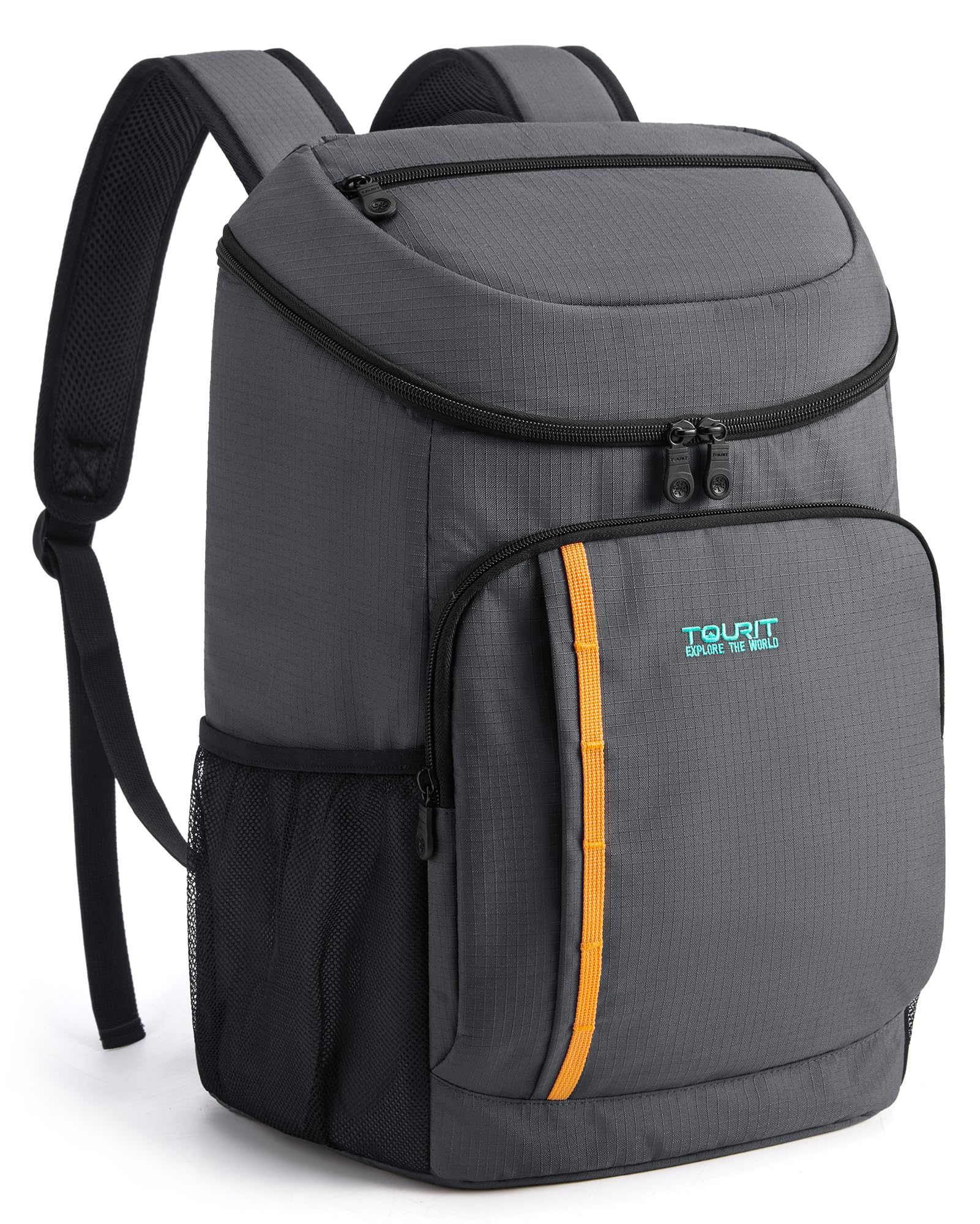
TOURIT Backpack 30 Can
The TOURIT Backpack Cooler stands out for its comfortable backpack design and ability to hold up to 30 cans, making it easy to carry drinks and snacks hands-free on day hikes or beach trips. However, the zipper is not leakproof — water seeps out when loose ice melts, so this cooler works best with ice packs instead of loose ice. Seam durability has been noted as a possible concern with extended use, but for occasional outdoor adventures, it’s a practical option.
Pros
- Comfortable padded straps allow hands-free carrying on hikes and beach trips.
- Holds up to 30 cans plus ice packs for a full day out.
- Insulation keeps contents cold for several hours during moderate activity.
Cons
- Zipper may leak water when ice melts, making loose ice impractical.
- Seam durability can be a concern with frequent heavy loads.
For those who prioritize hands-free portability and don’t mind using ice packs, this backpack cooler is a solid choice — just know it’s not truly leakproof.
Best for Family Picnics, Beach
Creative Green Life Jumbo
The Creative Green Life Jumbo holds 10 gallons with thick polyurethane foam insulation, and it folds flat when empty or washes clean in a machine. This makes it a practical choice for car camping, beach days, and grocery runs where you can set the bag down rather than carry it across a trail. The generous capacity fits plenty of food and drinks for a group, but the lack of backpack straps and the large size can make fully loaded carries awkward — best suited for trips from car to picnic table rather than long walks.
Pros
- Well-insulated with thick foam that keeps contents cold for hours.
- Spacious 10-gallon capacity fits food and drinks for a family outing.
- Durable construction and machine-washable for easy cleaning.
Cons
- May be too large for solo lunches or compact everyday use.
- Carrying heavy loads can be awkward without backpack straps.
Ideal for car-based family trips and grocery runs where the bag can be set down; not for hiking or hands-free carrying.
Best for Groceries, Food Delivery
VENO 2-Pack Grocery
These bags stand upright when packed, making loading and unloading groceries straightforward. While not a substitute for a heavy-duty cooler on all-day hikes, the VENO bags hold their shape and keep contents cool for short trips. They suit shoppers, delivery drivers, and picnic-goers who need a reliable insulated bag without paying premium. Expect the handles to show wear after frequent heavy loads, and plan for ice retention limited to a few hours.
Pros
- Sturdy build holds shape even when packed.
- Good temperature retention for trips under a few hours.
- Collapsible design folds flat for storage.
Cons
- Handles may fray or tear over time under heavy loads.
A cost-effective two-pack for short-haul use – handle wear is the main tradeoff.
Best for Large Group Picnics
Lifewit 20L Tote

The Lifewit 20-liter tote holds 32 cans at a budget-friendly price, with insulation that keeps drinks cold for a few hours. Strap and zipper durability can be inconsistent, and the insulation may not hold up for all-day use.
Pros
- Holds 32 cans (20 liters) at a very low price.
- Insulation performs decently for short trips and picnics.
Cons
- Strap and zipper durability can be inconsistent under heavy use.
Best for occasional group picnics or grocery runs where you need a lot of space on a tight budget.
Best for Office, Day Trips
MIYCOO Women’s 18L Tote

This stylish tote offers 18L capacity with a leakproof EVA liner and multiple pockets, ideal for carrying full meal kits to the office or on day trips. Build quality can vary—occasional zipper or handle concerns have been noted—and the generous size may be too large for minimalist lunches.
Pros
- Spacious 18L capacity fits complete lunches and snacks.
- Multiple compartments keep food, drinks, and utensils organized.
Cons
- Zipper or handle may show wear under regular use in some cases.
If style and organization matter more than rugged durability, this tote fits well for office lunches and day trips where its larger size is an asset.
Best for Hikers, Day Trips
SPARTER 33 Can Backpack

The SPARTER backpack cooler uses two insulated compartments to keep sandwiches dry and drinks cold separately — a practical setup for beach or park outings. As with many soft-sided coolers, the zipper can leak when ice melts; this bag works best with ice packs instead of loose ice. Strap durability may vary, so it suits occasional use rather than daily hauling.
Pros
- Two insulated compartments keep dry items separate from cold ones.
- Padded backpack straps make it easy to carry hands-free.
Cons
- Zipper may let water seep through when ice melts; use only with ice packs.
Ideal for hikers and beachgoers who value organizing snacks and drinks separately and are okay using ice packs.
Best for Family Bbqs, Camping
Lifewit 30L Collapsible

This Lifewit bag packs a huge 30L capacity into a portable design that collapses flat for storage. The insulation keeps food cold for hours with ice packs. But the bottom seam can leak after a few months and the soft sides sag when loaded, making it better suited for car-based picnics and barbecues than daily commuting or hiking.
Pros
- Holds up to 50 cans or a large picnic spread at a budget-friendly price.
- Folds flat when empty – fits in a closet or car trunk without taking space.
Cons
- Bottom seam may leak after several months of use, especially under heavy loads.
Best for occasional family outings where compact storage and low price matter more than long-term leakproofness.
Best for Travel, Beach, Picnic
CleverMade 30 Can Collapsible

This cooler folds flat into a suitcase, freeing up bag space when empty, and its 30-can capacity works well for short beach or picnic trips when you bring ice packs rather than loose ice. The attractive design includes a bottle opener and daisy chains. However, the premium price and two known downsides – the zipper can seep water and the interior liner may peel after a few uses – make it a niche choice for travelers who prioritize packability over everyday durability.
Pros
- Folds flat for easy luggage storage when empty.
- Holds 30 cans plus snacks with useful extras like a bottle opener.
Cons
- Zipper is not leakproof – melting ice can seep through with loose ice.
Best for travelers who need a packable cooler for short trips with ice packs, not for all-day outings or loose ice use.
Best for Casual Beach Trips
Lifewit 23L Beach Cooler

The Lifewit cooler bag provides ample storage with multiple pockets in a lightweight design that is easy to carry. The thin fabric can tear under heavier loads, so it’s best for gentle handling. This bag works well for casual beach trips and picnics when using ice packs.
Pros
- Spacious interior with multiple storage pockets for organizing food and drinks.
- Lightweight and easy to carry for beach or camping trips.
Cons
- Water may leak from the zipper when ice melts, despite leakproof claims.
Best for casual beach outings or picnics where you pack ice packs and don’t mind potential zipper seepage — not suited for long trips or heavy use.
Best for —
musbus 2-Pack XL

This two-pack offers triple-layer insulation and holds up to 24 bottles, enough for a family outing. The zipper closure and collapsible design add convenience. However, without verified performance data, it’s best for light occasional use where longevity isn’t critical.
Pros
- Large capacity holds 24 bottles – suitable for family picnics and grocery runs.
- Comes as a two-pack for separating cold and dry items.
Cons
- For regular heavy use, long-term durability is uncertain – best for light duty.
A reasonable pick for occasional use where budget and two-bag convenience matter more than extended durability.
How to Choose
The cooler bag that works for a day hike is not the same one that works for a family BBQ – focus on your actual carrying needs and the hidden trade-offs.
Capacity
Capacity is the most obvious spec, but it directly affects portability. A 30-can cooler weighs over 10 pounds when full of drinks and ice – that becomes a shoulder-straining load for any distance. For solo use, 8-15 liters is comfortable; for groups, 20-30 liters is practical only if you drive to your spot.
Manufacturers often list capacity in cans because it’s easy to picture, but a 30-can cooler rarely fits 30 cans plus ice. Budget at least 20% less usable space for ice packs. Check dimensions to see if the shape matches your cargo: tall bottles need height, wide containers need width.
Leakproof / Water Resistance
Most soft coolers use a zippered closure – and zippers are not waterproof. Even bags with leakproof liners will weep water through the zipper teeth when ice melts. The only way to guarantee a dry car or backpack is to use sealed ice packs instead of loose ice, or wrap loose ice in a plastic bag.
If you absolutely need to carry loose ice, look for coolers with a roll-top or clip-seal closure (rare in this price range), or accept that some moisture will escape. Bags that claim leakproof but earn mixed reviews on that feature are not being deceptive – it’s a physical limitation of zipper design.
Carrying Style
Totes are the most common and work well for short carries from car to picnic table. Backpacks free your hands and distribute weight better for walks over half a mile. Shoulder bags are a middle ground but can dig in when loaded. For a day hike, a backpack cooler is the clear choice; for a workplace lunch, a tote fits under a desk.
The trade-off: backpack coolers are typically soft-sided and prone to the same leak issues as totes. They also lack the rigid structure to protect fragile items. If your hike involves rocky terrain, a backpack cooler is fine for drinks and sandwiches, but not for eggs or delicate fruit.
Insulation Thickness
Thicker foam (8mm or more) keeps contents cold longer, but adds weight and reduces interior space. Thin insulation (3-5mm) is fine for a lunch break or grocery run, but will let ice melt in a few hours under direct sun. The material matters: expanded polyethylene (PE) foam is lighter, while polyurethane (PU) foam insulates better but is heavier.
For a full day at the beach, look for insulation rated at least 8mm thick. If you only need a bag for commuting to an air-conditioned office, even thin insulation works. The cold retention time is rarely advertised, so a good rule: thicker foam = longer cold, heavier bag.
Durability of Zippers and Straps
Zippers and straps are the weakest points on any cooler bag. Plastic zippers corrode and break faster than metal, especially in humid or salty environments. Nylon webbing straps last longer than polypropylene, but the stitching at anchor points often fails first. Look for reinforced bar-tacks at stress points and heavy-duty zippers (e.g., YKK brand).
Soft coolers collapse when empty, putting constant stress on zipper seams. After repeated use, the stitching can pull. This is why many budget bags fail within months. Spending a bit more on a bag with metal zippers and double-stitched handles can save money over time.
FAQ
Why does my cooler bag leak even though it says leakproof?
Zippered closures are not waterproof. Even with a leakproof liner, water will seep through the zipper teeth once ice melts. To keep contents dry, use sealed ice packs instead of loose ice. This is a design limitation of soft coolers, not a defect.
Can I use loose ice in a soft-sided cooler bag?
You can, but expect water to leak out as the ice melts. The bag’s zipper will weep moisture. If you must use loose ice, double-bag it in a plastic bag or trash bag inside the cooler. For hiking or trips where leaks are unacceptable, stick to ice packs.
How many cans can I actually fit in a 30-can backpack cooler with ice?
Realistically, about 20 to 22 cans plus a standard ice pack. The ’30-can’ claim assumes no ice and perfect stacking. When you add ice for a day trip, usable space drops by roughly one-third. Check the dimensions: a 17-inch tall backpack may not fit 12-ounce cans upright if the ice pack takes up height.
Is a tote-style cooler better than a backpack for a day hike?
A backpack is better for hikes where you need both hands free and weight distributed evenly. Totes are fine for flat walks under half a mile. For any hike with elevation change or rocky terrain, a backpack cooler’s straps keep the load stable and comfortable.