This post contains affiliate links. We may earn a small commission when you buy through our links — at no extra cost to you.
The best camping cooler isn’t the one with the loudest marketing claims — it’s the one that matches how you actually camp. Soft coolers advertised as leakproof often leak through the zipper once ice melts. Budget hard coolers may skimp on lid seals and hinges, compromising ice retention over multiple days.
That’s why this guide focuses on real-world performance: a cooler that keeps ice for two days at a budget price is better for a weekend car camper than a premium rotomolded chest that costs five times more. The trade-off is between ice longevity and portability or cost.
Understanding these boundaries helps you buy exactly what your trip requires — nothing more, nothing less.



Best for Weekend Car Camping
Coleman Chiller 48qt
Key Features
- Ice Retention: 1-2 days
- Capacity vs Weight: 48 qt / 7.6 lbs
- Leakproof: Lid seal adequate
- Portability: Handles, seat lid
- Lid & Hinges: Lid won’t stay open
- Price: Budget
The Coleman Chiller 48qt keeps ice cold for a full day or two in real use, enough for weekend camping trips. At 7.6 lbs empty, it’s light enough to carry from car to campsite, and the 48-quart capacity fits 31 cans plus 24 lbs of ice (or 76 cans without ice). That combination of performance and portability at a budget price is hard to match.
The lid does not stay open on its own — you’ll need to hold it up while loading or searching for items. This is a design quirk, not a cooling failure. Once closed, the TempLock foam insulation maintains temperature well, and the lid doubles as a 200 lb seat, adding practical value for social settings.
This cooler suits weekend car campers, day trippers, and tailgaters on a budget. If you’re backpacking or need to carry it long distances, the 7.6 lb weight becomes a drawback. The lid quirk is tolerable for short stops where you can prop it open with one hand or a nearby object.
Pros
- Exceptional value — affordable with strong ice retention for the price
- Good capacity for its size: fits large bottles and plenty of cans
- Solid temperature retention keeps ice cold for 1-2 days in real use
Cons
- Lid does not stay open on its own, making loading and access awkward
For under $40, the Coleman Chiller offers the best value in hard coolers — solid ice retention and ample space, with only a minor lid annoyance.
Best for Multi-Day Camping
Igloo BMX 52qt
Key Features
- Ice Retention: 3-5 days
- Capacity vs Weight: 52 qt / 15.6 lbs
- Leakproof: Lid seal tight
- Portability: Handles, rubber latches
- Lid & Hinges: Hinges can break
- Price: Premium
The Igloo BMX 52qt uses Ultratherm foam and rubber T-latches to keep ice cold for 3-5 days, matching coolers that cost twice as much. It outperforms the Coleman Chiller by a full day or two of ice retention, though the Chiller costs a quarter of the price.
This cooler suits campers who need reliable multi-day ice and are willing to pay a premium over budget models but want to avoid the $300+ price tags of rotomolded brands. The hinges and latches have been noted to fail under heavy abuse, so rough handling or frequent bouncing in truck beds may cause issues.
Pros
- Keeps ice cold for 3-5 days of camping.
- Takes bumps and drops on rugged terrain.
- Rubber T-latches stay shut and the threaded drain makes emptying simple.
Cons
- Ice retention varies; some users see melt within 24 hours in hot weather or with frequent opening.
- In scenarios with repeated heavy abuse, the latches and hinges may fail – less of a concern for casual car camping.
A worthwhile upgrade over budget coolers for extended trips, provided you aren’t subjecting it to extreme abuse.
Best for Backcountry Camping
YETI Tundra 45
Key Features
- Ice Retention: 3-5 days
- Capacity vs Weight: 45 qt / 24 lbs
- Leakproof: Lid seal tight
- Portability: Handles, T-Rex latches
- Lid & Hinges: Strong latches
- Price: Luxury
The YETI Tundra 45 uses rotomolded construction with 3-inch PermaFrost foam to keep ice frozen for several days, a level of insulation that budget coolers don’t match. Its bear-resistant certification adds security for backcountry camping. However, this performance comes with a 24-pound empty weight and a premium price that puts it out of reach for casual use.
This cooler suits campers who prioritize durability and ice retention above all else — think multi-day trips where ice loss is unacceptable. It’s a poor fit for weight-conscious backpackers or occasional picnickers. Pre-chilling the cooler before loading is necessary to get the full ice life.
Pros
- Virtually indestructible build that handles rough terrain and heavy use.
- Keeps ice frozen for days with 3-inch PermaFrost insulation.
- Rotomolded design withstands drops, impacts, and outdoor abuse.
Cons
- Heavy at 24 pounds empty; portability is a tradeoff for camping trips that involve hiking.
- Premium-priced compared to other rotomolded coolers with similar ice retention claims.
For serious outdoor enthusiasts who need a bear-proof cooler that holds ice for days, the Tundra 45 delivers — just be prepared to carry the weight and pay the premium.
Best for Day Trips & Beach
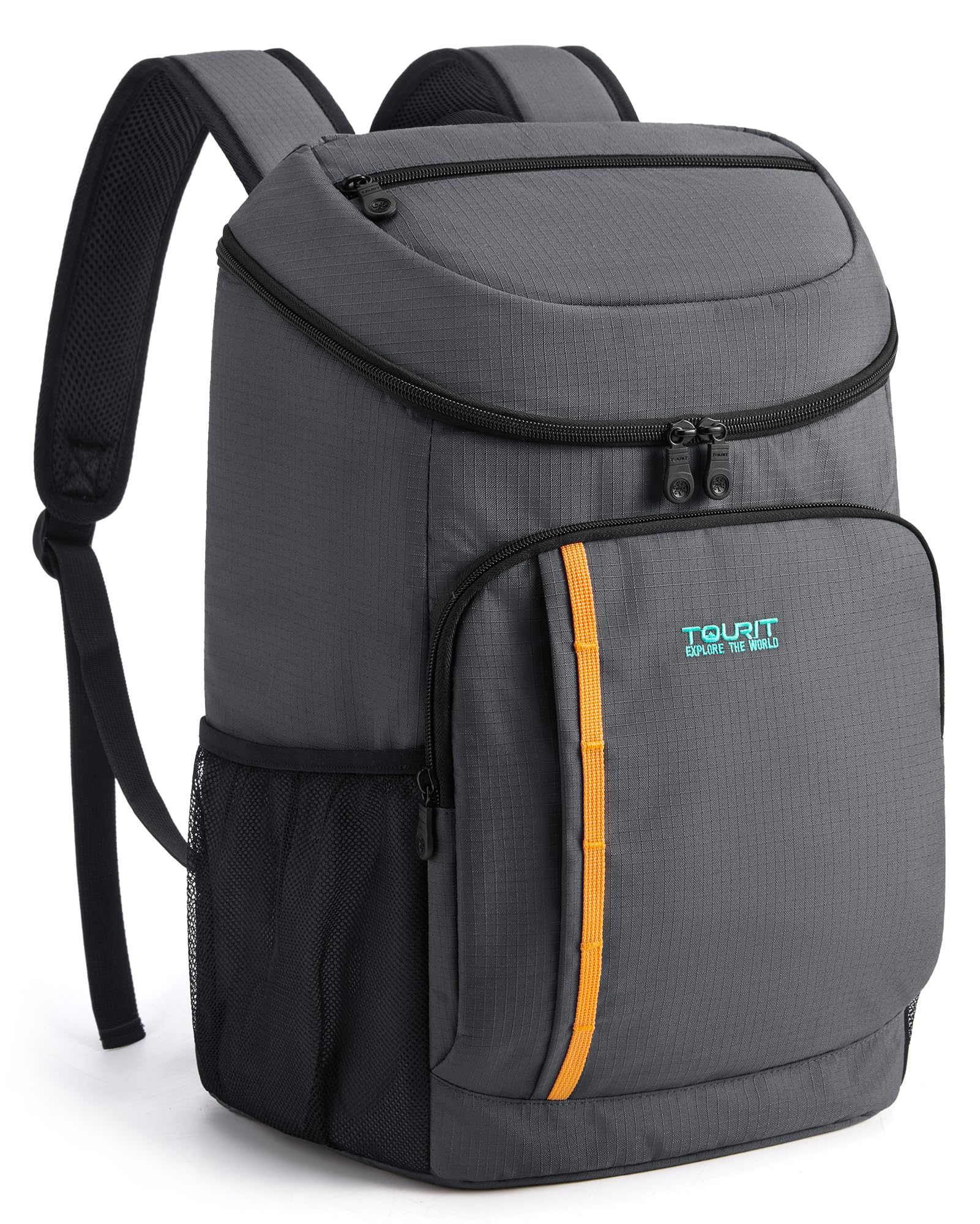
TOURIT Backpack 30 Can
Key Features
- Ice Retention: 6-16 hrs
- Capacity vs Weight: 30 cans / 1.1 lbs
- Leakproof: Zipper leaks on melt
- Portability: Backpack straps
- Lid & Hinges: Zipper weakness
- Price: Budget
The TOURIT Backpack Cooler delivers a lightweight, comfortable way to carry up to 30 cans for day trips. Its high-density foam insulation and 600 Oxford fabric hold temperatures well when paired with ice packs, and the backpack format makes it easy to hike or walk to the beach or tailgate.
This cooler is best suited for hikers, beachgoers, and budget-conscious campers who prioritize portability and don’t mind a key limitation: the zipper is not leakproof when ice melts. Using frozen water bottles instead of loose ice keeps contents dry and maintains cold temperatures for hours. For short, hands-free outings where you can plan your ice strategy, it’s a strong value.
Pros
- Solid build quality for the price
- Good temperature retention with ice packs
- Spacious 30-can capacity in a backpack format
Cons
- Zipper can leak when melting ice is carried; best used with ice packs or frozen bottles
- Stitching and strap durability can vary between units, with occasional reports of tearing
For day trips where portability matters more than leakproofness, the TOURIT backpack offers exceptional value — just pair it with ice packs.
Best for Travel & Storage
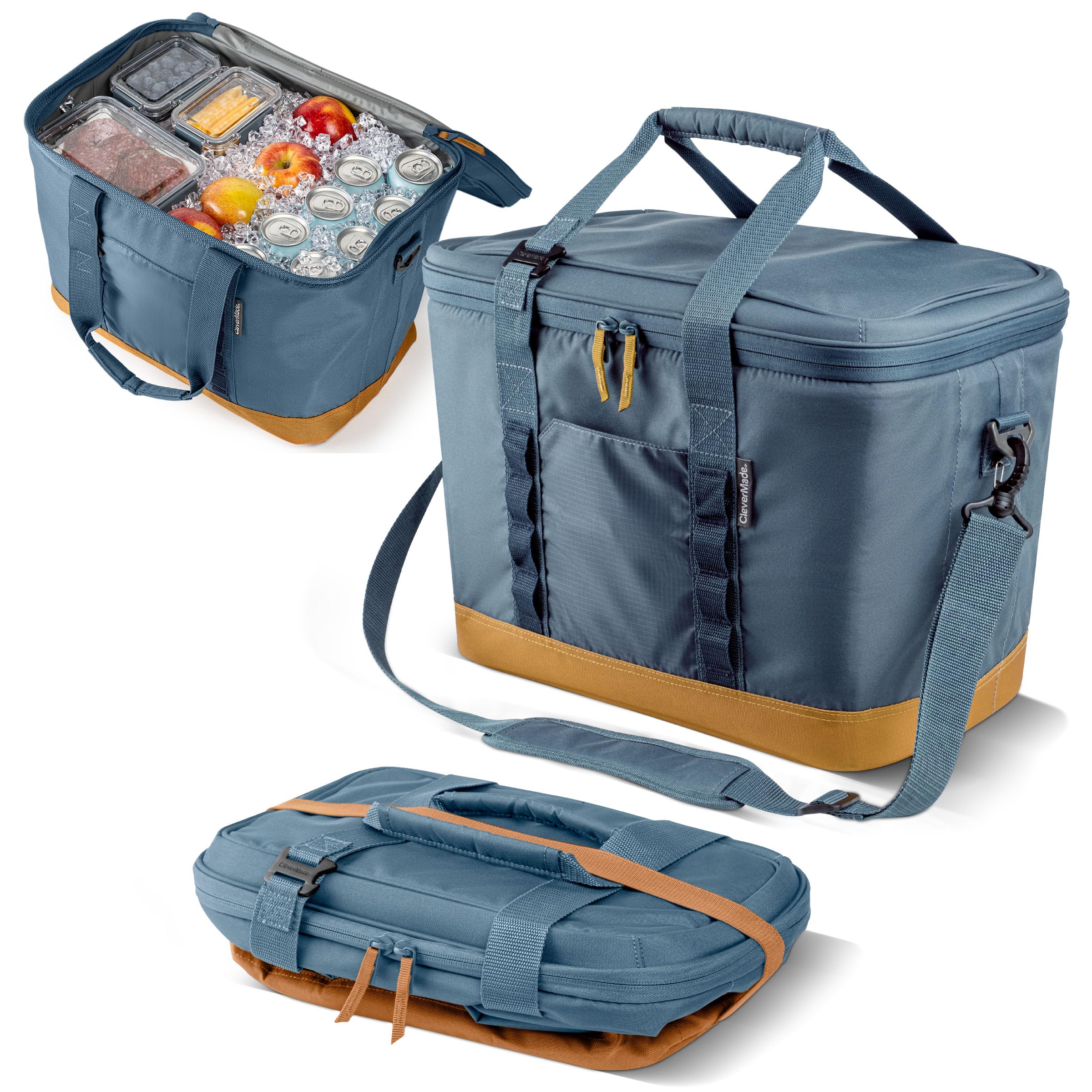
CleverMade Pacifica 50 Can
Key Features
- Ice Retention: 1 day
- Capacity vs Weight: 50 cans / 2.3 lbs
- Leakproof: Zipper leaks on melt
- Portability: Collapsible, handles
- Lid & Hinges: Zipper leakage
- Price: Mid-Range
The CleverMade Pacifica collapses into a flat package that tucks into a suitcase or trunk corner, making it the most storage-friendly soft cooler at this capacity. Where backpack coolers like the TOURIT keep their shape, this bag compresses to virtually nothing when empty — a clear advantage for travelers who need to pack light on the return leg.
For campers, the tradeoff is clear: the bag holds up to 50 cans with a lightweight 2.3 lb build, but ice retention is moderate (roughly a day with ice packs) and the zipper allows water seepage when ice melts. This suits weekend car camping and short picnics where you can replenish ice or use frozen bottles — not multi-day backcountry trips that demand a hard cooler’s seal.
Pros
- Collapses flat for storage in luggage or car trunks
- Holds up to 50 cans in a foldable form factor
- Durable fabric and stitching for a soft cooler
Cons
- Insulation keeps ice about a day in hot conditions — shorter than many hard coolers
- Zipper is not leakproof; water seeps through when ice melts
Buy this if you need a cooler that disappears when empty and stays light — it works best for short trips with ice packs, not long campouts.
Best for Casual Camping
Coleman Xtreme 50qt Wheeled
Key Features
- Ice Retention: 1-2 days
- Capacity vs Weight: 50 qt / 12.7 lbs
- Leakproof: Lid seal poor
- Portability: Wheels, telescoping handle
- Lid & Hinges: Weak wheels, hinges
- Price: Mid-Range
The Coleman Xtreme offers a low-cost way to get a wheeled cooler with enough capacity for a weekend trip, fitting 84 cans. Its telescoping handle and integrated seat lid add campsite convenience for under $70.
This cooler is best for casual campers who stay on flat ground and don’t need ice to last beyond a day or two. The wheels may break when rolling over uneven terrain, and ice retention can fall short of the advertised 5 days, typically lasting 1-2 days. For backcountry trips or extended outings, a more robust rotomolded cooler is a better fit.
Pros
- Large 84-can capacity at a budget price
- Provides 1-2 days of ice retention for the price
- Telescoping handle and seat lid rated for 250 lbs
Cons
- Lid seal is not airtight; cooler may leak when tipped
A passable choice for budget-conscious campers who prioritize capacity and wheels over ice life and durability.
Best for Daily Lunch Box
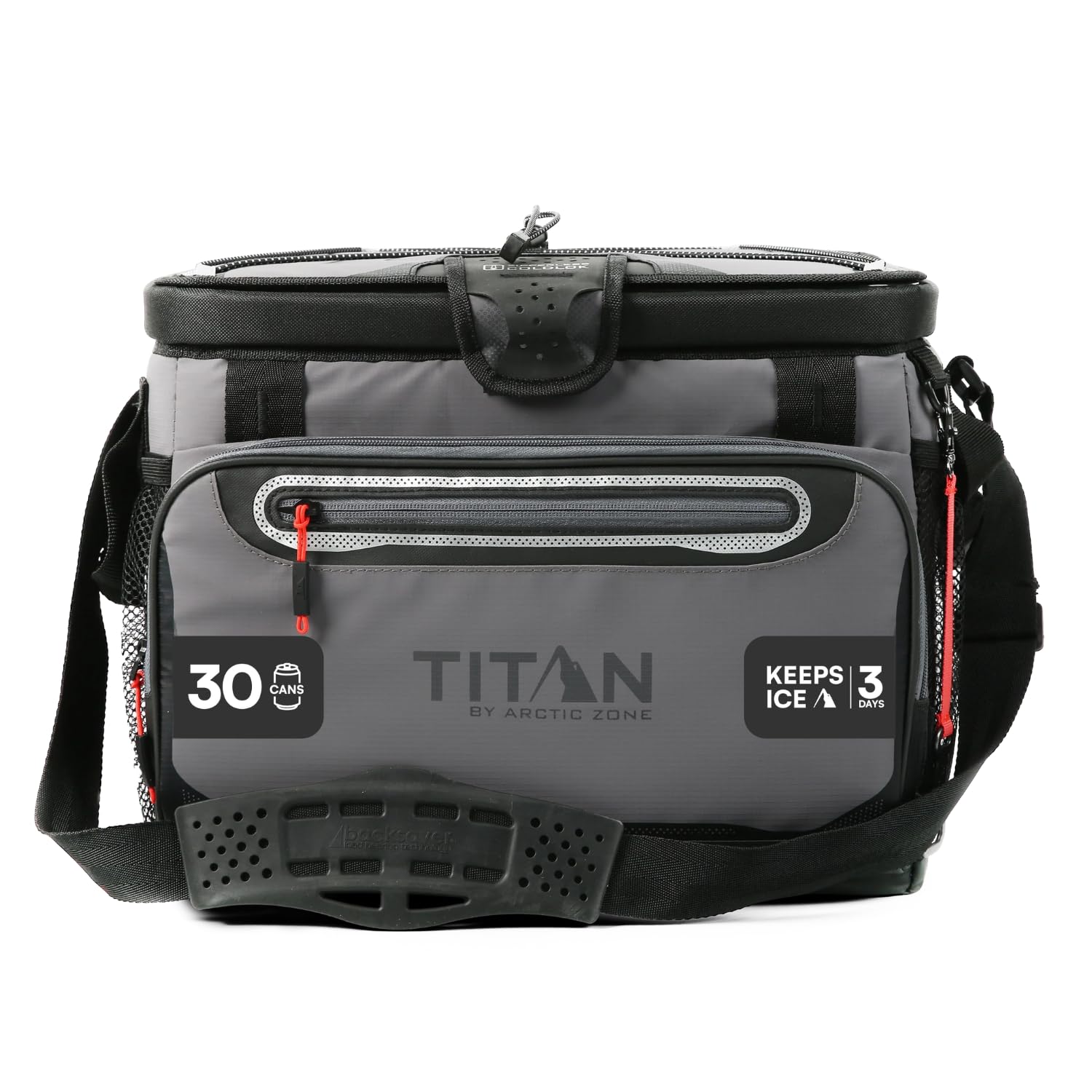
Arctic Zone Deep Freeze 30 Can
Key Features
- Ice Retention: 1 day
- Capacity vs Weight: 30 cans / 3.55 lbs
- Leakproof: Seal wear possible
- Portability: Zipperless lid, handles
- Lid & Hinges: Seal can wear
- Price: Mid-Range
The Arctic Zone Deep Freeze combines a sturdy hardbody shell with a zipperless lid that eliminates the common weak point of zippers. Its removable liner simplifies cleaning, and the SmartShelf adds organization. However, the insulation performance does not match the 2-day claim — ice packs can lose effectiveness within 24 hours, making it unsuitable for multi-day camping. The narrow interior also limits larger containers, so it works best for individual lunches or short outings.
Pros
- Well-built construction with a hardbody liner that resists punctures and leaks.
- Holds 30 cans with room for a shelf to separate food from drinks.
Cons
- Ice retention may fall short of the advertised 2 days; melting can occur within 24 hours.
- Narrow interior may not fit standard rectangular meal prep containers.
For daily lunches, work coolers, or short hikes where ice packs are sufficient, this is a well-made option — but for camping requiring overnight ice retention, look to a hard cooler with proven insulation.
Best for Day Hikes & Beach
SPARTER Backpack 33 Can

Key Features
- Ice Retention: 6-16 hrs
- Capacity vs Weight: 33 cans / 1.1 lbs
- Leakproof: Zipper leaks on melt
- Portability: Backpack straps
- Lid & Hinges: Zipper weakness
- Price: Budget
This backpack cooler offers a generous 33-can capacity in a lightweight, hands-free design that suits day trips and beach outings. Two insulated compartments let you separate food from drinks, and the padded straps make carrying comfortable. However, the zipper can let water seep through once ice melts, and the straps or liner may show wear after repeated use. It’s a reasonable alternative to the more popular backpack cooler in this set, especially if you plan to use ice packs and accept some leakage.
Pros
- Good capacity for 33 cans in a lightweight backpack that keeps hands free.
- Two insulated compartments help organize items and keep them separate.
Cons
- Zipper may leak when ice melts; using ice packs instead of loose ice reduces this issue.
- Straps and liner can show wear over time with frequent use.
A cost-effective choice for short outings where you use ice packs and don’t mind occasional dripping from the zipper.
Best for Occasional Picnics
Coleman Classic 52qt

Key Features
- Ice Retention: 1 day
- Capacity vs Weight: 52 qt / 8.7 lbs
- Leakproof: Lid seal weak
- Portability: Handles, seat lid
- Lid & Hinges: Weak hinges
- Price: Budget
The Coleman Classic 52qt offers a spacious interior, cup holders, and a seat lid strong enough to sit on – convenient features for short outings. However, ice melts within 24-48 hours in warm weather, significantly less than the Chiller. The lid also does not stay open when loading or unloading. While the price is low, the ice retention limits this cooler to day trips rather than camping where keeping food cold for multiple days matters.
Pros
- Spacious 52qt capacity with a manageable weight for its size.
- Built-in cup holders and 250 lb seat lid add convenience.
Cons
- Ice may melt within 24-48 hours in warm conditions – insufficient for overnight camping.
- Lid does not stay open, making packing and unpacking more difficult.
Best for short daytime picnics or tailgating where the cup holders and seat lid are welcome, but not a solution for camping trips requiring ice to last beyond a single day.
Best for Large Parties
Igloo Maxcold Glide 110qt

Key Features
- Ice Retention: 3-5 days
- Capacity vs Weight: 110 qt / 25.4 lbs
- Leakproof: Lid seal ok
- Portability: Wheels, long handle
- Lid & Hinges: Weak latches
- Price: Premium
The Igloo Maxcold Glide rolls smoothly on flat ground with its long handle and large wheels, and its 110-quart capacity easily holds provisions for a group. However, the hinges and latches can wear over time, and the lid may not stay closed under movement, making it less suited for rough camping terrain. For those who prioritize ice retention reliability, the Igloo BMX offers more robust construction.
Pros
- Long telescoping handle and soft-ride wheels make it easy to move over pavement and packed gravel.
- Massive 110-quart capacity holds enough food and drinks for a large group gathering.
Cons
- Hinges and latches may loosen over time, and the lid can pop open under jostling.
This cooler works well for car camping on level ground where you can roll it short distances, but if your trips involve rough terrain, look for a more robust option.
Best for Budget Day Trips
MIYCOO Backpack 40 Can

Key Features
- Ice Retention: 6-16 hrs
- Capacity vs Weight: 40 cans / 1.5 lbs
- Leakproof: Zipper leaks on melt
- Portability: Backpack straps
- Lid & Hinges: Zipper weakness
- Price: Budget
This backpack cooler holds 40 cans in two compartments at a budget-friendly price, ideal for short beach trips where you can accept some leakage from the zipper as ice melts. The padded straps add comfort, but seams and straps may wear after limited use. Ice retention suits a day with frozen packs only. For more durable leakproof performance, the TOURIT is worth the extra cost.
Pros
- Great value for an inexpensive backpack cooler
- Spacious with good organization (two compartments, side straps)
Cons
- Water may leak through the top zipper as ice melts
- Seams and straps can show wear after a few uses
This cooler fits occasional day trips where you can manage leakage and accept reduced durability. For any camping requiring dry gear or extended use, the TOURIT is a better option.
Best for Large Group Trips
YETI Tundra 65

Key Features
- Ice Retention: 3-5 days
- Capacity vs Weight: 65 qt / 29 lbs
- Leakproof: Lid seal tight
- Portability: Handles, T-Rex latches
- Lid & Hinges: Strong latches
- Price: Luxury
The YETI Tundra 65 delivers the ice retention and durability expected from a bear-resistant rotomolded cooler, with enough capacity for a weekend’s worth of food and drinks for a large group. However, its 29-pound empty weight and premium pricing make it a niche choice — best for serious expeditions where every day of ice matters and you have vehicle support or extra hands for lifting.
Pros
- Bear-resistant rotomolded construction handles rough terrain and wildlife encounters.
- Ice stays frozen for 3-5 days, reducing the need for frequent ice runs.
Cons
- Ice retention may fall short of the advertised 5 days in very hot climates or without proper pre-chilling.
Ideal for groups heading into bear country for multi-day trips, where the Tundra 65’s weight and cost are acceptable trade-offs for its ice retention and durability.
Best for Rough Terrain Moves
YETI Tundra Haul

Key Features
- Ice Retention: 3-5 days
- Capacity vs Weight: 45 qt / 37 lbs
- Leakproof: Lid seal tight
- Portability: Wheels, NeverFlat
- Lid & Hinges: Strong latches
- Price: Luxury
This wheeled cooler delivers the smoothest rough-terrain mobility of any option we’ve seen, with thick rotomolded walls that keep ice frozen for days. However, it weighs 37 pounds empty and carries a premium price tag, making it a luxury choice for those who truly need that wheel performance. Most campers will get comparable utility from lighter, cheaper coolers like the Igloo Maxcold or Coleman Xtreme. Additionally, the thick walls reduce interior space and no dry goods basket is available.
Pros
- Rolls easily over sand, gravel, and uneven ground without flat tires
- Strong ice retention keeps contents cold for multiple days
Cons
- Weighs 37 pounds empty, which can be a challenge to lift into a vehicle
- No compatible dry goods basket; thick walls limit usable interior space
Best for campers who regularly haul a cooler over rough ground and prioritize wheel durability over cost and weight — not for general use.
How to Choose
A cooler’s ice retention depends more on insulation thickness and seal quality than the brand name on the box.
Ice Retention
Ice retention is the number one spec but often exaggerated. Budget coolers use thinner foam that melts ice in 1-2 days; premium rotomolded coolers have 3-inch foam that holds ice for 3-5 days. The trade-off is weight and cost.
Real-world retention depends on pre-chilling the cooler, using block ice instead of cubes, and keeping it shaded. A cooler that claims 5 days may only deliver 2-3 in 90-degree weather.
Capacity vs Weight
More capacity always means more weight when full. A 48-quart hard cooler weighs 7-8 lbs empty but can top 50 lbs loaded with ice and drinks. Soft coolers are lighter but have less effective insulation and leak when ice melts.
Choose capacity based on trip length and number of people. A 30-can backpack suits a day hike; a 100-quart wheeled cooler is overkill for two people but essential for a group camping trip.
Leakproof Construction
Almost all soft coolers with zippers leak once ice melts — the zipper track isn’t watertight regardless of marketing claims. Hard coolers rely on gaskets and latches; budget models often have poor lid seals that let cold air escape.
For a truly leakproof setup, use a hard cooler or a soft cooler with frozen water bottles instead of loose ice. If you need a soft cooler, expect to drain water at the end of the day.
Portability
Wheeled coolers are great for campsite moves but add weight and cost. Backpack coolers free your hands for hiking but sacrifice ice retention. Standard hard coolers with handles are fine for car camping but a burden for long carries.
Consider the terrain: smooth wheels work on pavement, but all-terrain wheels (like on the Coleman Xtreme) are better for sand and gravel — though they often break under heavy use.
Lid & Hinges
A lid that doesn’t stay open is a daily frustration, especially when loading or accessing items. Some budget coolers solve this with a flimsy stay, while premium coolers use heavy-duty hinges or gas struts.
Latches and hinges are common failure points. Plastic latches on budget coolers can snap after a season; rubber T-latches (like on the Igloo BMX) last longer. Metal-reinforced hinges (like YETI’s) are the most durable.
FAQ
Why does my soft cooler leak even though it says leakproof?
Most soft coolers use a zipper seal that is water-resistant, not waterproof. Once ice melts, the water pressure forces it through the zipper track. ‘Leakproof’ typically refers to the liner material, not the closure. To avoid leaks, use frozen water bottles instead of loose ice.
How long will a Coleman Chiller keep ice compared to a Yeti Tundra?
The Coleman Chiller keeps ice for 1-2 days in real-world use, which is excellent for its $40 price. A Yeti Tundra 45 can hold ice for 3-5 days, but costs eight times more. The trade-off is between daily ice replacement and a much higher upfront investment.
Are backpack coolers good for hiking or only for beach days?
Backpack coolers are excellent for short day hikes (2-4 hours) because they free your hands and are lightweight. However, they leak when ice melts, so pack frozen water bottles and avoid loose ice. For longer hikes or multi-day trips, a hard cooler is more reliable.
Can I sit on a cooler without breaking the lid?
Many budget coolers advertise a 200-250 lb seat lid, but the hinges often crack under repeated use. Rotomolded coolers like YETI are safer to sit on because the lid is part of the same thick plastic structure. If you plan to sit often, invest in a cooler with reinforced hinges.