This post contains affiliate links. We may earn a small commission when you buy through our links — at no extra cost to you.
Nothing ends a good hike faster than a blister that forms within the first few miles. The problem isn’t a lack of products — it’s that many tapes and bandages peel off the moment your feet start sweating. Balms wear off faster than expected, and thick moleskin can shift and create new hot spots.
The real solution isn’t one miracle product. It’s matching the format to your specific conditions: a lightweight balm for day hikes with regular breaks, a cream designed for all-day sweaty treks, or an adhesive-free wool wrap for sensitive skin. And when shoe seams are the culprit, a patch that sticks to the boot rather than your skin solves the issue entirely.
This guide cuts through the marketing hype to show you which approach works for which trail. Because once you stop fighting with peeling tape or greasy residue, you can focus on the miles ahead.


Best for Day Hikers, Ultralight
Body Glide Foot Glide
Key Features
- Product Type: Solid balm stick
- Application Method: Apply to skin pre-hike
- Adhesion Durability: 3-4 hours, reapply
- Dosage Type: Multiple uses per stick
- Price: $
Body Glide Foot Glide creates a thin, dry barrier on the skin that reduces friction at common hot spots. The solid stick format means no mess or sticky residue — it glides on and stays in place without feeling greasy. Hikers complete 20-mile days without developing blisters when applied beforehand.
The balm is effective for a few hours of activity, but heavy sweating or extended treks past the 4-hour mark can cause it to wear off. This is not a one-application solution for all-day backcountry trips, but for day hikes and shorter outings it holds up well.
Ideal for day hikers and ultralight backpackers who prioritize weight savings and simplicity. The 0.8 oz stick fits in a pocket, and the plant-derived formula is gentle on sensitive skin. If you tend to soak through socks on long, sweaty hikes, plan to reapply mid-trek — the stick is small enough to toss in a pack.
Pros
- Prevents blisters on hikes up to 20 miles without breaking the skin barrier.
- Non-greasy formula glides on easily and leaves no sticky residue.
- Compact 0.8 oz stick fits in a pocket or pack for easy carrying on trails.
Cons
- Some buyers find the stick size provides less product than expected for the cost.
- The balm can wear off after a few hours of heavy sweating, requiring a mid-hike reapplication.
Body Glide Foot Glide is the straightforward choice for day hikers who want a simple, no-mess anti-blister solution — just keep it handy for a reapply on sweaty days.
Best for Sensitive Skin, Reusable
Wuru Wool Blister Prevention
Key Features
- Product Type: Loose merino wool
- Application Method: Wrap over hot spots inside sock
- Adhesion Durability: All day, no adhesive
- Cushioning Thickness: Soft cushioning
- Dosage Type: Reusable 20+ uses
- Price: $$
This loose merino wool wraps directly over hot spots inside your sock, creating a soft barrier against friction without any adhesive. The natural wool wicks moisture and stays breathable, which reduces irritation for hikers with sensitive skin or adhesive allergies. It is also reusable — a single 0.75 oz pack can last 20–30 uses, making it cost-effective for multi-day trips.
Where it differs from the top-pick balm is the extra step of placement: the wool needs careful positioning inside the sock. If it shifts or bunches, it can feel lumpy underfoot — a minor trade-off for those who want a non-sticky, reusable solution. It works best as a preventive layer for known hot spots rather than a treatment for existing blisters. Hikers with very sweaty feet may find the wool becomes heavy over time, so it suits moderate to dry conditions best.
Pros
- Prevents blisters without adhesives — just wrap over hot spots for immediate protection.
- Soft and breathable merino wool that does not cause skin irritation.
- Portable and reusable for multiple days; ideal for backpacking.
Cons
- Requires careful placement inside the sock; if not positioned correctly, it can feel lumpy in the shoe.
- Designed as a preventive layer; not intended to treat existing blisters.
For hikers who avoid adhesives or have sensitive skin, this merino wool offers a reusable and effective alternative to balms and tapes.
Best for Multi-Day Backpacking
Foot Kinetics HikeGoo
Foot Kinetics HikeGoo delivers long-lasting protection on demanding multi-day treks, with a sweat-resistant formula that keeps feet dry and conditioned. Unlike quick-dry balms, this thick cream stays put through wet conditions, making it a go-to for backpackers logging 30+ miles over several days.
This cream suits serious backpackers who prioritize staying power over convenience. The thick, greasy consistency can be messy to apply and may feel slippery inside socks until it absorbs, so it works best for those who don’t mind a bit of extra care during application.
Pros
- Prevents blisters on long, sweaty backpacking trips
- Moisturizes and conditions feet, leaving them soft after a hike
- Washes out of socks easily without staining
Cons
- Thick consistency makes application messy and difficult to dispense from the tub
- Greasy feel inside socks until the cream fully absorbs
For multi-day backpackers who need all-day sweat-resistant blister prevention, the messiness is a reasonable trade-off for the effectiveness HikeGoo provides.
Best for Shoe Friction Spots
ENGO Blister Patches
Key Features
- Product Type: Shoe patch
- Application Method: Attach to shoe interior
- Adhesion Durability: Hundreds of miles if stays
- Cushioning Thickness: Ultra-thin (0.015in)
- Dosage Type: 6 single-use patches
- Price: $$$
ENGO patches take a different route from most blister prevention: they stick to the inside of your shoe, not your skin. The ultra-thin film (0.015 inches) sits unnoticed, smoothing over seams and pressure points that cause friction. When adhesion holds, a single patch can last hundreds of miles — far longer than balms or tapes that wear off or peel. This approach also avoids adhesive irritation on sensitive feet.
These patches work best for hikers with one consistent hotspot from a specific shoe seam or stiff area, not for blisters from foot movement or multiple changing points. The adhesive can loosen on curved surfaces like heel cups, so periodic checking is needed. Users report patches staying through dozens of miles, though adhesion on curved heel pockets is less predictable. Given the premium price for six patches, this is a targeted fix rather than a budget bulk option. If you have variable hot spots or want a simple low-cost method, a balm or tape is more practical.
Pros
- Smooths shoe interior to stop friction at its source.
- Patches can last hundreds of miles when adhesion holds.
- Applied to shoe, not skin, avoiding adhesive irritation on feet.
Cons
- On curved shoe surfaces, patches may peel off after extended use.
- Premium cost for six patches makes per-use expense higher than alternatives.
Best for hikers who have identified a specific shoe friction point and want a long-term, skin-free patch.
Best for Known Hot Spots, Runners
KT Health Blister Tape
Key Features
- Product Type: Precut adhesive strips
- Application Method: Apply to skin over hot spots
- Adhesion Durability: Variable; half report peeling
- Cushioning Thickness: None (thin fabric)
- Dosage Type: 30 single-use strips
- Price: $$
KT Health Blister Tape comes as pre-cut strips that save the hassle of scissors on the trail, letting you apply protection to heels and toes in seconds. When adhesion holds, users report zero blisters over many miles, making it a convenient option for short or low-sweat hikes.
This tape is best for hikers who know their hot spots and want a lightweight, low-bulk solution for quick trips or as a backup. Trail runners will appreciate the minimal weight. But for very sweaty feet or multi-day treks, adhesion can fail and the material may start wearing through after a few miles. It works best on dry, low-sweat days or as a single-use strip for known friction points.
Pros
- Prevents blisters on heels and toes during long hikes
- Pre-cut strips apply quickly without scissors
- Useful in first aid kits for hot spots and chafing
Cons
- Adhesion can be inconsistent; strips may peel off during sweaty activities
- Material may wear through on long hikes, with edges rolling up after a few miles
A convenient pre-cut tape for short, low-sweat hikes when you need quick protection for known hot spots, but not a reliable choice for wet or multi-day conditions.
Best for Feet and Thighs
Dr. Frederick’s Blocker
Key Features
- Product Type: Solid balm stick (2-pack)
- Application Method: Apply to feet and body
- Adhesion Durability: Reapply every few hours
- Dosage Type: Multiple uses per stick
- Price: $$
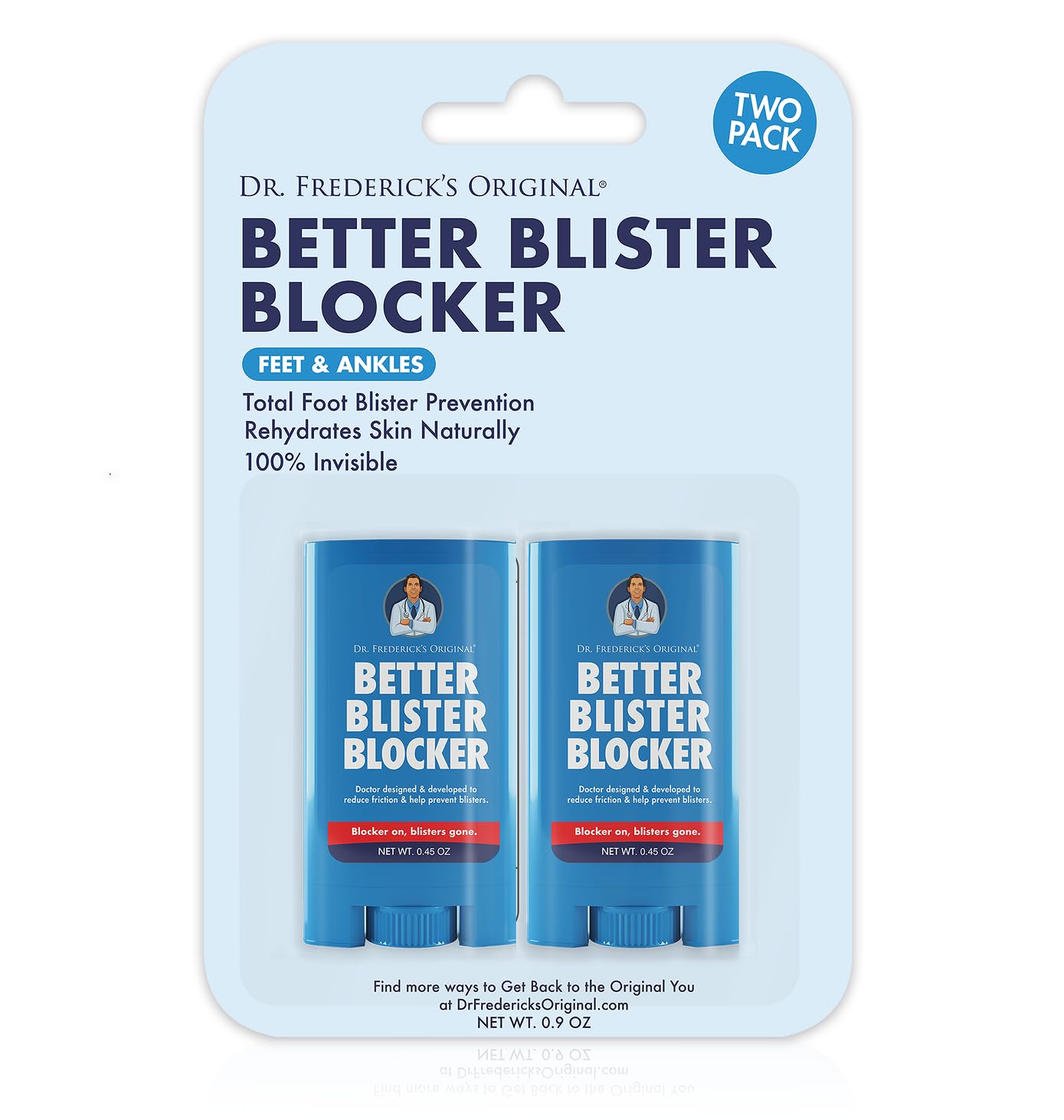
Dr. Frederick’s Original Better Blister Blocker is a two-pack of non-greasy balm that protects feet, thighs, and bra lines from chafing with a clean, dry finish. It offers a similar mechanism to the top pick but extends coverage to other body areas prone to chafing during hiking.
Best for hikers who need a single product for both foot blister prevention and thigh or bra line chafing. The small stick size and need for reapplication every few hours on long hikes mean it suits day hikes or shorter trips rather than all-day treks without a break.
Pros
- Effectively prevents blisters and chafing during hiking, even with new or stiff shoes.
- Dries quickly to a smooth, non-sticky finish that feels clean on skin.
- Moisturizing effect leaves feet feeling soft and smooth after a long hike.
Cons
- On long, sweaty hikes, the balm may need reapplication every few hours to maintain protection.
- Each stick contains only 0.9 oz total, which may run through faster than expected with frequent use.
A solid option for hikers who want a single anti-chafing product that works on feet and other areas, as long as the reapplication schedule fits their hiking style.
Best for Custom Cuts, Waterproof
Nexcare Blister Tape

Key Features
- Product Type: Foam medical tape roll
- Application Method: Cut and apply to skin
- Adhesion Durability: Hit-or-miss, low sweat
- Cushioning Thickness: Thin foam cushion
- Dosage Type: Multiple cuts per roll
- Price: $
The Nexcare Blister Prevention Tape offers a waterproof, breathable foam that can be cut to fit any hot spot. It stays on well in wet conditions and is comfortable under socks. However, adhesion to skin varies between rolls; some may peel off during sweaty activity. This tape works best for short, low-sweat hikes or as a supplementary layer rather than a primary prevention method.
Pros
- Custom-cut foam tape fits any hot spot precisely.
- Waterproof and breathable, holds up in wet conditions.
Cons
- Adhesion can be inconsistent; some rolls may not stick well to skin.
- Roll size is small for the price.
Worth trying if you get a good batch, but consider a balm like Body Glide for more predictable prevention on longer or sweatier hikes.
Best for Group Trip Backup
Promifun Hydrocolloid Pads

Key Features
- Product Type: Hydrocolloid bandages (28ct)
- Application Method: Apply to skin over hot spots
- Adhesion Durability: Fails on sweaty hikes
- Cushioning Thickness: Good cushioning
- Dosage Type: 28 single-use pads
- Price: $$
This 28-count variety pack provides comfortable cushioning for existing blisters and hot spots, with four shapes to cover heels, toes, and other areas. The thin design fits well inside shoes without adding bulk. However, adhesion can be inconsistent during sweaty or high-friction hiking sessions, which limits its reliability as a primary prevention method. For groups or as a backup supply in a first-aid kit, the quantity and price offer reasonable value, but active hikers should look to balms or tapes for dependable on-trail protection.
Pros
- Cushioning and comfort for existing blisters, thin enough to fit inside shoes
- Variety of four shapes provides flexible coverage for different foot areas
Cons
- Adhesion can be inconsistent during sweaty or active hiking, leading to pads peeling off
Best as a backup supply or for casual walks; not the first choice for active hiking prevention.
Best for Variety Shapes, Treatment
Dr. Frederick’s Hydrocolloid

Key Features
- Product Type: Hydrocolloid bandages (12ct)
- Application Method: Apply to existing blisters
- Adhesion Durability: Variable, low sweat only
- Cushioning Thickness: Good cushioning
- Dosage Type: 12 single-use pads
- Price: $$
The three targeted shapes (heel, toe, spot) fit well under socks and provide good cushioning for existing blisters. The hydrocolloid gel speeds healing and reduces pain. However, adhesion is inconsistent during active hiking — edges can peel quickly on moving feet, limiting this kit to low-sweat use or post-hike recovery.
Pros
- Hydrocolloid material accelerates healing and reduces pain from existing blisters.
- Variety pack includes heel, toe, and spot shapes for hard-to-cover areas.
Cons
- Adhesion can be inconsistent on sweaty or active feet, especially on heels.
- Per-bandage cost feels high when adhesion doesn’t hold for expected duration.
Best suited for treating existing blisters during low-activity days or as an overnight healing patch when you can stay off your feet.
Best for Extreme Adhesion, Wet
SpecOps Moleskin Roll
Key Features
- Product Type: Ultra-thin moleskin roll
- Application Method: Cut and apply to skin
- Adhesion Durability: Excellent in wet conditions
- Cushioning Thickness: Ultra-thin (0.015in?)
- Dosage Type: 16 ft, multiple uses
- Price: $$$
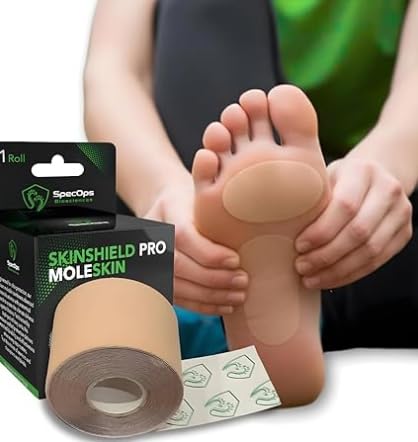
This moleskin sticks through days of wet conditions and keeps feet blister-free on multi-day treks, thanks to its combative-origin adhesion. The ultra-thin profile fits seamlessly inside shoes without adding bulk. However, the same thinness means minimal cushioning for existing hot spots, and the premium price sits well above standard moleskin — justified only if standard tapes have failed you or you need waterproof hold.
Pros
- Adhesion holds even after submersion in water for days.
- Keeps feet free of blisters during rugged, multi-day hikes.
Cons
- Thinness may not provide enough padding for sensitive spots or existing blisters.
- Edges can roll up or peel on curved surfaces like heels over time.
Best suited for hikers who need extreme adhesion in wet conditions and can accept a thinner profile — unlikely to satisfy those wanting padding or a budget price.
Best for Budget Conscience, Casual
Amazon Basic Care Blister

Key Features
- Product Type: Hydrocolloid bandages (10ct)
- Application Method: Apply to clean skin
- Adhesion Durability: Inconsistent, light use
- Cushioning Thickness: Good cushioning
- Dosage Type: 10 single-use pads
- Price: $
This hydrocolloid bandage from Amazon Basic Care offers a low-cost option for blister care, with reviews noting it helps prevent and heal blisters on feet and heels during light activity. However, adhesion and durability can be inconsistent; the bandage may peel or lose grip on sweaty or active feet, making it better suited for low-impact use like city walking or as a backup in a first-aid kit than for serious hiking.
Pros
- Significantly cheaper than name-brand hydrocolloid bandages.
- Helps prevent and heal blisters on feet and heels for casual walkers.
Cons
A good value choice for light-duty blister care when you need a cheap backup or for short urban walks, but not consistent enough for all-day hikes.
Best for Shoe Padding, Budget
Happy Hippo Moleskin

Key Features
- Product Type: Moleskin roll
- Application Method: Apply to shoe interior
- Adhesion Durability: Poor to skin, good to shoe
- Cushioning Thickness: Thin cushion
- Dosage Type: 15 ft, multiple uses
- Price: $
This budget-friendly moleskin roll provides plenty of material for padding inside shoes, effectively reducing friction from new boots when applied to the shoe rather than the foot. Its adhesive is not designed for direct skin contact — the same property that makes it suitable for shoe surfaces means it won’t stay on active, sweaty feet. Best for hikers looking to protect shoe seams or hotspot areas on their footwear.
Pros
- Prevents blisters when applied inside new boots or shoes.
- Budget-friendly price for a generous 15-foot roll.
Cons
- Thinner material may not provide enough padding for heavy-duty friction points.
If you’re lining the inside of new boots to prevent rubbing on a budget, this roll delivers — just don’t expect skin adhesion.
Best for First-Aid Kit Backup
Kimihome Hydrocolloid
Key Features
- Product Type: Hydrocolloid bandages (21ct)
- Application Method: Apply to skin over hot spots
- Adhesion Durability: Poor, edges curl
- Cushioning Thickness: Good cushioning
- Dosage Type: 21 single-use pads
- Price: $$
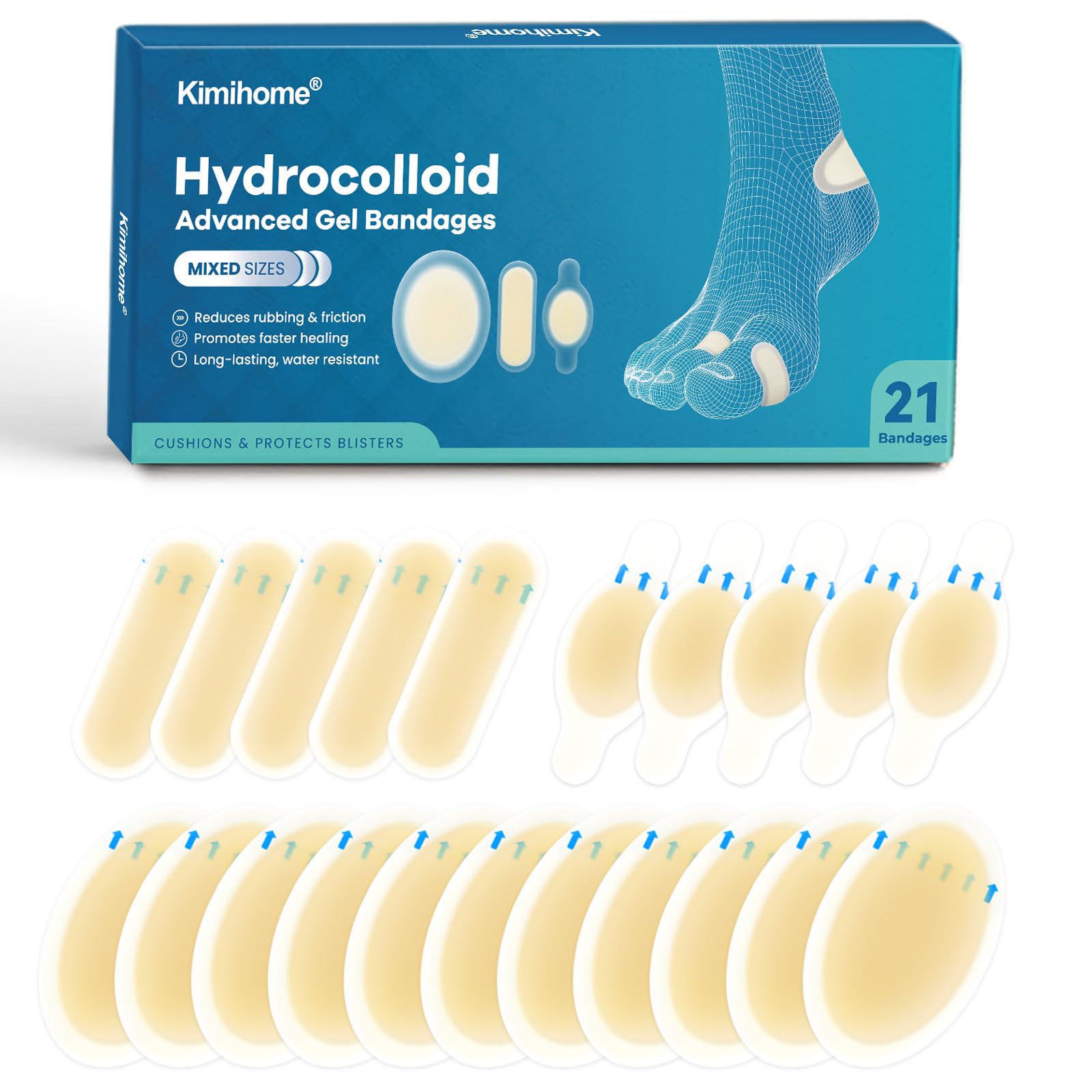
The Kimihome variety pack offers a generous count of hydrocolloid pads at a mid-range price, making it a practical addition to a travel first-aid kit. The cushioning helps heal existing blisters and protects hot spots during low-activity days. However, the adhesion is inconsistent — edges may not stay down during movement, and some users experience skin irritation upon removal. For hiking where sweat and friction are constant, this is not a dependable choice; it works best as a backup for casual walks or post-hike recovery.
Pros
- Effective cushioning and healing for existing blisters; works well for children.
- Good value given the number of bandages included in the pack.
Cons
- Edges may not stick during activity, causing the bandage to shift or fall off.
- Removal can irritate sensitive skin, especially after extended wear.
Best kept in a travel first-aid kit for light daily wear or post-hike blister care, not for active hiking where adhesion and sweat are concerns.
How to Choose
The most effective blister prevention is the one that matches your hike’s duration, sweat level, and skin sensitivity — not the one with the flashiest marketing.
Product Type
The format dictates how you use it and where it works. Balms and creams create a friction barrier on skin but wear off with sweat. Tapes and bandages provide a physical shield but depend on adhesion. Wool wraps offer a no-stick alternative that wicks moisture but requires careful placement. Shoe patches address the source of rubbing without touching your skin.
Start by asking: Do I need prevention before hiking, treatment for an existing blister, or a fix for a persistent shoe seam? Each format excels at one of these jobs.
Application Method
Pre-hike balms are quick and clean but need reapplication. Tapes and bandages can be applied at the first sign of a hot spot, but require clean, dry skin to stay put. Wool wraps are placed inside the sock before you put it on. Shoe patches are a set-and-forget solution applied to the boot lining.
Consider trail logistics: can you pause to reapply? Do you have a clean foot to tape? If you hike with wet feet often, an adhesive-free method like wool or a shoe patch avoids the major failure point of tapes.
Adhesion Durability
Adhesion is the single most common failure point in blister prevention. Hydrocolloid bandages and many tapes peel off quickly on sweaty, curved areas like heels. The reason is simple: skin moisture and movement break the bond. Balms don’t ‘stick’ — they lubricate, so they simply wear away over time.
For all-day protection in wet conditions, look for products specifically tested for sweat resistance (like balms with silicone or wool). For tapes, apply to bone-dry skin and avoid touching the adhesive side. Some products, like ENGO patches, bypass skin adhesion entirely by sticking to the shoe.
Cushioning Thickness
Thick padding feels comfortable but can alter shoe fit, creating new friction points. Thin materials fit inside tight running shoes but offer minimal shock absorption. Moleskin and some tape rolls let you cut exactly the shape you need, but too many layers under a heel can lift your foot and cause instability.
If your boots have limited volume, choose ultra-thin options like ENGO patches or foam tapes. For loose-fitting trail shoes, a wool wrap or moleskin provides gentle cushion without risking fit issues.
Dosage Type
Single-use bandages and tape strips are convenient but add waste and cost per use. Multi-use balms and wool wraps can last dozens of applications, making them more economical for frequent hikers. However, multi-use products require careful hygiene to avoid contamination. A balm stick or tub of cream is easy to share on group trips but can get gritty if left in a hot car.
FAQ
Why does my blister prevention tape peel off after only an hour of hiking?
Adhesion failure is almost always caused by moisture: sweat on the skin or damp socks. Tapes and bandages require a perfectly clean, dry surface to stick. Even a thin layer of lotion or natural skin oils can compromise the bond. For sweaty feet, skip the tape and use a balm or wool wrap instead.
Can I use hydrocolloid bandages to prevent blisters before they form, or only after?
Hydrocolloid bandages are designed to create a moist healing environment for existing blisters. Using them preemptively on healthy skin often leads to slippage and irritation because their gel cushions are not meant to withstand the friction of a full hike. For prevention, stick to a balm, tape, or wool.
How often should I reapply anti-blister balm during a long day hike?
Most balms, including Body Glide, need reapplication every three to four hours in dry conditions, and more frequently if you’re sweating heavily or crossing streams. Plan a mid-hike foot care stop: dry your feet, let them air out, and reapply. If you dislike stopping, choose a longer-lasting cream like HikeGoo.
What’s the difference between moleskin and blister tape — which is better for heels?
Moleskin has a thick, soft cotton flannel layer that provides cushioning, while blister tape is a thin, flexible film that primarily reduces friction. For heels, moleskin can absorb shock but may roll up if not applied perfectly. Blister tape fits more discreetly inside shoes but offers minimal padding. If your heel blisters are formed by tight shoes, moleskin helps; if by rubbing against the heel cup, tape is better.