This post contains affiliate links. We may earn a small commission when you buy through our links — at no extra cost to you.
Walk into any climbing gym and you will see two kinds of belay devices: simple tubes and cam-assisted models. The marketing makes each sound like the only safe choice, but the reality is more practical. Many new climbers overpay for features they never use, or buy a device that fights their climbing style.
The real difference is in how you climb. Top-rope sessions in the gym do not need assisted braking. Lead climbing on sharp rock benefits from the extra grip a cam provides. Alpine routes demand ultralight gear that doubles as an anchor tool. Buying a device without matching it to your typical day out is a common way to waste money or create frustration.
This guide cuts through the hype by focusing on what each device actually does well and who should use it. Know your climbing style, and the right belay device becomes obvious.



Best for Gym & Sport
Black Diamond ATC Package
Key Features
- Braking Type: Manual tube
- Weight / Compactness: ~50g device
- Rope Diameter: 8.5-11mm
- Price: Mid-Range
The Black Diamond ATC device uses hot-forged aluminum and a two-friction groove design to deliver consistent rope control across a wide diameter range. The RockLock carabiner’s screw-lock gate adds a layer of security without the complexity of auto-locking mechanisms, and the flat profile of the device minimizes snagging on gear loops.
During gym sessions and sport climbs, the ATC feeds rope smoothly during rappel and holds firmly when the brake hand is locked. Some users note that the carabiner’s sleeve can loosen over a long day of lowering, but a quick re-tightening during breaks resolves it. The two friction modes provide ample grip for both single and double-rope rappels, though thinner ropes require the more aggressive slot.
This package is built for climbers who want a no-fuss manual belay device without paying for assisted braking they might not use. Beginners will find the tube mechanism intuitive, and experienced gym climbers appreciate the low weight and predictable catch. However, the lack of cam-assisted locking means the climber must maintain active brake-hand control at all times — a factor that matters most for new lead belayers or those climbing infrequently.
The included carabiner matches the device’s build quality, eliminating guesswork about compatibility. For climbers who already own a locking carabiner, the standalone ATC device costs a few dollars less, but the package saves the hassle of checking gate fit and offers a consistent screw-lock that many users prefer over budget alternatives.
Pros
- Rugged hot-forged aluminum body and precise machining ensure consistent rope engagement across the usable diameter range.
- Includes a carabiner matched to the device, saving the cost and effort of separate purchases.
- Aluminum construction withstands frequent use and rough handling without visible wear after a season of gym climbing.
- Simple two-friction groove design works intuitively for both top-rope and lead belay with minimal learning curve.
Cons
- For new lead belayers still developing consistent brake-hand discipline, the lack of cam-assisted locking means catch technique is critical.
This kit suits sport and gym climbers who prefer manual control and a straightforward belay device without added complexity or cost.
Best for Lead & Sport
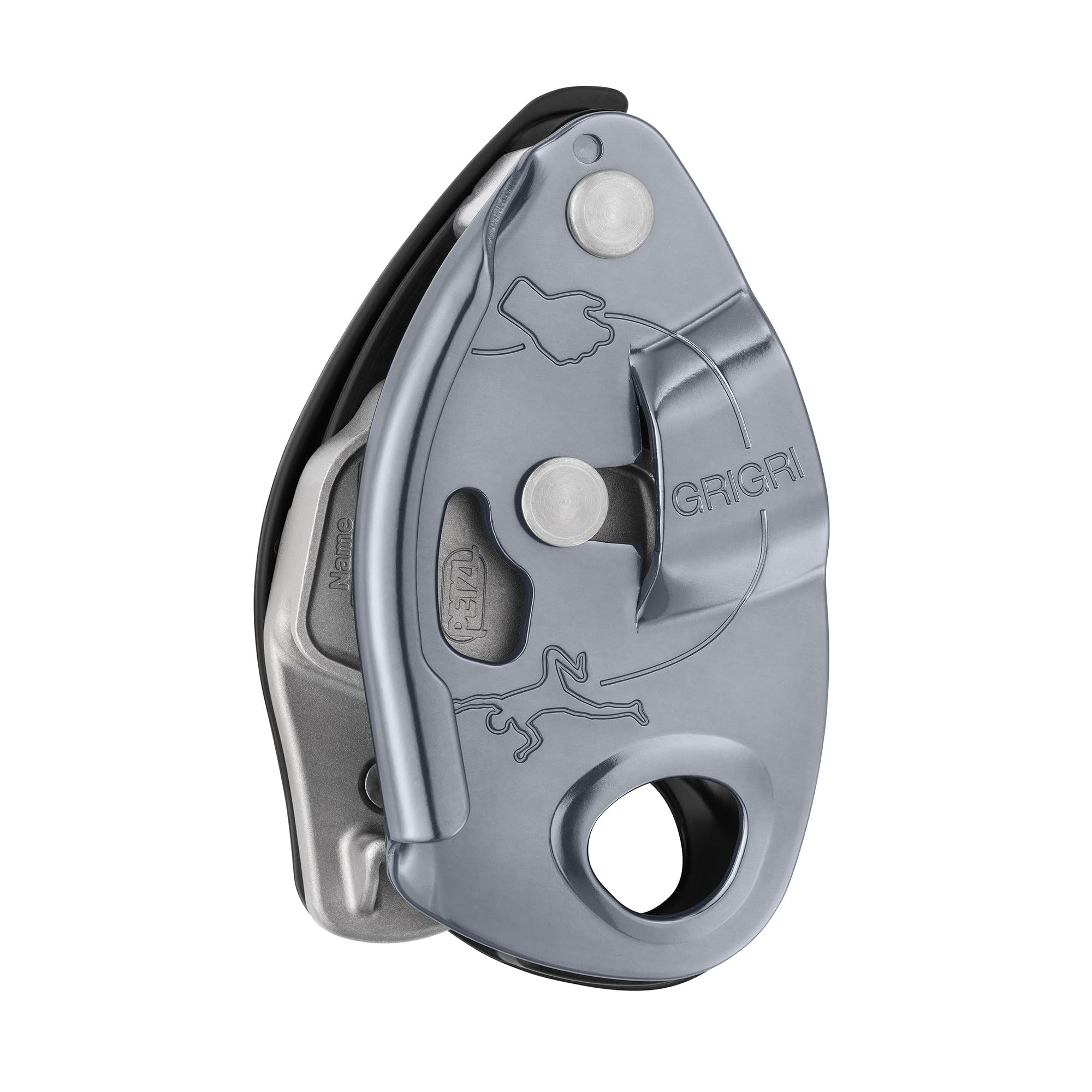
Petzl Grigri
Key Features
- Braking Type: Assisted cam
- Weight / Compactness: 175g
- Rope Diameter: 8.5-11mm (opt. 8.9-10.5)
- Price: Premium
The Grigri’s cam-assisted braking engages consistently across rope diameters from 8.5 to 11 mm, making it a staple for gym and sport climbing. Unlike a manual tube device, the cam automatically locks on a falling leader, reducing the chance of a dropped lead during belay.
This device fits lead climbers who frequently belay partners of different weights or are making the switch from tube devices. The side plates can feel thin on some units, though this is a usability tradeoff rather than a safety concern; a brief break-in period may be needed for the lowering action to feel fully smooth.
The ergonomic handle provides a 3:1 mechanical advantage for controlled lowering, and the assisted braking is intuitive enough for newer belayers to learn quickly. For alpine or multi-pitch climbing where weight and simplicity matter more, a lighter guide-mode device like the Reverso would be a better match.
Pros
- Cam-assisted braking locks automatically on a falling leader.
- Smooth, controlled lowering via ergonomic handle with 3:1 advantage.
- Intuitive operation for climbers transitioning from manual tube devices.
Cons
- Thin side plates can feel less robust on some units.
A strong choice for lead climbers who want assisted braking; the side plate feel and break-in period are minor tradeoffs for the security it provides.
Best for Top-Rope Gym
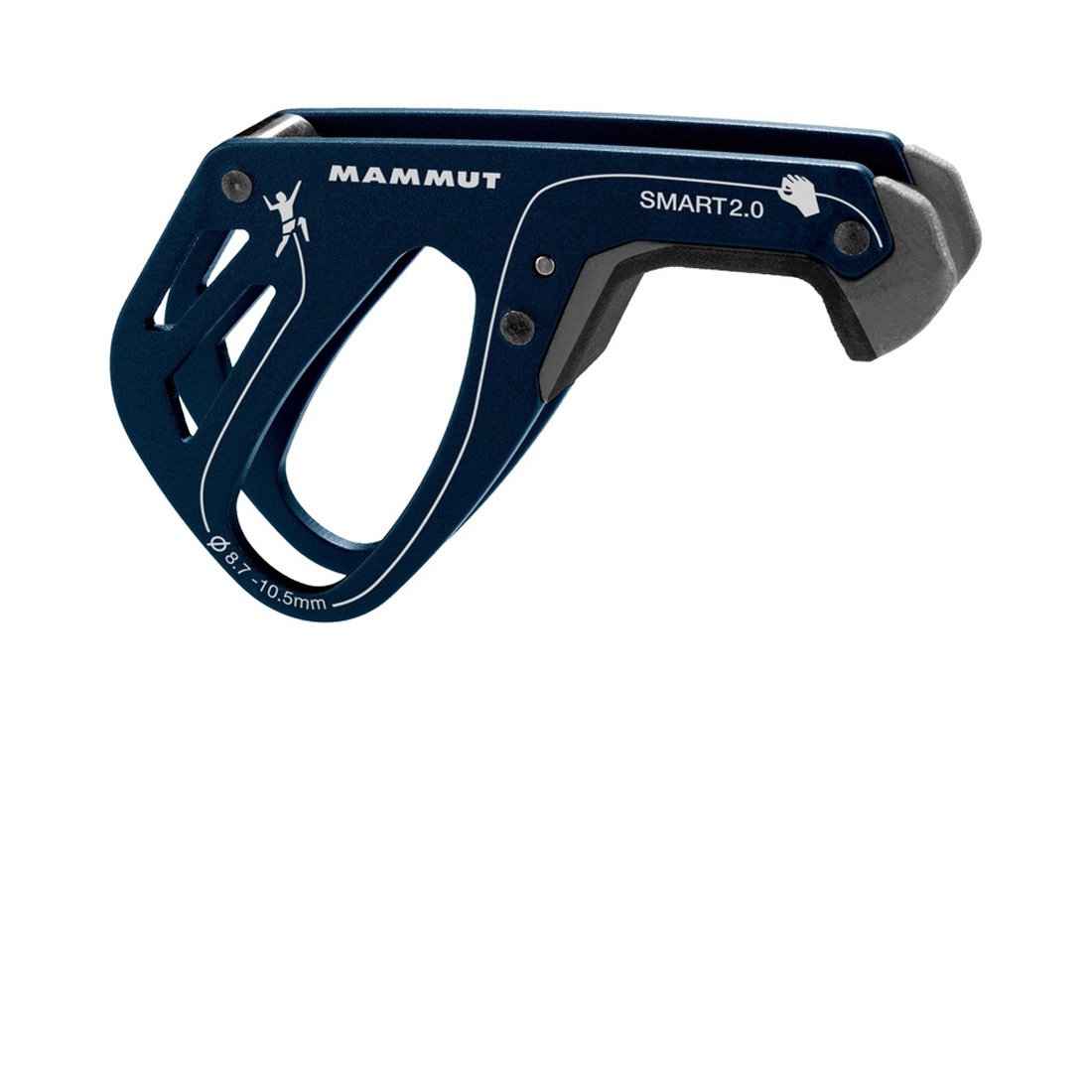
Mammut Smart 2.0
Key Features
- Braking Type: Tube + assisted insert
- Weight / Compactness: 80g
- Rope Diameter: 8.7-10.5mm
- Price: Budget
The Mammut Smart 2.0 keeps things simple: a tube-style device with an insert that provides assisted braking for top-rope belaying. No moving parts, no cams — just a clean 80g build that gives extra friction when the rope runs through it, so a falling climber is caught with less effort from the belayer. Compared to a basic ATC, this offers a step up in safety without the complexity of a cam-driven device.
This device targets top-rope gym climbers, budget-conscious beginners, and anyone who prefers a minimalist design. The assisted braking works well for giving and taking slack on top rope, but it is not suitable for lead climbing — the rope can jam when you try to feed slack quickly, making it frustrating and unsafe for sport or trad leading. Also, it requires a specific HMS carabiner shape (the Mammut Smart HMS is recommended) for smooth operation; a generic pear-shaped HMS may cause friction issues.
When used with a compatible carabiner, the Smart 2.0 feeds rope smoothly on top rope and locks down on a fall. The lightweight aluminum body and plastic insert make it easy to handle, and there is no learning curve for someone already familiar with a tube device. For gym sessions where the climber is always above the belayer, this adds a reassuring layer of braking without the bulk or cost of a Petzl Grigri.
Pros
- Lightweight 80g design with no moving parts, easy to pack and use
- Provides extra braking assistance for top-rope belaying without requiring advanced technique
- Affordable entry point into assisted braking, undercutting cam-based devices
Cons
- Not designed for lead climbing — the device can jam when feeding slack, making it unsafe for sport or trad belaying
The Mammut Smart 2.0 works well for top-rope-only climbers who want light, simple assisted braking on a budget — just pair it with the recommended carabiner and leave it at the gym.
Best for Alpine & Trad
Petzl Reverso
Key Features
- Braking Type: Manual tube
- Weight / Compactness: 68g
- Rope Diameter: Single 8.5-10.5, Half 7.1-9.2
- Price: Mid-Range
At 68 grams, the Petzl REVERSO is barely noticeable on a rack. Its guide mode lets the anchor-end belay two seconds independently, with no need for a separate tether or extra hardware. That direct friction path means less slack in the system and a cleaner anchor stance.
The V-shaped friction grooves grip a wide range of rope diameters — single ropes from 8.5 to 10.5 mm, half and twin pairs down to 7.1 and 6.9 mm. This tolerance matters when switching between a skinny alpine line and a beefier sport rope on the same trip. The aluminum body keeps it corrosion-resistant on wet routes, though it will wear faster than steel if used heavily with abrasive ropes.
This device targets trad and alpine climbers who prioritize weight and guide-mode functionality over hand-holding. It requires the belayer to maintain correct brake-hand tension on lead belay — no cam to catch a loose grip. For gym-only climbers or anyone who prefers assisted braking, the Grigri (also in this guide) is a more forgiving option. The REVERSO shines when every gram counts and you already own the belay technique.
Pros
- Weighs 68 g — lighter than any assisted device and most tube-style competitors
- Guide mode belays two seconds from the anchor without a separate tether
- Wide rope compatibility (single 8.5–10.5 mm, half/twin 6.9–9.2 mm)
Cons
- For lead belay, the device relies entirely on the belayer’s brake-hand technique — no assisted braking to compensate for a loose grip
The REVERSO is the right pick for multi-pitch and alpine climbers who want the lightest possible belay/rappel device and already have solid lead-belay habits. If you need extra margin for error on a hanging belay, look to the assisted-braking Grigri instead.
Best for Saddle Hunting
Mad Rock Safeguard
Key Features
- Braking Type: Assisted cam
- Weight / Compactness: 142g
- Rope Diameter: 8.9-11mm (climb), 8.1-11 (rescue)
- Price: Premium
The Safeguard delivers one-handed operation and immediate cam engagement, making it a natural fit for saddle hunting descents where a climber needs to control descent while managing gear. Its aircraft-grade aluminum and stainless steel build handles outdoor abuse without added bulk.
Praised by hunters for SRT use, the device prioritizes instant braking over smooth slack feeding. That same cam engagement can feel abrupt when belaying a leader, so it works best in single-rope descent scenarios rather than dynamic lead climbing.
This device suits saddle hunters and climbers who also hunt, but its premium price and lack of guide mode make it less compelling for pure rock climbing or gym use. For standard lead belaying, the Grigri provides similar assisted braking at a lower cost.
Pros
- Designed for saddle hunting SRT descents with instant cam engagement.
- One-handed operation simplifies lowering and retrieval.
- Aircraft-grade aluminum and stainless steel build holds up to outdoor conditions.
Cons
- Higher price than general assisted devices like the Grigri, offering less value for standard climbing use.
- Lacks guide mode for multi-pitch trad climbing, limiting its use for that discipline.
The Safeguard is the right choice for saddle hunters who need a reliable descent device with one-handed operation; for standard rock climbing, the Grigri offers better value.
Best for Rescue & Rappel
AOKWIT Figure 8
Key Features
- Braking Type: Figure 8 manual
- Weight / Compactness: 282g
- Rope Diameter: 8-10mm
- Price: Budget
The AOKWIT Figure 8 delivers a 50kN breaking strength that exceeds what most climbing belay devices offer, making it suited for rescue and industrial rope work. In contrast to the Black Diamond ATC Package, which prioritizes lightweight portability for sport climbing, this device is built for handling heavy loads and repeated use. Its bent-ear design allows for smooth rappelling and lock-off, though the tradeoff is a larger footprint that feels excessive in a gym pack.
Rappelling with the Figure 8 is straightforward: the ears provide friction control, and lock-off is secure. Some units may show cosmetic flaking of the powder coating, but this does not affect function. The device is not intended for lead belaying because the figure 8 geometry twists ropes, introducing a safety risk when giving slack.
This device fits rescue crews, industrial rope access technicians, and budget-conscious buyers who need a durable rappel device for occasional use. It is not a replacement for a tube-style belay device for sport climbing or lead belaying. Gym and sport climbers will find it heavier and bulkier than necessary, and the rope twisting makes it unsuitable for belaying a leader.
Pros
- Extremely strong and durable
- Excellent value for the price
- Easy to use for rappelling and lock-off
Cons
- Large and heavy compared to tube or assisted devices
- Powder coating may flake off on some units
The AOKWIT Figure 8 is a purpose-built tool for rescue and industrial rope work where strength matters more than portability. For sport climbing or lead belaying, the ATC Package is the more appropriate choice.
Best for Spare Device
Black Diamond ATC

Key Features
- Braking Type: Manual tube
- Weight / Compactness: ~60g
- Rope Diameter: 8.5-11mm
- Price: Premium
The Black Diamond ATC is the same bare-bones tube device found in the ATC Package, made from the same aluminum with the same 60g weight. It delivers the same predictable friction for belaying and rappelling on single ropes. The catch is price: this standalone unit costs more than the package that includes a matching locking carabiner. Rope threading can feel tight with thicker ropes, requiring a bit of care during setup. This device makes sense only if you already own a compatible carabiner and want a spare or need to replace a lost device without buying another full kit.
Pros
- Simple tube device that handles standard belay and rappel duties without complexity.
- Built with the same materials and finish as the well-known ATC package.
Cons
- Rope threading can be tight with thicker ropes, requiring extra care during setup.
- Higher price than the ATC Package that includes a locking carabiner.
For climbers who already own a compatible carabiner and need a spare or backup device, this bare ATC fits the bill despite its premium pricing.
Best for Teaching Beginners
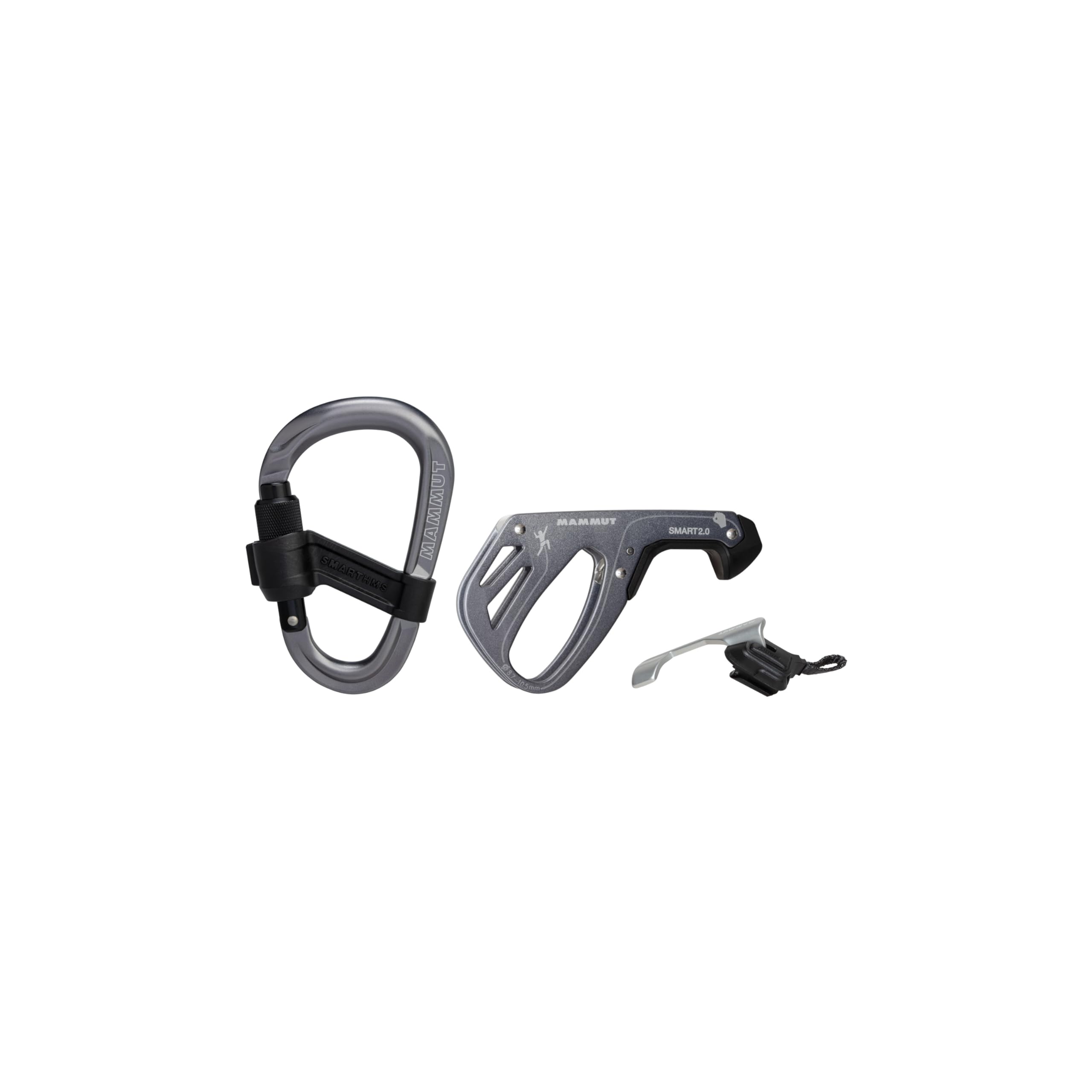
Mammut Smarter
Key Features
- Braking Type: Tube + guided insert
- Weight / Compactness: ~80g
- Price: Premium
The Smart 2.0 is a capable tube-style assisted braking device, and the Smarter add-on clips to the brake hand to provide a visual cue for proper hand position — useful when an instructor needs to verify technique at a glance. The complete package eliminates separate purchases. However, the price is steep compared to buying the Smart 2.0 and a carabiner on their own, and the add-on’s real-world performance is less established than the standalone device. Its benefit is limited to structured teaching sessions; for general gym or sport climbing, the lighter Smart 2.0 alone makes more sense.
Pros
- Visual cue add-on helps new belayers learn correct brake hand position during supervised instruction.
- Complete kit includes the Smart 2.0 device and a compatible HMS carabiner, removing compatibility guesswork.
- Smart 2.0 provides assisted braking for added security on top-rope belays.
Cons
- Package costs more than buying the Smart 2.0 and a carabiner individually, making it a premium purchase.
- The Smarter add-on adds extra bulk to the setup and is only useful in teaching scenarios.
This package fits climbing instructors who need the add-on’s teaching cues for groups of beginners; most other climbers will find better value in the standalone Smart 2.0.
Best for New Lead Climbers
Petzl Grigri+

Key Features
- Braking Type: Assisted cam + anti-panic
- Weight / Compactness: 200g
- Rope Diameter: 8.5-11mm (opt. 8.9-10.5)
- Price: Premium
The Petzl Grigri+ builds on the standard Grigri’s assisted braking by adding an anti-panic handle and selectable top rope and lead modes. The anti-panic feature is designed to catch a runaway rope during lowering, which gives new belayers an extra layer of security. However, the same handle can engage unintentionally during normal lowering, slowing descent and frustrating users who prefer direct control. For experienced climbers, the standard Grigri or a tube device offers more predictable feedback. The Grigri+ is heavier and more complex, making it less suited for multi-pitch or alpine use. It works best for gym and single-pitch sport climbing where the safety net outweighs the occasional slowdown.
Pros
- Cam-assisted blocking with anti-panic handle adds security for new lead belayers.
- Smooth lowering and easy to use after practice.
Cons
- Anti-panic handle may engage unexpectedly, slowing lowering.
- Not ideal for experienced belayers who prefer direct control.
Best for new lead belayers who want maximum safety assistance; experienced climbers should choose the standard Grigri.
How to Choose
The most important factor is matching the belay device to your primary climbing style, not the price tag.
Assisted Braking vs Manual Tube
Assisted-braking devices use a cam that pinches the rope during a fall, reducing the grip strength needed to hold the brake. This makes lead belaying safer for lightweight partners or beginners. However, the cam can interfere with slack payout if not handled correctly, and you must still hold the brake strand.
Manual tube devices like the ATC rely entirely on the belayer’s technique. They are lighter, cheaper, and simpler to maintain. For top-rope belaying or gym climbing where falls are rare, a tube device works perfectly. For frequent lead climbing with varying partner weights, assisted braking adds a meaningful safety margin.
Weight and Compactness
Every gram matters on a multi-pitch alpine route. Devices like the Petzl Reverso (68g) are ideal for racking on a harness without bulk. Heavier assisted devices (170-200g) add noticeable weight, especially when combined with a large rack and rope.
In the gym or at the crag, weight is less important than ease of use. A 175g Grigri is not a burden for a sport climbing session. Buy lightweight only if you regularly hike long approaches or need to save every ounce for big walls.
Rope Diameter Compatibility
Belay devices are designed for a specific rope diameter range. Using a rope outside that range reduces friction: too thin a rope can slip through, too thick can jam. Most devices work best with 9.5-10.5mm ropes, but always check the manufacturer’s specs.
If you own a skinny 8.7mm rope, look for a device optimized for thin diameters (e.g., Reverso or Smart 2.0). For thick 11mm gym ropes, any standard tube or Grigri will work. Ignoring this causes frustrating feeding or dangerous lock-up.
Guide Mode for Multi-Pitch
Guide mode allows a leader to belay two seconds simultaneously from an anchor, each rope independent. This is essential for trad and alpine climbing where you must bring up followers. Devices like the Reverso can switch to guide mode by clipping a carabiner through a hole.
The trade-off is extra complexity and weight for that feature. If you only climb single-pitch sport routes, you will never use guide mode. Buying a device with it adds cost and weight for no benefit.
Included Carabiner vs Device Only
Many belay devices are sold both alone and in a package with a screw-lock carabiner. Buying the package often saves 10-20 dollars compared to purchasing the carabiner separately. The included carabiner is usually matched to the device’s shape for optimal performance.
If you already own a compatible HMS carabiner, buying the device alone is cheaper. But for a first-time buyer, the package eliminates guesswork and ensures compatibility. Check carabiner shape: some devices (Smart 2.0) require specific HMS models to function correctly.
FAQ
Why does my Petzl Grigri+ anti-panic keep engaging during lowering?
The anti-panic handle is designed to stop a runaway lowering by locking the rope if you pull too hard. If it engages during normal use, you may be gripping the handle too aggressively. Practice a slower, controlled squeeze. If the problem persists, some users disable the anti-panic feature (check manufacturer instructions) or switch to the standard Grigri for smoother control.
Can I use a figure 8 belay device for lead climbing?
No. Figure 8 descenders twist the rope during belay and can cause dangerous kinking. They also lack the friction needed to catch a fall smoothly. Use a tube-style or assisted-braking device for lead belaying. Figure 8s are best for rappelling and rescue work where rope twisting is less critical.
Is the Mammut Smart 2.0 safe for lead belay?
The Smart 2.0 is not recommended for lead belaying. Its assisted-braking insert can jam the rope when feeding slack, causing short-roping. It works well for top-rope belaying where slack is minimal. For lead climbing, choose a dedicated lead belay device like the Petzl Grigri or a standard ATC with proper technique.
What is the difference between an ATC and a Grigri for top rope belaying?
An ATC is a manual tube device that requires the belayer to hold the brake strand at all times. A Grigri uses a cam to lock the rope automatically during a fall, adding a layer of safety. For top-roping, an ATC is sufficient and cheaper; the Grigri’s assisted braking is a nice bonus but not necessary. Choose the ATC if you want simplicity and value, the Grigri if you prefer extra security or plan to lead climb later.