This post contains affiliate links. We may earn a small commission when you buy through our links — at no extra cost to you.
Any backpacker who has bought a pair of ultralight camp shoes knows the pattern: they pack small, dry fast on paper, and then the sole peels off after three creek crossings. Most water shoes in this category make similar promises, but the real-world trade-off between packability and longevity is rarely spelled out.
This guide focuses on the actual performance you can expect after a season of use. We highlight shoes that deliver on quick-dry claims without sacrificing durability, and call out the ones that won’t survive a weekend trip. The goal is to help you match the shoe to your trip style and frequency, not to chase the lightest possible weight.
Whether you need a disposable weight-saver for a single thru-hike or a sturdy camp slipper for repeated weekend trips, the right shoe exists. The trick is knowing which features actually matter.




Best for All-Around Camp
WateLves Barefoot Water Shoes
Key Features
- Quick-Dry Capability: Quick-dry
- Fit & Toe Box: Wide, size up
- Price: $$
The WateLves barefoot shoes feature a thick cushioned sole and a flexible knitted upper that conforms to the foot. The rubber outsole offers reliable grip on wet and dry surfaces, and the elastic laces make them easy to slip on and off. This combination results in a comfortable shoe for camp activities, from walking to the river to lounging around the tent.
While the wide toe box allows natural splay, the fit runs slightly short in the toe area for some. Backpackers looking for a quick-dry, packable camp shoe that doubles for water use will appreciate the build quality – just size up if you are between sizes. For those who need arch support or a weight-weenie ultralight option, other choices may suit better.
Pros
- Plush cushioning supports long walks on varied terrain.
- Durable knit upper and grippy outsole hold up to frequent trips.
- Works for water, beach, and camp use without needing separate shoes.
Cons
- Toe box may feel cramped for those with wider feet or between sizes.
If you want one shoe that handles camp, water, and everyday tasks without sacrificing comfort or durability, this is the pick.
Best for Budget Backpackers
ATHMILE Barefoot Water Shoes
Key Features
- Quick-Dry Capability: Quick-dry
- Fit & Toe Box: Wide, inconsistent
- Price: $
ATHMILE delivers exceptional barefoot comfort and immediate water drainage at a budget price that undercuts most competitors. While the top pick in this guide offers more consistent fit and construction, this shoe is the practical choice for first-time camp shoe buyers who want functional footwear without the investment. Sizing can be inconsistent and sole detachment has been noted in isolated cases, making this a seasonal replacement for warm-weather water activities rather than a long-term companion.
Pros
- Barefoot feel with zero-drop design and wide toe box
- Dries quickly after water exposure
- Budget-friendly price for a functional camp shoe
Cons
- Sizing can be inconsistent – some may need to size up or down
- Sole detachment has occurred in some units
The practical option for budget-first buyers – just expect to possibly swap sizes for a better fit.
Best for High-Mileage Hikers
Merrell All Out Blaze Aero
Key Features
- Weight & Packability: Lightweight
- Quick-Dry Capability: Breathable quick-dry
- Fit & Toe Box: Order up
- Price: $$$
The Merrell All Out Blaze Aero Sport combines aggressive tread with lightweight mesh for a shoe that handles wet trails and water crossings without needing a break-in period. High-mileage hikers who want a single shoe for both hiking and fording streams will appreciate the grip and breathability. However, the fit runs small — ordering a half size up is essential — and the lining may peel after extended use, a tradeoff for its hybrid design.
Pros
- No break-in needed; comfortable from the first wear
- Lightweight and breathable for hot-weather hiking and water use
- Excellent traction on wet and uneven terrain
Cons
- Sizing runs small for some — order a half size up
- Lining may peel after months of use in some cases
For hikers who need a do-it-all water/trail shoe and can manage the fit caveat, this Merrell is a capable option.
Best for Boating/fishing
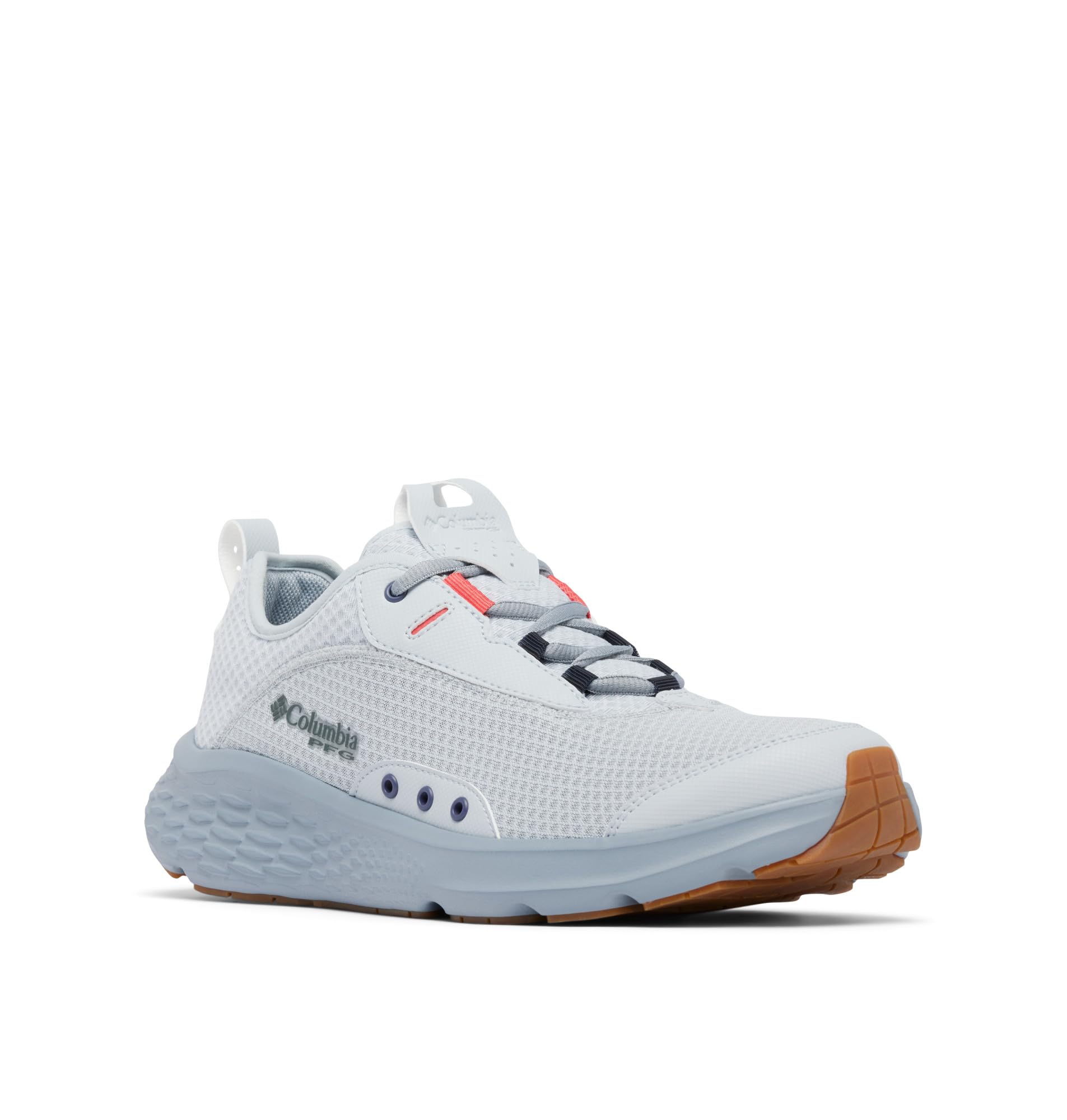
Columbia Castback PFG
Key Features
- Weight & Packability: Lightweight
- Quick-Dry Capability: Quick-dry
- Fit & Toe Box: True to size
- Price: $$
Columbia’s Castback PFG delivers immediate comfort and a secure fit from the first wear, with a mesh upper that keeps feet cool on hot days. It’s designed for boaters and anglers who spend time on wet surfaces but don’t need full waterproofing — water resistance stops at light splashes. Durability is adequate for casual use, but staining and cosmetic wear can show up over time, making this a poor fit for backpacking trips where gear takes repeated abuse.
Pros
- Padding and shape provide immediate comfort for all-day wear.
- Breathable mesh keeps feet cool and dries quickly after getting wet.
- Low profile works well on boat decks and for casual water walks.
Cons
- Water resistance is limited to light splashes; does not keep feet dry in submersion.
- Some staining and cosmetic wear can occur after extended use, especially in sand or mud.
A comfortable, lightweight choice for boating and casual water activities, but not built for the demands of backpacking camp use.
Best for Camp Lounging
WHITIN Barefoot Sock Shoes
Key Features
- Weight & Packability: Ultra-portable
- Fit & Toe Box: Narrow
- Price: $
The WHITIN Barefoot Sock Shoes prioritize ultralight packability above all else. They compress to a palm-sized bundle, making them a natural choice for camp lounging or yoga when weight and space are critical. The sock-like upper is comfortable for low-exertion indoor or dry camp use, and the rubber outsole provides decent traction on smooth surfaces.
Where they fall short is in active or wet conditions. The knit upper traps heat, leading to sweaty feet during even mild movement, and the thin sole can show wear after moderate use. These limitations make them best suited for short, dry trips where the priority is a barely-there camp slipper rather than a do-it-all shoe. For longer backpacking or frequent water exposure, the top pick in this set offers better ventilation and build consistency.
Pros
- Ultra-portable design compresses small for packing
- Sock-like comfort for lounging and light indoor use
- Non-slip rubber outsole grips well on dry surfaces
Cons
- Upper retains heat, making feet feel sweaty in warm conditions
- Thin sole can wear down or separate with repeated use
Buy these if pack weight is your only concern and you plan to use them mainly inside a tent or on dry campsites. For anything more active, a sturdier option will serve better.
Best for Barefoot Budget
ELETON Barefoot Water Shoes
Key Features
- Weight & Packability: Lightweight
- Quick-Dry Capability: Quick-dry
- Fit & Toe Box: Wide, size up
- Price: $
The ELETON delivers a genuinely comfortable barefoot feel with a spacious toe box at a low price. Lightweight and quick-drying, it works well for casual water activities and camp lounging. However, sizing runs small – ordering a half size up is necessary – and the total lack of arch support means this shoe suits only experienced minimalist users who don’t need any midfoot structure.
Pros
- Very comfortable barefoot feel with roomy toe box
- Lightweight and quick-drying for all-day wear
- Good value for a budget water/camp shoe
Cons
- Sizing runs small – ordering a half size up is recommended
- No arch support, which may cause discomfort for those used to more structure
A solid choice for barefoot-savvy backpackers who want a lightweight camp shoe and can accept the sizing quirk.
Best for Entry-Level
FUNWINK Barefoot Shoes

Key Features
- Quick-Dry Capability: Quick-dry
- Fit & Toe Box: Inconsistent
- Price: $
The FUNWINK barefoot shoes provide a comfortable, flexible mesh upper and a wide toe box at an entry-level price. They pack easily for camp use. However, long-term durability under repeated wear is uncertain, and sizing can vary between pairs.
Pros
- Comfortable and lightweight for daily camp lounging
- Great value at a low price
Cons
- Sizing is inconsistent – some find them too large, others too narrow
Suits entry-level minimalists for short, dry trips where low cost and packability matter more than long-term durability.
Best for Minimalist Camp
Joomra Barefoot Sock Shoes

Key Features
- Weight & Packability: Ultra-portable
- Fit & Toe Box: Inconsistent
- Price: $
This barefoot shoe uses vegan materials and provides decent ground feel and rock protection for light camp activities. However, durability is modest — soles may separate with extended use — and the upper lacks breathability in warm conditions, making it better suited for short, dry trips than multi-day backpacking.
Pros
- Comfortable barefoot feel with good ground feedback
- Provides reliable protection from rocks and debris
Cons
- Soles may separate or tear after limited use
Best for short, dry camp trips where packability and eco-friendliness matter more than long-term durability.
Best for —
L-RUN Barefoot Water Shoes

L-RUN’s Barefoot Water Shoes offer a slip-on design with quick-dry fabric, making them easy to pull on after a swim or for a quick camp walk, and the budget-friendly price keeps the upfront cost low. With thousands of units sold, the product clearly has a large audience. That said, no user reviews are accessible to confirm fit, comfort, durability, or how well the sole holds up on wet surfaces — leaving any buyer essentially purchasing blind. For backpackers who rely on community feedback to avoid gear misfires, this lack of transparency is a meaningful gap.
Pros
- Slip-on design with quick-dry fabric for easy transitions from water to camp.
- Budget-friendly price makes it a low-cost experiment for occasional water use.
Cons
- No accessible user feedback to verify real-world fit, comfort, or durability — a blind buy scenario.
Worth considering only if you are willing to gamble on a budget water shoe with no user reviews to guide your choice.
Best for Winter Camp
NF Thermoball Traction Mule

Key Features
- Weight & Packability: 1.1 lbs
- Fit & Toe Box: Tight, size up
- Price: $$
The North Face Thermoball Traction Mule delivers impressive warmth and cozy comfort for cold-weather camp lounging. However, its bulky build and synthetic insulation trap moisture, making it slow to dry and difficult to pack. For backpackers seeking lightweight, quick-drying camp shoes, this mule doesn’t fit – it’s best left for car camping or winter basecamp where packability isn’t a priority.
Pros
- Exceptional warmth with Thermoball insulation for cold-weather camp.
- Comfortable and cozy for relaxing around camp.
Cons
- Sizing runs small – may require ordering a full size up for a comfortable fit with thick socks.
Best for winter car campers or basecamp loungers who prioritize warmth over packability and quick-dry performance.
How to Choose
The camp shoe that disappears in your pack often disappears from your feet after a few uses – weight carries a hidden cost in durability.
Weight and Packability
Ultra-light shoes use thin soles and minimal stitching to save ounces, but that same construction accelerates wear. A shoe that weighs under 6 ounces per pair may only last a single thru-hike before the sole separates or fabric tears.
For weekend trips, a slightly heavier shoe (around 8-10 ounces) with a stitched rubber outsole will survive several seasons. Decide whether you need disposable weight savings or a reusable camp slipper.
Quick-Dry Capability
Mesh uppers dry fastest but let in sand and grit that can abrade the interior. Closed knit or synthetic materials dry slower but keep debris out. After a wet crossing, a mesh shoe dries in under an hour in sun; a knit shoe may take two hours.
If you cross multiple streams per day, prioritize mesh and accept the extra cleaning. For damp camp mornings, a closed upper that dries overnight is fine.
Fit and Toe Box Width
A wide toe box lets your feet splay naturally after a day in boots, but sizing across brands is wildly inconsistent. Many barefoot-style shoes run a half to full size small, while some run large. Measure your foot length and compare to the brand’s size chart.
After a full day of hiking, feet swell up to half a size. If you plan to wear camp shoes with socks, order up. A shoe that fits snugly without socks will be unusable with socks.
FAQ
Can barefoot water shoes be used for actual hiking on trail?
They can handle short, easy trails but lack the support and protection for rocky or steep terrain. For a day hike, consider a hybrid like the Merrell All Out Blaze. For camp-only use, barefoot shoes work fine.
How do I keep my camp shoes from smelling after a few trips?
Rinse them thoroughly after each use and let them dry completely in the sun. A spray of diluted white vinegar after rinsing helps kill odor-causing bacteria. Avoid storing them wet in a stuff sack.
Are foldable water shoes durable enough for a week-long backpacking trip?
Most foldable shoes like the FITKICKS are designed for light use and may not survive a full week. Look for models with stitched soles rather than glued, and expect to replace them after one or two long trips.
What size should I get if I usually wear a half size?
Sizing varies wildly across brands. For barefoot-style shoes like ATHMILE or WateLves, order a half size up from your normal shoe size. Check reviews for specific fit notes – many run small.