This post contains affiliate links. We may earn a small commission when you buy through our links — at no extra cost to you.
The first run on a bluebird morning is the easy part. The real test comes later — the chairlift ride when the wind picks up, the snow that sneaks past a too-short hem, the zipper you can’t work with gloves on. I’ve worn jackets that looked great in the lodge and left me shivering by the second lap, and pants that fit beautifully until I tried to crouch into my bindings. Good ski wear fixes all of it: warm without the marshmallow effect, long enough to cover what needs covering, and comfortable enough that you forget you have it on.
This winter, from opening day in December through slushy spring turns in April, my team and I put eight jackets and pant sets through real mountain days. We cared about the things a product photo can’t show: sleeves with room for a midlayer, a hem that stayed put when we bent over, zippers that worked with gloves on, linings that still felt soft after a few washings, and a price that makes sense for how often you actually ski. Here’s what earned a place in the boot bag.



Best for Cold Ski Days
Arctix Essential Ski Bibs
Key Features
- Style: Insulated bib
- Insulation: Insulated
- Water resistance: Water resistant
- Price: Midrange
Watch someone in waist-high snow pants bend to click into a binding and you’ll see the flaw: the jacket rides up, the pants ride down, and a band of cold air opens at the small of the back. A bib removes that band entirely, and that is why we put the Arctix Essential bibs at the top of this list. The insulation and the water-resistant shell are good; the coverage from hip to chest is what changes a cold day.
Warmth is the second thing we noticed. There’s enough fill for a lift-served day in genuine cold, and the legs are cut roomy enough to pull over a fleece legging without turning you into a marshmallow, which is not something we can say about every budget piece here. The straps sit flat over the shoulders rather than digging in, and that matters by the fourth run.
Size is where to slow down. The body runs short for long-torsoed skiers, so if you carry your length through the middle, go up a size rather than trusting the chart. The legs come in more than one inseam, which is a real help if you’re petite, and everything else about the fit is forgiving.
For the money, we haven’t found a more complete piece of ski wear in this group. It covers the waist, holds heat and sheds snow, and it does all three without the price of a technical shell.
Pros
- Seals the waist against snow and wind
- Warm without bulk on the lift
- Cheapest full-coverage piece in this guide
- Short and long inseam options
Cons
- Seams at the inner leg can come apart
Our pick for most women: the bib seals the waist, the insulation handles real cold, and it costs less than any other full-coverage option here.
Best for Deep-Cold Layering
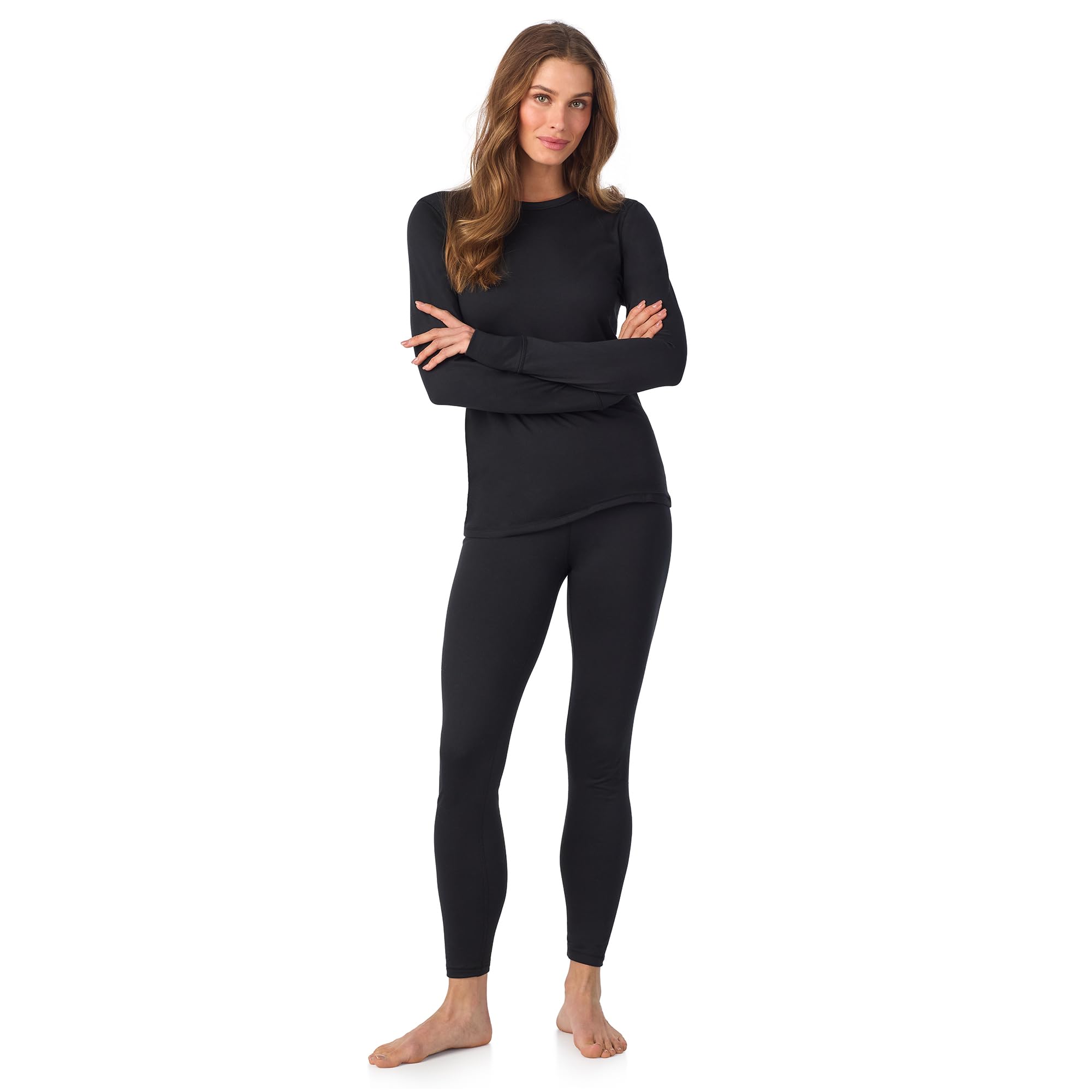
Cuddl Duds Heavyweight Set
Key Features
- Style: 2-piece base layer set
- Set weight: 14.9 oz
- Weight class: Heavyweight
- Price: Midrange
At just under a pound for the set, this is the heaviest base layer here, and it feels it: brushed fleece inside, a smooth face outside, and a weight that reads as serious the moment you unfold it. Heavyweight usually means bulk, which is why the next part matters.
What we didn’t expect was how little it adds under a shell. It slides under a slim softshell and stays there instead of bunching at the knee, which makes it the set we reach for when the forecast is properly cold rather than merely chilly. Warmth like this without a fight with your pants is the whole reason it’s here.
Two practical notes. It runs generous, so if you’re between sizes, take the smaller one; there’s enough stretch that you won’t lose mobility. And it softens with washing rather than tightening up, which is more than we can say for most fleece-backed layers.
Pros
- Warm enough for the coldest ski days
- Slim under fitted shell pants
- Brushed inside, smooth outside
- Softens with washing instead of tightening
Cons
- Too warm for spring skiing and hard climbs
For the coldest days, this is the set we hand people first: warm, soft, and slim enough that your shell still fits over it.
Best for Active Ski Days
Postropaky Snow Ski Pants
Key Features
- Style: Insulated softshell pants
- Boot access: Zipper leg opening
- Water resistance: Waterproof
- Price: Premium
Ski pants usually announce themselves: shiny, rustly, with a knee that won’t bend. These don’t. Pull them on and they read as ordinary winter trousers, which is exactly why we like them for the kind of day that involves a walk from the car, a bootpack, or a long lunch outside.
The softshell does the work. It blocks wind, sheds snow, and moves with you instead of against you, and there’s enough insulation for a cold morning without the puffiness that makes a chairlift feel like a sauna by noon. The ankle zip is the detail we appreciated most: it opens wide enough to drop the cuff over a ski boot without a wrestling match, then closes into a clean hem for the drive home.
They run long, which is a gift if you’re tall and a hemming job if you’re not, so check the inseam against a pair you already own before ordering. Everything else about the fit is unusually forgiving through the hip and thigh.
Pros
- Looks like ordinary winter trousers
- Ankle zips open over ski boots
- Warm and easy to move in
- Blocks wind on exposed ridges
Cons
- Water resistance weakens in wet slush
We pack these for ski days with a walk in them: quiet, stretchy, and cut like real trousers rather than a snowsuit.
Best for First Ski Trips
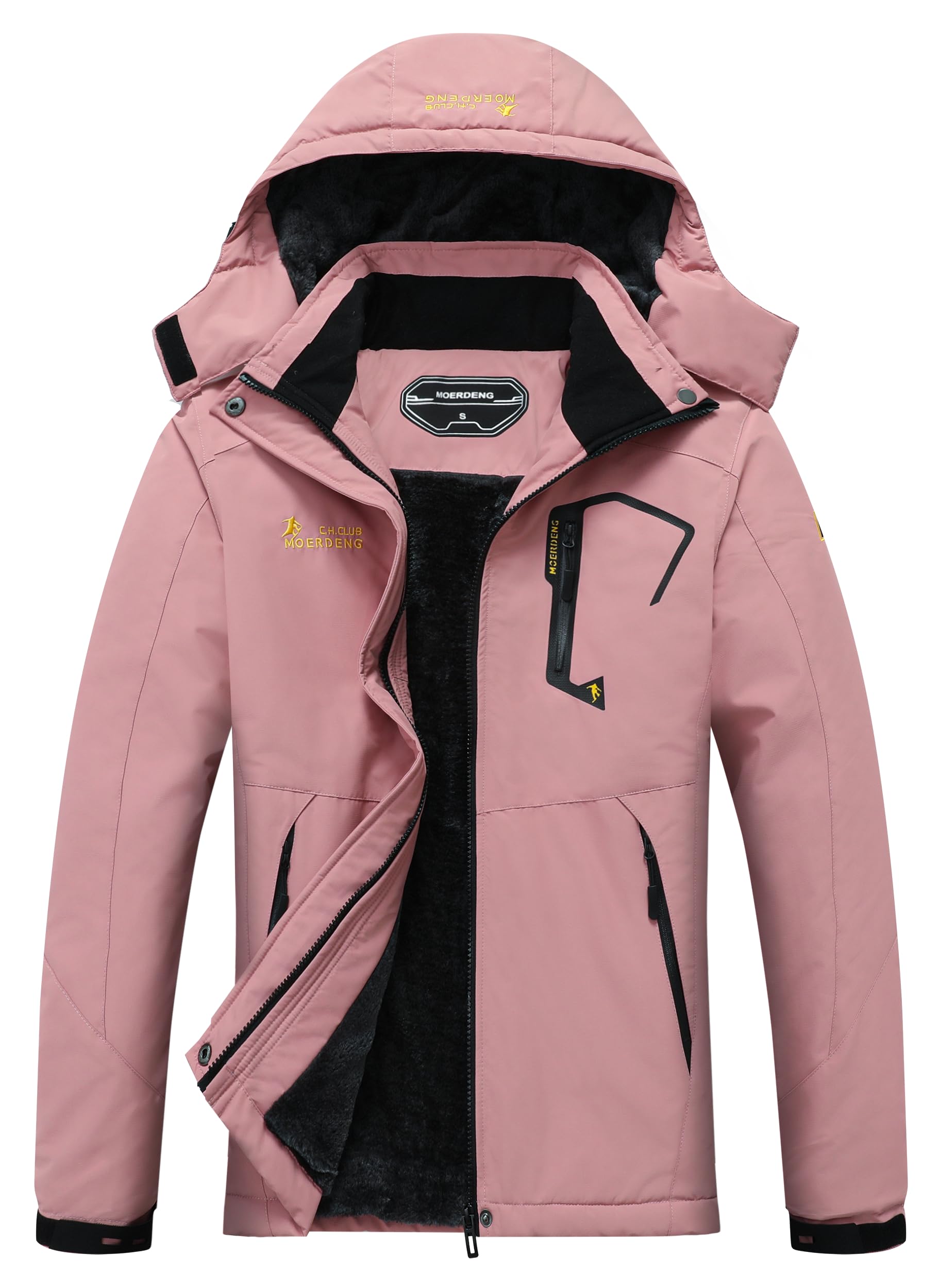
MOERDENG Ski Jacket
Key Features
- Style: Ski jacket
- Department: Women’s
- Manufacturer: MOERDENG
- Price: Premium
If you ski a week a year and the jacket spends the rest of its life in a closet, an expensive technical shell is hard to justify. That’s the buyer this jacket is built for: someone who needs warm and dry for a handful of days and would rather put the difference toward lift tickets.
It earns that job. The insulation is genuinely warm for a cold lift, the outer fabric keeps wet snow from soaking through, and the pockets are better than the price suggests, with an inside one that keeps a phone or a pass off a wet chair. The whole thing packs down small enough to live in a car without taking over the trunk.
Here’s where we land: on warmth and weather protection, we’re comfortable recommending it for a first season or a few trips a year. The caveat is the main zipper, which is the part that lets this jacket down. It can stick, and on some it separates. Check it the day it arrives while returning is still easy, and keep the fabric clear of the teeth when you pull.
Pros
- Warm insulation for cold lift days
- Keeps wet snow out
- Useful pockets, including an inside one
Cons
- Main zipper can stick or separate
We think it’s the right jacket for a first or occasional season: warm, dry in wet snow, and simple enough that you’re not paying for features you won’t use.
Best for under a Shell
baleaf Thermal Shirt
Key Features
- Style: Thermal shirt
- Fabric: Fleece
- Sleeve: Long sleeve
- Price: Midrange
The thumb holes are the detail that sold us. With the cuff pulled down over your knuckles, there’s no gap between sleeve and glove for cold air to find on the ride up, which is a small thing that decides whether a February lift is tolerable or miserable.
That kind of thinking runs through the whole shirt. It’s fleece-backed without being heavy, it moves sweat away on the climb instead of holding it, and it’s cut close enough to disappear under a shell. It’s also the piece we’ve reached for on cold-weather runs, which is a decent sign for anything sold as ski wear.
The cut is deliberately close, since a loose base layer defeats the point, but it’s snug enough through the middle that we’d suggest one size up if you’re between sizes or want to wear it on its own. A zippered pocket takes a key or a card, so there’s one less thing rattling around in a pack.
Pros
- Thumb holes close the wrist gap
- Wicks sweat on the climb
- Fleece-backed without bulk
- Zippered pocket for a key or card
Cons
- Sleeves run long on shorter frames
We recommend it as the top half of a layering system: warm, quick to dry, and close-cut enough to vanish under a shell.
Best for Travel and Spares
PISIQI Thermal Set

Key Features
- Style: Long johns set
- Lining: Fleece lined
- Department: Women’s
- Price: Budget
This is the thinnest set here, and that is the appeal: a smooth face, a light fleece back, and a fabric that disappears under jeans, shell pants or a pair of work trousers. If a base layer has ever made your pants feel tight, this is the correction.
It’s warm for its weight rather than warm in absolute terms. Under a shell on a cold day it does the job; on its own it’s a fall layer. What we liked is how little room it takes in a pack, and the finish is better than the price tier suggests, with tidy seams that hold their shape through repeated washing.
Our read: buy it as the second set, or as the one that lives in a travel bag. The fit is the catch, because the bottoms run large relative to the top, so a set that fits across the shoulders can hang loose at the waist. Size down if you’re between sizes and don’t mind a closer top.
Pros
- Thin enough to wear under anything
- Warm for its weight
- Tidy seams that hold up in the wash
- Budget way to own a spare set
Cons
- Less warm than the heavyweight sets here
We keep this one for travel and as a spare: thin, soft, and warm for its weight, with bottoms roomy enough that you may want to size down.
Best for Lodge and Apres
Trendy Queen Turtleneck

Key Features
- Style: Thermal top
- Neckline: Turtleneck
- Department: Women’s
- Price: Budget
Most thermal tops only make sense under something else. This one gets worn on its own, to dinner, on the drive up, in the lodge, because it looks like a sweater rather than long underwear and the turtleneck does the job of a scarf without the bulk.
The feel is why it works. We were struck by how soft the collar is against the neck, and the knit is thick enough to be warm on its own without turning into a sweatshirt. It sits around the hip, so it doesn’t ride up under a pack or bunch under a jacket.
One caveat worth knowing before you pack it: some colors arrive with a chemical smell that takes a wash or two to clear. Run it through the machine once when it lands and it’s a non-issue; wear it straight out of the bag on a trip and you’ll notice.
Its place in a ski kit is the mid layer you wear when you’re not working hard: under a roomy shell on a cold day, or alone with a vest at lunch. It isn’t a substitute for a close-fitting technical base layer under a slim jacket, and it doesn’t pretend to be.
Pros
- Warm enough to wear on its own
- Soft, non-itchy knit
- Looks like a sweater, not a base layer
Cons
- Runs big; order one size down
We wear it for the parts of a ski trip that aren’t skiing: warm, soft, and smart enough for dinner without a change.
How We Tested Women’s Ski Wear
We started by pulling every women’s jacket and pant set with consistent customer praise, then narrowed the field on the specs that matter on a mountain: waterproof and breathability ratings, insulation type, available inseam and jacket lengths, size range, and price. That left eight pieces, from lightly insulated shells to fully loaded resort jackets. I tested alongside two other skiers of different heights and body types, so a size small wasn’t judged by one person’s shoulders alone.
Everything got worn where it actually lives: December groomers, a windy morning well below freezing, a wet spring day when the snow turned to slush, and a full day of lift-served laps followed by a long lunch in a steamy lodge. We layered the same way each time — base layer plus a midlayer — and noted whether we were sweating on the bootpack or shivering on the chair. Length got checked bending over to buckle boots and reaching for poles; sleeve size got checked with gloves on and arms overhead to see whether cuffs rode up past the wrist.
Zippers were worked one-handed, with gloves on, in the cold, and we logged snags, sticky pulls, and whether draft flaps actually stayed put. Each piece was washed per its label two or three times to see how the fabric and water repellency held up, and we watched for pilling, pulled seams, and snags from chairlift edges. Softness was judged at the collar and cuffs against bare skin, appearance at the lunch table as much as at first chair, and value by what the price bought compared with the pieces sitting next to it.
How to Choose Women’s Ski Wear
Buy the layer that touches the snow before the one that looks best in the lodge, because coverage and fit keep a ski day comfortable long before puff does.
A bib closes the gap that pants leave
Bend to buckle a boot, sit on a chairlift, or take a tumble and the join between jacket and pants opens. A bib removes that join by carrying the pant up to the chest, which is why most cold-weather skiers are better off starting there. Our top pick is a bib for exactly this reason.
Pants still have a place: they’re quicker for bathroom stops, cooler in spring, and easier if you carry length in your torso. Go that way and look for a high waist plus a jacket with a snow skirt. The trap with bibs is torso length, not letter size: a bib short in the body pulls at the shoulders every time you bend, so check that measurement against a garment you already own.
Match base layer weight to the forecast
Warmth under a shell comes mostly from the layer against your skin, not from the amount of puff in the jacket. A heavyweight fleece-backed set under a thin shell is warmer than a midweight set under a parka, and you can still move in it. One heavy set for storm days and one thin set for spring, travel and anything sweaty covers a season.
The trap is doubling up. Two thick layers trap moisture, which chills you the moment you sit still on a lift. If you run hot, a single thin set and a warm mid layer beats a heavyweight set every time.
Read water resistance honestly
Water-resistant, waterproof and weatherproof get used loosely on inexpensive ski wear. What matters is the snow you actually ski: a softshell handles cold dry snow and wind beautifully and gives up when you sit in wet slush or a rainy lift line, while a heavier coated shell copes with the wet but breathes less.
Look at seams and zips as closely as the claim, since a covered or taped zip is what keeps snow out of your chest. Our Postropaky pick sits at the comfortable softshell end of that trade, happy in cold snow and not built for a soaking.
Fit the body, not the size label
Sizing swings wildly between brands here, so a medium from one maker can fit like a large from another. Measure your torso from the base of your neck to your waist and your inseam from crotch to ankle, then compare those numbers to the size chart rather than to your street size.
Two rules cover most of the rest. Base layers should sit close enough to move with you without compressing anything, and a shell needs enough room through the shoulders to swing a pole. Petite and long-torsoed skiers should treat short and long inseams as a real reason to choose one brand over another.
Spend where the weather hits
The pieces that face the weather carry the technical load: the jacket and the pants. Base layers are simple to make well, which is why the cheapest picks in this guide are base layers and the ones doing the most engineering are the outer pieces. Spending on a shell and saving on layers is the right order.
If the budget is tight, buy the outer pieces first and layer underneath with what you already own. A heavyweight set plus a proper ski pant covers more days than an expensive jacket over cotton leggings, and the second base layer set can wait for a sale.
Frequently Asked Questions
Can I ski in my regular winter coat instead of a ski jacket?
On a cold, dry day, a warm puffer over a base layer will get you down the hill. The problem arrives with wet snow, rain or a soaking chairlift: a coat without a water-resistant shell absorbs water, gets heavy and stops insulating. If you ski a few dry days a year, use what you own; if you’re heading somewhere wet, a purpose-built jacket is the better buy.
How many base layer sets do I need for a week of skiing?
Two is the practical answer: one on your body, one drying. Fleece-backed synthetics dry overnight in a warm room, so a thin set plus a heavyweight set will carry a week of alternating days. A third set only earns its space if you have nowhere to dry anything or you’re going somewhere humid.
Do ski pants go over or under ski boots?
Over. The cuff should sit outside the boot shell, with any inner gaiter tucked inside. Try it with your boots on before the first trip, because a cuff that’s too narrow rides up and leaves a gap at the ankle where cold and snow get in. Zippered leg openings, like the ones on our Postropaky pick, make that a good deal easier.
Final Verdict
For most women, the Arctix bibs plus a warm base layer settle the decision: coverage at the waist and warmth next to the skin do more for a ski day than any single jacket. If you ski in serious cold, take the Cuddl Duds set over the thinner ones; if your days include a bootpack, the Postropaky pants are the better cut.
Fill in the jacket when the budget allows. Until then, the rest of the kit is doing the work that actually keeps you on the hill.