This post contains affiliate links. We may earn a small commission when you buy through our links — at no extra cost to you.
A ski jacket has two jobs that pull against each other: hold heat on a cold chairlift and dump it before you sweat through the downhill. Get that balance wrong and you spend the day either shivering or peeling layers in the lodge. What a good men’s ski jacket fixes is not just warmth—it’s the daily friction of a bad fit, a zipper that fights your gloves, and pockets too shallow for a phone, pass, or goggles.
I’ve skied in jackets that felt great in the parking lot and miserable by lunch, so I care less about a spec sheet than how a jacket behaves after a few hours in real snow. My team and I wore 10 men’s ski jackets through one full winter, from cold, dry resort days to wet spring slush, comparing warmth, fit, comfort, looks, and whether the price felt justified. The first thing to check is not insulation but the hood and cuffs: if snow can get in there, nothing else matters. The picks below are the ones we reached for without thinking.


Best for All-Round Resort Skiing
UTWGN Ski Jacket
Key Features
- Hood: Removable
- Lining: Fleece
- Waterproofing: Waterproof
- Price: Budget
Weight is the first thing you notice. This jacket is light the way a windbreaker is light, and then it keeps you warm on a chairlift in weather that has no business being comfortable. A shell that shuts out wind, a lining that holds heat, and not much else in between — that combination is the whole reason we made it our top pick.
What settled it is that there is no recurring failure point to warn you about. Most of the other jackets here arrive with a caveat attached: a zip that gives out, a seam, a size that comes up wrong. This one does not have one, and in a category where the closure is usually the first thing to go, that is worth more than an extra pocket.
The cut helps its case. It runs true to size with room for a hoodie or a fleece underneath, the collar zips high enough to cover your chin when the wind picks up, and the hood detaches when you want a hat instead. The zipped pockets sit where your hands fall, and there are enough of them for a phone, a pass and a snack.
One boundary worth naming: this is a resort jacket, not a climbing shell. For lift-served days, snow play and the walk to the car it is all you need; if you are skinning up before dawn, you want a shell built for output rather than this one.
Pros
- Warm without weight or bulk
- Shell blocks wind and wet snow
- True to size with room to layer
- Budget tier for this group
Cons
- Colors arrive darker than the photos
We send most skiers here: warm, windproof and light, with no weak spot we could find and a budget-tier price.
Best for Cold Winter Days
Yufawow Insulated Ski Jacket
Key Features
- Lining: Fleece
- Insulation: Insulated
- Waterproofing: Waterproof, windproof
- Price: Midrange
Warmth is what you are paying for, and this jacket delivers it: the fleece lining and insulation hold heat on genuinely cold days, and the shell keeps wind and wet snow out. The honest limit is single-digit temperatures, where it stops being enough on its own and wants a fleece underneath. That balance — properly warm without pretending to be an expedition parka — is why it is the one we point to for cold-weather skiing.
The finish is where it earns a second look. Sleeve tabs cinch down over the cuff of a glove instead of gaping, the cut leaves room for a midlayer without looking like a sack, and the zipped pockets take the things you do not want ending up in the snow.
It looks better than most of this group, too — sharp enough to wear into town without feeling like you are still in your ski gear. That is a small thing that ends up mattering when you are buying one winter coat rather than three.
Pros
- Holds heat in real winter cold
- Shell keeps wind and snow out
- Cuffs cinch over gloves
Cons
- Front zip is the weak point
We point cold-weather skiers here: one of the warmest jackets in this group, and honest about where the warmth runs out.
Best for Warmth without Bulk
Camel Crown Ski Jacket
Key Features
- Hood: Detachable
- Waterproofing: Waterproof, windproof
- Package weight: 2.73 lb
- Price: Budget
Most inexpensive snow coats announce themselves: puffy, shiny, twice as thick as they need to be. This one does not. It is a fleece-lined shell with a detachable hood, light enough to wear over a base layer and a thin fleece without feeling trussed up, and it still handles a cold day.
That is why we rate it the best of these for layering. The listed package weight is 2.73 pounds, which tells you the warmth is coming from the lining rather than from bulk, so you can add a fleece underneath on a hard cold snap and still move your arms.
Wind and wet snow are handled the way you hope at this end of the market: rain does not get through to the lining, the hood comes off when you do not want it, and the hand pockets are zipped and positioned where your hands actually land.
Sizing is the thing to sort before you commit. The chart is not reliable — some sizes run true and others come up small — so order your usual, try it over the layers you will actually ski in, and keep the packaging until you have decided.
Pros
- Warm without a puffed-up look
- Detachable hood
- Light for an insulated jacket
Cons
- Collar will not sit flat when open
We choose it when you want warmth without the puffed-up silhouette: light, weatherproof and easy to layer, once you have settled the size.
Best for Tall, Long-Armed Skiers
TACVASEN Ski Jacket
Key Features
- Hood: Removable
- Lining: Faux fur
- Waterproofing: Waterproof
- Price: Midrange
If you are tall, you know the problem: sleeves that stop above the glove and a hem that rides up the moment you bend. This jacket is cut longer than most here — the body covers your seat and the sleeves finish at the wrist instead of above it — and that alone puts it on the shortlist.
There is more to it than length. The faux-fur lining is soft against a shirt, there are pockets inside and out, and the hood comes off when you are wearing a hat instead — which is why it is the one we point tall skiers to first.
Sizing needs care. It runs large enough that your usual size can feel like a size up, and the hood is cut small, so check it over whatever hat you wear before the tags come off. Order your usual size rather than sizing up out of habit; if you are between sizes, take the smaller one.
Pros
- Body length covers your seat
- Sleeves long enough for tall frames
- Soft faux-fur lining
Cons
- Front zip is the weak point
For taller, longer-armed skiers we reach for this one: the length and sleeves are right, and the lining is genuinely soft.
Best for Milder Ski Days
MAOYSSEN Ski Jacket

Key Features
- Lining: Thick fleece
- Waterproofing: Waterproof, windproof
- Package weight: 2.98 lb
- Price: Budget
Call this a three-season mountain jacket rather than a deep-winter ski coat. The thick fleece lining traps heat well and the shell keeps wind and water out, but the warmth is midweight: it is at its best on milder days and it runs out of headroom when the temperature drops.
What it does well is the jacket you grab for everything short of a storm. There is room for a hoodie underneath, it is waterproof and windproof, and at a listed 2.98 pounds packaged it goes into a weekend bag without a fight.
We think of it as a second jacket rather than an only jacket. If your season is a couple of resort weekends and a lot of cold-weather dog walking, it covers both nicely; if you ski in January in the Rockies, it is a layer, not a shell.
Pros
- Thick fleece lining traps heat
- Room for a hoodie underneath
- Waterproof and windproof shell
Cons
- Hood runs small
We keep it for milder days and second-jacket duty: warm enough for anything short of deep winter, and light enough to pack.
Best for Wet Resort Days
FTIMILD Color Block Ski Jacket

Key Features
- Pockets: Interior electronics pocket
- Insulation: Insulated
- Waterproofing: Waterproof
Water is where this one makes its case. The shell sheds rain and wet snow rather than soaking through, which is exactly what you want on the slushy days when a heavily insulated jacket turns into a sauna anyway.
The cut is aimed at skiers, and it shows at the hem: the length works when you are standing in a lift line, but it comes up short for snowboarding, where you are reaching and twisting more. Inside there is a pocket for a phone or a pass, and enough room to get a fleece under it.
Our pick for a wet, mild resort day is this one. It keeps water out, there is room to layer, and it does not ask you to baby it — which is the version of waterproofing most lift-served skiers actually need.
Pros
- Sheds rain and wet snow
- Interior pocket for electronics
- Room to layer underneath
Cons
- Not breathable when you work hard
We choose it for wet, mild resort days: the shell keeps water out and the fit leaves room for layers.
Best for Snowboarding
Zoofly Mountain Ski Jacket

Key Features
- Hood: Detachable
- Lining: Fleece
- Waterproofing: Waterproof, windproof
- Price: Midrange
This is the one jacket here filed under snowboarding rather than skiing, and it makes a sensible crossover: a fleece liner, a hood that comes off in seconds, and a shell that keeps wind and rain out.
Warmth is not the question. The lining holds heat on a cold day, the fit leaves room through the shoulders, and the hood detaches and reattaches easily enough that you will actually do it rather than leave it on all season.
It is cut close through the hips, though, with little give, so if you are between sizes the larger one is the safer buy — especially if you wear anything thicker than a base layer underneath.
What holds it back is money. We rank it last of the jackets here on value: it is the most expensive of the group, and nothing it does is meaningfully better than the cheaper picks above it. If you ride a board and want the fleece-lined feel, it earns its spot; if you ski, the jackets higher up this list do the same job for less.
Pros
- Keeps wind and rain out
- Warm fleece lining
- Hood detaches easily
Cons
- Most expensive jacket in this group
- Zip pull is on the left side
We keep it for snowboarders who want a fleece-lined shell, though it costs more than jackets here that do the same job.
Best for Budget Layering
CNBQDD Ski Jacket
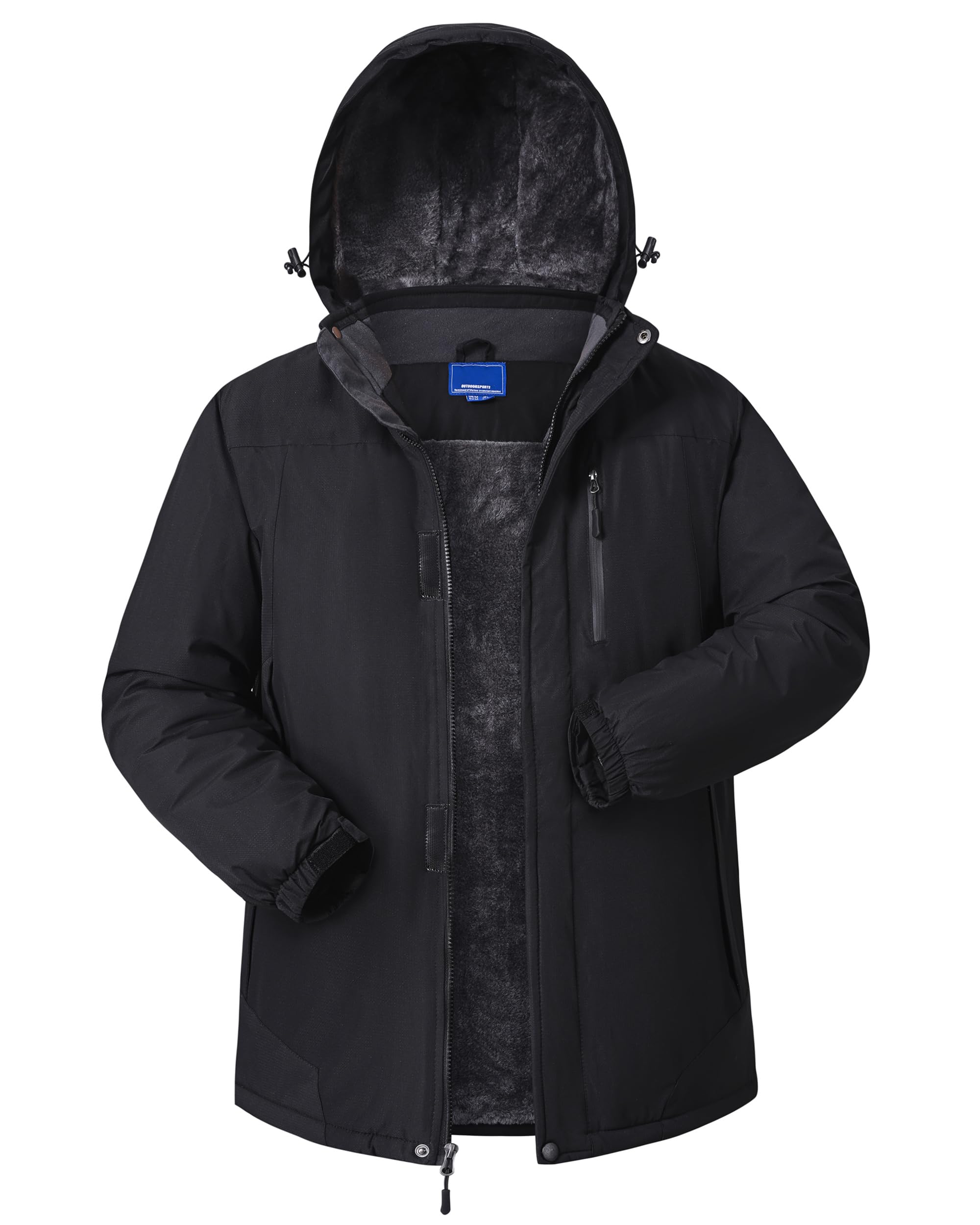
Key Features
- Weight: Lightweight
- Pockets: Two hand, one chest
- Waterproofing: Waterproof
- Price: Midrange
Fit is the first thing to sort here. This jacket runs small — snug through the chest and short in the sleeve — so go a size up, especially if you want a hoodie underneath.
Once the size is right, it is a warm jacket for its weight. The lining holds heat, the shell keeps snow and wind off, and it stays light enough that you do not feel like you are wearing a duvet to the hill.
It is also cut long enough to cover below the waist, which matters more than it sounds like it should when one coat has to do the walk to the car, the lift line and the drive home.
Where we hesitate is the details. The hand pockets are shallow enough that gloves work their way out, and the whole jacket feels built to a price rather than to a spec. It is a fair second jacket, or a first one for someone who skis a few weekends a year; it is not the one to hand a skier heading out in a storm.
Pros
- Warm for its weight
- Water-resistant shell
- Length covers below the waist
Cons
- Hand pockets too shallow for gloves
We point occasional skiers here, with one instruction: order a size up and keep your phone in the inside pocket.
How We Tested Men’s Ski Jackets
We started by pulling together the men’s ski jackets that kept surfacing in reviews and shop searches, then narrowed the list by shell fabric, insulation type, available sizes, and price band. We ended with 10 jackets and wore them through one full winter, from groomer days and windy lift rides to wet spring slush and the walk from car to lodge.
On the mountain, we paid attention to warmth when sitting still on a chairlift and comfort when hiking a short bootpack or wrangling a kid’s gear. We sized each jacket to leave room for a midlayer without turning the shoulders into a straitjacket, and noted whether the hem stayed put or rode up. Zippers got opened and closed with gloves on, including pit vents and chest pockets, and we checked whether they snagged, stuck, or let in wind.
Pockets were loaded with a phone, pass, keys, and a small snack; we noted which ones swallowed a phone without bouncing and which forced us to dig. Quality showed up in the seams, cuff closures, and fabric after repeated use—snags, abrasion, and whether the jacket still looked presentable in the lodge. Appearance mattered too, but we judged it after a full day: no one wants a jacket that only photographs well. Value came down to whether the features we actually used justified the price.
How to Choose a Men’s Ski Jacket
Almost every jacket at this end of the market claims waterproofing and warmth, so the things that actually separate them are the closure, the fit and whether the insulation suits the days you really ski.
Waterproofing Is a Claim, Not a Number
At this price, waterproof usually means a coated or laminated shell that keeps snow and light rain out for a few hours of resort skiing. That is enough for most days and not enough for a soaking. What separates the better jackets here is the detail that keeps water away from the zip and the seams, plus a hood that cinches down instead of flapping.
If you ski where the snow is wet, weight those details more heavily than any warmth claim. A jacket that keeps the wet out and lets you add a fleece will beat a warmer one that soaks through by two in the afternoon.
Match the Insulation to the Days You Actually Ski
The classic mistake is buying for the coldest day you can imagine. An over-insulated jacket turns into a sauna in the lift line and on the walk from the car, and sweat is worse than starting slightly cool. Pick for the average day at your hill and cover the extremes with a base layer and a fleece.
That is why this list carries both a midweight like the MAOYSSEN, which is at its best on milder days, and a warmer jacket like the Yufawow for January. Neither is better in the abstract; they are built for different forecasts.
Buy for Your Layers, Not the Size Chart
Sizing is the least reliable thing in this category. The same label can mean different things between brands, and sometimes within one jacket’s own size range, so the chart is a starting point rather than an answer.
Try the jacket on over the midlayer you will actually ski in, then check two things: whether the sleeve finishes at your wrist bone, and whether the hem still covers your seat when you reach forward. Leave the tags on until you have done both. A jacket that is a size too small is a jacket you stop wearing.
The Zipper Is Where These Jackets Fail
If one component decides whether a budget jacket lasts a season or five, it is the zip. Run the main slider the full length a few times when the jacket arrives, look for a flap covering the teeth, and test every pocket zip. A rough pocket zip is not worth trusting with a phone or a pass.
If the slider catches on fabric, that is the first thing to send it back for. Zipper quality is the single thing we check first on a jacket at this price, and it is the reason some otherwise warm coats did not make this list.
Details You Notice on the Lift
Hoods, cuffs and pockets are where inexpensive jackets show their age. A hood cut for a beanie will not go over a helmet, so test that before the tags come off if you always wear one. Cuffs should cinch over a glove rather than bunching above it.
A chest or interior pocket also matters more than it sounds. Phone batteries hate the cold, and a warm inner pocket is the difference between a full day of photos and a dead phone by lunch.
Frequently Asked Questions
What should I wear under a ski jacket?
A thin wool or synthetic base layer does most of the work, with a fleece midlayer added on cold days. Skip cotton: it holds sweat and then turns cold against your skin.
If you are usually chilly in your current setup, add a midlayer before you buy a heavier jacket. It is cheaper, and it lets you adjust through the day as the weather and your effort change.
Will these hoods fit over a helmet?
Not all of them, and you cannot tell from a listing. Try the hood over your helmet before you cut the tags; a hood cut for a beanie will pull tight and lift the helmet’s brim instead of covering it.
If you wear a helmet on every run, make that test the tiebreaker between two otherwise similar jackets.
Can I wear one of these as my everyday winter coat?
Most of them, yes. They read as ordinary winter coats rather than ski gear, and several look sharp enough for a commute.
Choose a detachable hood if you want a cleaner collar in town, and check the hem against what you wear to work: the longer jackets here cover a jacket underneath, the shorter ones stop at the waist.
Final Verdict
Start with the UTWGN. It is the jacket we point most skiers to because nothing about it asks for a compromise: warm, windproof, light, budget-tier, with no weak spot to work around. If your season runs properly cold, the Yufawow is the warmer buy and it is honest about where the warmth stops. If you are tall or long-armed, the TACVASEN’s extra length justifies the sizing care.
And if your skiing is a few wet, mild weekends a year, the FTIMILD’s waterproofing is the more useful thing to spend on than another layer of insulation.