This post contains affiliate links. We may earn a small commission when you buy through our links — at no extra cost to you.
Yoga leggings can carry you through a studio class and a grocery run, but give them a real trail — a granite scramble, a long descent, four hours under a pack — and the cracks show fast. Thin fabric snags, seams start rubbing exactly where the hip belt sits, and the one tiny pocket won’t hold a phone, a snack, and a map. Hiking leggings fix that with tougher material, a waistband that stays put when you step high over a blowdown, and pockets you can actually reach without shucking your pack.
I’ve lived in a dozen pairs over the past six months, from slick nylon blends to brushed, almost-buttery knits, and the differences come down to things you only notice around hour three. Fit matters more than any tag number: a waistband that sits above your hip belt, an inseam that matches your height, and a rise that doesn’t roll when you bend. Below are the pairs that earned a spot in the rotation, and what each one is genuinely good at.


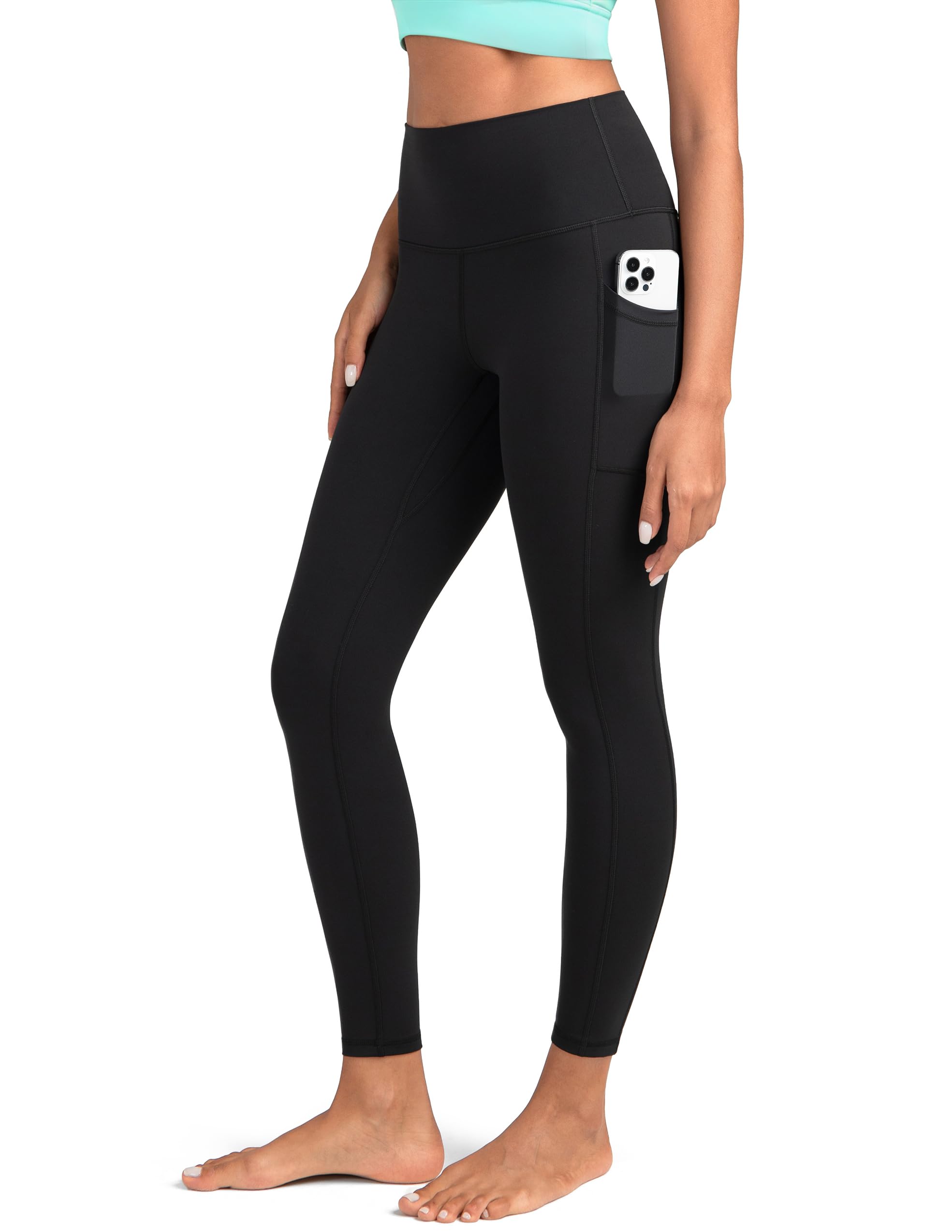


Best for All-Round Trail Days
IUGA Tummy Control Leggings
Key Features
- Knit: Thick, opaque
- Rise: High waist, tummy control
- Pockets: Two leg pockets
- Price: Midrange
Bend at the waist with a pack on and you find out fast which leggings are going to work. The IUGA pair came through that check opaque and dense, with no shine spreading across the seat where the fabric pulls, and that is most of why it is our top pick. Both leg pockets sit deep enough that a phone rides against the outer thigh instead of swinging, which we noticed most on steep descents.
Under a hipbelt the high waist lies flat instead of folding into a ridge, and the knit has enough body to stay where it is put without the squeeze of a compression tight. Thickness is doing two jobs here: it keeps the fabric opaque when you squat, and it is the first thing between your legs and brush, granite, and the rough edge of a pack strap. While we have not put a full season into this pair, nothing about the stitching or the seams suggests it will be the first thing to go.
What keeps them in the bag is the lack of fuss. There is no hitching at the waist after a scramble and no checking behind you before you stand up, and in a category full of pairs that need managing, that is the quiet advantage.
Pros
- Dense knit stays opaque through a bend
- Two deep leg pockets hold a phone
- Waistband lies flat under a hipbelt
- Thick enough for brush and rough rock
Cons
- Full-length cut runs long on shorter hikers
This is the pair we recommend to most hikers: dense, reliably opaque fabric, two leg pockets that hold a phone, and a waistband that stays flat under a pack.
Best for Budget Trail Kit
Heathyoga Leggings with Pockets
Key Features
- Rise: High waist, tummy control
- Weight: 5.6 oz
- Pockets: Side plus hidden waistband
- Price: Budget
The pocket we used most on this pair is the one you cannot see. A hidden slot in the back of the waistband takes a phone flat against the small of your back, which keeps it clear of a hipbelt and out of reach of branches, and the two side pockets handle a key or a gel.
At 5.6 ounces the pair is light enough to disappear into a daypack, and the fabric is dense and smooth rather than soft and thin. Opacity held when we squatted, the band stayed where we put it on a long descent, and nothing about the finish suggests a compromise. This is the pair we hand to someone who wants one dependable set of leggings without paying for a label.
The density that makes these opaque also makes them warm. On a shaded climb in shoulder season that is exactly right; in full August sun you will notice it. For a pair at the bottom of the price range here, that is a fair trade.
Pros
- Hidden waistband pocket holds a phone flat
- Dense fabric holds its opacity
- Light at 5.6 ounces
- Low cost leaves room for a second pair
Cons
- Fit runs small on some builds
The best-value pair here: dense fabric that stays opaque, a hidden waistband pocket that holds a phone, and a band that does not creep.
Best for Compression on Descents
CRZ YOGA Butterlift Leggings
Key Features
- Knit: Butterlift compression
- Inseam: 25 inches
- Weight: 5.61 oz
- Price: Midrange
Twenty-five inches of inseam is the number to start with. It lands a little above the ankle bone for most of us, which keeps the hem clear of a boot cuff and stops fabric bunching behind the knee on a climb. For a compression legging the pair is also light, at 5.61 ounces, so the support comes from how the knit is built rather than from bulk.
Support is where this one separates from the cheaper picks. The waistband stayed up through a full day with a hipbelt cinched over it, and the fabric is firm through the thigh in a way that feels held rather than squeezed. Squat-proof is the brand’s word for it; in daylight, with the fabric stretched across a knee, we could not see through it.
The trade is softness. These feel athletic rather than buttery, so they are not the pair you lounge in, and they sit at the top of the midrange here. If your hiking involves long descents and you want compression doing some of the work, that is money well spent; if you want a soft all-day legging, the Colorfulkoala is closer.
Pros
- Firm compression through hip and thigh
- 25-inch inseam clears boot cuffs
- Waistband stays up under a pack
- Light at 5.61 ounces
Cons
- Seams are the weak point under hard use
The firmest, most supportive pair here: compression through the hip, a waistband that stays up under a pack, and a 25-inch inseam that clears a boot.
Best for Shorter Hikers
Colorfulkoala Essential 7/8
Key Features
- Rise: High waist, tummy control
- Length: 7/8
- Pockets: Side pockets
- Price: Midrange
A 7/8 hem is the reason this pair stays in the rotation. It stops above the ankle, so there is no wet cuff wicking mud up your leg and nothing bunched behind a hiking boot, and for shorter hikers it reads as a full-length legging rather than a cropped one. The fabric is genuinely soft, closer to a brushed knit than an athletic one, and the side pockets take a phone without dragging the waistband sideways.
Thin is the other side of that softness. In black the coverage is good, but the knit is on the lighter side of this group, and a bright day with a stretched knee can show more than you want. The waistband itself stays put through a climb, which matters more than the hand-feel once you are carrying weight.
What the softness buys you is packability. This pair rolls down smaller than any of the thick ones here, so it earns a place as the second set in a travel bag or the pair you change into at the end of a day. It is the one we take when the trip is more walking than scrambling.
Pros
- 7/8 hem sits above a hiking boot
- Side pockets take a phone
- Packs down smaller than thick knits
Cons
- Sizing runs small
- Pills and frays with heavy wear
Our pick for shorter hikers: a 7/8 cut that lands above a boot, soft brushed fabric, and side pockets that hold a phone.
Best for Curvier Frames
CHRLEISURE Leggings with Pockets
Key Features
- Knit: Buttery-smooth
- Rise: High waist, tummy control
- Pockets: Hidden waistband pocket
- Price: Premium
Sizing across this group is inconsistent enough that a pair which runs large is genuinely useful, and this one does. The size that fits snugly elsewhere leaves room through the hip and thigh here, which is why it suits curvier frames and anyone who dislikes a compression feel. The hidden waistband pocket lies flat, and the fabric is thick enough to stay opaque through a squat.
It is also the smoothest knit in this set, closer to a brushed, silky fabric than the dense cotton-like ones, and it feels substantial without stiffness. For cool-weather hiking and everyday wear, that mix of room and coverage is hard to beat.
Color matters more here than usual. The lighter tones show the ridges and hems of the thick knit, while black and the deep shades read smooth, so if you want the fabric to look as good as it feels, stay dark.
Pros
- Roomy through hip and thigh
- Thick fabric stays opaque
- Hidden waistband pocket lies flat
- Softest, smoothest knit in this set
Cons
- Length runs short for taller hikers
If most leggings squeeze your hips, this roomy, thick, opaque pair is the one to try, and it is the softest knit here.
Best for Cold Morning Starts
Ewedoos Women’s Yoga Pants
Key Features
- Rise: High waist, tummy control
- Style: Compression leggings
- Pockets: Three pockets
- Price: Budget
Three pockets sounds like a small thing until you are at a trailhead juggling a phone, a key, and a gel. This pair gives you one on each leg plus a small one in the waistband, and the leg pockets are deep enough that a phone sits still while you climb. Of the layouts here, it is the one that needs the least thought.
The fabric is the thickest we handled in this group, brushed and buttery on the inside, with enough density that opacity is never in question. On a cold start, moving before the sun is on the ridge, that warmth is exactly what you want.
For cold starts and shoulder-season days this is the pair we reach for: the same thickness that makes them wrong in July makes them right at six in the morning in October. And there is no checking yourself in a window before a squat, because the fabric simply holds.
Pros
- Three useful pockets, including a waistband slot
- Thick fabric that never reads sheer
- Warm on cold morning starts
Cons
- Sizing runs small
A thick, warm, genuinely opaque pair with three pockets, our choice for cold starts and shoulder-season hikes rather than summer heat.
Best for Cold-Weather Walking
THE GYM PEOPLE Thick Yoga Pants

Key Features
- Knit: Thick
- Rise: High waist
- Pockets: Hidden waistband pocket
- Price: Midrange
The waistband is the part we liked most. It is wide and flat, and it stayed flat under a hipbelt instead of folding over on itself, with a hidden pocket in the band for a key. The fabric is genuinely thick, not the kind that turns transparent the moment you move.
There is a seam running across the backside, and whether it bothers you depends on where the waistband settles on your frame. It is the sort of detail that decides a pair more than any specification, and it is worth a look in the mirror before you commit.
Durability is where it gets patchy. The same knit that feels substantial on a cold morning can pill between the thighs and go sheer where it is stretched hardest, which is the sort of thing you find out on a climb rather than in a fitting room.
Where it earns a place is cold-weather walking and everyday wear, when thickness and a band that does not fold matter more than a refined finish. For long, abrasive days, the denser pairs above are the safer call.
Pros
- Wide waistband stays flat under a pack
- Hidden waistband pocket for a key
- Thick fabric that covers well
Cons
- Sizing runs large for some builds
A thick, warm, high-waisted pair whose wide band stays put under a pack; we rate it for cold-weather walking rather than rough trail days.
Best for Warm, Easy Trails
NexiEpoch 4 Pack Capri Leggings

Key Features
- Pack: 4 pairs
- Length: Capri
- Pockets: Side pockets
- Price: Budget
Four pairs for less than most single leggings here is the whole pitch, and it is a good one if you go through leggings quickly or want a set for a trip. The cut stops below the knee, the knit is soft and stretchy, and each pair has side pockets for a phone or a key.
Where they do not belong is anything rough. A capri leaves your shins open to brush, gravel, and sun, so treat these as warm-weather, groomed-path leggings and travel wear rather than backcountry kit.
Wash them on their own before the first trip. The black dye comes off on skin and bedding for a while, and a separate cold wash saves you a ruined towel.
The four-pack arithmetic is what makes them worth it: keep one in the car, one in the pack, and you stop caring whether a pair gets muddy. That is a different job from the rest of this list, and a useful one.
Pros
- Four pairs in a single order
- Soft, stretchy knit
- Side pockets on every pair
Cons
- Thin knit can turn sheer in daylight
Four soft capri pairs in one order, best for warm, groomed trails and travel, and not for brush, scree, or strong sun.
How We Tested Hiking Leggings
We started with more than 40 pairs, reading fabric specs to separate real nylon and merino blends from thin fashion knits, mapping inseam and waist-rise options against a range of heights, and checking which pockets were usable rather than decorative. Availability in a wide size range and a reasonable price narrowed the field. Twelve pairs made the cut, and testers of different heights and body types wore them over six months.
Each pair went on at least three hikes: a rocky, rooty climb with a loaded daypack, a wet morning where we pulled rain shells over them, and an easy rail-trail walk where comfort was the only thing to judge. We filled the pockets with a phone, keys, and a snack, then hiked a mile to see what bounced or dragged the waistband down. We squatted, lunged, and stepped over fallen logs, then checked in a mirror whether the fabric went sheer in daylight and whether the waistband stayed where we put it.
Because leggings live in the laundry, every pair went through at least ten wash cycles, and we compared pilling, seam integrity, color, and whether the waistband and knees still snapped back. We noted how the fabric felt out of the bag and again after those washes — a couple of the softest knits went fuzzy fast. We also logged sizing quirks, including whether petite and tall lengths existed, and how high the rise landed relative to a hip belt, since a waistband that dips under a pack strap is the quickest way to ruin a climb.
How to Choose Hiking Leggings
The leggings that work on a trail are the ones that stay opaque when you squat, stay put under a hipbelt, and survive what you brush against, in that order.
Opacity Comes Before Everything Else
The moment you bend to adjust a boot or step over a log is the moment a thin pair stops being a private problem. Fabric density matters more than the word buttery on a product page, because that softness often comes from a thin knit. Test any pair in daylight before you commit: squat, bend, and look at what the fabric does across the seat and knee. If you can see the shape of your hand through the fabric when it is stretched, it is not a trail legging.
This is where the cheap tier separates itself, and not in a good way. Several low-cost pairs we looked at are genuinely comfortable and genuinely sheer, which is fine around the house and wrong on a ridge.
Waistbands, Hipbelts, and Pockets
Your legging waistband sits exactly where a pack’s hipbelt sits, so a wide, flat band that stays put is worth more than an elaborate tummy-control panel. Reach matters for pockets too: a side-leg pocket under a cinched hipbelt is hard to get at, while a slot at the back of the waistband stays accessible and keeps a phone off your thigh on a scramble.
Check one thing before you commit: whether a phone in a leg pocket drags that side of the waistband down. It is the difference between leggings you forget about and leggings you hitch up every twenty minutes.
Length: 7/8, Full, and Capri
Length is a footwear decision as much as a style one. A 7/8 cut clears a boot cuff and avoids the wet hem that full-length leggings collect on muddy ground; full length gives more protection from brush, sun, and insects; capri leaves the shin bare, which is fine on groomed paths and wrong where the trail is overgrown.
Treat the name as marketing and the inseam as the fact. Taller hikers often find a 7/8 fits like a full-length pair, and shorter hikers find a full-length hem pooling over a boot. The CRZ YOGA Butterlift states its 25-inch inseam outright, which is more useful than any of these labels.
Fit, Sizing, and Fabric for the Season
Sizing is where this category misleads most. Several pairs here run small and a couple run large, so order from your hip measurement rather than your usual size, and expect to exchange once. Fabric is the other seasonal choice: dense, thick leggings are lovely on a cool morning and oppressive on an August climb, while thinner ones dry faster and show more. If you hike year-round, one dense pair and one thin pair covers more ground than two of the same.
Frequently Asked Questions
What should I wear under hiking leggings?
A seamless synthetic thong or nothing at all, and never cotton. Cotton holds moisture against the skin, and on a long climb that is where chafing starts. If you already chafe on warm days, a pair of short, snug synthetic undershorts under the leggings does more for you than any change of legging.
How many pairs of leggings do you need for a week of hiking?
Two, in rotation: one on your legs, one drying on the back of your pack or a hostel rail. Synthetic knits dry overnight, so a hand wash every other evening keeps a two-pair rotation going for a week. Add a third if you are hiking somewhere persistently wet or cold.
How should hiking leggings be washed?
Cold water, inside out, and hang them to dry. Heat is what kills the stretch in a knit legging, so the dryer is the one thing to avoid. Skip fabric softener entirely, because it coats the fibers that are supposed to move moisture away from your skin, and wash new black pairs separately once.
Final Verdict
The IUGA pair is the one we point most hikers to: it stays opaque when you bend, the two leg pockets hold a phone, and the band behaves under a hipbelt. If you want firmer support through the hip and thigh and a shorter leg that clears boot cuffs, the CRZ YOGA Butterlift is the step up. And if your hikes start before the sun is on the ridge, the thicker Ewedoos knit is the warmer way to go.