This post contains affiliate links. We may earn a small commission when you buy through our links — at no extra cost to you.
The worst GPS running watch is the one that makes you think about it mid-run: waiting for a signal, squinting at a cramped screen, or calculating whether the battery will last the route you planned. A good one should feel like a quiet tool—accurate on the road and trail, readable in sunlight, and simple enough to start, pause, and lap without breaking stride. It should also look decent enough to leave on for the rest of the day and feel solid on the wrist, because most of us are not swapping watches at the trailhead.
I’ve worn GPS watches for years, and the differences that matter rarely show up in the spec sheet. They appear in the third mile of a wooded trail, when pace holds steady instead of jumping, or on a Sunday long run with battery to spare. Over the past six months, my team and I ran with nine watches, comparing their accuracy, battery life, screens, menus, and app connections side by side. The right pick is the one whose quirks you stop noticing.

Best for Everyday Training
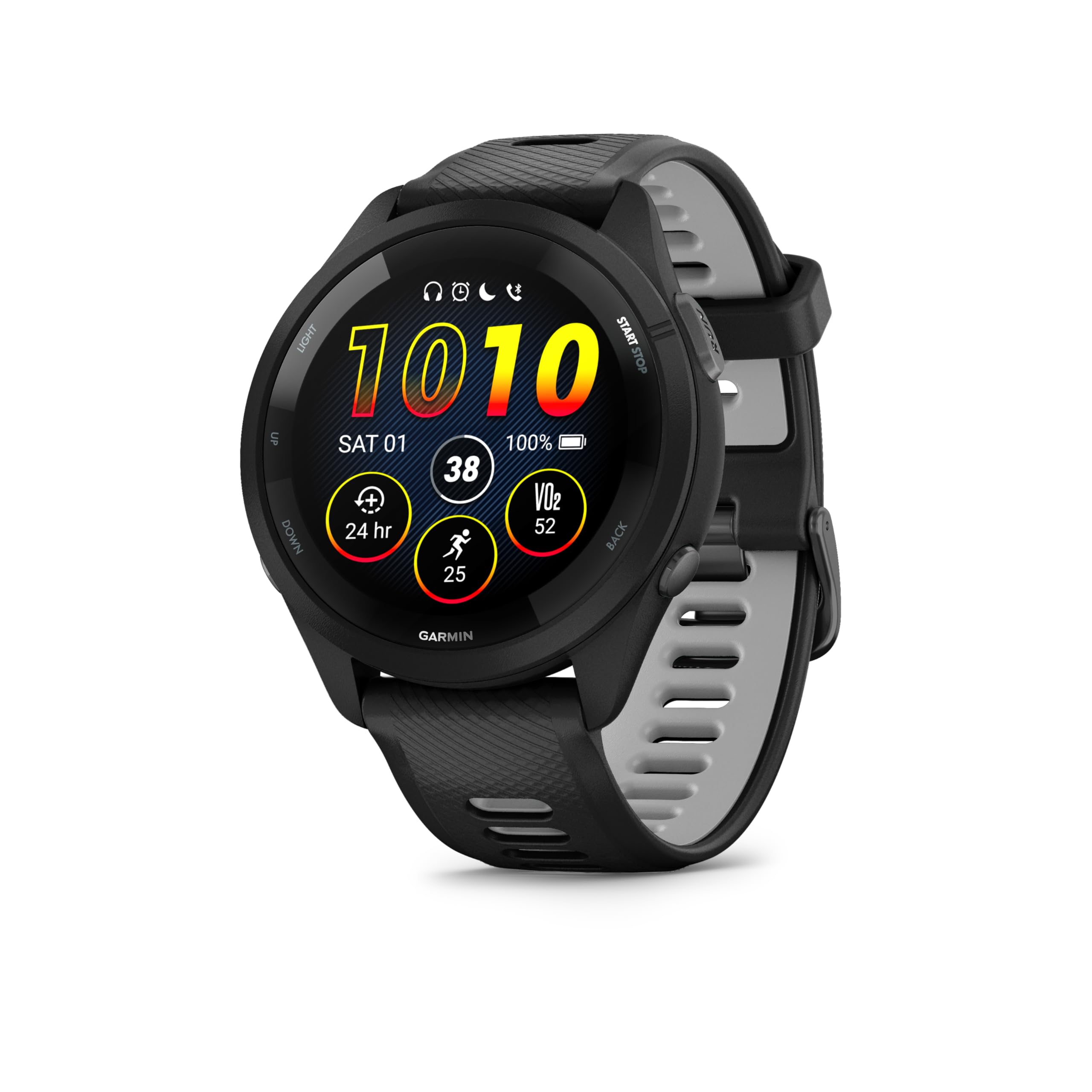
Garmin Forerunner 165
Key Features
- GPS: Built-in GPS
- Weight: 1.38 oz
- Battery: Up to 11 days; 19 hours in GPS
- Display: 1.2-inch AMOLED
- Price: Midrange
Light enough to forget you put it on is the first thing we noticed about the Forerunner 165, and it’s the reason it stays on for sleep and recovery rather than coming off after a run. The 1.2-inch AMOLED earns its place too: numbers you can read at pace, in full sun, without breaking stride. Of everything here, this is the one that best balances a bright screen, a low weight and a price most runners can justify — which is why it’s our top pick.
The coaching is where the value sits. Daily suggested workouts shift with your sleep, HRV and recent training load, Garmin Coach builds an adaptive plan toward whatever race you’re aiming at, and 25-plus activity profiles cover the pool and the gym on the days you don’t run. We liked that the morning report drops recovery, sleep and the day’s session onto one screen — a check that takes less time than lacing up.
Battery is rated at up to 11 days in watch mode and 19 hours with GPS running, which means a weekly charge and a long-run Sunday that doesn’t need planning around a cable. It also mirrors notifications from a paired phone and syncs to Garmin Connect over Bluetooth, which is as much smartwatch as we want while running.
The spec to look at closely is satellite support. The 165 lists built-in GPS, while the Forerunner 265 and the Suunto Run both list multi-band or dual-frequency positioning. On open roads and park loops the 165 held a steady pace for us; if your regular route runs between tall buildings or under heavy canopy, that extra satellite band is the one upgrade worth paying for.
Pros
- Just 1.38 oz on the wrist
- AMOLED screen readable in direct sun
- Adaptive daily workouts and coach plans
- Up to 11 days between charges
Cons
- Menus take a few weeks to feel natural
We recommend the Forerunner 165 as the default running watch: light enough to forget, bright enough to read mid-run, and its adaptive coaching gives a new runner a plan to follow.
Best for Bigger Wrists
Garmin Forerunner 265
Key Features
- GPS: Multi-band GPS
- Battery: Up to 13 days; 20 hours in GPS
- Display: 1.3-inch AMOLED
- Case size: 46 mm
- Price: Premium
A 46 mm case is the whole first impression. On a larger wrist the Forerunner 265 sits like a proper training watch, and the 1.3-inch AMOLED fits a full data screen without shrinking anything — pacing, zone and elapsed time all legible in one glance while you’re moving.
Multi-band GPS is what separates it from the cheaper picks here. It’s the difference between a route line that follows the sidewalk and one that cuts corners between buildings, and for anyone training in a city it’s the upgrade that matters most. Around that sits the training kit: a readiness score built from sleep, recovery, load and HRV, daily suggested workouts aimed at a race you enter in the app, and the morning report. We found readiness useful less as a number than as a nudge to move a hard session when sleep had been poor — the sort of adjustment a printed plan can’t make.
Thirteen days in watch mode and 20 hours with GPS is the roomiest battery here for a screen this size, and 8 GB of storage holds music for phone-free runs. It is the most expensive of our picks, and the extra money buys satellite bands and screen area rather than a different kind of training — the right trade only if those were the things you were missing.
Pros
- Multi-band GPS for city routes
- 13-day battery with a 1.3-inch AMOLED
- Readiness score and race-focused suggested workouts
- 8 GB for music on the wrist
Cons
- 47 g is noticeable overnight
- One case size, at 46 mm
Step up to the 265 if you have larger wrists and run through city streets: the 1.3-inch screen and multi-band GPS are the two upgrades that change the experience.
Best for Garmin Alternative
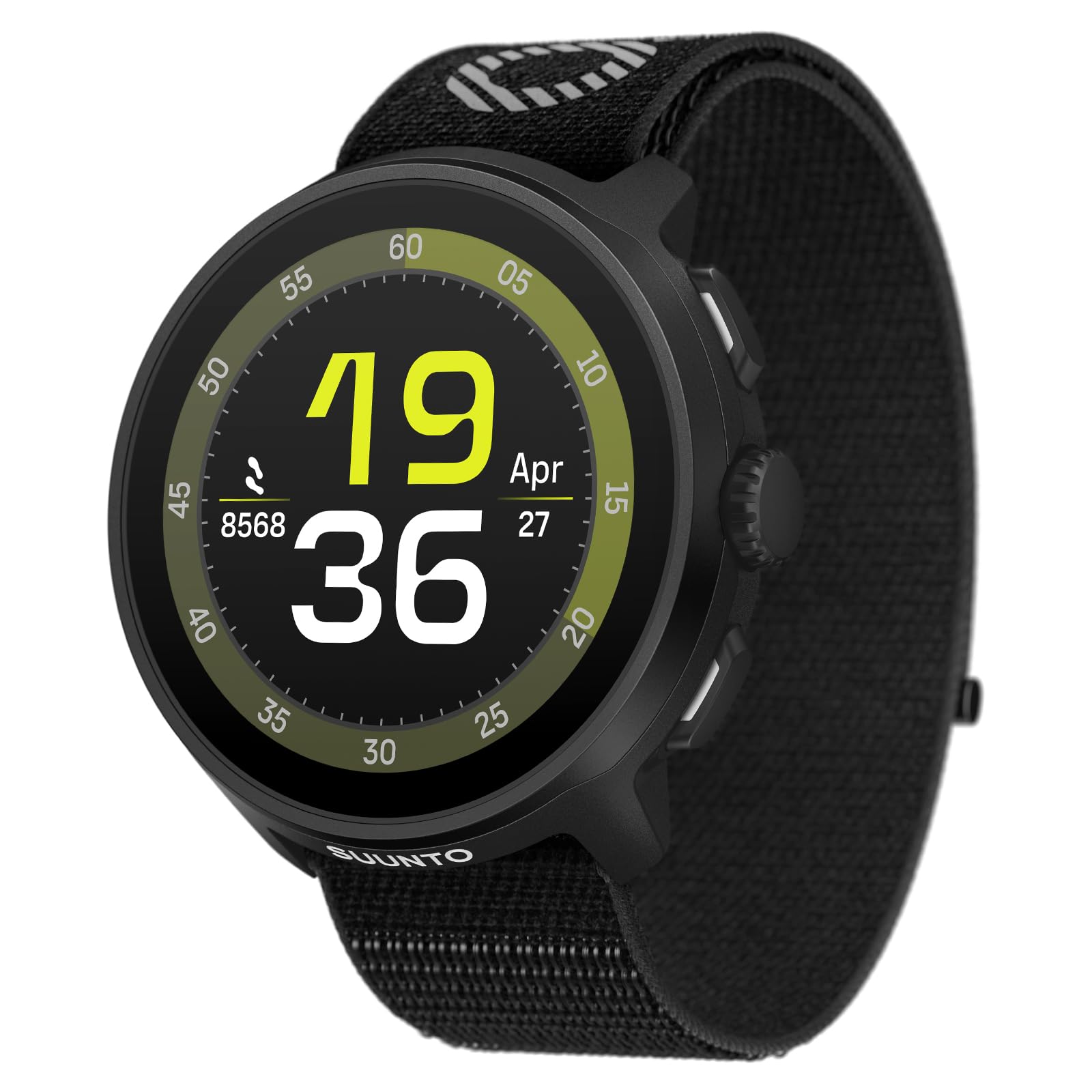
Suunto Run
Key Features
- GPS: Dual-frequency GPS
- Battery: Up to 12 days; 20 hours in GPS
- Display: 1.32-inch AMOLED
- Warranty: 2 years
- Price: Midrange
The Suunto Run is the only watch here that isn’t a Garmin, and the difference you feel first is the strap. Textile with a hook-and-loop closure lies flat against the wrist and doesn’t shift overnight, which counts for more than it sounds when the watch is meant to stay on for sleep and recovery. The 1.32-inch AMOLED is the sharpest display in this group at 466 by 466, and the crown makes moving between screens quick without smearing the glass.
Battery is rated at up to 12 days in daily use and 20 hours of training with high-precision GPS, and the satellite spec is dual-frequency — the same idea as the 265’s multi-band, aimed at the same problem of tall buildings and tree cover. Suunto also gives you breadcrumb navigation for unfamiliar routes, a training stress score, and offline music, all in an app that’s easy to read at a glance.
What tips it for us is that pairing of dual-frequency positioning and a two-year warranty at roughly what our top pick costs: you aren’t paying a premium for leaving Garmin. Check heart rate early if you train by zones — optical sensors can swing over tattoos or a strap worn loose, and a chest strap settles it for interval work. The rest of the trade shows up in what you scroll through rather than what you record.
Pros
- Dual-frequency GPS at mid-range money
- Textile strap lies flat overnight
- Sharpest display of the four
- Two-year warranty
Cons
- Limited, fixed watch-face selection
- App has less depth than Garmin Connect
We point anyone who wants out of Garmin’s ecosystem to the Suunto Run: dual-frequency GPS, a flat textile strap and a two-year warranty at about the same money.
Best for Tight Budgets
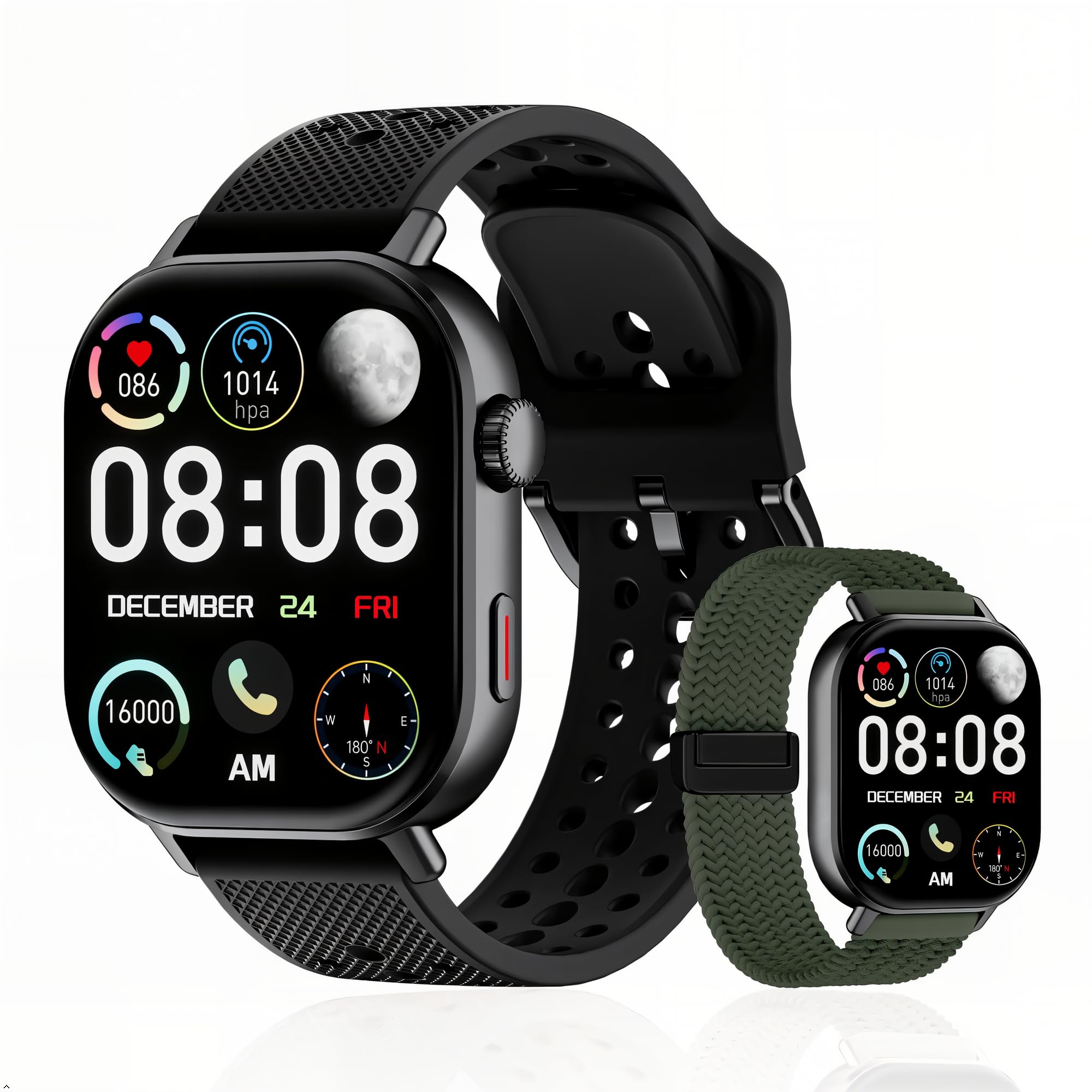
Moutarlier GPS Watch
Key Features
- GPS: Built-in GPS
- Display: 2.06-inch AMOLED
- Sport modes: 170+
- Water resistance: 50 m / 5ATM
- Price: Budget
A 2.06-inch square AMOLED is the largest screen here, and we understood the point the first time we glanced at pace mid-rep without slowing down. That’s the entire proposition: distance, pace and heart rate in numbers big enough to read at arm’s length. It’s also the cheapest of our picks by a wide margin, which makes it the sensible way to find out whether you’ll actually wear a watch running before spending real money.
What you get is broad rather than deep. There’s built-in GPS with average pace and distance, 170-plus activity modes, 5ATM water resistance for pool laps, and Bluetooth calling and texts from a paired phone, plus an SOS shortcut. Live with it for a week and the size stops feeling oversized and starts feeling useful, especially in bright light where a smaller screen would have you squinting.
The training layer the Garmins build isn’t here: no adaptive daily workouts, no readiness or recovery scoring, no coach plans. It counts and displays; it doesn’t coach. If you already know how to structure a week and just want the numbers in front of you, that’s a fair trade rather than a shortfall.
Pros
- 2.06-inch AMOLED, the biggest here
- 5ATM for pool and open-water swims
- Calls and texts from a paired phone
- Multi-day battery between charges
Cons
- Large, thick case on smaller wrists
- Slow GPS lock before a run
For a first watch on a tight budget, this is the one we hand people — provided a big readable screen matters more to them than training analysis.
How We Tested GPS Running Watches
We started with a shortlist of nearly 30 watches from brands we’ve tested before, then narrowed it by size, price, and the features that matter for running—GPS modes, structured workouts, app support, and battery claims. Nine made the cut. We tested each for at least two weeks over a six-month stretch, wearing them for easy neighborhood runs, track intervals, long trail efforts, and full days at a desk or on weekend errands.
For GPS accuracy, we ran a measured five-mile loop and a tree-covered trail, then compared each watch’s map trace and mile splits against the known distance; we noted where pace jumped, distance clipped short, or the signal took more than a minute to lock. Battery testing was equally routine: we charged to 100 percent, logged the drop after a one-hour GPS run, left notifications on, and tracked how many days each lasted in normal smartwatch mode.
We set each one up from the box without the manual, built a simple interval workout, changed data fields, and paused or lapped mid-run with sweaty fingers to judge the interface and ease of use. We paired every watch with a phone, left the phone behind on a run to check standalone GPS, and watched whether workouts synced cleanly to the app. We also wore each for full days, noting whether the case caught on a shirt cuff, the band stayed comfortable after a sweaty run, and the screen remained readable in direct sun; a watch also had to look reasonable with everyday clothes, not just running gear. Customization got a practical test too: watch faces, data screens, alerts, and training features had to be useful, not just present.
How to Choose a Gps Running Watch
The watch you keep wearing beats the one with the longest feature list, and that usually comes down to a screen you can read at pace, a battery that covers your week, and a case you don’t mind sleeping in.
Start with GPS hours, not days between charges
Every watch here quotes two battery numbers, and only one of them is about running. The smartwatch figure — 10 to 13 days on the Garmin and Suunto picks — tells you how often you’ll think about the charger. The GPS figure, 19 to 20 hours on those same watches, tells you how much training you can record before the watch quits mid-run.
A marathon is under five hours, so even the shortest of these covers a race with room to spare. We look at the GPS number first and treat anything past 15 hours as a solved problem for road running; it starts to matter again for long ultras, or for anyone who reliably forgets to charge.
Single-band versus multi-band positioning
Built-in GPS gets you a route. The satellite spec decides how tidy that route looks. The Forerunner 165 and the Moutarlier list standard built-in GPS; the Forerunner 265 adds multi-band reception and the Suunto Run adds dual-frequency, which both draw on more than one signal band to reduce drift between tall buildings and under dense canopy.
The trap is that lock time gets noticed more than accuracy does. Start the watch before you step outside so your first kilometre isn’t a guess, and let it settle while you tie your shoes. If your regular routes are open roads and park loops, standard GPS is fine; if they thread through downtown, the extra bands earn their keep.
Screen and case size are one decision
Screens here run from 1.2 inches on the Forerunner 165 to the 2.06-inch square panel on the Moutarlier, and the case grows with them. A 1.2-inch AMOLED on a 43 mm case disappears under a sleeve and still reads mid-stride; the big square is genuinely easier to glance at but sits high and wide on a smaller wrist.
Decide which glance you need. If you check pace every few minutes, bigger wins. If you want the watch to vanish, smaller does. Either way, AMOLED is what makes daylight reading work — and it is also the reason these watches need charging at all.
Weight decides whether you sleep in it
Sleep, HRV and recovery scores only exist if the watch stays on overnight, so weight matters more than the spec sheet makes it look. The Forerunner 165 is 1.38 ounces and effectively disappears; the Forerunner 265 is 47 grams, which is a different experience on a small wrist.
If you plan to use readiness and recovery guidance, treat overnight comfort as a real buying criterion alongside battery. Size the case to your wrist rather than to the largest screen you can get, and wear it a couple of nights before the return window closes.
Decide how much coaching you’ll actually use
Training features are where the price climbs fastest. Adaptive daily workouts, a readiness score and coach plans change what you do on a Tuesday; cadence and running-economy metrics mostly don’t, unless your week is already structured. Be honest about which ones you’ll act on — the Moutarlier does none of it and still records every run.
Buttons are the other half of this decision. Every watch here pairs a touchscreen with physical controls, and the buttons are what work with wet hands or gloves, so check that start, stop and lap sit on a real button before you buy.
Frequently Asked Questions
Why buy a running watch instead of running with my phone?
Because the phone is the thing you don’t want to hold. A watch puts current pace, distance and heart rate on your wrist without an armband, a pocket or a screen unlock, and it keeps recording when you leave the phone behind.
Try one run with your phone in a pocket and count how often you pull it out. That number is your answer.
Can I run without my phone?
Yes. Every watch here records GPS and heart rate on its own and syncs to your phone afterwards, so the phone can stay at home or in a bag. You lose notifications, not your run data.
If you want music or podcasts while you run, check the storage spec first: the Forerunner 265 and the Suunto Run both list offline music, and that is the feature to confirm before you plan phone-free audio.
How accurate is wrist heart rate on a running watch?
Good at steady efforts, less so when your heart rate is changing fast. Intervals, hill repeats and cold mornings are where the wrist reading lags, and a loose strap or a tattoo under the sensor makes it worse.
Run one interval session with a chest strap and your watch at the same time. If the two agree at steady pace, trust the zones; if they drift apart on every surge, keep the strap for interval days.
Can I swim with these watches?
Yes. All four are rated to 50 meters or the 5ATM equivalent, which covers pool laps and open-water swims. That rating assumes still water, so keep them off the diving board and away from high-pressure jets.
Rinse in fresh water after a chlorinated session and let the strap dry fully before you wear it overnight.
Final Verdict
Our default is the Garmin Forerunner 165. It’s the lightest and easiest of these to live with, it reads clearly in daylight, and its adaptive workouts give a new runner something to follow instead of a wall of numbers. Buy it and you’ll have spent the least of our main picks on the watch most people will actually keep wearing.
Change the requirement and the answer changes. Step up to the Forerunner 265 if your routes run between buildings or your wrist needs a 46 mm case; take the Suunto Run if dual-frequency GPS matters but Garmin’s app doesn’t; and choose the Moutarlier only when a big readable screen on the smallest budget is the entire brief.