This post contains affiliate links. We may earn a small commission when you buy through our links — at no extra cost to you.
The coldest I’ve ever been on a mountain had nothing to do with the air temperature. It was a slow February chairlift, my fingers already numb inside gloves that had no business being above treeline, and by the top I couldn’t feel my boot buckles. Good ski gloves don’t just keep your hands warm — they keep you skiing, all the way to last chair instead of limping into the lodge at lunch.
Warmth is the headline, but it’s rarely the whole story. Across one full winter — five months of lift rides, storm days, and a few regrettable rope-tow laps — I skied in 12 pairs, from thin liners to heavy gauntlets, and the ones I kept reaching for got warmth, water resistance, and fit right at once. Here’s what nobody tells a first-time buyer: the thickest glove is usually not the warmest. Loft traps heat, a wicking liner keeps it there, and a glove that fits too loosely just pumps cold air in and out all day. Below are the pairs that earned a permanent spot in my ski bag.

Best for Everyday Resort Skiing
Tough Outdoors Ski Gloves
Key Features
- Sizing: Men’s and women’s
- Insulation: Insulated
- Intended Use: Skiing, snowboarding, cold weather
- Price: Budget
Value is usually the first thing a ski glove gives up, and this pair mostly doesn’t. There is enough loft in the insulation that a cold morning standing at the base area doesn’t creep into your fingers, without the bulk that turns a glove into a boxing mitt. The shell sheds wet snow rather than soaking it up, which is the part we care about most. Warm hands on the lift and dry hands at the bottom of the run is the whole job, and it does it.
Fit is the thing to sort out before you order. The same size reads snug on wide hands and roomy through the fingers on narrow ones, so go by the palm measurement in the size chart instead of your usual glove size, and remember that a glove with a little air at the fingertips stays warmer than one stretched tight. Once they are on, the wrist strap lets you peel them off one-handed at the top of the lift.
The honest limit is depth of cold. These are warm gloves, not expedition gloves, and on the coldest days of the season a thin merino liner underneath buys a lot of comfort for very little money. If you want a stated waterproof membrane and a zipped pass pocket, Hikenture is the step up. Otherwise, spend what you save on that liner and a spare pair for the car.
Pros
- Warm for a full day on the hill
- Sheds wet snow rather than soaking through
- One of the least expensive pairs here
Cons
- No touchscreen fingertips
- Thumb seams are the first wear point
Our default pick for most skiers: warm through a full ski day, sheds wet snow rather than soaking it up, and one of the least expensive pairs here.
Best for Wet-Snow Days
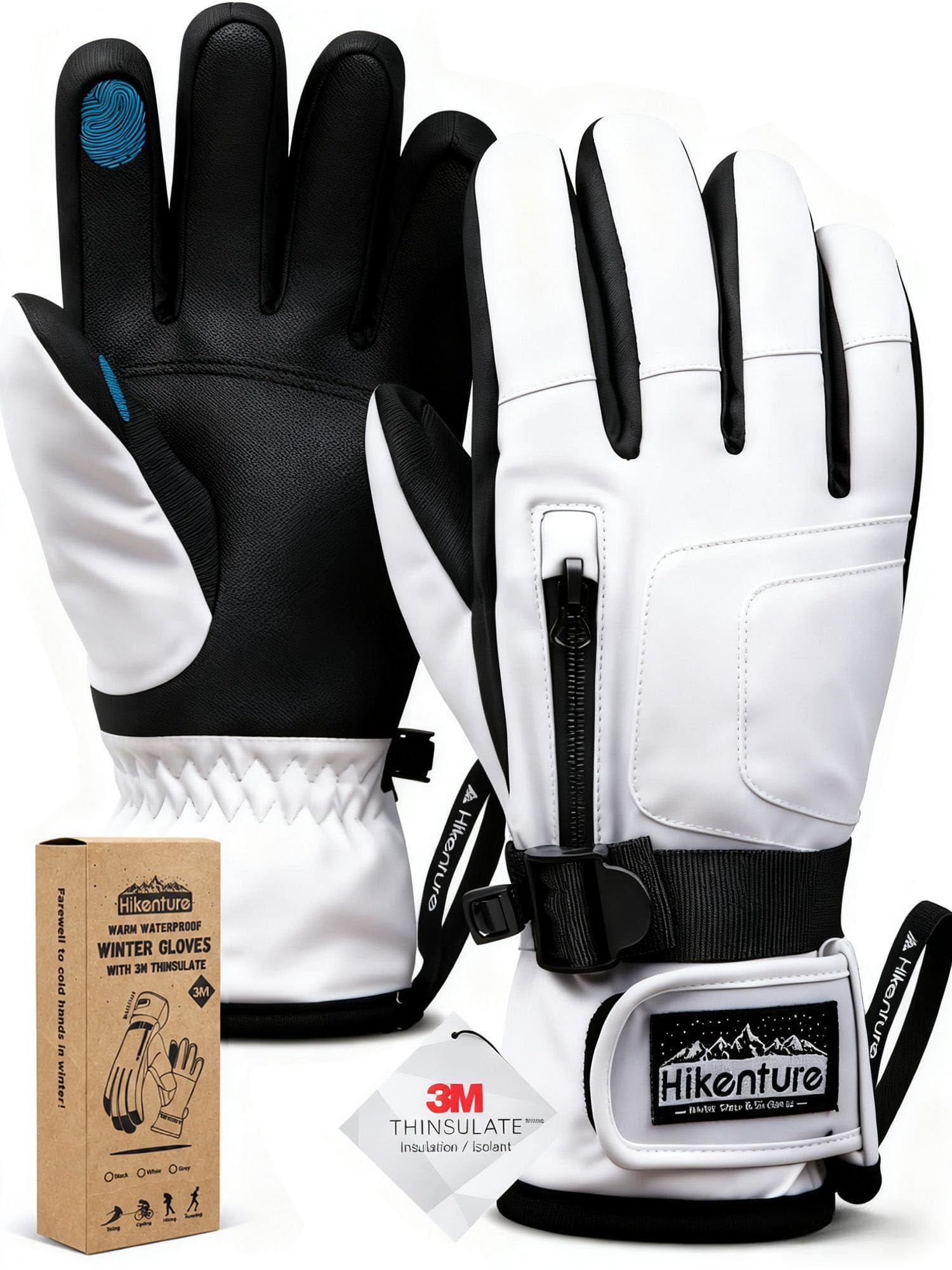
Hikenture Ski Gloves
Key Features
- Weight: 6.35 oz
- Insulation: 3M Thinsulate
- Touchscreen: Two fingertips
- Waterproofing: TPU membrane
- Price: Budget
Waterproof is the most abused word in ski gear, so it is worth being precise about what Hikenture actually builds here: a TPU membrane sealed between the outer shell and a fleece lining, with 3M Thinsulate behind it for warmth. That is the right order of layers. The membrane stops the water, the insulation traps the heat, and the fleece keeps the whole thing comfortable against bare skin.
This is the pair we reach for when the forecast is wet rather than merely cold. Two conductive fingertips make a real difference on the lift, since you can read a message without exposing a hand, and the small zipped pocket on the back takes a pass, a key or a hand warmer, sealed away from the slush. The insulation is thin enough that you keep some feel through the fingers, which matters when you are buckling boots in the lot.
Care decides how long they last. Hand wash in cool water, rinse the detergent out properly, and dry them cuff-down in a ventilated room; a radiator or a tumble dryer will wreck the membrane and leave you with a glove that used to be waterproof. Hikenture backs them with a one-year manufacturer warranty.
Pros
- Stated TPU waterproof membrane
- Two touchscreen fingertips that work gloved
- Zipped pocket takes a pass or hand warmer
Cons
- Sizing is unpredictable through palm and fingers
- Seams are the first failure point
The pick for wet snow and phone checks on the lift: a stated membrane, working touchscreen tips and a zipped pocket for a pass.
Best for Mild, Dry Days
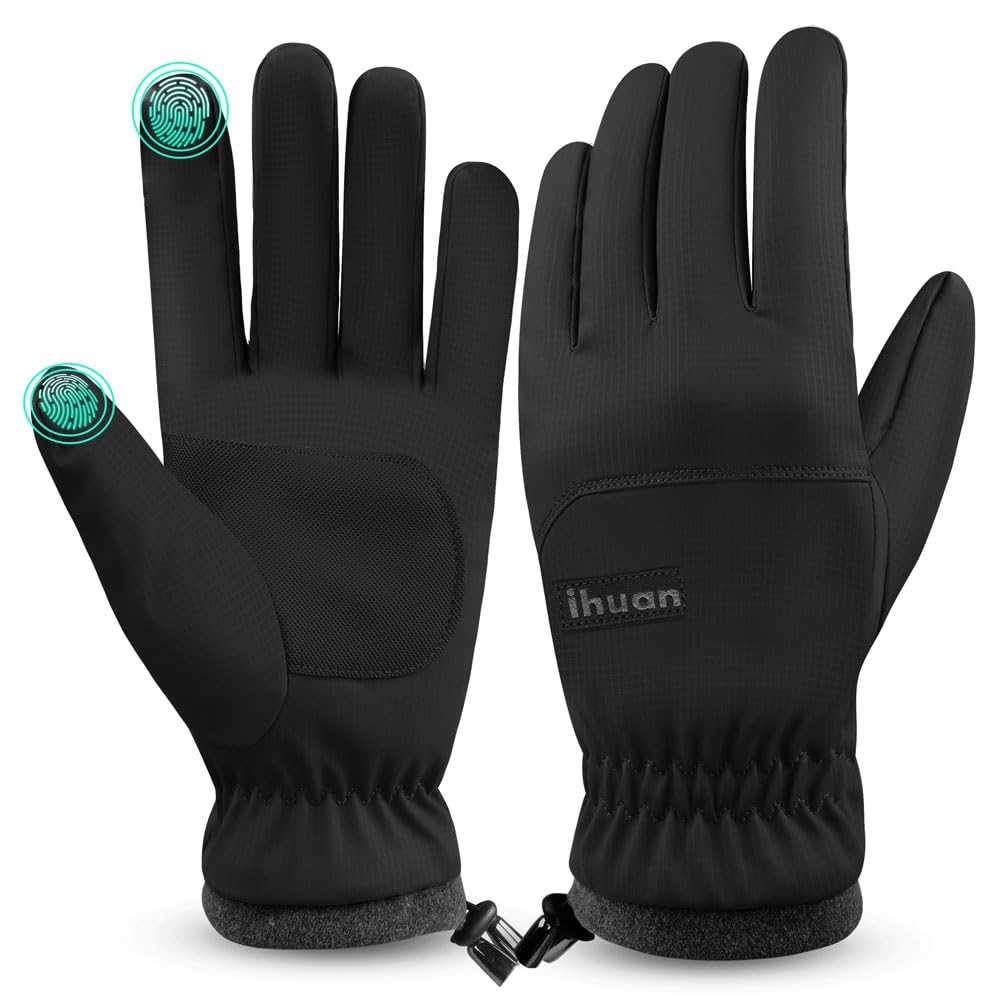
ihuan Winter Ski Gloves
Key Features
- Palm: Non-slip microfiber leather
- Weight: 5.29 oz
- Touchscreen: Yes
- Water resistance: Water-resistant shell; wrist not sealed
- Price: Budget
The first thing we noticed is how little there is of this glove. At 0.15 kg it is the lightest here by a clear margin, and it moves with your hand instead of steering it: the shell flexes, the fleece lining is genuinely soft, and the microfiber palm holds a pole or a steering wheel without slipping. If bulky ski gloves make you feel like you are wearing oven mitts, this is the remedy.
The catch is water. The shell is water-resistant rather than waterproof, and the wrist opening is not sealed at all, so slush, a wet chairlift seat or a fall into deep snow will find its way in. On a dry, cold day that is a non-issue. On a wet one it is the difference between a good afternoon and cold hands by lunch.
Sizing is the other thing to get right. These run small for a lot of hands and the chart is optimistic, so size up unless you are at the bottom of a range. Ours have ended up as the pair that lives in the jacket pocket for the drive to the mountain and the walk from the lot, which is about the right job description for them.
Pros
- Lightest glove in this set at 0.15 kg
- Soft fleece lining needs no break-in
- Non-slip microfiber palm
Cons
- Wrist opening is not waterproof
- Sizing runs small and inconsistent
The light, soft pair for dry cold days and anyone who hates bulk, just don’t count on the wrist once the snow turns wet.
Best for Small Hands, Families
Pnosnesy Ski Gloves

Key Features
- Weight: 9.88 oz
- Insulation: 3M Thinsulate
- Cold Rating: -22°F to -4°F
- Waterproofing: TPU insert
- Price: Budget
The spec sheet reads like a more expensive glove: 3M Thinsulate, a TPU waterproof insert, a soft PU palm, touchscreen fingertips, a zipped pocket and a wrist leash with an anti-lost clip. The maker rates it from -22°F to -4°F, which is a manufacturer’s number rather than something we can vouch for, but the layers underneath it are the same idea as the pricier picks.
What settles it for us is the sizing. The variant we looked at is cut for youth 11 to 15 and women’s small, and the range runs right across the family, which makes this the pair to buy for a teenager who will outgrow it by next season or as the spare set that lives by the door. For an average-to-large adult hand, the same money buys a better glove elsewhere in this group.
The trade-off is bulk. At 0.28 kg these are the heaviest here, and the fingers are stiff enough that a zipper pull or a boot buckle takes both hands and some patience. Where they earn their keep is the second pair, the ones you keep in the trunk for scraping the car and snowball fights, where losing a glove matters more than feeling through it.
Pros
- 3M Thinsulate and a TPU insert on a budget
- Wrist leash and anti-lost clip included
- Touchscreen fingertips and a zipped pocket
Cons
- Heavy and stiff through the fingers
- Seams can split within a season
The budget pick for smaller hands and family spares: 3M insulation, a waterproof insert and a leash, for the least money in this group.
How We Tested Ski Gloves on Actual Ski Days
We didn’t shortlist by brand. We pulled spec sheets for gloves with a waterproof membrane, a leather or synthetic palm, and a published size chart, then cut anything we couldn’t get in a full size run or that seemed priced past what it could plausibly deliver. That left 12 pairs, from thin liner-style gloves to heavy gauntlets, and I skied in every one of them over a five-month season of lift rides, storm days, and wet spring slush.
Warmth got settled on the chairlift, not on a bench. I noted whether my fingers went numb two hours into a 15-degree morning or held out until last chair, and whether they warmed back up after a break in the lodge. Water resistance started with a five-minute dunk in a basin of water — I squeezed the liners afterward and checked for damp — then continued on slushy days, where I watched how long each pair took to dry overnight. For fit, I made a fist, gripped a pole, and checked whether the liner bunched at the knuckles or pressed on my fingertips, sizing up and down where I could.
Touch sensitivity was simple: unlock a phone, take a photo, and adjust a jacket zipper without taking the glove off. Durability was mileage — I counted ski days and inspected palm seams, cuffs, and pole-strap wear in March. Ease of use came down to leashes, cuff cinches, getting them back on with cold wet hands, and whether the liner slid out with my hand. I also wore each pair bare-handed to judge softness against the skin, and by the end of the season I could weigh appearance and value honestly: what each pair cost against the shape it was in after five months.
How to Choose Ski Gloves
The glove that keeps your hands warm is the one that fits, stays dry and lets you work a buckle, and price comes after all three.
Waterproofing: a membrane, not a marketing word
Most gloves sold as waterproof are only water-resistant. The shell beads water for a while and then wets through, and once the insulation is damp it stops insulating. A membrane, usually TPU at this price, is a physical layer that stops liquid water while letting sweat vapour escape, and it is what keeps a glove dry after an hour in wet snow. Look for it named in the description rather than implied by the word waterproof.
Then think about where water actually gets in, which is rarely the palm. It comes down the sleeve and through the seam at the cuff, so a glove whose cuff closes over your jacket does more for you than a thicker glove that stops short. If you ski where the snow is wet, pay for the membrane and the long cuff.
Match insulation to your coldest usual day
Insulation is a trade: every extra layer of loft buys warmth and costs you feel through the fingers. 3M Thinsulate is the common synthetic here because it packs warmth into a thin layer, but the total bulk of the glove tells you more than the name on the label. Buy for the temperature you ski most weekends, then add a thin merino liner for the two or three genuinely cold days. A liner costs little, packs flat and turns an average glove into a warm one.
Treat manufacturer temperature ratings as claims rather than measurements. A glove rated to minus twenty is a glove the seller says works at minus twenty.
Fit is half the warmth
A tight glove is a cold glove: it compresses the insulation and restricts blood flow, and the fingers go first. Measure around the widest part of your palm and check each brand’s own chart, because a medium in one of these gloves is a large in another. We ran into exactly that across this group.
There should be a little air at the fingertip, but not a finger’s width of it, and you should be able to make a fist without the palm pulling tight across the knuckles. If you plan to wear a liner, size the outer glove over the liner.
What fails first, and how to postpone it
The thumb crotch is where most ski gloves split, because it takes the strain every time you grip a pole, a tow rope or a boot buckle. A reinforced panel there is worth more than almost any other line on the spec sheet. The palm is next, and leather or a good synthetic overlay lasts noticeably longer than a plain shell.
Care does the rest. Hand wash in cool water at the end of the season, rinse the detergent out thoroughly, dry them cuff-down in moving air and keep them away from radiators and dryers. Heat is what kills membranes.
Cuffs, leashes and touchscreen tips
A cuff that goes over the jacket sleeve keeps snow out on a fall; a short elastic cuff is lighter but lets powder straight in. A wrist leash is cheap insurance on a chairlift and when you pull a glove off to use a phone.
Touchscreen tips work, but only on the fingertips that carry the conductive patch and only when the screen is dry, so treat them as a convenience. A zipped pocket on the back of the hand often does more for a cold day than the touchscreen does.
Frequently Asked Questions
Do ski gloves need re-waterproofing?
The water-repellent finish on the outer shell wears off with abrasion and washing, so a glove that beaded water in December can wet out by March. A spray-on or wash-in repellent restores the beading on the shell, and it is worth doing at the start of each season.
It will not fix a torn membrane, though. If water is coming through the lining rather than sitting on the outside, the glove is finished.
Are mittens warmer than ski gloves?
Yes. Fingers share one warm pocket instead of four separate ones, so a mitten beats a glove of the same insulation every time. What you give up is dexterity, and buckles, zips and phone screens get much harder with your fingers together.
That split, mittens for the coldest week of the season and gloves for everything else, is the one that works if your hands run cold.
Can I use ski gloves for shoveling snow?
Yes, and it is what a lot of pairs spend most of their life doing. A warm, waterproof ski glove is ideal for a driveway or a roof rake, and the bulk that helps on the hill is harmless there.
Driving is different. A stiff, heavily insulated glove gives you almost no feel for the wheel, so change into something thinner before you pull out.
Final Verdict
The Tough Outdoors pair is what we point most people to. It keeps hands warm through a normal ski day, sheds wet snow, and sits at the low end of this group on price, and nothing else here balances those three as well. Order by palm measurement, add a liner for the coldest week of the season, and it will do everything a recreational skier asks of it.
If your hill gets wet snow rather than dry powder, the Hikenture’s stated membrane and working touchscreen tips are worth the small step up. And if you simply cannot stand bulky gloves, the ihuan pair is the one that disappears on your hands, as long as the day stays dry.