This post contains affiliate links. We may earn a small commission when you buy through our links — at no extra cost to you.
Most helmet problems show up about 20 minutes into a ride: the dial has crept loose, the front pad is pressing a spot above your eyebrow, or the whole thing sits so far back you can see the brim in your peripheral vision. I’ve owned helmets that did all three, which is why I care less about the spec sheet than whether a helmet disappears once I’m pedaling. A good one protects your head, yes, but it also has to fit your actual head shape, adjust without a fight, and look decent enough that you don’t dread putting it on.
Over the past six months, we rode with 12 bike helmets across commutes, errands, and longer weekend paths, comparing fit, weight, adjustability, build quality, and what each one delivered for the money. The differences were mostly in the details: padding placement, strap anchors, and how easily the retention dial could be fine-tuned with one hand. The helmets below are the ones that earned a permanent spot by the door.

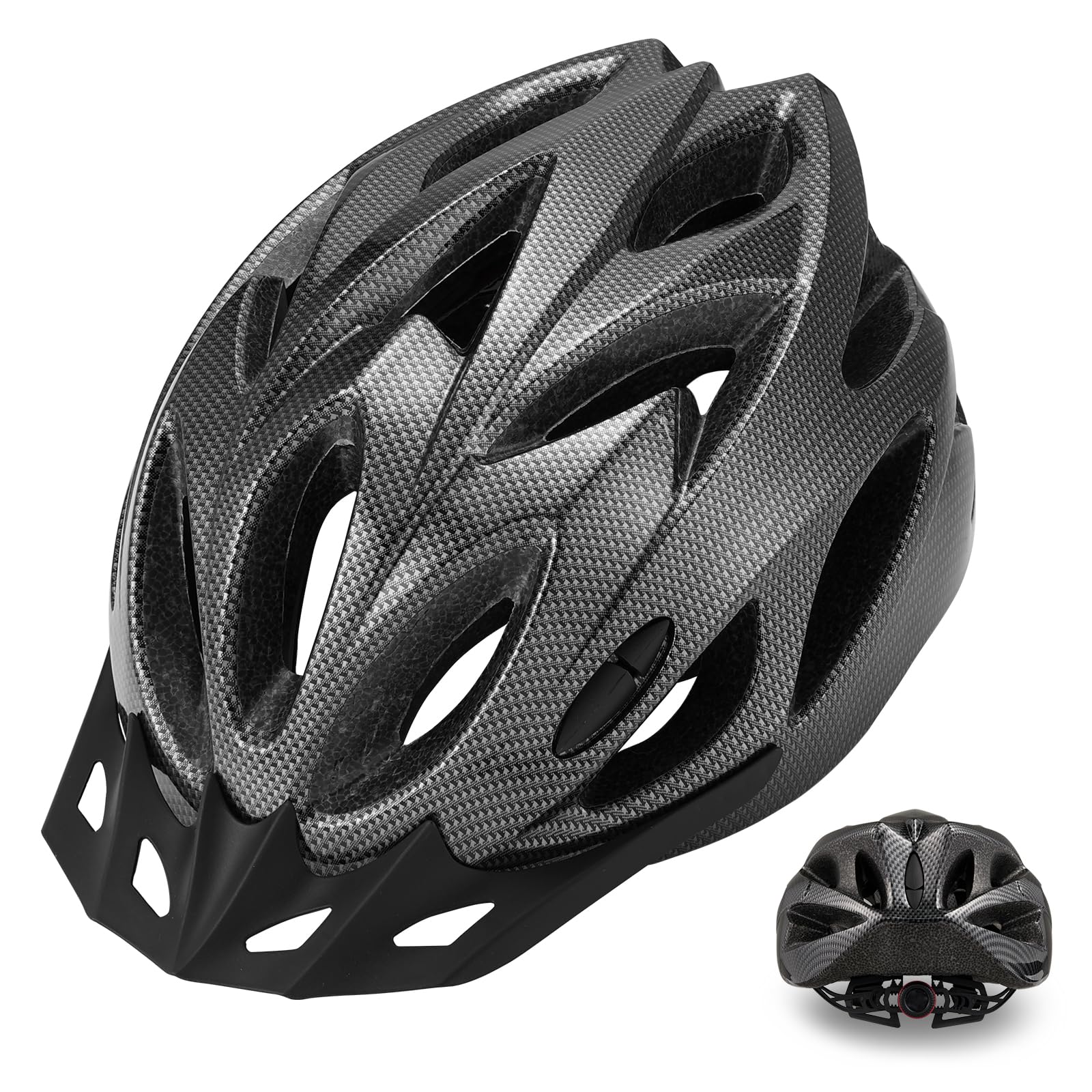


Best for Recreational Riding
Schwinn Thrasher
Key Features
- Vents: 20
- Fit range: 58–62 cm
- Retention: Rear dial and strap adjusters
- Certification: CPSC, age 1+ extended coverage
- Price: Budget
Fifty-eight to 62 centimeters is the whole story with this helmet, which is why we start with the tape measure rather than the feature list. That is the band the Thrasher fits, and inside it this is the helmet we recommend without hesitating. It carries the CPSC certification with extended rear coverage, the dial at the back takes up slack in one twist, and the side and chin straps set once and stay set.
Twenty vents and a full wrap of padding do the work once you are rolling. Air moves over the crown instead of pooling behind the brow, and the padding sits between skull and shell rather than leaving a hard edge at the front. The visor is short, but it does keep low evening sun out of your eyes, and the whole helmet is light enough that you stop noticing it after a mile, which is the nicest thing we can say about one.
The limit is the one we started with. Below 58 centimeters the shell sits high on the forehead however far the dial winds in, and the Zacro covers 54 to 62 for about the same money. What the Thrasher’s price does not buy is a built-in light or the goggle-and-visor setup on the VICTGOAL. The shell, the padding and the retention dial all do their job.
Pros
- CPSC-certified with extended rear coverage
- Dial and strap fit adjusted in seconds
- Twenty vents and full wrap padding
- Least expensive certified adult helmet in this group
Cons
- Visor clips and dial wheel can fail with use
Our default adult pick: CPSC-certified, dial-adjustable and well vented, at a price that leaves room for lights and a lock.
Best for Wide Head Sizes
Zacro Adult Bike Helmet
Key Features
- Liner: Removable and washable
- Vents: 18
- Fit range: 54–62 cm
- Certification: CPSC and CE
- Price: Budget
If the Schwinn’s 58 centimeter floor leaves you out, start here. The Zacro runs 54 to 62 centimeters from a single adult shell, so it covers the narrower half of the range the top pick misses, and the dial at the back takes it from loose to snug without you having to guess a size from a chart.
At this money we expected to give something up and mostly did not. It carries both CPSC and CE marking, the visor comes off with a tug when you want a plain road profile, and the liner pulls out for washing, the detail we appreciated most after a sweaty week, because a helmet that smells is a helmet that stays in the garage.
The visor is short, so it will not shade your whole face, but it keeps sun and rain out of your eyes and it is the part we used most. Eighteen vents keep air moving on a warm commute and the shell never turned into a sweat box on a climb. If a rear light matters to you, the VICTGOAL is the step up; if you simply want a certified helmet that fits, this is where we point.
Pros
- Covers 54 to 62 cm in one shell
- CPSC and CE marked
- Removable, washable liner and visor
Cons
- Interior padding is thinner than the plush liners here
The helmet to buy when fit range and price both have to work: CPSC and CE marked, with a washable liner.
Best for Dusk Commuting
VICTGOAL LED Bike Helmet
Key Features
- Vents: 21
- Weight: 10.9 oz
- Fit range: 54–63 cm across M–XL
- Rear light: USB rechargeable, three modes
- Price: Midrange
A light built into the back of a helmet sounds like a gimmick until you ride home at dusk without one. The VICTGOAL’s rear light runs three modes and charges over USB, and it sits flush enough that we stopped noticing it was there, which is the point. Nothing to clip on, nothing to remember.
The magnetic goggles are the bigger surprise. They snap onto the shell above the visor, keep wind and bugs out of your eyes, and leave room underneath for a pair of glasses, which settles it for anyone who cannot ride without them. On a windy afternoon we kept them on for the whole ride rather than pocketing them at the first climb.
Sizing runs across M, L and XL from 54 to 63 centimeters, so most adults and plenty of teenagers land inside it, and 21 vents keep it cool enough for a summer commute. The shape is rounder than a pure road helmet and sits a little higher on the forehead than the Zacro. If your riding is daylight only, you are paying for a light and goggles you will not use.
Pros
- Built-in USB rear light with three modes
- Magnetic goggles that fit over glasses
- Wide 54 to 63 cm range across three sizes
Cons
- Rear light needs regular charging
- Visor and goggles take a firm push to seat
For commutes that run into dusk, this is the helmet we point to, with a built-in rear light and goggles that fit over glasses.
Best for Night and E-Bike
ILM E3-10L
Key Features
- Lights: USB front and rear
- Weight: 14.9 oz
- Fit range: Large–X-Large
- Certification: CPSC, ASTM, CE and EN1078
- Price: Premium
The visor is why we kept coming back to this one. It is a tinted lens that clips over the face and sits well clear of your eyes, and at e-bike speeds it does what sunglasses do without the arms pressing into your temples or fogging up at a cold start.
The lights are the other half of the pitch. There is one at the front and one at the back, both USB, and the rear is bright enough to read as a light rather than a reflector in daylight. On a bike that already runs a battery, that is two more things to keep charged, and that is the trade you are making.
Fit is generous: it is an L to XL shell, so it suits bigger heads, and the dial takes it in far enough for a thin beanie. The liner lifts out for washing, and the shell sits level rather than tipping back the way some deep shapes do. Ten vents is fewer than the road helmets here, so expect a warmer head on a still day.
We think it earns its price for anyone whose rides run into the dark, or who rides an e-bike where being seen is worth the grams. If your riding is daylight and short, the lights are dead weight, and the Zacro or the Schwinn will do the same job for considerably less.
Pros
- Tinted visor replaces sunglasses
- Front and rear USB lights
- Four certification marks including EN1078
- Removable, washable liner
Cons
- 421 g, the heaviest of the road-style picks here
The one we hand to night riders and e-bike commuters: lit front and rear, with a tinted visor that replaces sunglasses entirely.
Best for Skate and Bmx
Triple Eight Sweatsaver
Key Features
- Pads: Two Sweatsaver sets included
- Weight: 1.1 lb
- Fit range: 53–57 cm (S/M)
- Certification: CPSC and ASTM F1447
- Price: Premium
There is no dial on this one, and that is deliberate. The Sweatsaver fits by padding: two sets of thick, moisture-wicking pads come in the box and you swap them until the shell sits still on your head. For skatepark and BMX riding we preferred that to a dial, which can press into the back of your skull when you are looking up at a ramp.
The Sweatsaver fabric is the other half of the name. It soaks up sweat instead of letting it run into your eyes, which matters in a helmet you keep on for an hour at a time. The shell wraps lower at the back than a road helmet, the coverage you want when you fall backward, and it is triple-certified including the CPSC bicycle standard. A skate shell is not automatically legal for bikes; this one is.
Sizing is where this helmet goes wrong, and it is worth being blunt: the S/M band is 53 to 57 centimeters and the pads come up snug, so measure and go up if you are anywhere near the line. Get that right and it is the most comfortable helmet here over a long session, with padding thick enough that the shell never rests on bone.
Pros
- Two sets of thick Sweatsaver pads included
- Lower rear coverage for park riding
- Certified for bikes as well as boards
Cons
- Half a kilo, the heaviest helmet here
- Runs hot when you are working hard
For park, pump track and BMX, we take the Sweatsaver for its thick pad fit and lower rear coverage, provided you size it right.
Best for Toddlers
GLAF Toddler Helmet
Key Features
- Vents: 14
- Weight: 8.47 oz
- Fit range: 44–48 cm (XXS)
- Certification: CPSC, age 1+
- Price: Budget
Forty-four to 48 centimeters is a very small shell, and that is the point: most toddler helmets start where this one stops. The XXS GLAF is the smallest helmet in this group, and it meets the CPSC bicycle standard for riders aged one and up.
We think that is the right way to buy a first helmet. A shell that is genuinely small sits level instead of tipping back over the ears, and the dial at the back takes up the last centimeter as a head grows. At 0.24 kilograms there is not much for a small neck to carry, and fourteen vents mean the back of the head does not come home damp after a summer walk.
The details are the ones that matter with a toddler: a short front visor, straps that adjust at the ears, padding that does not need a fight to get on. It tops out at 48 centimeters, so it is a helmet for the first couple of years rather than one that follows a child to school; when it is outgrown, the OUWOER’s Small picks up at 48 and runs to 54.
Pros
- A true 44 to 48 cm shell
- Light enough for a toddler’s neck
- Dial and straps that adjust as the head grows
Cons
- Runs large on the smallest infants
The first helmet we put on a one-year-old: a genuinely small shell, a dial that follows growth, and a weight a toddler’s neck can carry.
Best for Young Kids
OUWOER Kids Helmet

Key Features
- Shell: ABS over EPS foam
- Vents: 11
- Fit range: 48–54 cm (Small)
- Certification: CPSC, age 1+
- Price: Midrange
Three sizes, from a 48 centimeter Small to a 61 centimeter Large, with a ratcheting dial at the back: the OUWOER is built for the years when a child’s head does most of its growing.
We found the dial easy for small hands, extra pads come in the box to take up slack, and the colors are loud enough to spot across a playground, which sounds trivial until you are looking for one child in a crowd of scooters. The shell is ABS over EPS and it carries the CPSC bicycle standard.
What holds it back is consistency. Fit varies enough between children of the same age that the age range on the page is worth less than the tape measure. Measure the head, order to the number, and it is a sound helmet for a first bike or a scooter.
Pros
- Three sizes covering 48 to 61 cm
- Dial plus extra pads to tune the fit
- Bright colors that are easy to spot
Cons
- Straps work loose and need re-tightening
- Tightening dial is the weak component
A sensible kids’ helmet across a wide size spread, provided you measure the child’s head rather than trust the age on the box.
Best for School-Run Riders
Bell Richter Youth

Key Features
- Weight: 10.2 oz
- Fit range: 54–58 cm
- Retention: True Fit one-step dial and pinch guard
- Certification: CPSC
- Price: Budget
Bell’s True Fit system is dial-and-done, and on a youth helmet that is the right call: a nine-year-old can put this on without help and get the same fit every time, and the pinch guard on the buckle means no skin caught in the clip.
The band is 54 to 58 centimeters and it is sold for ages 8 to 14, which is the honest scope of it: this is a helmet for a child who is nearly done growing, not a first one. It meets the CPSC bicycle standard, and at 10.24 ounces it is light enough to forget about.
What we liked is the coverage: the shape comes down lower at the back of the head than the Schwinn does, which helps a rider still learning to look over a shoulder without wobbling. The padding is generous for the money, and the black-and-white finish hides school-bag scuffs better than the bright kids’ shells do.
It suits the school run and the bike rack, at a price that does not sting when it is outgrown. What it is not is a first helmet: at 54 centimeters the band starts well above toddler sizes, and the GLAF and the OUWOER’s Small cover the years before this one fits.
Pros
- True Fit dial plus pinch-free buckle
- Light at 10.24 ounces
- Extra coverage at the back of the head
Cons
- Front visor snaps off at its mounts
A light youth helmet with a fit system a child can run alone, best for riders who measure inside 54 to 58 cm.
How We Chose and Tested Bike Helmets
We started by reading size charts, shell and liner specs, and customer reviews, then narrowed the field by price, available sizes, and whether replacement pads and straps were sold separately. That left 12 helmets, which we rode for six months. The goal was not to crown the lightest or the prettiest shell, but to find the ones that stayed comfortable and secure after the novelty wore off.
Before the first ride, we measured each tester’s head and compared it with the manufacturer’s size range; when a helmet sat between sizes, we tried the neighboring size and noted pressure points at the forehead and temples. On morning commutes and weekend path rides, we tightened and loosened the retention dial one-handed, adjusted the chin strap with gloves on, and checked whether the helmet stayed level after looking over a shoulder. We also wore each for at least one two-hour ride, paying attention to neck strain and how much the weight was noticeable by the end.
Durability and build quality got a longer look: after repeated sweaty rides, we checked whether pads stayed glued in place, strap anchors held tight, buckles still snapped cleanly, and shell edges showed scuffs or separation. For appearance, we compared profile and color options in daylight and with sunglasses on, and for value, we weighed what came in the box against the price bracket. The helmets that scored best were the ones that needed the fewest mid-ride adjustments and still looked tidy after months by the door.
How to Choose a Bike Helmet
The number that matters most is not on the price tag — it is the circumference of the head the helmet has to protect.
Start with the measurement, not the size name
Wrap a soft tape around the head about two centimeters above the eyebrows, keep it level, and write the number down. Every helmet here is sold by a band, and the bands differ: the Schwinn is a single 58 to 62 cm shell, the Zacro covers 54 to 62 in one universal size, and the Triple Eight splits 51 to 60 cm across four shells.
A dial takes up slack inside a shell; it does not turn an oversized shell into a safe one. If a measurement lands at the edge of a band, take the smaller shell, and if it lands outside the band entirely, choose a different helmet rather than a thicker beanie.
Read the certification, not the marketing
CPSC is the standard a bicycle helmet has to meet to be sold in the United States, and it is the mark to look for on the sticker inside the shell. Skate-style lids often add ASTM F1447, which covers recreational bicycling and roller skating, and imported helmets may also carry the European EN1078 mark.
Multi-sport in a product title is marketing; the certification is the claim. A helmet sold for biking without a CPSC mark is not one we would put on a head, whatever it costs or how good it looks on the shelf.
Vents and shell shape: buy for the riding you do
Twenty vents on the Schwinn against ten on the ILM tells you which one was built for a hot climb and which one was built around lights and a visor. Road and fitness shapes vent better and sit lighter, while skate shapes wrap lower at the back of the head and run hotter.
If you commute and arrive sweaty, ventilation matters more than it looks on the page. If the helmet spends its life at a skatepark or on a pump track, rear coverage is worth the heat.
Lights, visors and goggles earn their place after dark
Built-in lighting is the clearest dividing line in this group. The VICTGOAL and the ILM both run USB lights, and the ILM adds a front light and a tinted lens that stands in for sunglasses. Both need charging and both add weight to the helmet.
If your riding is daylight only, that is money and grams you carry for nothing. If you regularly ride home at dusk, a light that is always with you is the most useful thing on the helmet.
Buy kids’ helmets by measurement, not age
Age ranges are the least reliable number on a kids’ helmet box. The bands are the fact: 44 to 48 cm for a first helmet, 48 to 54 for the early years, 54 to 58 for older children. A helmet bought to grow into sits high on the forehead and slides back in a fall.
Look for a dial a child can reach, a pinch guard on the buckle, and pads that can be swapped as the fit changes. Check the buckles before every ride; that is the part that keeps the helmet on.
Frequently Asked Questions
How tight should a bike helmet be?
Snug enough that the skin on your forehead moves when you rock the helmet, and level rather than tipped back. Push it down so the front edge sits about two fingers above the eyebrows, tighten the dial until it grips, then set the chin strap so two fingers fit under the buckle with your mouth open.
If the shell moves independently of your scalp, the dial is still too loose, and no amount of chin strap will fix that.
When should I replace a bike helmet?
After any impact that puts real force through it, even if the outside looks fine. The EPS foam is what absorbs the hit and it does not spring back, so a helmet that has been in a crash is finished.
Replace it sooner if the shell is cracked, the dial no longer holds tension, or a strap anchor is pulling out. Check those three points at the start of each season.
Do I need to spend more than the cheapest helmet here?
Not for protection. Every helmet in this guide carries a CPSC mark, and the least expensive ones absorb an impact the same way the priciest one does.
The extra money buys lights, a bigger visor, thicker padding, wider size options and nicer finishes. Spend up if you ride at night, or if your head measures between the bands the budget shells offer.
Final Verdict
For most adults the Schwinn Thrasher is the helmet to buy: it meets the CPSC standard with extended rear coverage, the dial and straps do their job, and twenty vents keep it comfortable on a real ride. Measure first, because 58 to 62 centimeters is the whole band and it does not stretch.
Below 58 centimeters the Zacro is the better buy, with the same certifications, a wider shell and a liner you can wash. And if the ride home happens after dark, the ILM’s lights and visor are worth both the extra weight and the extra money.