This post contains affiliate links. We may earn a small commission when you buy through our links — at no extra cost to you.
Most winter hiking gloves promise arctic-level warmth and waterproofing, but the reality is often different. A glove labeled -30°F may leave your fingers numb at 20°F, and a ‘waterproof’ coating can soak through after ten minutes in wet snow. The gap between marketing and real-world performance is wide in this category.
That doesn’t mean a good pair of hiking gloves is impossible to find—it just means you need to look past the temperature claims and focus on insulation type, membrane quality, and fit. For moderate cold hiking (20-32°F), the right glove balances warmth, water resistance, and dexterity without breaking the bank.
The core trade-off you will face is between premium warmth (leather, Thinsulate) and all-weather versatility (waterproof membrane, touchscreen). This guide helps you pick based on the conditions you actually hike in, not the ones on the box.


Best for Moderate Cold Hiking
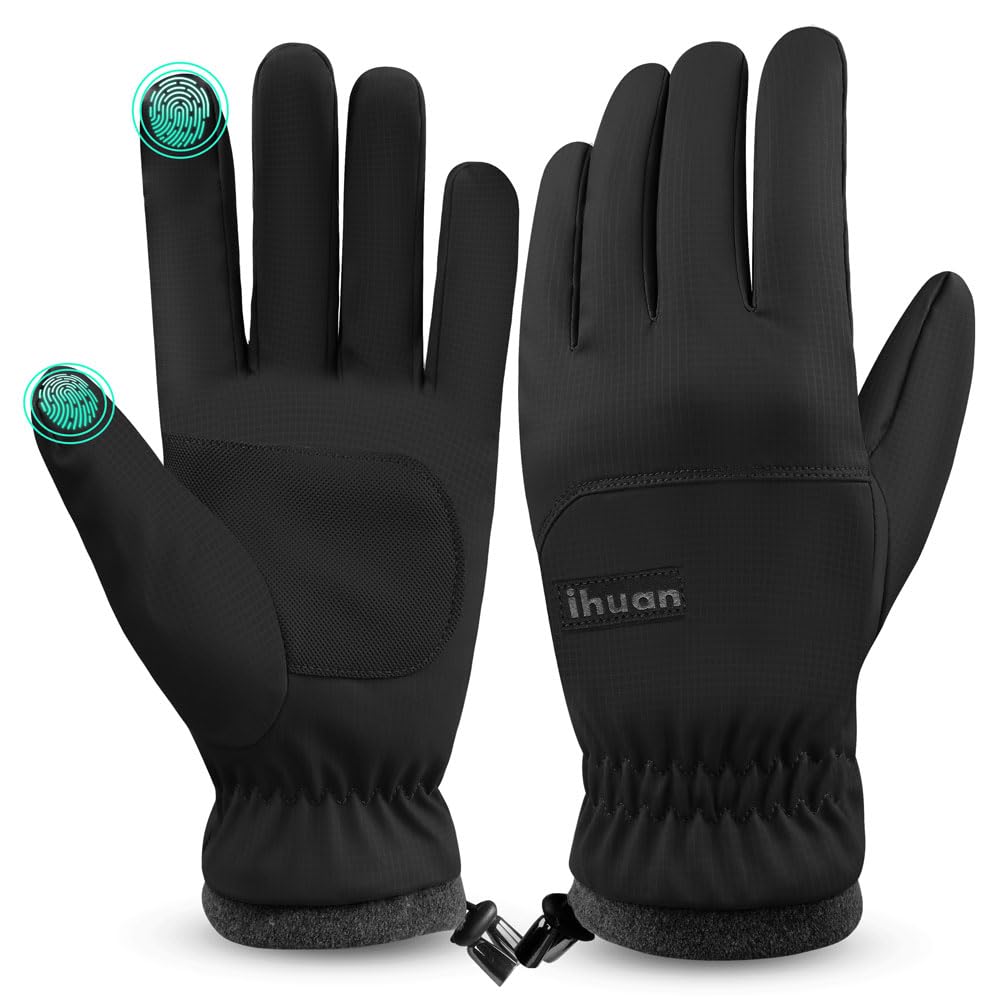
ihuan Winter Ski Gloves
Key Features
- Insulation Type: Fleece lining
- Waterproofing: Coating (wrist not sealed)
- Touchscreen: All fingers
- Palm Grip: Silicone anti-slip
- Cuff Design: Long elastic cuff
- Price: Budget
The ihuan Winter Ski Gloves deliver effective warmth in the 20-32°F range with a soft fleece lining that traps heat well during light activity. The anti-slip silicone palm provides a secure grip on trekking poles, and the touchscreen works on all five fingers, so you can check your phone without removing the glove. The outer fabric resists light snow and drizzle, though the wrist opening isn’t sealed — prolonged exposure to heavy wet snow will let moisture in.
Fit is a key consideration: these run small, so anyone with average or larger hands should order a size up for comfortable wear. Below 20°F the insulation thins out quickly if you’re standing still, but keeping active in moderate cold keeps the warmth consistent.
These gloves are best suited for budget-conscious hikers tackling casual winter walks, light trails in mild cold, or daily commutes where moderate snow is the norm. They aren’t intended for sub-20°F static use or heavy wet snow — the wrist seam will soak through after prolonged exposure. For dry cold below 20°F, consider a lined deerskin option instead.
Pros
- Fleece lining keeps hands comfortably warm in 20-32°F conditions.
- Stitching and materials feel solid for the price point.
- Soft interior fabric reduces irritation during extended wear.
Cons
- Sizing runs small, so larger hands may need to go up one size.
- Wrist area isn’t sealed against water; heavy wet snow can soak through at the opening.
For anyone who primarily hikes in moderate cold and light snow on a budget, these gloves cover the essentials without overpromising — just size up and avoid wet conditions.
Best for Dry Cold Hiking
SKYDEER Deerskin Gloves
Key Features
- Insulation Type: 3M Thinsulate
- Waterproofing: Leather (not waterproof)
- Palm Grip: Deerskin suede leather
- Cuff Design: Elastic wrist
- Price: Mid-Range
The deerskin palm and 3M Thinsulate insulation provide warmth comfortable down to about 20°F, making these gloves a strong option for dry cold hiking and casual winter wear. They are best suited for those who prioritize soft leather feel and classic style over all-weather versatility, since they lack waterproofing and touchscreen functionality.
Pros
- Warmth from 3M Thinsulate and fleece lining for dry cold conditions
- Soft deerskin suede leather and comfortable fit
- Stylish design suitable for everyday wear
Cons
- Leather soaks through in wet snow or rain; not waterproof
- No touchscreen functionality for phone use
These gloves deliver on warmth and comfort in dry, cold settings — a focused choice for those who don’t need waterproofing or phone access while hiking.
Best for Active Mild Cold
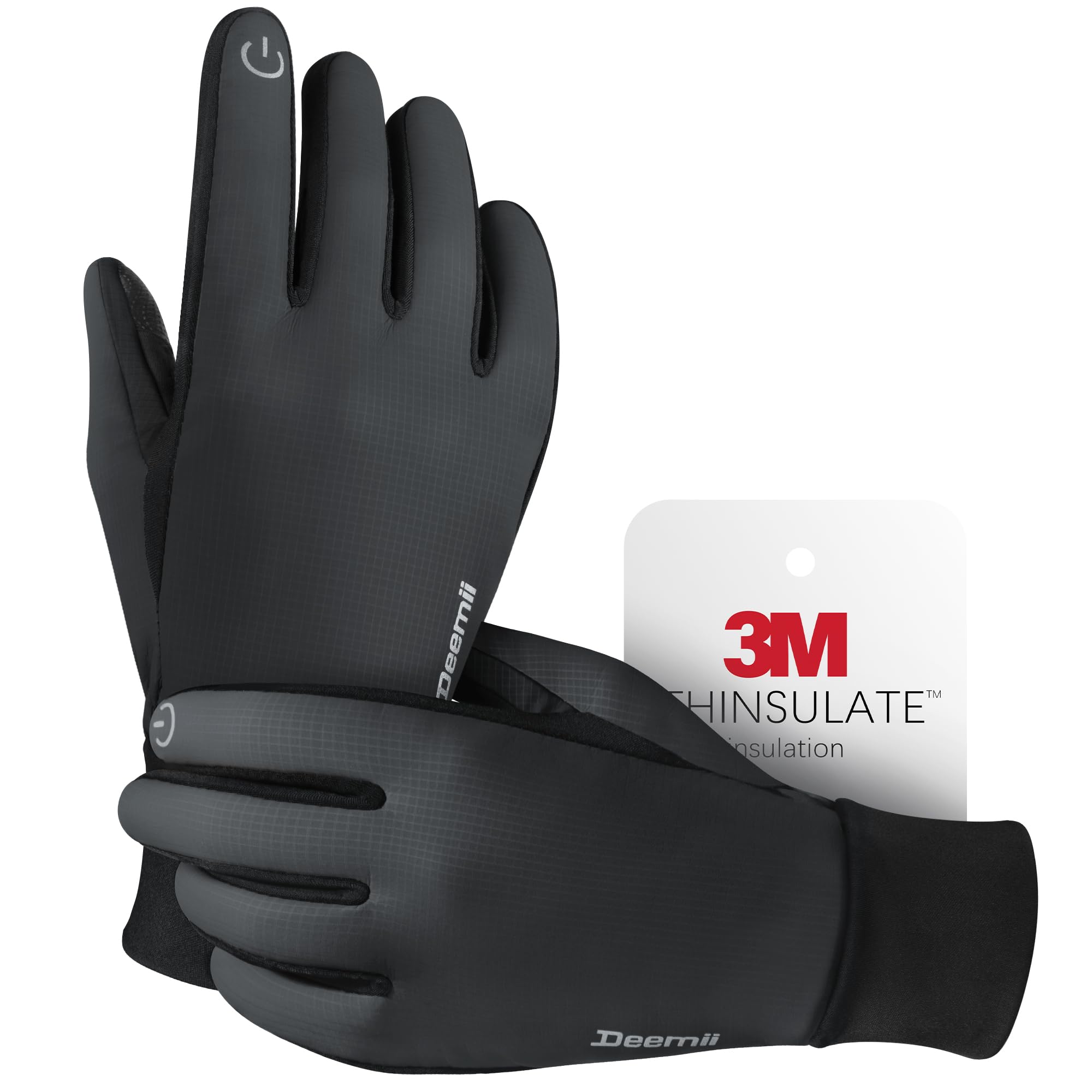
Deemii 3M Thinsulate
Key Features
- Insulation Type: 3M Thinsulate C40
- Waterproofing: Coating (water-resistant)
- Touchscreen: Thumb and index
- Palm Grip: Silicone stripes
- Cuff Design: Elastic
- Price: Budget
The Deemii gloves pair a thin profile with 3M Thinsulate C40 insulation, maintaining warmth during high-output hiking while allowing nearly bare-hand dexterity. These suit budget-conscious hikers who need reliable touchscreen access for maps or music and prefer a slim fit for precise movements. However, the water-resistant coating handles only light dry snow — not wet snow or rain, and the claimed 23°F rating is optimistic for static use.
Pros
- Warmth-to-weight ratio is high for active use in dry cold.
- Slim profile preserves dexterity for zippers, touchscreens, and adjustments.
- Touchscreen on thumb and index responds accurately for basic phone tasks.
Cons
- Sizing runs small — measure your hand and compare to the size chart before ordering.
A smart pick for dry, active winter hikes where dexterity and touchscreen accuracy outweigh weather protection.
Best for Dry Cold Budget
TRENDOUX 3M Thinsulate
Key Features
- Insulation Type: 3M Thinsulate 200g
- Waterproofing: Coating + PU leather
- Touchscreen: Thumb and index
- Palm Grip: PU leather palm
- Cuff Design: Elastic knit with strap
- Price: Budget
The TRENDOUX gloves bring 3M Thinsulate 200g warmth at a price under $20, making them the most budget-friendly option among the reviewed gloves. They suit dry winter hiking and snow shoveling, especially for men with larger hands who prioritize warmth. However, the water resistance is minimal — these gloves are not suitable for wet snow or rainy hikes, as moisture can soak through the fabric and PU leather palm.
Pros
- 3M Thinsulate 200g insulation delivers consistent warmth in dry cold.
- Comfortable fit with soft lining, good dexterity for a glove of this thickness.
- Budget-friendly warmth — strong value for money.
Cons
- In wet snow or rain, the gloves can soak through quickly — better suited for dry conditions.
- Sizing may run small or large depending on hand shape; checking the size guide before purchase is advisable.
A strong choice for budget-conscious hikers in dry winter climates who want maximum warmth without the waterproofing premium.
Best for Light Dry Tasks
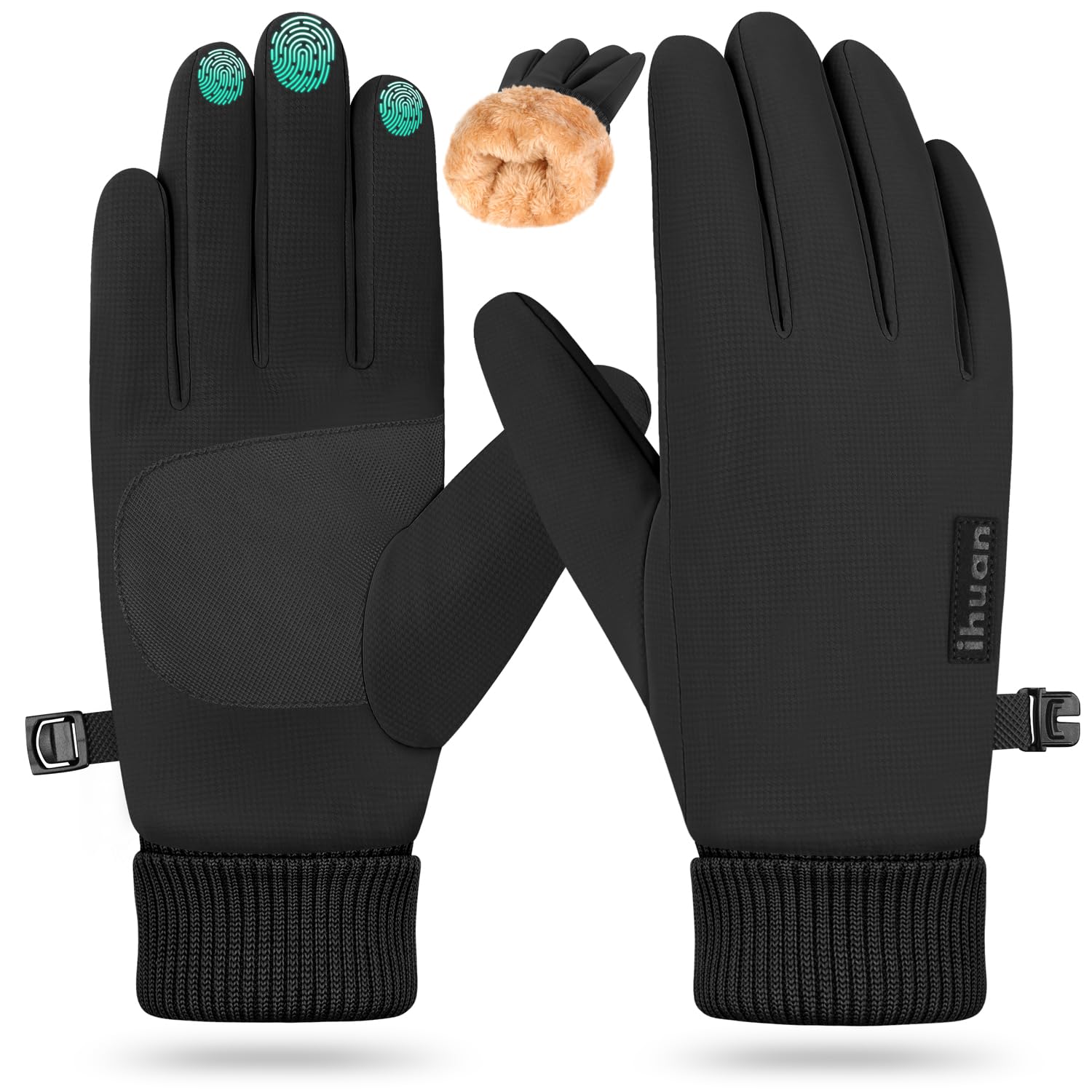
ihuan Waterproof Cold
Key Features
- Insulation Type: Cotton insulation
- Waterproofing: Coating (seams may leak)
- Touchscreen: Thumb and index
- Palm Grip: Silicone anti-slip
- Cuff Design: Long elastic cuff
- Price: Budget
The ihuan Winter Waterproof Gloves offer an affordable price and a longer elastic cuff that keeps snow out during light tasks like shoveling. These gloves are best suited for budget buyers who need a simple layer for dry cold down to about 20°F. The oversized fit may require sizing down, the touchscreen function is inconsistent, and the waterproof coating can be overwhelmed in wet snow — making them a poor choice for hiking in moisture.
Pros
- Warm enough for moderate cold down to about 20°F with cotton insulation.
- Soft interior provides comfort during static use or light activity.
Cons
- Sizing runs large; those with average or smaller hands may find the fit loose.
- In wet snow or rain, the waterproof coating can be overwhelmed, leading to soaked hands.
A cost-effective glove for light shoveling and dry cold, but not for hiking or wet conditions.
Best for Dry Snow Play
Tough Outdoors Ski Gloves

Key Features
- Insulation Type: Foam/polyfill
- Waterproofing: Claimed (coating)
- Palm Grip: Silicone grip pattern
- Cuff Design: Wrist strap
- Price: Budget
This glove delivers solid warmth for dry cold activities like skiing and snowball fights at a budget-friendly price. However, for winter hiking, the lack of touchscreen and inconsistent fit undermine its usefulness, and water resistance is only suited to light snow.
Pros
- Very warm and comfortable in cold conditions
- Excellent value for money
Cons
- No touchscreen capability
Best for dry snow play on a budget, but not for winter hiking where touchscreen and reliable fit matter.
Best for Mild Dry Running
Bruvoalon 3M Thermal

Key Features
- Insulation Type: 3M Thermal (likely Thinsulate)
- Waterproofing: Coating (not waterproof)
- Touchscreen: Thumb and index
- Palm Grip: Silicone anti-slip
- Cuff Design: Elastic
- Price: Budget
The Bruvoalon gloves deliver decent warmth and a functional touchscreen for mild cold, with silicone palm grip for light activity. However, water resistance is minimal – they soak through quickly in rain or wet snow – and the fit can run large for some hands. Best suited for dry cold walking or running when you don’t expect moisture.
Pros
- Warm and comfortable for moderate cold conditions.
- Functional touchscreen on thumb and index fingers.
Cons
- Minimal water resistance; not suitable for rain or wet snow.
A budget option for dry cold walking and running, but not a glove for wet winter hiking.
Best for Extreme Dry Cold
MOREOK -30°F Gloves

Key Features
- Insulation Type: 3M Thinsulate 200g
- Waterproofing: TPU membrane
- Touchscreen: Thumb only
- Palm Grip: Silicone palm
- Cuff Design: Adjustable buckle, elastic
- Price: Mid-Range
The MOREOK -30°F Gloves use 3M Thinsulate 200g and a TPU membrane to handle dry snow and extreme cold, and the oversized fit easily accommodates liner gloves. However, the advertised -30°F rating is optimistic — warmth drops noticeably below 20°F, and the bulky sizing limits dexterity for hiking. This glove works for low-movement tasks like snowmobiling or shoveling in dry cold, but not for active winter hiking where touchscreen access or a snug fit matters.
Pros
- Thinsulate 200g insulation delivers substantial warmth in dry cold below 0°F when layered.
- Large fit allows liner gloves to be worn underneath without compressing insulation.
Cons
- Warmth falls short of the -30°F claim; fingers may get cold below 20°F, and the oversized fit reduces dexterity.
Suitable for extreme dry cold tasks where bulk is acceptable — snowmobiling, shoveling — but not for dexterous hiking or conditions near freezing.
Best for Light Dry Hiking
SIMARI Waterproof

Key Features
- Insulation Type: Fleece lining
- Waterproofing: Outer fabric (coating)
- Touchscreen: All fingers (graphene)
- Palm Grip: PU leather anti-slip
- Cuff Design: Adjustable drawstring
- Price: Budget
The SIMARI gloves deliver fleece warmth and all-finger touchscreen capability for dry cold conditions. Sizing can run large for very small hands, so trying them on is advisable before committing.
Pros
- Fleece lining keeps hands warm in dry cold weather.
- Graphene touchscreen works on all fingers for phone use without removing gloves.
Cons
- Water resistance is limited to light snow; wet snow can soak through.
A solid option for dry cold hiking when touchscreen is a priority and the fit matches your hand size.
How to Choose
Temperature ratings on winter hiking gloves are often inflated by 10-15°F, so subtract that buffer when matching gloves to your coldest expected conditions.
Insulation Type and Temperature Rating
The insulation material determines both warmth and bulk. 3M Thinsulate is the most common effective synthetic; its gram weight (e.g., 200g) indicates loft and warmth. Fleece and cotton are cheaper but lose insulating value when wet and pack less warmth per thickness.
Down insulation is rare in hiking gloves because it fails when damp. Ignore flashy temperature claims like -40°F unless the glove also has a proven waterproof membrane and sealed seams. For active hiking above 20°F, a 100-200g synthetic insulation is sufficient.
Waterproofing: Membrane vs Coating
A waterproof membrane (like TPU) forms a physical barrier that blocks liquid water while allowing vapor to escape. A DWR coating only beads water on the surface and will saturate after moderate exposure. Most budget gloves use coatings, which fail after 10-15 minutes in wet snow.
For hiking in rain or melting snow, look for a glove that explicitly states a membrane and has taped seams. If you only face dry powdery snow, a coated glove can suffice. The wrist opening is a common leak point—adjustable wrist closures or longer cuffs help.
Touchscreen Compatibility
Conductive fibers in the fingertips allow screen use, but the effectiveness varies widely. Gloves with touchscreen on all fingers are more convenient than those limited to thumb and index. The sensor works best when the glove fits snugly—loose fingertips fail to register taps.
If you rely on GPS navigation during hikes, prioritize a glove with confirmed touchscreen performance. Budget gloves often have intermittent response, especially after the fingers get wet or dirty. A dedicated navigation glove (like the Deemii) may be worth the trade-off in insulation.
Palm Grip Material
Silicone stripes on the palm provide good grip on trekking poles and ice axes in dry conditions, but they wear down quickly against wet rock. PU leather (synthetic) is more durable and offers better grip when damp, though it can stiffen in extreme cold.
True leather (deerskin, goatskin) offers the best combination of grip, durability, and comfort but requires conditioning and is not waterproof. For technical hiking in mixed conditions, a silicone or PU leather palm is more practical.
Cuff Design
The cuff seals out cold and snow. Elastic cuffs are simple and light but can let snow in if the fit is loose. Adjustable straps (velcro or buckle) allow a custom fit over jacket sleeves—preferable for deep snow or extreme cold.
Long gauntlet-style cuffs (like on the ihuan) offer extra coverage but can feel bulky under a jacket sleeve. For short hikes in moderate cold, a snug elastic cuff is sufficient.
FAQ
Why do my winter hiking gloves feel cold even though they say -20°F rated?
Temperature ratings on inexpensive gloves are based on stationary hand models, not active hiking. When you stop moving, circulation slows and insulation compresses under pressure from poles. Subtract 10-15°F from the claimed rating for realistic warmth expectations. Also, if the glove is too small, insulation is compressed and warmth drops significantly.
Are touchscreen winter gloves actually reliable for using GPS on a hike?
They are reliable in dry conditions and snug fits, but moisture ruins conductivity. For consistent GPS use, choose a glove with touchscreen on at least the index finger and thumb, and keep fingers dry. Budget gloves often fail after a few uses; the Deemii and TRENDOUX have above-average touchscreen reliability.
How can I make my winter gloves more waterproof for wet snow hiking?
You cannot make a coated glove fully waterproof. A temporary fix is applying a silicone-based waterproofing spray (like Nikwax Glove Proof) to the shell. For long-term protection, buy a glove with a built-in TPU membrane and sealed seams. Ski liners worn underneath also keep moisture off skin but do not stop saturation.
Should I size up in winter hiking gloves to allow for liners?
Yes. If you plan to wear thin liner gloves (e.g., merino wool) for extra warmth or moisture management, size up one full size. Without liners, a snug fit is better for dexterity. Check the manufacturer’s size chart against your hand measurement, as many budget brands run small.