This post contains affiliate links. We may earn a small commission when you buy through our links — at no extra cost to you.
Most budget water shoes promise quick-dry and non-slip, but the real test is how long they hold up. After a few rocky beach trips, soles separate, mesh tears, and those $15 shoes end up in the trash.
That doesn’t mean you need to spend a lot. The trick is knowing which trade-offs matter: a slightly thicker sole or a reinforced toe can make the difference between replacing shoes every month and getting a full season of use.
This guide focuses on shoes that deliver reliable traction and lasting construction without demanding a premium price. The picks below reflect what actually works for casual water activities, not just what looks good on a spec sheet.


Best for Budget Water Activities
Maxome Water Shoes
The Maxome water shoes deliver a genuinely barefoot feel with a roomy toe box and secure fit, making them comfortable for long hours at the pool or lake. The outsole provides confident grip on wet surfaces, exactly what you need for beach entries and boat decks.
Durability is decent for the price point, but routine use on rough terrain may cause sole separation after several outings. These shoes are best suited for budget-conscious buyers who stick to calm water activities like swimming, paddleboarding, or casual beach days, rather than rocky hikes or heavy-duty wear.
Pros
- Barefoot feel with roomy toe box and secure fit
- Confident traction on wet surfaces like pool decks and boat docks
- Great value for the price with solid overall construction
Cons
- Sole separation can occur after several uses in some cases
For casual water use on a budget, the Maxome offers comfort and traction that outlasts similarly priced alternatives.
Best for Water Aerobics
ziitop Water Shoes
Soft cushioning and solid traction on slick surfaces make the ziitop a natural fit for water aerobics, pool laps, and relaxed beach walks. The thick sole provides more underfoot padding than most budget water shoes, and the quick-dry upper sheds water fast between uses.
This shoe suits casual water play where you don’t mind replacing them after a season or two. The sides can rip after a few outings if you push into rough rocky terrain, so it’s best kept to calm water conditions.
Pros
- Generous cushioning for a water shoe — feels stable on hard surfaces.
- Reliable grip on wet tile, pool decks, and smooth rocks.
- Good overall value for the price point.
Cons
- On rocky river hikes or frequent rough use, the side fabric may tear after a handful of outings.
Right for anyone who prioritizes a plush step for the pool or beach and is okay with replacing them every season or two.
Best for Active Water Sports
DLGJPA Water Shoes
The DLGJPA Men’s Water Shoes pair a sleek sneaker-like look with a quick-drying build that stays comfortable during active water sports like kayaking and paddleboarding. The sole offers decent grip on wet boat decks, and the flexible upper moves with the foot during repetitive motions like paddling. On dry land they feel light and breathable enough for short walks to the launch site.
The main catch is sizing: the shoe runs a half to a full size large, so ordering down is recommended to avoid slippage in the water. A slim-to-medium foot width works best; wider feet may find the toe box snug even after sizing down. Durability is adequate for the price—some buyers note sole separation after extended use, but these hold up fine for seasonal kayaking and beach trips rather than daily wear.
Pros
- Lightweight and ventilated, ideal for hours in or near the water
- Athletic styling that looks natural with boardshorts or hiking pants
- Good traction on wet boat decks and smooth rocks
Cons
- Sizing runs large—order a half size down for a secure fit
- Sole separation can occur after a season of heavy use
A solid mid-range option for men who want a sporty water shoe that performs on the water and looks good doing it—just fix the sizing from the start.
Best for All-Around Water Sports
DOUSSPRT Water Shoes
The DOUSSPRT stands out for its sneaker-like comfort that keeps feet content during long hours at the beach or pool. The cushioning and quick-dry upper work well for casual water sports, but the sole attachment can separate after a season of regular use — a tradeoff to consider if you plan heavy wear. This shoe suits men who value all-day comfort and style over maximum longevity, making it a strong option for leisurely water activities and walks.
Pros
- Extremely comfortable for all-day wear on sand or pavement
- Dries quickly after getting wet, ready for the next activity
- Sneaker-like design that looks good for casual outings beyond water
Cons
- Soles can come apart after a season of use, especially with frequent or rugged activity
If all-day beach comfort matters more than long-term durability, the DOUSSPRT delivers for leisurely use with realistic expectations.
Best for Budget-Friendly Beach Trips
Vsufim Water Shoes
At under 8 ounces, these shoes fold down small enough to stash in a daypack, making them a go-to for travelers who want something to slip on at the beach or pool without carrying extra bulk. The soft sole feels comfortable on sand and smooth surfaces, and the fit stays secure in the water. However, the lightweight construction comes with a durability tradeoff: insoles can detach and fabric may tear after limited use, so this is a shoe for occasional casual outings rather than regular rugged wear.
Pros
- Very comfortable with a soft sole that feels good on sand and smooth surfaces
- Lightweight and packable – folds flat for easy travel carry
- Good fit that stays secure in the water
Cons
- Durability is limited – insoles may detach or fabric can tear after a few uses
Best for budget-conscious travelers who value portability over longevity; expect to replace them after a season of light use.
Best for Versatile Water Activities
UBFEN Water Shoes
The aggressive tread on the UBFEN water shoes provides exceptional grip on wet rocks and boat decks, making them a favorite among anglers and boaters. This shoe suits men looking for quick-drying, non-slip footwear for swimming, beach, pool, and water sports. However, durability can vary — sole separation or lace breakage may occur with heavier use, and an initial chemical smell is present out of the box.
Pros
- Aggressive tread provides maximum grip on wet rocks and boat decks.
- Barefoot feel with ample comfort for extended wear.
Cons
- Sole separation or lace breakage can occur with regular use.
- A strong tire-like odor may be noticeable upon opening.
For men who prioritize grip on wet surfaces over long-term longevity, these shoes deliver consistent traction at a mid-range price.
Best for Beach Walking
SEEKWAY Water Shoes

Soft, blister-free fit and true-to-size sizing at a low price. Durability can be a concern – some units may tear at the toe or sole after limited use, so it’s best for occasional beach walks rather than heavy water activities.
Pros
- Comfortable, blister-free fit for long beach walks.
- True-to-size fit with generous toe room.
Cons
- Durability can be a concern – some units may tear at the toe or sole after limited use.
Best for budget-conscious buyers who prioritize comfort for occasional beach use over long-term durability.
Best for Casual Beach Outings
Mishansha Water Shoes
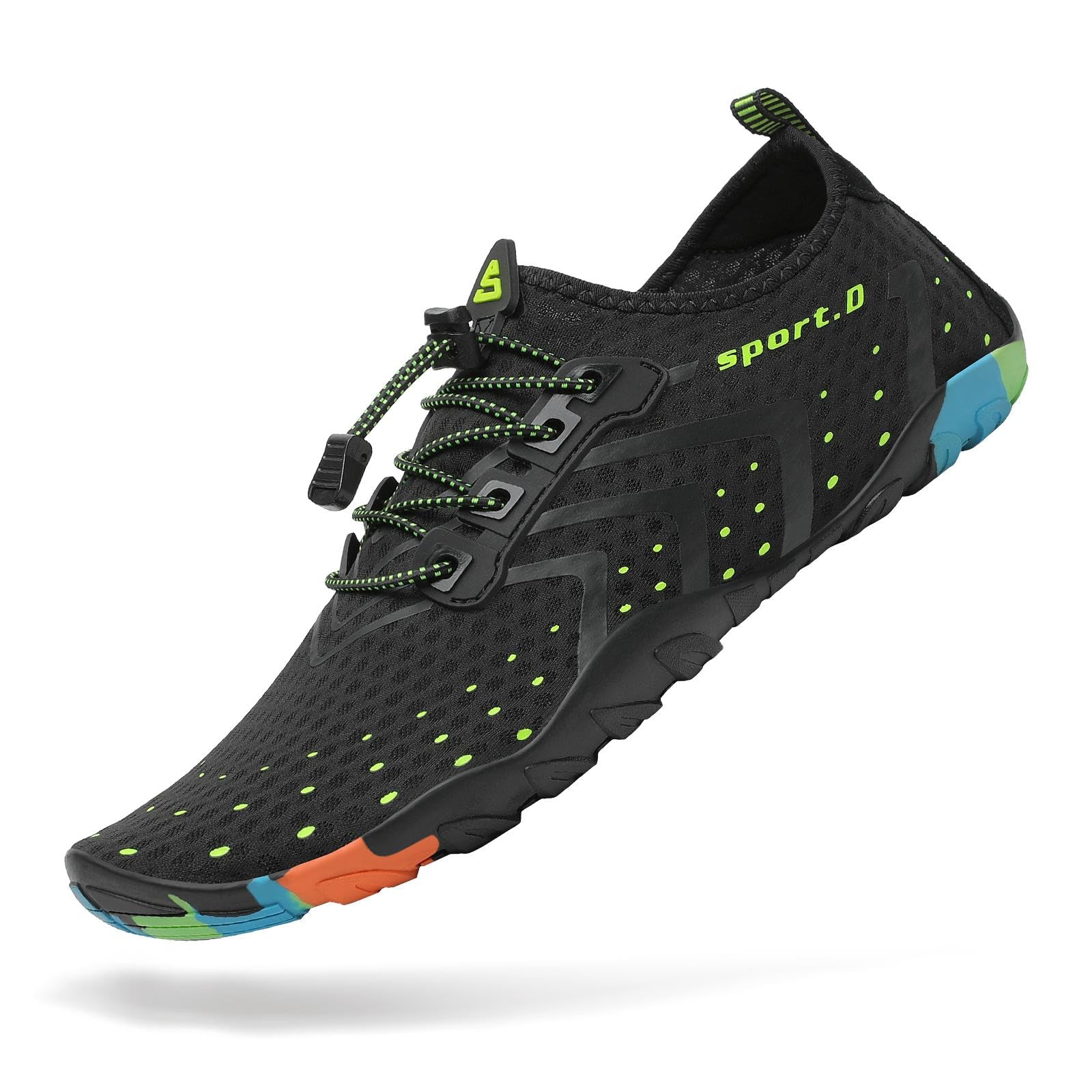
The Mishansha water shoes look more like casual sneakers than typical aqua footwear, which makes them a natural fit for beach-to-boardwalk outings where appearance matters. They dry quickly and feel stable in calm water. However, the shoelaces and straps can snap under normal tension, and the outsole may lose grip on wet rocks or boat decks. These issues don’t spoil a relaxed day at the lake or pool, but they rule out rocky shorelines or active water sports.
Pros
- Sneaker-like design transitions from beach to boardwalk without looking like water shoes
- Comfortable and stays put in the water for casual swimming and wading
Cons
- Shoelaces and straps can snap under tension, and the outsole may slip on wet rocks or boat decks
Best for casual beach or pool days where you might also walk on sand or pavement, not for rocky shorelines or activities requiring secure footing.
Best for Light Beach Activities
SIMARI Water Shoes
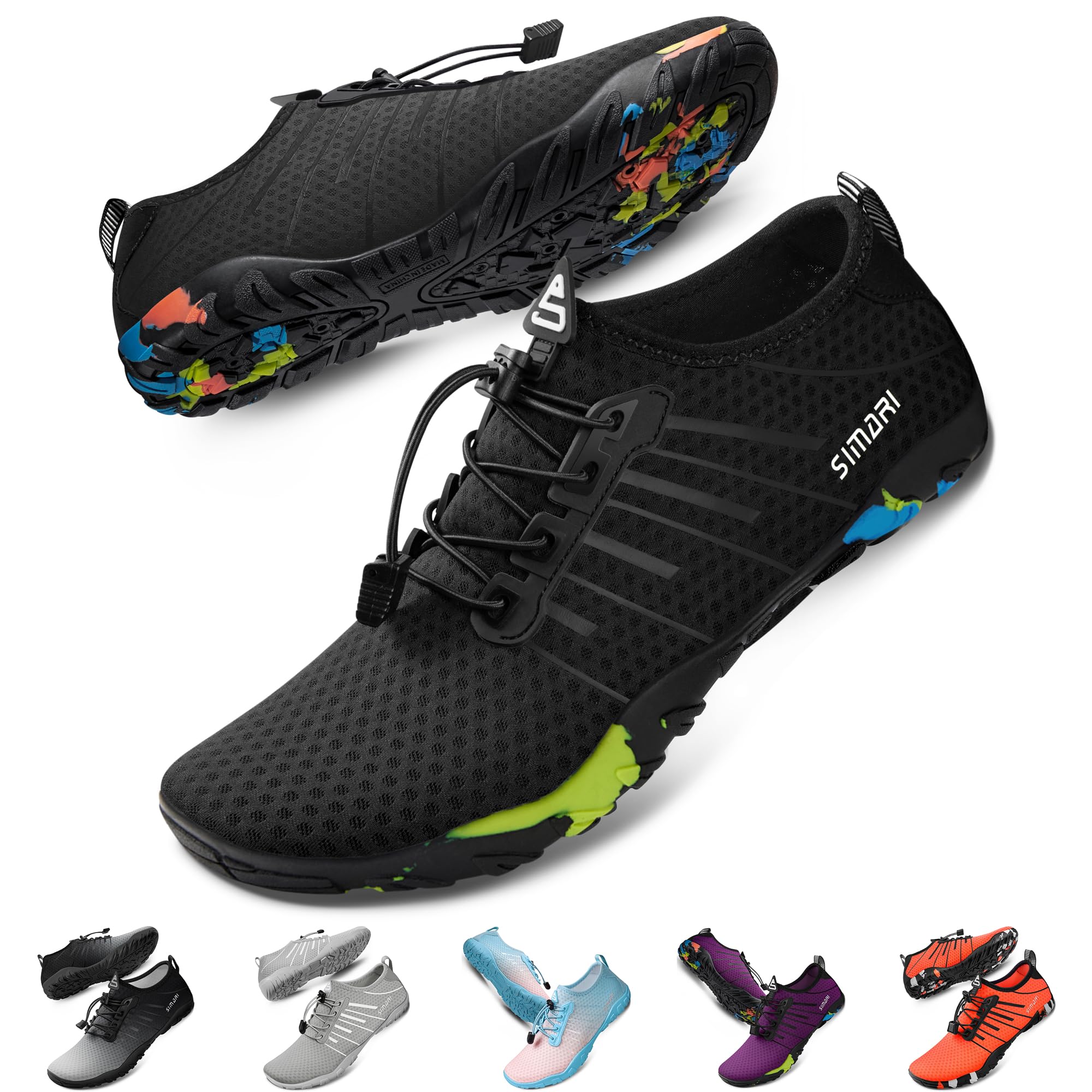
The SIMARI Water Shoes combine a sneaker-like look with quick-dry performance for light beach and pool use. The lightweight construction feels comfortable on and off the water. However, the sole and fabric may separate after a few outings, making these best reserved for short vacations or occasional trips rather than daily wear.
Pros
- Stylish design that looks like regular sneakers
- Quick-drying and lightweight for water activities
Cons
- Durability concerns: sole and fabric may separate after limited use
A good option for looking sharp at the beach or pool on a weekend trip, but not suitable for regular or extended use.
Best for Creek Walking
Racqua Water Shoes

The Racqua Water Shoes offer a generous fit that works well for creek walking and kayaking where extra toe space is welcome. Quick-drying materials and sneaker-like cushioning keep feet comfortable on uneven riverbeds. However, sizing runs noticeably large — most buyers will need to go down a full size. The outsole provides only moderate grip on wet surfaces, so these are best suited for gentle water activities rather than slick boat decks or pool tiles. Durability holds up for seasonal use but may show sole separation over time.
Pros
- Comfortable, sneaker-like cushioning for extended wear on trails and in water.
- Spacious toe box ideal for those who prefer roomy fit during creek walks or kayaking.
Cons
- Sizing runs large — can require sizing down, especially for those with narrow feet.
A decent option for casual creek walking or kayaking if you value toe room and don’t need secure footing on wet, smooth surfaces.
Best for Casual Water Sports
YALOX Water Shoes

The YALOX Water Shoes offer a comfortable fit both in and out of the water, with a design that resembles regular sneakers. They provide adequate grip on slippery surfaces and work well for casual stream walks, kayaking, or beach days. However, average durability means the toe mesh can separate or the insoles may shift over time, and traction is not as aggressive as purpose-built options. These tradeoffs keep it from ranking higher among mid-range water shoes.
Pros
- Comfortable in water and on land without feeling waterlogged.
- Attractive design that passes for casual everyday sneakers.
Cons
- Toe mesh can separate and insoles may slip after limited use.
Best suited for casual water sports where budget matters and you can accept replacing them after a season.
Best for Kayaking and Boating
WateLves Men’s Water Shoes

Excellent for kayaking and boating with secure fit and good traction. Comfortable barefoot feel and stylish design at a budget price. Discontinued old stock; durability is average and insoles may detach. Ideal for water sports, but not for long-term durability seekers.
Pros
- Comfortable barefoot feel
- Great for kayaking and boating
Cons
- Insoles can detach over time
Best suited for kayakers and boaters who need an immediate water shoe and are fine with leftover inventory; not for those wanting a long-term durable shoe.
How to Choose
Durability is the single biggest differentiator in swim shoes — a shoe that feels great in the store may unravel after a single rocky outing.
Sole Durability and Tread Pattern
The sole is what protects your feet from sharp rocks and hot sand. Thin rubber soles, common in budget aqua socks, flex easily but offer little puncture resistance and wear down quickly on abrasive surfaces.
Look for a sole with at least 3-4 mm of rubber and a tread pattern that includes multidirectional lugs. This grip is essential on wet rocks and boat ramps, where smooth soles slide out.
Quick-Dry Mesh Upper
A mesh upper is standard for drainage and drying, but not all mesh is equal. Large-weave mesh dries fastest but lets in sand and gravel that can cause blisters. Tighter mesh holds water longer but keeps debris out.
Consider where you’ll wear them: sandy beaches favor tighter mesh; lake bottoms with fine sediment work fine with open mesh. Shoes with drainage holes (like some Mishansha models) combine both benefits.
Weight and Packability
Swim shoes range from 7 oz (featherlight socks) to 13 oz (sturdy sneaker-like designs). Lighter shoes pack easily but often trade away sole thickness and support. Heavier shoes feel more solid on land but take up space.
For travel or as a backup, a sub-8 oz shoe that folds flat is ideal. For daily use on rocky beaches, the extra weight of a reinforced shoe pays off in comfort and longevity.
Toe Protection and Coverage
Most water shoes have open mesh toes that offer zero impact protection. If you plan to walk on sharp rocks or coral, look for a rubber toe cap or reinforced bumper. This small feature prevents stubbed toes and extends shoe life.
Coverage matters too: low-cut sock-style shoes let in pebbles easily, while mid-cut designs with a heel strap keep debris out and stay secure during active movements.
FAQ
Why do my water shoes fall apart after one beach trip?
Most budget water shoes use glued rubber soles that separate when exposed to heat, sand, and salt water. Shoes with stitched or molded construction, like the Maxome, last significantly longer. If you hit rocky terrain, the abrasion accelerates delamination.
Are water shoes with drainage holes better for hiking?
Drainage holes help water escape quickly, but they also let in small pebbles and sand. For hiking on trails with loose gravel, a shoe with a mesh upper and a snug collar works better because it keeps debris out while still draining. Dedicated water hiking shoes often omit drainage holes in favor of a sealed sole.
How should water shoes fit – snug or loose?
Water shoes should fit snug like a sock, with no heel slip, but leave a thumb’s width of space at the toe. A loose fit lets in sand and causes blisters; too tight restricts circulation. Most brands run large, so check recent reviews for sizing guidance.
What’s the best water shoe for rocky river hiking?
For rocky river beds, you need a shoe with a stiff, thick sole (at least 5 mm) and a rubber toe cap. The UBFEN shoe offers excellent traction and a reinforced toe. Avoid thin aqua socks — they offer zero protection against sharp rocks.