This post contains affiliate links. We may earn a small commission when you buy through our links — at no extra cost to you.
A small cooler should keep your lunch cold and fit in your pack. But soft-sided bags often struggle with zipper failures and ice that melts before lunchtime. Hard coolers hold ice longer but add weight and bulk. The right choice depends on where you are going and what you are carrying.
This guide focuses on compact coolers under 20 quarts that deliver on their promises. We highlight models with proven durability, real-world ice retention, and smart design features that actually work for day hikes, work sites, and short trips. No marketing fluff — just clear trade-offs to help you pick the right tool.




Best for Short Day Trips
Carhartt Insulated Lunch Box
Carhartt’s soft cooler uses thick fabric and reinforced stitching that withstands job-site abuse and trail jostling. The interior compartments keep utensils and napkins separate from the main food area, making packing and accessing items straightforward.
Best suited for workers and hikers who pack a single lunch or snacks for a half-day outing. The 8-liter capacity handles a meal container and an ice pack, but large meals or multiple drinks require a bigger bag. In very hot climates, the insulation may warm up food faster than a hard cooler would.
Pros
- Sturdy construction survives rough handling and daily wear.
- Organized interior with separate compartments keeps food and utensils tidy.
- Good temperature retention for a soft cooler when paired with an ice pack.
Cons
- 8-liter capacity may feel tight for larger lunches or multiple drinks.
- Insulation can struggle in extreme heat, causing food to warm up faster.
A durable soft cooler that handles work and short hikes well, provided your load stays within its compact size.
Best for Jobsite and Seat
Klein Tools 17-Quart Cooler
The Klein Tools 55600 holds 18 cans and keeps ice cold through a full work shift, even in heat. Its steel hinges and latch hold up to drops and job-site abuse. At 6.8 lbs and a 12-inch cube, it is too heavy and bulky for hiking or casual carry — this is a stationary cooler that also serves as a seat. Best for tradespeople who need a durable lunch box that stays put on the truck bed or scaffold and won’t need refreezing by lunch.
Pros
- Ice retention through a full 10-hour shift plus overnight in hot conditions
- Durable construction with stainless steel hinges and lock hasp survives drops on concrete
- Top lid seats up to 300 pounds for a stable break-time perch
Cons
- Heavy 6.8 lbs and boxy shape make it awkward for daily lunch carry or tighter spaces
- Shoulder strap is short and poorly positioned for comfortable carrying over distance
This is the cooler for construction workers who need a seat and all-day ice retention — not for hikers or daily commuters.
Best for Short Trips, Office
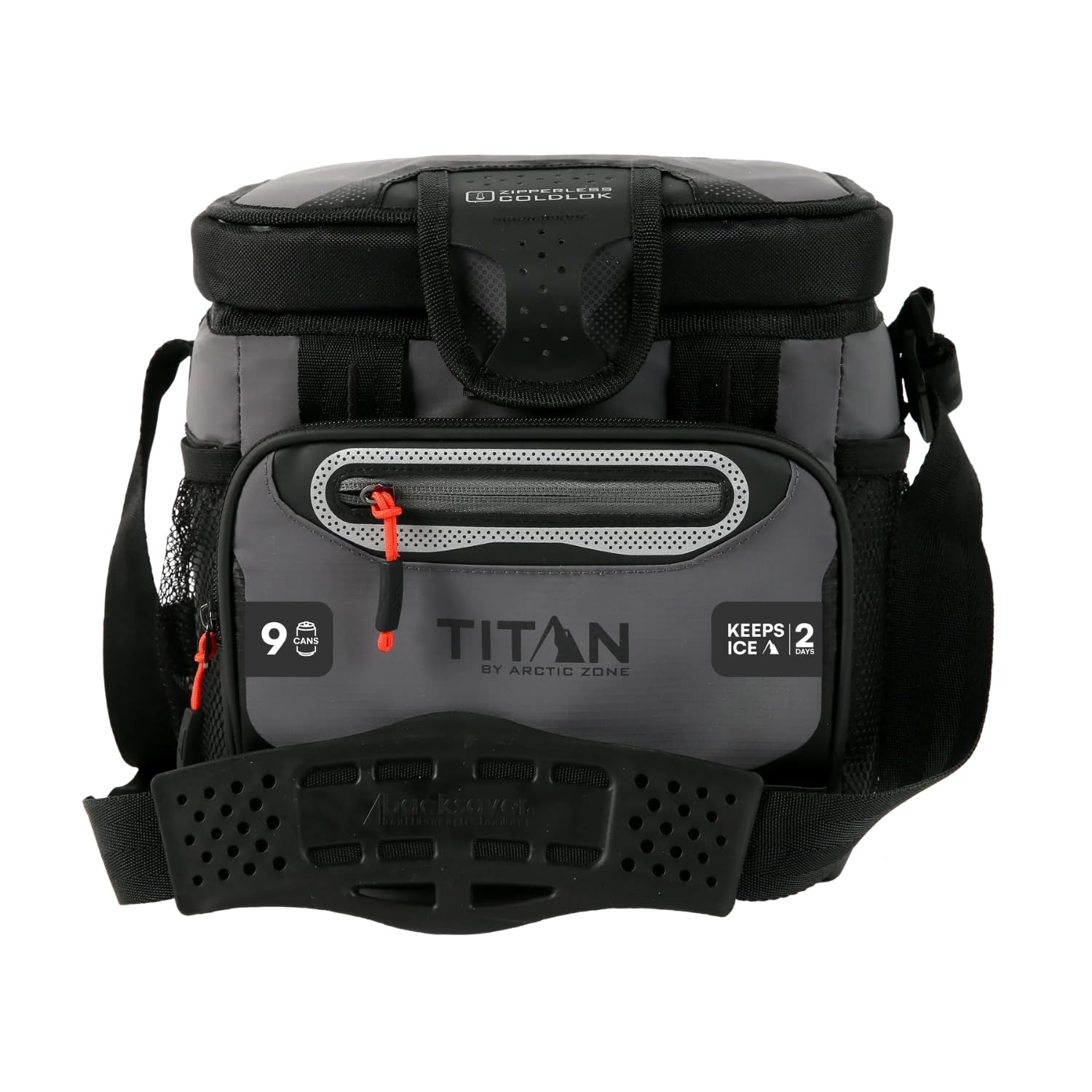
Titan Arctic Zone 9 Can Cooler
Key Features
- Capacity: 3.2 L (9 cans)
- Closure: Zipperless flap
- Weight: 1.72 lbs
- Price: $$
The zipperless flap and Velcro closure sidestep the most common failure point on small coolers, while the integrated SmartShelf keeps cans and round containers from shifting. This compact 9-can hardbody fits easily in a backpack for office lunches or quick outings.
Where it falls short: the interior is too narrow for standard meal prep containers, so those who pack rectangular boxes will need to look elsewhere. Ice retention averages 6–8 hours in warm conditions, adequate for a workday lunch but falling well short of two-day claims. This cooler suits anyone who prioritizes a durable closure and organized packing over maximum cold duration.
Pros
- Zipperless closure eliminates a common failure point on small coolers.
- SmartShelf keeps food organized and prevents crushing during transport.
Cons
- Interior width may not fit standard rectangular meal prep containers.
- Ice retention typically lasts 6–8 hours rather than the advertised two days.
A smart pick for those who pack small round containers or cans for short outings and want a zipperless build over longer ice life.
Best for Day Hikes, Picnics
Coleman Chiller 9qt Cooler
Key Features
- Capacity: 9 qt
- Closure: Bail handle lid
- Weight: 2.9 lbs
- Price: $
The Coleman Chiller delivers classic hard-cooler function at a budget-friendly price. Weighing under 3 pounds, it’s easy to carry one-handed to the beach or a picnic — a lighter alternative to heavier rotomolded coolers.
This cooler suits day hikers and casual users who need ice retention for a few hours. The lid doesn’t stay open, so you’ll need a free hand or a prop — a minor inconvenience for the savings.
Pros
- Affordable price with ice retention that lasts through a day trip
- Lightweight at 2.9 lbs, easy to grab and carry one-handed
- Classic Coleman build that holds up over years of casual use
Cons
- When loading or reaching inside, the lid won’t stay open without propping or holding
Best for budget-conscious buyers who don’t mind propping the lid — a lightweight, affordable cooler for day trips.
Best for Picnics, Budget
MIYCOO Double Deck Lunch Bag
The MIYCOO Double Deck Lunch Bag packs generous storage into a soft cooler at a budget-friendly price — multiple compartments, side mesh, and an expandable top keep lunch organized. Insulation holds cold for hours with an ice pack, making it a practical choice for office workers or day-trippers. However, strap and stitching may wear over time under heavy daily use, so this bag suits moderate use or occasional outings rather than rugged everyday hauling.
Pros
- Multiple compartments and expandable top for organized packing
- Good insulation keeps food cold for hours with an ice pack
- Strong value for the feature set at a budget price
Cons
- Strap and stitching may wear under heavy daily use
For organized lunches on a budget without demanding rugged daily durability, this bag delivers strong storage and cooling at a low price.
Best for Style, Casual Use
Stanley Julienne Soft Cooler
Key Features
- Capacity: 7.4 qt (10 cans)
- Closure: Zipper with snap-top
- Price: $$$
The Stanley Julienne brings a polished look and brand cachet to the soft cooler category, with multiple colorways that stand out in a lunchroom or at a picnic. Its insulation holds up decently when paired with an ice pack, keeping food cold for a few hours — adequate for a workday or short outing. However, the $75 price tag doesn’t buy meaningfully better cold retention or durability than budget-friendly alternatives. The zipper can feel stiff and may occasionally catch, which is worth checking before daily use. This cooler suits buyers who prioritize aesthetics and a known name over raw performance, but those after the best insulation or rugged build should look at the Carhartt, which offers more substance for the money.
Pros
- Attractive design with a range of color options
- Decent insulation for a few hours with an ice pack
- Lifetime warranty from a recognized brand
Cons
- Zipper may require extra force and can get stuck occasionally
- Premium price doesn’t bring superior insulation or durability over cheaper coolers
If a stylish lunch bag with brand recognition matters more than peak insulation, the Stanley Julienne delivers — just know you are paying for the logo, not a performance leap.
Best for Budget Occasional Use
Lifewit Insulated Lunch Bag

This budget-friendly tote holds a full meal and drinks for a few hours of cooling, making it a practical choice for office workers who need a cheap lunch bag for occasional trips. Its low cost is the main draw, but the straps and zipper can wear out sooner than more rugged options, so it suits light, intermittent use rather than daily hauling or outdoor adventures.
Pros
- Very affordable for a 12-can insulated bag
- Spacious enough for a full lunch and drinks
Cons
- Strap and zipper may fail under regular daily use
Fine for an occasional desk lunch where minimal wear is expected, but not for daily commuting or rough handling.
Best for Kids, Personal Use
Igloo Playmate Pal 7qt

Key Features
- Capacity: 7 qt (9 cans)
- Closure: Push-button lid
- Weight: 2.2 lbs
- Price: $
This 7-quart hard cooler fits neatly in a lunch bag and keeps drinks cold for hours. The nostalgic design appeals to those who want a traditional look. However, the push-button latch can loosen or break, making this best for occasional lunches rather than daily hauling.
Pros
- Compact size fits individual lunches and snacks easily.
- Keeps drinks cold for several hours in a small package.
Cons
- The push-button latch may not stay shut or can break over time.
This cooler fits well for nostalgic picnic outings or kids’ lunches where the lid isn’t handled roughly. For daily commuting, consider a more robust hard cooler.
Best for Car Camping, Work
Igloo Profile 16qt Cooler

Key Features
- Capacity: 16 qt (24 cans)
- Closure: Bail handle with latch
- Weight: 4.35 lbs
- Price: $$
The Igloo Profile 16qt cooler holds 24 cans vertically, fitting tall bottles that many personal coolers can’t. Its insulation keeps contents cold well for day trips. However, the top flap lid can lose tension and pop open over time. It costs more than the classic compact cooler from Coleman, making it a secondary option if bottle storage matters most.
Pros
- Solid build quality keeps contents cold for short trips.
- Spacious for a personal cooler; fits tall bottles and 24 cans.
Cons
- Top flap lid can wear out and pop open over time.
Fit for those who prioritize vertical bottle storage in a hard cooler, provided the lid flap annoyance is acceptable.
Best for Travel, Beach
CleverMade Tahoe Cooler

This cooler folds completely flat when empty, making it a practical choice for travelers who need to save space in a suitcase or trunk. It holds up to 18 cans, which works well for a beach trip or picnic. The main tradeoff: when ice melts, water can seep through the zipper, so it’s best used where a small leak won’t be an issue — like a sandy beach or a picnic blanket rather than a car seat. The liner may also show wear over time, but for a packable cooler that gets occasional use, the foldability is a clear advantage.
Pros
- Folds completely flat for easy storage and travel.
- Capacity is suitable for a small group outing or picnic.
Cons
- Water may seep through the zipper when ice melts, so it’s not for leak-sensitive situations.
Pick this if you need a collapsible cooler for travel or beach days where a minor leak won’t matter — it’s not the choice for dry car interiors or long ice retention.
Best for Camping, Electronics
Engel 19qt Drybox Cooler

The Engel 19qt Drybox provides a genuinely airtight seal that keeps electronics, documents, or other moisture-sensitive items dry. Its insulation is rated to hold ice for up to two days. The trade-off is that those performance claims lack broad independent verification, and the price is likely premium for a cooler this size.
Pros
- Air- and water-tight seal protects cameras, phones, and other valuable gear
- High-performance foam insulation rated to keep ice for up to two days
Cons
- Premium price with insulation performance that hasn’t been confirmed through independent testing
Best suited for anglers, boaters, or jobsite workers who need a dry storage box for sensitive items and are willing to pay a premium for that waterproofing, even if cold retention data remains unverified.
Best for Snacks, Kids
PackIt Freezable Snack Box

Key Features
- Capacity: 0.8 L (snack)
- Closure: Buckle flap
- Weight: 0.57 lbs
- Price: $
This small cooler keeps snacks cold for hours using a built-in ice pack that never needs replacing. At 0.8 liters it holds a yogurt, fruit, or a single drink can, making it a natural fit for kids’ school snacks or travelers carrying medications. But the same compact size that makes it so portable also prevents it from holding a full sandwich and drink lunch, so it works best as a supplement rather than a main lunch bag.
Pros
- No separate ice packs needed – built-in cooling gel is always ready.
- Tiny footprint slips into any backpack or tote easily.
Cons
- Too small for a full lunch – holds only snacks or a single drink.
Buy this as a snack add-on or medication cooler, not as a primary lunch bag.
Best for Large Lunches
Maelstrom Expandable Lunch Bag

Key Features
- Capacity: 23 L (expandable 19-23)
- Closure: Zipper
- Weight: 1.5 lbs
- Price: $$
The Maelstrom offers ample space with an expandable top and thoughtful pockets, making it suitable for office workers with big lunches. However, its 23L capacity exceeds the compact cooler size most personal-use buyers need, and zipper consistency is a known concern.
Pros
- Very spacious with expandable top compartment – fits multiple meals and snacks.
- Multiple pockets and side tissue pocket for organized storage.
Cons
- Zipper consistency can vary; occasional sticking or misalignment has been noted.
Best for those needing a large capacity for full-day meals and willing to accept occasional zipper quirks.
Best for Hiking, Hands-Free
LTINVECK Cooler Backpack

The LTINVECK backpack cooler offers hands-free carry and separate compartments for food and drinks, making it a practical choice for short hikes. However, its 30-can capacity exceeds typical personal cooler needs, and the zipper and structural integrity may not hold up to heavy daily use.
Pros
- Hands-free backpack design keeps your hands available while hiking or traveling.
- Large capacity with separate insulated compartments for food and drinks.
Cons
- Zipper may fail over time with regular heavy loading.
A good fit for hikers who need hands-free transport of a large picnic, but not the best choice for a compact personal cooler or daily lunch use.
How to Choose
The most important thing to know is that ice retention claims are optimistic; real-world performance in summer heat is often half of what is advertised.
Capacity
Capacity is stated in quarts, liters, or cans, but usable space depends on shape. Many soft coolers are designed around round cans and cannot fit standard rectangular meal prep containers. Always measure interior width and length against your containers before buying.
A 9-quart hard cooler may hold 12 cans, but a 9-liter soft bag often holds less due to padding. For a full lunch plus a drink, look for at least 8 liters (8.5 quarts) of internal volume.
Insulation and Ice Retention
Soft coolers use foam insulation and a zipper seal, both of which are weak points. The zipper is a thermal leak; every time it is opened, cold air escapes. Hard coolers have thicker foam and a gasket seal, retaining ice 2-3 times longer in hot weather.
Manufacturer claims of 24-30 hours are based on ideal indoor conditions. In 90°F outdoor use, expect 4-6 hours from a soft cooler and 8-12 hours from a hard cooler. If you need ice to last beyond lunch, a hard cooler is the safer bet.
Closure Type
Zippers are the most common closure on soft coolers, but they are also the most common failure point. Plastic zippers degrade with repeated stress, dirt, and heat; metal zippers last longer but are rare at this price. Zipperless options like the Titan Arctic Zone use a flap and Velcro, eliminating zipper breakage entirely.
Hard coolers use latches or bail handles. Latches with metal hinges are more durable than plastic push-button mechanisms, which can pop open under pressure. For drop-in reliability, choose a cooler with a latch that has a lock hasp or a robust metal clasp.
Weight and Portability
Weight is a direct trade-off with insulation thickness. A 2.9 lb hard cooler (Coleman) is easy to carry to the beach but won’t hold ice as long as a 6.8 lb model (Klein). For day hikes where you carry the cooler in a pack, a soft cooler under 2 lbs is ideal. For a jobsite where you set it down, heavier is fine.
Consider how you will carry it: backpack straps (LTINVECK) free your hands, while shoulder straps on soft coolers can dig in when loaded. Hard coolers with a single handle require a free hand.
Leakproof Construction
True leakproof coolers have a gasket seal and a drain plug. Most soft coolers rely on a zipper that is not watertight; melting ice will seep out through the zipper seam. If you plan to carry the cooler in a backpack or car interior, choose a hard cooler with a rubber gasket or a soft cooler with a welded leakproof liner.
The Engel drybox is one of the few small coolers that is genuinely airtight, protecting electronics and sensitive items. For general use, consider a cooler with a leak-resistant design, but do not assume it is waterproof until tested.
FAQ
How long will a small cooler actually keep ice in 90°F weather?
In 90°F, most soft coolers keep ice for 4-6 hours with an ice pack. Hard coolers like Klein’s 17-quart can hold ice for 10-12 hours in hot conditions. Rely on the cooler’s reputation rather than marketing claims of 24-30 hours.
Can I fit a standard meal prep container in a 9-can cooler?
Usually not. Many 9-can coolers are designed for round cans, not rectangular containers. Always measure interior dimensions against your containers. If you use square meal prep boxes, look for a cooler with at least 10 inches width. The Titan by Arctic Zone is particularly narrow and won’t fit standard containers.
Why do soft cooler zippers break so often?
Soft cooler zippers are exposed to repeated stress, dirt, and heat. Plastic zippers degrade faster than metal ones, and the curved paths of cooler bags strain zipper teeth. Opt for a cooler with metal zippers or a zipperless design if durability is a priority.
Is a hard cooler or soft cooler better for day hikes?
For day hikes, a soft cooler is better because it is lighter and packs flat when empty. Hard coolers add significant weight (over 4 lbs) and are bulky. But if ice retention is critical (e.g., raw meat), a hard cooler like the Coleman Chiller at 2.9 lbs is manageable. Choose based on how far you are carrying it.