This post contains affiliate links. We may earn a small commission when you buy through our links — at no extra cost to you.
Merino wool hiking socks promise comfort and warmth, but the real question is how long they keep that promise. Cheap packs often develop holes after a few trips, while premium pairs come with a higher price tag.
The difference comes down to materials and construction: higher wool content and reinforced heels and toes extend lifespan, but they also cost more upfront. That trade-off defines the core decision for any hiker.
This guide focuses on what matters most for your feet: the right cushion level for your terrain, the correct height for your boots, and whether a lifetime warranty is worth the investment. No hype, just the practical trade-offs that determine which socks match your hiking habits.


Best for Frequent Hikers
Darn Tough Hiker Midweight
Key Features
- Cushion Density: Midweight cushion
- Height: Micro Crew
- Durability Indicators: Lifetime warranty
- Price: Premium
Midweight cushion underfoot and micro crew height strike a practical balance for most hiking conditions – from rocky trails to cold weather. Merino wool blend wicks moisture, resists odor, and feels soft against skin without irritation. The dense knit holds its shape after many washes, with no thinning or holes reported across years of use.
This sock is a smart buy for hikers who prefer a single, durable pair over rotating cheap socks. The snug fit around ankles and toes keeps the sock in place inside boots, but may feel restrictive for those with wider feet or sensitive calves. If you value a lifetime guarantee and are willing to pay a premium for construction that outlasts budget alternatives, this is the sock to own.
The unconditional lifetime warranty removes long-term risk – replace them for free if they ever wear out.
Pros
- Comfortable against skin with merino wool that doesn’t itch.
- Holds up to heavy use without developing holes.
- Works well with hiking boots, preventing blisters.
Cons
- Snug around ankles and toes – may feel restrictive for wider feet.
A premium-priced sock that pays for itself through longevity and a lifetime warranty – ideal for hikers who want to buy once and forget about socks.
Best for Winter Hikers
Darn Tough Boot Full Cush
Key Features
- Cushion Density: Full cushion
- Height: Boot sock
- Durability Indicators: Lifetime warranty
- Price: Premium
Where the Hiker Midweight balances cushion and breathability for three-season use, this full-cushion boot sock goes all-in on warmth and impact absorption. The thick merino blend traps heat effectively in cold conditions while still wicking moisture to keep feet dry. That same thickness becomes a liability in warm weather or with tight boots – it fills boot volume quickly, which can make footwear feel restrictive. Best suited for winter hikers and backpackers who prioritize insulation and don’t mind the higher per-pair cost.
Pros
- Exceptional warmth for sub-zero conditions
- Plush full-cushion padding reduces impact on rocky terrain
- Merino wool construction wicks moisture and resists odor
Cons
- Premium price and cushion thickness limit use to cold-weather hiking with roomy boots
For winter-only hiking where warmth is the priority, this sock delivers without compromise – but it is overkill and overpriced for summer trails.
Best for Women Trail Runners
Darn Tough W Quarter
Key Features
- Cushion Density: Midweight cushion
- Height: Quarter
- Durability Indicators: Lifetime warranty
- Price: Premium
This quarter-height sock manages heat and moisture better than most hiking socks, making it a strong choice for warm-weather trail runs and day hikes. Unlike the micro crew version, it sits below the ankle for low-cut shoes. It suits women who prioritize breathability and blister prevention in summer, but the snug elastic around the calf may feel constricting for those with larger calves or who prefer looser fit. Also note this is not intended for cold weather or tall boots.
Pros
- Comfortable fit that hugs without rubbing – no blisters even in heat
- Durable construction holds up to frequent washing over years
- Breathable and not too hot for summer hiking or trail running
Cons
- Snug elastic around the calf may feel constricting for some
The ideal summer companion for trail runners and hikers who want a breathable, low-rise sock – the snug fit is the only real tradeoff.
Best for Budget Hikers
COZIA 3-Pack
The COZIA 3-pack offers a balanced price-to-performance ratio among budget options, combining over 50% merino wool for noticeable warmth and a soft, non-itchy feel. Compared to the most popular budget alternative, these socks have a slightly more consistent fit, though both share similar durability tradeoffs over time.
This pack is best suited for everyday winter wear and light hiking on a budget. However, the fit runs snug for larger feet, and durability can be inconsistent – some pairs develop holes after months, making it ideal for moderate use rather than rugged terrain.
Pros
- Excellent warmth for cold weather
- Comfortable and soft, not itchy
- Good value for a 3-pack
Cons
- Fit can be too tight for larger feet or high arches
- Durability can be inconsistent – some pairs develop holes in the heel after months
A budget-friendly option for casual winter use and light hikes; for frequent or rugged hiking, consider a more durable model.
Best for Style-Conscious Women
Darn Tough Treeline
Key Features
- Cushion Density: Midweight cushion
- Height: Micro Crew
- Durability Indicators: Lifetime warranty
- Price: Premium
Distinctive patterns bring visual flair to Darn Tough’s midweight hiking sock without compromising the fit or cushion that makes the brand a favorite for multi-day treks. At a micro crew height (7.5-inch rise), this sock suits low-cut hiking shoes and warm-weather hikes but offers less coverage than taller boot socks. The premium per-pair cost and limited height define its buyer: women who want durable, stylish socks for regular hiking and are willing to invest in a pair that comes with a lifetime warranty.
Pros
- Bright, unique patterns that add personality to hiking gear.
- Soft merino wool blend stays comfortable against skin without irritation.
- Midweight cushion protects feet on rocky trails without excessive bulk.
Cons
- Premium price per pair — a significant investment for a single sock.
The Treeline delivers on its promise: style without sacrificing durability, best for hikers who prioritize design and are comfortable with the investment.
Best for Casual Winter Wear
Alvada 3-Pack Crew
Warmth and softness are the standout qualities of this 3-pack. The merino blend feels cozy and itch-free, making it a great option for cold-weather walks or casual winter days. However, heel and toe holes have been reported after a few months of use, so these are best suited for occasional hikes or as backup socks rather than a long-term workhorse.
Pros
- Keeps feet warm in freezing conditions
- Plush, non-itchy softness
- Affordable for three pairs
Cons
- Holes in heels and toes may develop after a few months of use
- Sizing can run small for larger feet (size 12+)
If your hikes are occasional and you want immediate warmth without a big investment, this pack delivers – just don’t expect them to survive multiple seasons of regular use.
Best for Low-Cut Shoe Hikers
Darn Tough Quarter Mid

Key Features
- Cushion Density: Midweight cushion
- Height: Quarter
- Durability Indicators: Lifetime warranty
- Price: Premium
This quarter-height Darn Tough delivers the same merino wool comfort and durability as their classic midweight crew, in a lower cut for warmer days and trail runners. The tradeoff: elastic around the ankles can feel constricting for some, and the short height limits compatibility with boots or cold-weather layering. Best for summer hikes in low-cut shoes, not a year-round boot sock.
Pros
- Soft merino wool keeps feet dry and comfortable on warm days.
- Low cut design stays secure under trail runners without bunching.
Cons
- In hot conditions, the elastic ankle band may feel restrictive for those sensitive to compression.
Ideal for summer hikers who prioritize breathability and wear low-cut shoes, and accept a snug ankle fit. Not for boot users or those wanting loose cuffs.
Best for Long-Distance Hikers
Darn Tough W Micro Crew

Key Features
- Cushion Density: Cushioned sole
- Height: Micro Crew
- Durability Indicators: Lifetime warranty
- Price: Premium
This women’s micro crew sock delivers a snug, stay-put fit that eliminates bunching during hikes. The merino blend provides warmth without overheating, and the cushioned sole adds comfort on trails. However, the micro crew height is shorter than boot-length socks, and the premium price for a single pair may deter budget-focused shoppers. Despite that, for women who prioritize precise fit and durability, this is a focused option.
Pros
- Snug fit that stays in place without bunching or slipping down.
- Warm merino blend with cushioning for trail comfort.
Cons
- Premium price for a single pair may be hard to justify for casual hikers.
Best for women who want a sock that never bunches and are willing to invest in a lifetime warranty, even if they only get micro crew height.
Best for Casual Occasional Hikers
Danish Endurance Pack
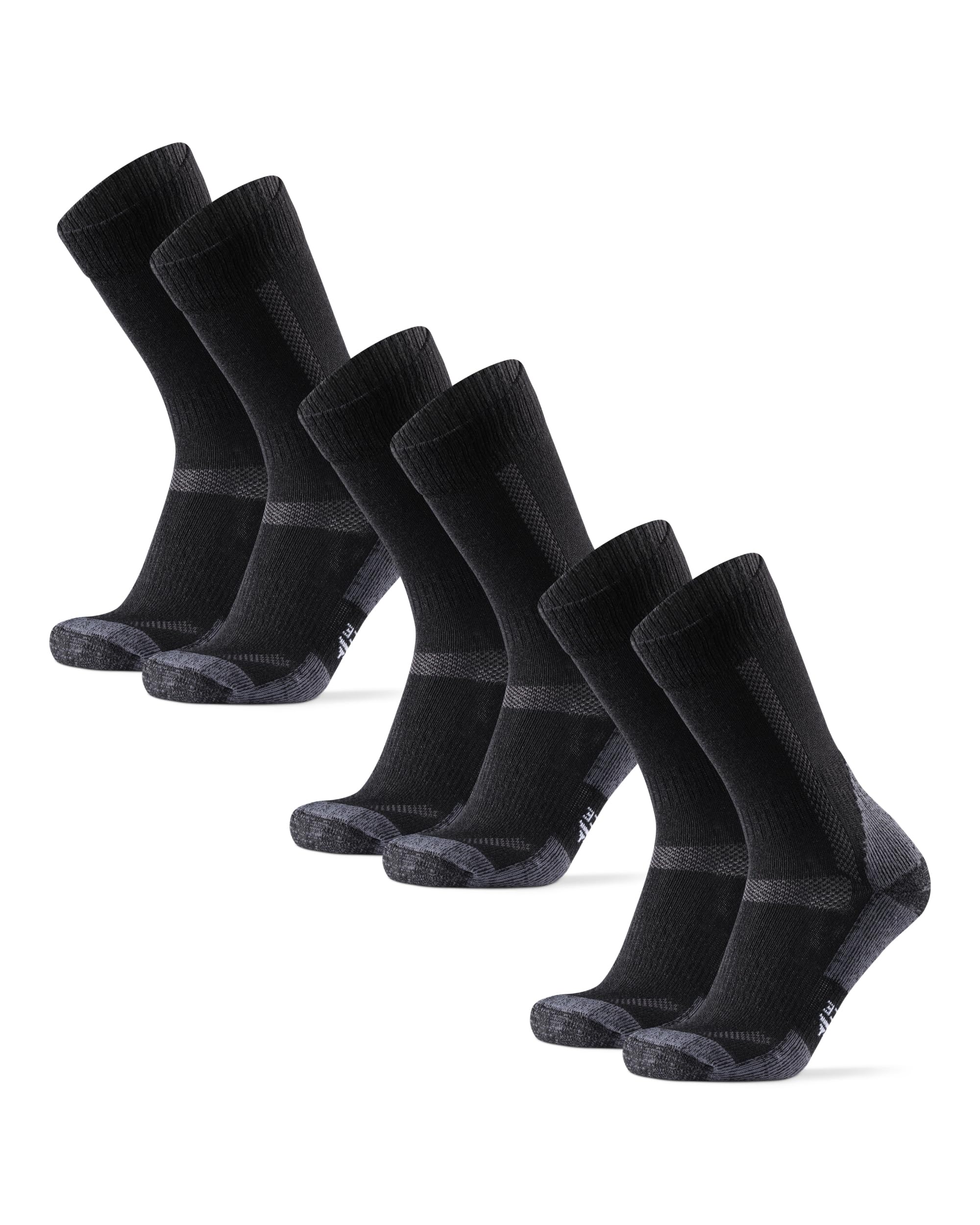
This multi-pack delivers a low cost per pair, with comfortable cushioning and winter warmth. But durability is limited – some pairs may develop holes after moderate use – and the calf fit can feel constrictive. The wool content is lower than claimed, so it is best as a backup or for occasional hikes.
Pros
- Good value for a multi-pack of merino wool blend socks
- Comfortable soft cushioning for everyday wear
Cons
- Some pairs may develop holes after limited use
A practical choice for casual hikers or as backup socks, as long as you accept that durability and fit are not premium-level.
Best for Casual Winter Use
Sandsuced 5-Pack

This budget 5-pack delivers cozy warmth and softness for everyday winter use. However, pilling and thinning can appear after a few washes, and the fit runs tight for larger feet. Best for casual wear or occasional light trail use, not heavy hiking.
Pros
- Keeps feet warm without excessive bulk
- Soft and comfortable feel against skin
Cons
- Pilling and thinning can appear after a few washes
Best suited for women on a tight budget needing bulk warmth for casual winter wear, not for regular hiking.
Best for Occasional Winter Use
Anlisim 5-Pack

These socks deliver immediate warmth and a soft, non-itchy feel in five color options. The low pack price makes them appealing for daily winter use or as cozy house socks. However, durability varies between pairs — some may develop holes after a few wears, so they are not a fit for regular hiking.
Pros
- Warm and comfortable for cold-weather daily wear.
- Soft, plush feel with no itch.
Cons
- Some pairs may develop holes after limited use.
A good option for those wanting an affordable, soft sock for everyday cold-weather wear or as a backup pair, provided you accept possible early wear in some units.
Best for Budget Casual Use
MOGGEI 5-Pack

This 5-pack provides immediate warmth and softness at a budget-friendly price. The thick merino blend feels cozy and not itchy. Build quality is inconsistent though – some pairs may develop holes after limited use. These work best for occasional cold-weather wear around town, not for regular hiking.
Pros
- Very warm and soft for cold weather
- Cost-effective 5-pack for tight budgets
Cons
- Seams or toes can develop holes after a few wears
Best suited for occasional cold-weather use or as a backup set when budget is the priority – not for regular hiking or outdoor activities.
How to Choose
The right hiking sock depends on the balance of merino wool content, cushion thickness, and height to match your boots and trail conditions.
Merino Wool Percentage
Higher wool content, above 60 percent, pulls moisture away from skin faster and resists odor better. That makes a big difference on multi-day trips where washing is not an option.
Socks with less than 40 percent wool rely more on synthetic fibers, which are cheaper but trap sweat and smell quicker. The trade-off is upfront cost versus daily comfort on the trail.
Cushion Density
Full cushion packs thick padding under the entire foot, absorbing impact from heavy packs and rocky terrain. It is the right choice for winter hikes and backpacking with stiff boots.
Light cushion or medium cushion gives more ground feel and packs down smaller, ideal for day hikes in warm weather or when wearing lightweight trail runners. Too much cushion in a tight boot can cause hotspots.
Sock Height
Crew and micro crew socks rise above the boot top, protecting the calf from chafing and debris. Quarter-height socks sit below the ankle, working best with low-cut shoes or trail runners.
Boot socks (mid-calf) add extra insulation and keep snow out, but require tall boots to stay in place. Choosing the wrong height for your footwear can cause slipping bunching and blisters.
Durability Indicators
Nylon reinforcement in the heel and toe extends the life of a sock significantly. Brands that use a higher nylon content (30-40 percent) see fewer early holes than those using minimal nylon.
A lifetime warranty is the strongest durability signal. It forces the manufacturer to stand behind construction quality. Socks without such a warranty often wear thin within a season of regular hiking.
FAQ
Do Darn Tough socks really last a lifetime or is that marketing hype?
Based on thousands of reviews, the lifetime warranty is genuine. Many users report years of heavy use without holes. If a pair eventually wears out, Darn Tough replaces it with no questions asked. That makes the upfront cost a long-term investment for frequent hikers.
Can I wear merino wool hiking socks in summer without getting too hot?
Yes, if you choose a midweight or light cushion crew sock with good ventilation. Merino wool regulates temperature by wicking moisture, so it keeps feet cooler than cotton in heat. Avoid full-cushion boot socks for summer; they trap too much warmth.
Why do my cheap merino wool socks get holes in the heel after a few weeks?
Budget socks often use a lower wool percentage and less nylon reinforcement in high-wear areas. The heel and toe are the first to go because thin material can’t handle friction inside a boot. A higher nylon blend or a reinforced heel patch extends lifespan significantly.
What is the difference between midweight and lightweight cushion hiking socks?
Midweight cushion has a padded sole and some ankle protection, good for most day hikes and moderate loads. Lightweight cushion is thinner, better for warm weather and low-cut shoes where you want more ground feel. Midweight offers more blister protection but less breathability.