This post contains affiliate links. We may earn a small commission when you buy through our links — at no extra cost to you.
Many beanies promise ‘merino wool’ warmth but deliver a thin blend that leaves you shivering on the trail. The real trade-off is between breathability for active use and insulation for standing still.
A 100% merino beanie excels at wicking moisture during a climb, but its thin knit can feel like a sieve when you stop for lunch in sub-freezing temps. Fleece-lined options seal in heat but trap sweat during high-output moves.
This guide cuts through the marketing to help you pick the beanie that matches your pace – whether you’re trail running in the teens or camped out at zero.


Best for Everyday Hiking
Minus33 100% Merino Beanie
Key Features
- Wool Content: 100% Merino
- Thickness: Thin
- Fit: One size fits most
- Price: Budget
This beanie delivers what it promises: 100% merino wool that feels soft against the skin, keeps the head warm in sub-freezing conditions during active use, and packs down small enough to tuck into a coat pocket. The thin knit breathes well during hikes and commutes, making it a go-to for moderate cold.
Best suited for everyday hiking and layering under a helmet or hood, this beanie’s warmth is limited when standing still below 20°F — a hood or additional insulation handles that gap. The fit works for most heads, though sizes above 7.5 may feel snug.
Pros
- Warm enough for sub-freezing temps despite a thin knit
- Soft and non-itchy, comfortable for sensitive scalps
- Holds shape and fabric integrity after repeated washing
Cons
- Fit can be snug for head sizes above 7.5
- The thin knit may not retain enough heat for stationary use below 20°F
For hikers and commuters who want a soft, packable merino beanie that won’t itch, this is a straightforward and cost-effective pick.
Best for Bitter Cold Hikes
DANISH ENDURANCE Lined
Key Features
- Wool Content: Merino blend
- Thickness: Medium
- Fit: One size (snug)
- Price: Mid-Range
The fleece interior sets this beanie apart from standard merino knits, adding significant insulation for static cold. The merino blend outer layer provides a soft, itch-free feel, while reinforced stitching keeps the shape over time. Where the top pick prioritizes breathability for active use, this one focuses on pure warmth retention.
Best for users who need a warm hat for stationary winter activities like camping or freezing commutes. The fit runs short and snug – those with head sizes above 7.25 may find the ears uncovered. The fleece lining reduces breathability, so it’s not suited for high-output hiking or running.
Pros
- Superior warmth for bitter cold – fleece lining adds significant insulation.
- Very soft and cozy interior – inner fleece feels like a blanket against the skin.
- Good quality construction – reinforced stitching holds up to regular use.
Cons
- Fit may be too short and tight for larger heads; double-check head circumference before buying.
- Fleece lining reduces breathability – best for low-exertion use.
A solid choice for bitter cold, but only if the fit works for you – for active cold-weather wear, go with a thinner merino option.
Best for Winter Trail Running
SmartWool Thermal Reversible
Key Features
- Wool Content: 100% Merino
- Thickness: Thin
- Fit: One size fits most
- Price: Mid-Range
The double-layer interlock knit and 250g/m² Merino fabric deliver a balance of warmth and breathability that suits high-output hiking and running. Unlike the more general-purpose Minus33 beanie, this design prioritizes movement over static insulation. It’s best for winter trail runners and hikers who generate their own heat; for standing still in freezing weather, the fabric may feel too thin.
Pros
- Retains heat during active use without overheating — good for cold-weather runs.
- Soft Merino weave rests comfortably on skin, no itching.
- Light enough to stash in a pocket when not needed.
Cons
- Snug fit may not accommodate head sizes above 7.25 — worth checking measurements before buying.
If your winter activity keeps you moving, this SmartWool beanie balances warmth and breathability well. For static cold or larger heads, the Minus33 top pick is a better fit.
Best for All-Day Comfort
MERIWOOL 100% Merino
Key Features
- Wool Content: 100% Merino
- Thickness: Thin
- Fit: One size fits most
- Price: Mid-Range
This beanie delivers the non-itchy softness that 100% merino promises, with a knit that feels more like cotton than traditional wool. It breathes well during active use like hiking or running, keeping the head warm without overheating. That thin fabric trades extreme-cold insulation for breathability — below 20°F when standing still, it may not provide enough warmth. Additionally, the fit runs snug for heads above size 7.5, so buyers with larger heads should check before purchasing. This is a strong choice for anyone who prioritizes softness and active comfort over sub-zero static performance.
Pros
- Ultra-soft and non-itchy — feels like cotton, not scratchy wool.
- Warm yet breathable for active use; keeps head comfortable without overheating.
- Lightweight and packable, easy to stash as an emergency layer.
Cons
- Thin knit may not be warm enough for stationary use below 20°F.
- Fit can be tight for heads above size 7.5.
If the softest possible merino beanie that disappears on the head is your priority — and you‘re active in mild to moderate cold — this delivers with zero itch.
Best for Large Heads
Vanfvok Large Head Beanie
Key Features
- Wool Content: 40% Wool
- Thickness: Medium
- Fit: Large head 7.5+
- Price: Budget
For those with larger heads (7.5+), the Vanfvok beanie offers a rare fit without compression, thanks to its oversized cut and soft silk lining that adds warmth without bulk. However, it contains only 40% wool, so buyers expecting a merino-dominant beanie will be disappointed. This budget-friendly lined beanie suits large-headed users who prioritize fit over wool content and want a warm, comfortable option for cold weather.
Pros
- Designed for head sizes 7.5+ with a comfortable, non-constricting fit
- Soft interior lining adds warmth and comfort
- Very affordable price for a lined winter hat
Cons
- Only 40% wool content – not a true merino beanie
The Vanfvok beanie works well for large-headed buyers on a budget who don’t require high merino content, but it’s not the right choice for pure merino seekers.
Best for Budget Hikes
DANISH ENDURANCE Blend
Key Features
- Wool Content: 55% Merino
- Thickness: Thin
- Fit: One size fits most
- Price: Budget
This beanie uses a 55% merino wool and 45% recycled polyester blend that keeps it affordable while retaining wool’s natural softness and moderate warmth. It holds up well in mild cold down to about 30°F, making it a practical choice for daily commutes and light hikes rather than extreme conditions.
The blend means it’s not 100% merino, and some buyers have noted the title can be misleading on that point. The knit may also develop fuzziness after repeated wear. Best for those who want wool’s comfort at a lower price and don’t mind a synthetic supplement, or for smaller heads since the fit can be snug in lighter colors.
Pros
- Soft and itch-free against the skin, even for sensitive scalps
- Warm enough for typical winter days down to 30°F
- Budget-friendly price for a merino-blend hat
Cons
- Not 100% merino; contains 45% recycled polyester that may disappoint wool purists
- Fit can be tight for some, especially in lighter color options
A solid everyday beanie for cool weather on a budget, but skip it if you need pure merino warmth or a roomier fit.
Best for Trail Running
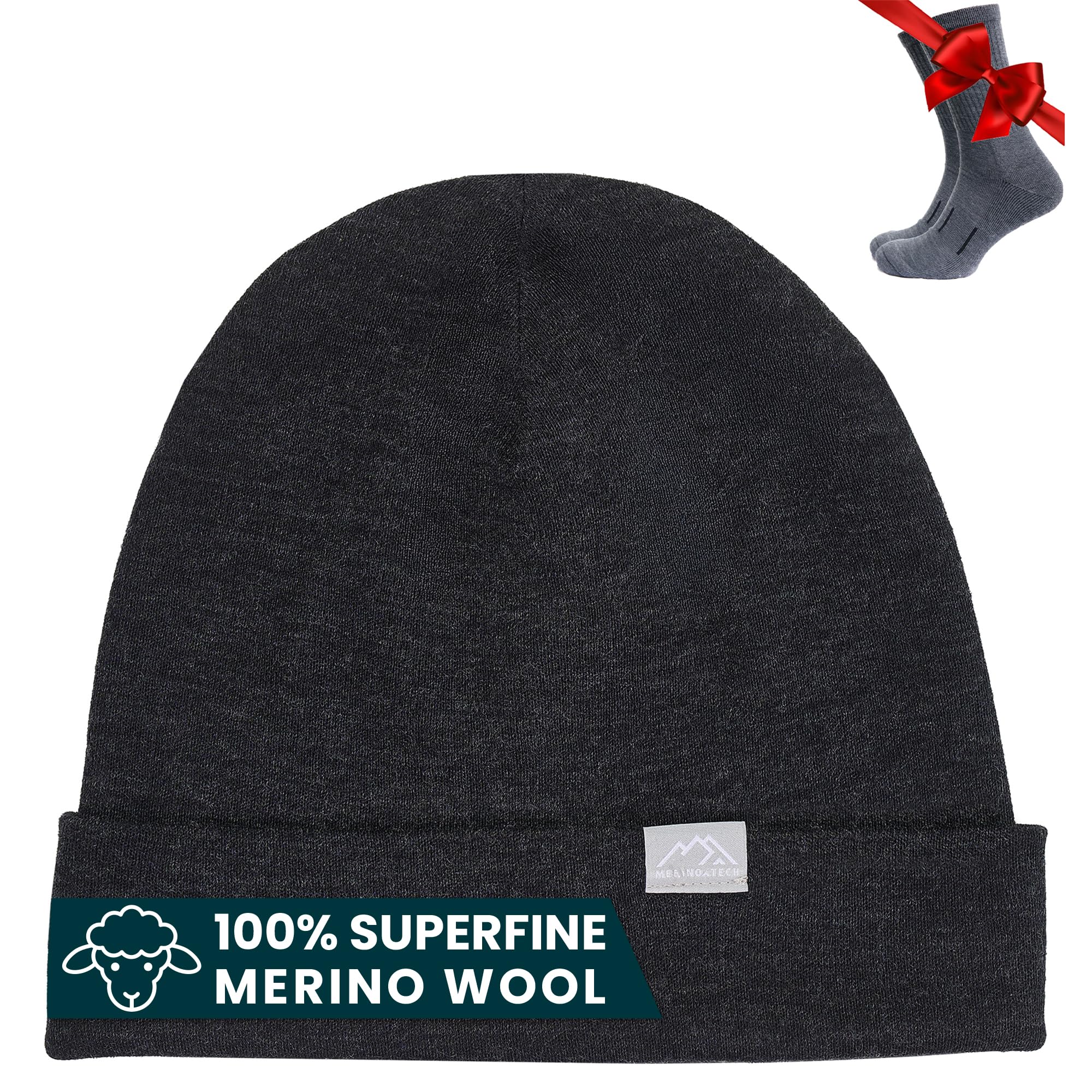
Merino.tech 100% + Socks
Key Features
- Wool Content: 100% Merino
- Thickness: Ultra lightweight
- Price: Mid-Range
This beanie uses ultra-fine 17.5 micron merino that feels smooth like cashmere, and the included merino socks add notable value for hikers. However, the fabric is very thin; it works well under a hood or helmet for trail running or high-output hiking, but on its own it won’t keep you warm in stationary cold below 30°F. That makes it a layering piece rather than a primary winter hat.
Pros
- Exceptionally soft 100% merino wool (17.5 microns) — feels like cashmere against the skin.
- Bonus pair of merino socks adds value for hikers and travelers.
Cons
- Very thin knit — insufficient warmth for stationary use below 30°F without layering.
A smart buy if you need an ultralight merino beanie for active use under a hood and want a free pair of socks, but not for standalone winter warmth.
Best for Gift-Giving
Villand Double-Layer

Key Features
- Wool Content: 100% Merino
- Thickness: Thin (denser)
- Price: Budget
Double-layer merino construction gives this beanie extra warmth for cold weather, and the gift bag adds easy gifting appeal. The tradeoff is reduced breathability, so it’s best for low-output use rather than hiking or running. The longer fit may not work well for smaller heads.
Pros
- Double-layer design provides noticeable extra warmth.
- Gift bag included for casual gifting.
Cons
- Longer fit may feel excessive for smaller heads.
A budget-friendly double-layer merino beanie for gifting or casual cold-weather wear, if the longer cut works for you.
Best for Budget Basic
Tough Headwear Beanie

Key Features
- Wool Content: Merino blend
- Thickness: Thin
- Fit: One size (small)
- Price: Budget
At under $11, this beanie delivers softness and warmth for mild cold, but the fit runs snug and may loosen over time. It suits smaller heads (under 7.25) or as a spare — not for daily wear in harsh winters or larger heads.
Pros
- Exceptionally low price for a merino blend
- Soft and warm for moderate cold conditions
Cons
- Fit tends to be small and may not suit larger heads comfortably
A reasonable backup beanie for smaller heads or occasional mild-weather use, but not built for daily winter wear or larger head sizes.
Best for Helmet Layering
FUQILA 100% Merino

Key Features
- Wool Content: 100% Merino
- Thickness: Thin
- Fit: One size fits most
- Price: Budget
This beanie delivers real 100% merino wool at a budget-friendly price, with a soft, non-itchy feel that works well for mild winter hiking or layering under a helmet. The thin knit limits its insulation in temperatures below freezing, and the fit can ride up or leave ears partially exposed for some head shapes.
Pros
- Genuine 100% merino wool at a budget price – no synthetics.
- Soft and comfortable – no itch, cozy feel.
Cons
- Thin knit may not retain enough heat for standalone use below freezing.
Best for buyers who need an affordable merino beanie for layering under a hood or for mild-weather activity, not as a primary winter hat in cold climates.
Best for Emergency Layer
ACUSHLA 100% Merino

Key Features
- Wool Content: 100% Merino
- Thickness: Thin
- Fit: One size fits most
- Price: Budget
The ACUSHLA beanie delivers genuine 100% merino wool for under $20, with a soft, itch-free feel that works as a lightweight backup or under a heavier hat. The knit is thin, however, so it won’t hold up as your primary winter hat in freezing conditions, and occasional stitching irregularities may shorten its lifespan under daily use.
Pros
- Pure 100% merino wool at a budget-friendly price
- Soft and non-itchy against sensitive skin
Cons
- Thin fabric may not provide enough warmth for below-freezing weather on its own
Worth grabbing as a spare or layering piece for mild cold, but not a standalone winter solution when temperatures drop.
How to Choose
Many beanies labeled ‘Merino wool’ are actually blends – always check the fiber content percentage before buying.
Wool Content: 100% vs Blend
Pure merino wool is naturally breathable, moisture-wicking, and odor-resistant. It performs best during active use but can feel thin when you stop moving.
Blends with polyester or acrylic add durability and reduce cost, but they trap moisture and may itch. If warmth for static cold is your priority, a fleece-lined blend can outperform a pure merino beanie.
Thickness and Warmth-to-Weight
Thinner knits (like the Minus33 or MERIWOOL) pack small and breathe well, making them ideal for layering under a hood or for high-output hiking. They lose effectiveness below about 20°F when you’re stationary.
Medium-weight beanies (fleece-lined or double-layer) provide more insulation but add bulk and reduce breathability. Match the thickness to your winter activity level, not just the temperature.
Fit for Head Size and Shape
Most beanies say ‘one size fits most’ but actually fit heads up to 7.25 or 7.5. If your head is larger, look for models like the Vanfvok that explicitly cater to 7.5+.
A snug fit is fine for active use; a loose fit allows cold air to enter. Check user feedback for specific head sizes rather than relying on generic sizing charts.
Lining: Fleece vs Unlined
Fleece lining adds a full insulation layer that traps heat and feels cozy against the skin. The trade-off is reduced breathability – you’ll sweat faster during exertion.
Unlined merino beanies are better for high-output activities because they wick moisture and regulate temperature. For mixed days (hike up, lunch break), consider a reversible or stackable system.
Care and Durability
Merino wool is delicate. Hand washing in cold water with mild soap extends its life. Machine washing on delicate can cause pilling and shrinkage, especially in blends.
Pilling is common on blends with synthetic fibers after repeated wear. 100% merino pills less but still requires gentle handling. Avoid high heat drying.
FAQ
Is a 100% merino wool beanie warm enough for below-freezing hiking?
Yes, for active hiking in temps down to about 20°F. The merino wool wicks sweat and retains body heat during movement. But if you stop for long breaks below 20°F, you’ll feel the cold through a thin beanie. For static cold, choose a fleece-lined version.
Why does my merino beanie feel itchy if it’s supposed to be soft?
Itch is usually caused by lower-quality wool (coarser fibers) or a blend with synthetic materials like acrylic. Pure merino with finer microns (17-19µm) feels smooth. If your beanie is labeled ‘merino’ but the fiber content is low, the itch is from the non-wool components.
Can I machine wash a merino wool beanie without shrinking it?
Yes, but use cold water on a delicate cycle and a mesh laundry bag. Never use hot water or a dryer – heat shrinks merino. Lay flat to dry. Hand washing is gentler and extends the beanie’s life.
What’s the difference between a cuffed beanie and a skull cap for hiking?
A cuffed beanie (watch cap style) has a folded band that provides extra insulation over the ears and can be worn slouchy or snug. A skull cap is closer-fitting and thin, designed primarily for layering under a helmet or hood. Skull caps are less warm on their own.