This post contains affiliate links. We may earn a small commission when you buy through our links — at no extra cost to you.
Many hiking watches promise weeks of battery and pinpoint GPS, but real-world use often tells a different story. In deep canyons or under heavy forest cover, single-band GPS can wander, and altimeters drift with changing weather. Solar charging adds convenience but rarely delivers unlimited power without direct sun.
This guide cuts through the marketing, focusing on the specs that actually matter: multi-band GNSS, display type, and honest battery expectations. The key trade-off hikers face is between a vivid AMOLED display and a power-sipping MIP screen—one excels for map reading, the other for multi-day endurance. Choosing the right screen type based on your typical terrain and trip length is the single most impactful decision you’ll make.


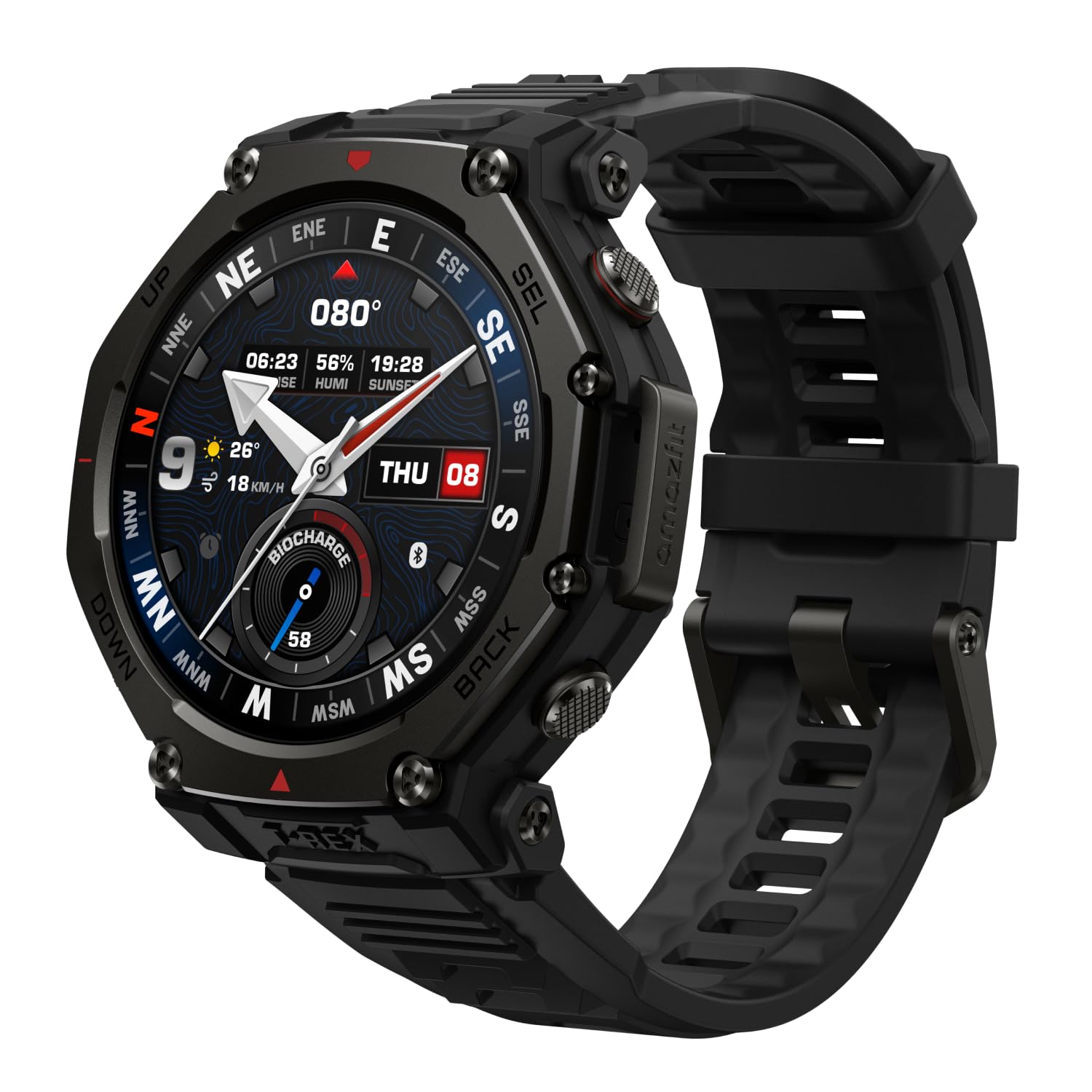
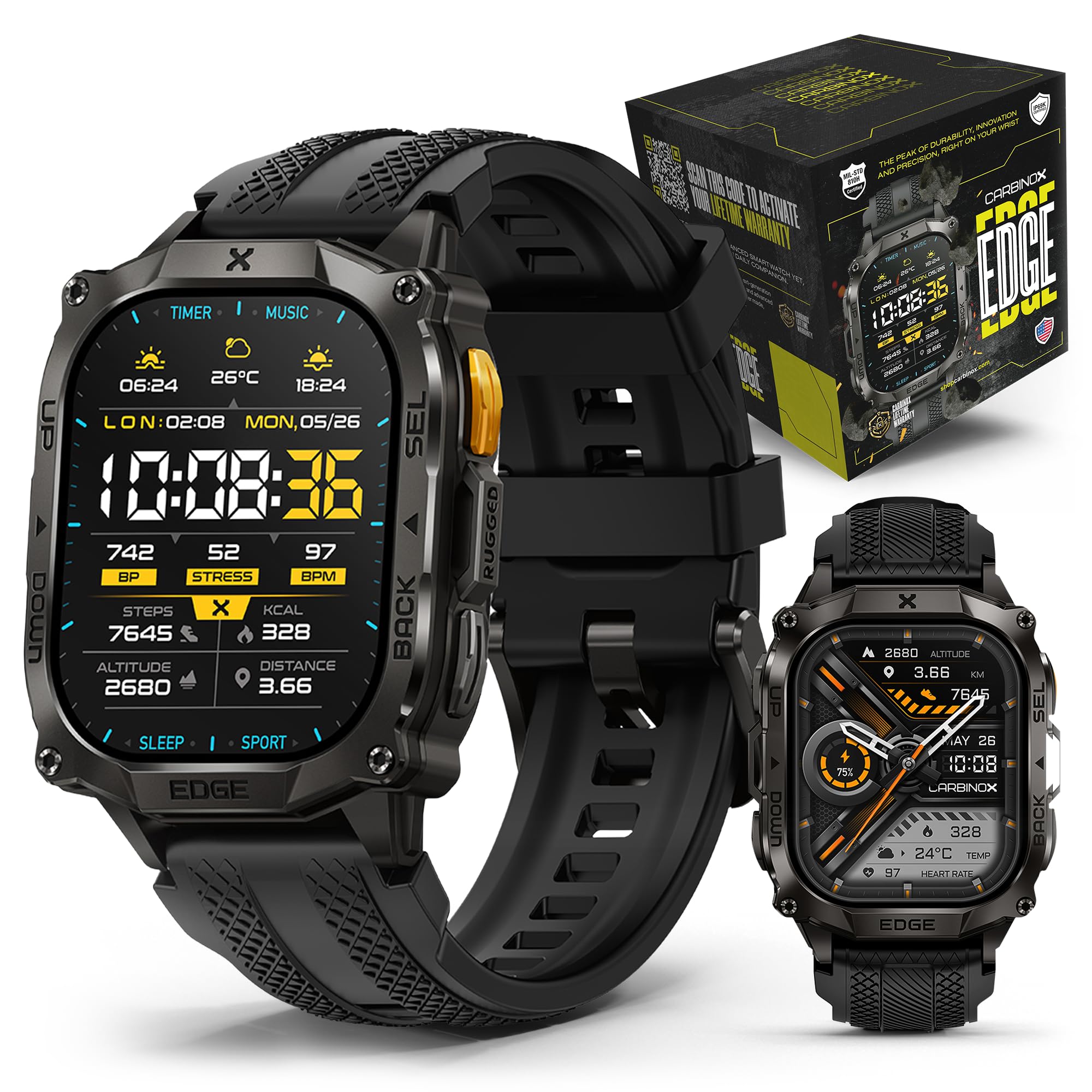
Best for Extended Backpacking
Garmin Instinct 2X Solar
Key Features
- GPS Accuracy: Multi-band GNSS
- Display Type: MIP solar always-on
- Battery Life: Infinite with solar, 40+ days
- Durability: 100m, MIL-STD-810
- Navigation Features: TracBack, route
- Price: $$
Where the top-pick Instinct 3 leans into its bright AMOLED display, the Instinct 2X Solar focuses every design decision on battery longevity. Its Power Glass lens and solar panel keep the watch running indefinitely under direct sun — a genuine advantage when you’re out for two weeks without a power bank. Multi-band GNSS is included, matching the accuracy of pricier models, and the built-in flashlight adds practical utility for night navigation and camp tasks.
This is the right choice for long-distance backpackers who spend days in exposed terrain and need a watch that simply won’t quit. The tradeoff is the interface: a button-only menu system with multiple layers that takes deliberate time to learn. Customizing activity screens and setting up navigation requires patience, and the MIP display lacks the pop of an AMOLED panel. That learning curve is manageable for anyone willing to spend an hour with the manual, but it’s worth factoring in before purchase.
Pros
- Solar charging extends battery life indefinitely on sunny multi-day hikes
- Tough 100m water-resistant build handles drops and trail abuse
- Full fitness tracking suite with HRV, sleep, and multiple workout modes
- Multi-band GNSS provides accurate positioning in canyons and tree cover
Cons
- Button-only menus require manual learning — setup and daily navigation are not intuitive out of the box
For backpackers who measure trips in weeks and value battery over screen quality, the Instinct 2X Solar is the logical choice — just be prepared to invest time in learning its interface.
Best for Premium Adventurer
Amazfit T-Rex 3 Pro
Key Features
- GPS Accuracy: Dual-band, 6 systems
- Display Type: AMOLED 3000 nits
- Battery Life: 25 days typical
- Durability: 100m, sapphire, titanium
- Navigation Features: Offline maps, route
- Price: $$$
The T-Rex 3 Pro separates itself from the top pick with sapphire glass and a titanium bezel — materials typical of watches costing much more. The 3000-nit AMOLED stays readable in direct sun, a clear advantage over the top pick’s screen. That premium construction and large display come in a 48mm case that can feel bulky on smaller wrists. Offline maps and dual-band GPS provide reliable navigation in remote terrain, matching the top pick’s route-finding capability.
This watch fits hikers who value robust materials and screen brightness over a compact fit. The barometer, altimeter, and compass are responsive for trekking, and the 25-day battery life reduces recharging on multi-day trips. The large case may be uncomfortable for those with smaller wrists, and the sapphire glass has shown occasional scratching in isolated units — not a common issue, but worth noting for anyone expecting absolute scratch resistance.
Pros
- Sapphire glass and titanium bezel for long-term durability
- Bright 3000-nit AMOLED visible even in harsh sunlight
- Dual-band GPS with offline maps for accurate backcountry navigation
- 25-day battery life supports extended backpacking trips
Cons
- The 48mm case can feel bulky on smaller wrists
- Sapphire glass scratching has been noted in isolated cases despite its scratch resistance claims
For hikers who prioritize build quality and screen brightness over a smaller profile, the T-Rex 3 Pro delivers a premium experience at a lower price than comparable Garmin models.
Best for Budget Rugged
Carbinox Edge
Key Features
- GPS Accuracy: Dual-band GNSS
- Display Type: AMOLED 500 nits
- Battery Life: ~10 days real-world
- Durability: IP69K/5ATM
- Navigation Features: Basic GPS tracking
- Price: $$
The Carbinox Edge is one of the few watches under $200 that bundles dual-band GNSS, a 1.96" AMOLED display, and a stainless steel bezel. Compared to the feature-packed value leader in this lineup, you save roughly half the cost while getting a similar set of sensors – altimeter, barometer, compass, SpO2. The tradeoff is that Bluetooth connectivity can be intermittent, and a small number of units have arrived with screen failures. For hikers who can work around occasional disconnects and are comfortable with a flexible return policy, the value here is unmatched.
This watch targets budget-conscious hikers who want the clarity of AMOLED and the accuracy of multi-band GPS without spending over $200. It works well for day hikes and weekend trips where you can tolerate a phone re-pair if needed. Those who require flawless connectivity or plan to rely on the watch for multi-week expeditions should step up to Garmin or Amazfit alternatives, where quality control is tighter.
Pros
- Stainless steel bezel and Gorilla Glass give it a premium feel at a budget price.
- Real-world battery life of 7–10 days covers weekend trips without charging.
- Dual-band GNSS with six satellite systems provides accurate tracking in canyons and forests.
- Packs a full set of outdoor sensors – altimeter, barometer, compass – at half the cost of rivals.
Cons
- Bluetooth connectivity can drop intermittently, requiring occasional re-pairing with your phone.
- Screen quality can vary between units – a small number may fail to turn on or show a black display.
Best suited for hikers who want AMOLED and multi-band GPS without the premium price tag – buy with a flexible return window in mind.
Best for Abc Purist
Casio Pro Trek PRG-270

Key Features
- GPS Accuracy: No GPS
- Display Type: Digital LCD
- Battery Life: Solar, indefinite
- Durability: 100m WR
- Price: $$
The Casio Pro Trek PRG-270 skips GPS entirely, which places it outside the search for a hiking smartwatch with navigation. What it delivers instead is an exceptionally durable solar-powered altimeter, barometer, and compass that never needs a charge. The barometer and temperature readings are consistent, and the auto tilt light and power-save mode add practical convenience for backcountry use. The altimeter relies on barometric pressure and can drift with weather changes, so it requires manual calibration at known elevations — a tradeoff that matters when precise elevation data is critical.
Pros
- Solar battery charges from any light source, eliminating the need for cable charging or battery swaps.
- Barometer and compass provide reliable weather trend and directional data during treks.
- Scratch-resistant case and mineral glass handle scrapes and bumps without visible marks.
Cons
- Altimeter accuracy depends on barometric pressure and can shift 100+ feet with weather changes — best as a trend indicator than a precise elevation tool.
- Watch face and band run small; larger wrists may find the fit tight.
This watch suits hikers who already carry a map and compass and want a maintenance-free ABC instrument that runs on sunlight — not a GPS navigation tool.
Best for Multi-Sport Athlete
Suunto 9 Peak Pro

Key Features
- GPS Accuracy: 4 satellite systems
- Display Type: MIP 1.2"
- Battery Life: 40h GPS, 300h tour
- Durability: 100m
- Navigation Features: Basic route
- Price: $$
Slim and light, the Suunto 9 Peak Pro charges to full in an hour — a ten-minute top-up delivers two hours of GPS tracking. Its multi-sport tracking covers running, swimming, cycling with consistent metrics. These strengths come with tradeoffs that make the watch a better fit for multi-sport athletes than for hikers who need dependable navigation and long-term durability.
Pros
- Fast charging: a 10-minute charge adds two hours of GPS tracking.
- Slim and lightweight design comfortable for all-day wear.
- Solid sports tracking with consistent metrics across multiple activities.
Cons
- GPS tracks may wander in dense forest or steep terrain, affecting distance and route accuracy.
- Complete loss of function after a few months has been noted in some units.
For multi-sport athletes who prioritize a light profile and quick charging over precise GPS and rugged durability, the Suunto 9 Peak Pro delivers — but hikers should opt for a model with multi-band GNSS and a stronger durability track record.
Best for Value Features
Amazfit T-Rex 3
Key Features
- GPS Accuracy: Dual-band, 6 systems
- Display Type: AMOLED 2000 nits
- Battery Life: 27 days typical, 180h GPS
- Durability: 100m, freediving 147ft
- Navigation Features: Offline maps, route
- Price: $$
The Amazfit T-Rex 3 packs offline maps and dual-band GPS into a watch that costs less than any Garmin with similar capabilities. The 1.5-inch AMOLED display stays readable in direct sunlight, and the battery lasts weeks between charges — a combination that makes it a strong alternative to the top pick. Where it trades off is software maturity: the Zepp OS ecosystem supports fewer third-party apps and updates arrive less predictably than Garmin’s.
This is the watch for hikers who prioritize navigation features and battery life over a mature app ecosystem. If you rely on offline maps for backcountry routes and want dual-band GPS without spending over $400, the T-Rex 3 delivers. It’s less suited if you need deep integration with training platforms like Strava or Garmin Connect, or require the absolute best GPS accuracy in dense forest cover — those buyers should look at the Garmin Instinct 3 instead.
The rugged construction meets military standards for thermal, shock, and water resistance up to 100 meters, including freediving to 147 feet. Combined with 27 days of typical battery life, this watch handles multi-day trips without charging — a practical advantage over the top pick’s shorter runtime.
Pros
- Offline maps with 26 GB storage for detailed backcountry navigation
- Dual-band GPS with six satellite systems for reliable tracking in challenging terrain
- Battery life extends 27 days typical, 180 hours GPS — no daily charging needed
Cons
- GPS accuracy in deep canyons or heavy tree cover may fall short of premium Garmin models
- Zepp OS offers limited third-party app integration and inconsistent software updates
If you want offline maps and long battery life at a price that undercuts the competition, the T-Rex 3 is the clear choice — just be aware of the ecosystem limitations.
Best for All-Around Hiking
Garmin Instinct 3
Key Features
- GPS Accuracy: Multi-band with SatIQ
- Display Type: AMOLED 1000 nits
- Battery Life: 18 days smartwatch, 30h GPS
- Durability: 100m, MIL-STD-810
- Navigation Features: TracBack, route planning
- Price: $$
The AMOLED display is the Instinct 3’s clearest upgrade for hikers who check data while moving. The 1.2-inch screen is bright, sharp, and easier to read at a glance than older monochrome Instinct models, especially when scanning pace, elevation, heart rate, route prompts, or weather-related widgets on trail. Garmin keeps the rugged identity intact with a metal-reinforced bezel, 100-meter water resistance, and button controls that still make sense with gloves or wet hands.
Multi-band GPS with SatIQ gives this watch its strongest navigation case. SatIQ can shift satellite modes based on conditions, which helps balance accuracy and battery use instead of forcing one setting for every hike. That matters in forest cover, steep terrain, and mixed environments where basic single-band GPS can wander. The Instinct 3 also keeps the outdoor essentials together: altimeter, barometer, compass, GPS activity profiles, health metrics, and customizable workouts.
Battery life is strong for an AMOLED hiking watch rather than an expedition watch. Garmin rates it for up to 18 days in smartwatch mode and up to 30 hours in GPS mode, which fits day hikes, weekend trips, training weeks, and travel without constant charging. The built-in LED flashlight is more useful than it sounds on paper, giving quick light for trailhead gear checks, tent tasks, or low-light walking without reaching for a headlamp.
This is the right fit for hikers and trekkers who want modern readability, accurate tracking, and a rugged build in one watch. The main boundary is the ABC sensor behavior: the altimeter and barometer require occasional calibration when weather fronts move through, which is normal for this category. Buyers planning long off-grid backpacking trips without charging access should lean toward the endurance-focused solar model instead.
Pros
- Bright AMOLED screen makes trail data easy to read at a glance
- Strong battery life with quick recharging for hikes and training weeks
- Multi-band GPS and health tracking support accurate outdoor activity logging
- Custom workouts and activity profiles give hikers room to tune the watch
- Rugged build and metal-reinforced bezel suit regular trail use
Cons
- Tight budgets may find the mid-range price hard to justify
- Multi-week backpacking trips still require charging plans
- Weather shifts can affect elevation and pressure readings between calibrations
The Garmin Instinct 3 is the hiking smartwatch to check first if you want AMOLED clarity, multi-band GPS, ABC sensors, and rugged hardware without moving into premium pricing.
How to Choose
The most impactful decision you’ll make is choosing between an AMOLED and MIP display, as it directly affects battery life and readability on the trail.
GPS Accuracy
Multi-band GNSS uses multiple satellite frequencies to correct for atmospheric delay and signal reflections off canyon walls or dense tree cover. Single-band watches lose lock more frequently, causing track lines to wander. If you hike in the West’s slot canyons or under Pacific Northwest canopy, multi-band is a must. For open ridge walks, single-band suffices at a lower cost.
Display Type
AMOLED screens offer vibrant color and high contrast perfect for viewing offline maps in shaded forests, but they consume more power—expect to recharge after a few days of heavy GPS use. MIP (Memory-in-Pixel) displays are always-on, sip power, and remain readable in direct sunlight, but appear washed out indoors. Choose AMOLED if you navigate via detailed maps; choose MIP if battery life for multi-day trips is your priority.
Battery Life
Marketed battery figures usually assume ideal conditions: minimal GPS, low screen brightness, and moderate temperatures. Real-world GPS runtime is typically 60–70% of the advertised number. For example, a watch claiming 30 hours of GPS may deliver 20 hours in normal use. Check GPS endurance in hours, not smartwatch days, and factor in offline maps which drain faster than basic tracking.
Durability
Water resistance of 10 ATM (100m) means you can swim and shower safely but not dive. MIL-STD-810 certification covers drops, vibration, and extreme temperatures. Scratch-resistant lenses like sapphire or Gorilla Glass resist trail abrasion, but plastic lenses are more prone to scuffing. A metal bezel protects the watch face from rock contact better than polymer.
Navigation Features
Offline maps let you download topo or satellite imagery before the trip, so you can navigate without cell service. TracBack automatically retraces your route—essential if you take a wrong turn. Route planning on the watch via waypoints is more basic but sufficient for day hikes. For extensive backcountry navigation, confirm the watch supports downloadable maps from known sources.
FAQ
Why does my Garmin altimeter show the wrong elevation after a storm?
Barometric altimeters rely on stable atmospheric pressure. When a storm front moves in, pressure drops, causing the altimeter to think you’ve gained elevation. Calibrate against a known point on your map after weather changes. Most watches allow quick calibration from a GPS fix or manual entry.
Can I use a hiking smartwatch for swimming and freediving?
Watches rated 10 ATM (100m) are safe for swimming and snorkeling but not for freediving beyond 30m because dynamic pressure increase can exceed seals. Some models like the Amazfit T-Rex 3 specifically support freediving to 45m. Check the dive rating before immersion.
How many hours of GPS tracking can I actually expect from a 28-day battery watch?
The 28-day claim is for smartwatch mode with minimal features. In continuous GPS tracking, expect 20–30 hours for most mid-range watches. High-end models with solar can stretch that, but 30 hours is a realistic maximum for continuous GPS use in standard conditions.
Is a military-grade smartwatch worth the extra cost for weekend hiking?
Military-grade features like jumpmaster and ballistics solvers add cost but deliver no benefit for typical hiking. If you don’t need night-vision compatibility or stealth mode, a standard rugged watch from Garmin or Amazfit offers identical durability and better value for weekend trips.