This post contains affiliate links. We may earn a small commission when you buy through our links — at no extra cost to you.
Many hiking sandals feel great in the store but lose their grip and structure on rocky trails. The soles wear unevenly after a few miles, and straps that seemed secure start to slip when wet. Durability is often the first thing sacrificed in comfortable-looking designs.
Two specs matter most: outsole traction and arch support. Soft rubber grips well but wears quickly; harder compounds last longer but slide on wet rock. Closed-toe designs protect toes but add weight, while open-toe sandals offer more adjustability at the cost of bare-toe risk.
A sandal that matches your foot shape and hiking style will outperform any generic comfort sandal on the trail. The goal is to find one that doesn’t force a replacement mid-season and keeps your feet happy on long days.




Best for Hiking & Water
KEEN Newport H2
Key Features
- Arch Support: Molded arch
- Traction & Durability: Aggressive tread
- Adjustability: Hook-and-loop straps
- Toe Protection: Closed toe
- Weight & Drying: Quick-dry synthetic
- Price: Mid-Range
The closed-toe bumper shields toes from impacts on rocky terrain, while the carbon rubber outsole maintains grip on wet rock and loose gravel. The synthetic upper dries quickly after submersion, and the construction holds up through multiple hiking seasons. Some scuffing on abrasive rock is possible but cosmetic.
The multi-directional lugs bite into mud and gravel, and the midsole offers enough stiffness for load-bearing hikes. This sandal avoids the sloshy feel of open-toe designs in water, and the toe cap prevents stubbed toes during stream crossings.
Best for men with wider feet who prioritize protection and water-ready performance. Sizing runs small, so ordering half a size up is a routine adjustment. Narrow feet may find the fit too loose even with straps tightened, making this a poor match for slim foot shapes.
Pros
- Closed-toe design protects toes from rocks and roots during water crossings and hikes.
- Durable construction holds up to regular trail use over multiple seasons.
- Quick-dry synthetic upper and aggressive outsole provide grip in wet conditions.
Cons
- Sizing runs small; ordering half a size up is recommended for a proper fit.
The KEEN Newport H2 delivers the toe protection and wet-grip you want on rocky trails — just size up for the right fit.
Best for Hiking, Scrambling
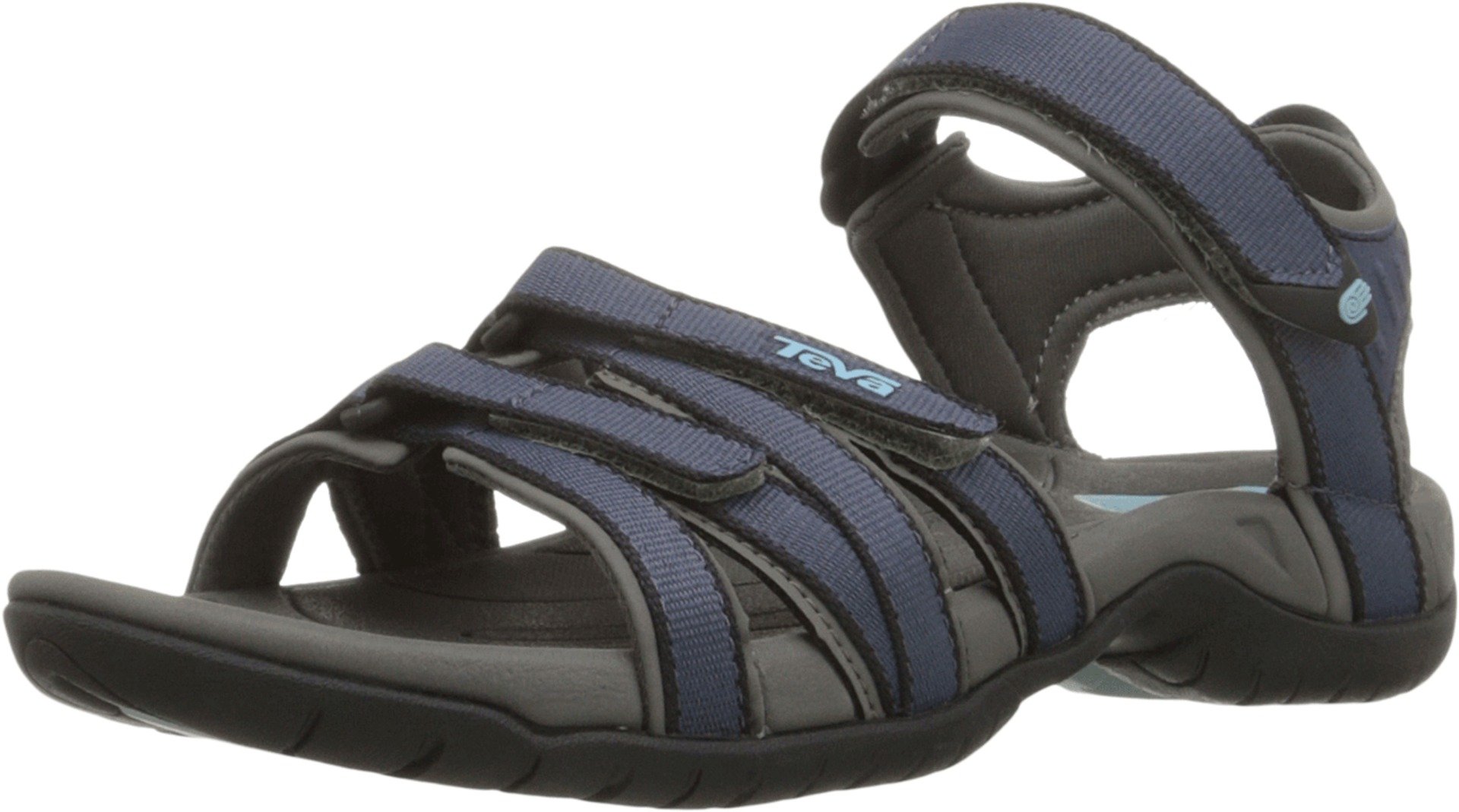
Teva Women’s Tirra
Key Features
- Arch Support: High arch support
- Traction & Durability: Durable, all-terrain
- Adjustability: Three-point straps
- Toe Protection: Open toe
- Weight & Drying: Lightweight, quick-dry
- Price: Mid-Range
The Tirra’s three adjustable straps and supportive footbed let you dial in the fit precisely, which matters on long hikes where foot swelling or arch fatigue can cause problems. This sandal suits narrow to medium-width feet and offers strong arch support that helps with conditions like plantar fasciitis. However, the ankle strap sits high on some foot shapes and may require an adjustment period.
Pros
- Three-point strap system adjusts for a snug fit across the forefoot, midfoot, and heel.
- Arch support design helps alleviate plantar fasciitis discomfort during extended walks.
Cons
- The ankle strap may ride high and cause rubbing on some foot shapes, particularly during initial wear.
Best for hikers with narrow to medium feet who want customizable arch support and don’t mind a break-in period for the ankle strap.
Best for Hiking, Water
KEEN Newport Leather
Key Features
- Arch Support: Moderate arch
- Traction & Durability: Durable leather, rugged
- Adjustability: Hook-and-loop straps
- Toe Protection: Closed toe
- Weight & Drying: Heavier, slower dry
- Price: Premium
The KEEN Newport Leather Sandal delivers the same toe protection as the top pick but with a leather upper that withstands repeated trail abuse. This adds weight and requires a break-in period, but the payoff is a sandal that molds to your foot over time. Best for hikers who prioritize protection and traditional materials over quick-dry convenience. Those with wider feet should size up for a comfortable fit.
Pros
- Durable leather construction with a protective toe bumper for rocky trails.
- Comfortable for all-day hiking and water activities after break-in.
Cons
- Sizing runs small; many need to order half a size up for proper fit.
For hikers who value leather durability and toe protection over minimal weight, this sandal earns its place on the trail.
Best for Long-Distance Hiking
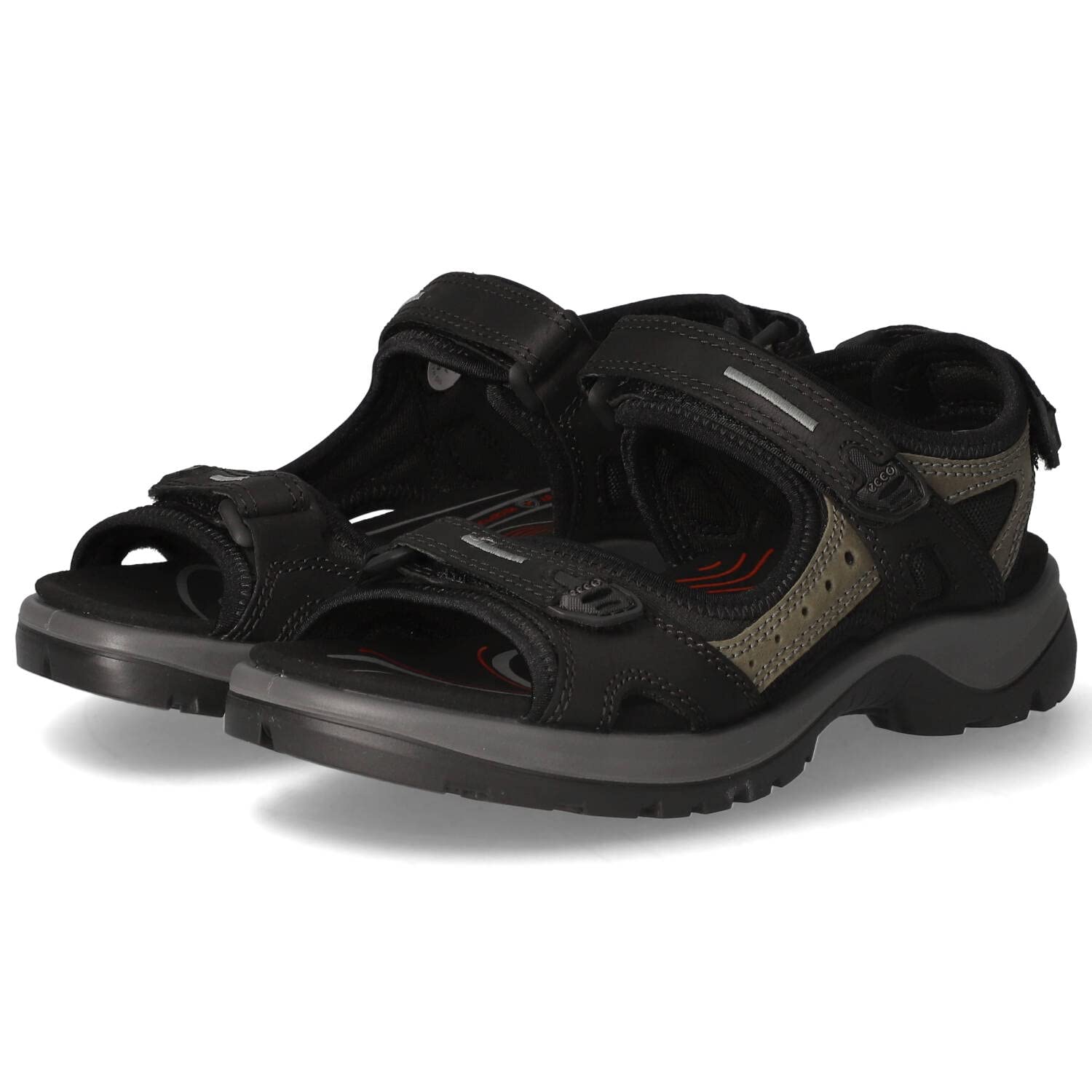
ECCO Yucatan
Key Features
- Arch Support: High arch support
- Traction & Durability: Durable, long-lasting
- Adjustability: Two-point straps
- Toe Protection: Open toe
- Weight & Drying: Leather, moderate weight
- Price: Premium
The ECCO Yucatan provides exceptional cushioning and support that keeps feet comfortable through long trail days, with construction that holds up season after season. This sandal is built for hikers with narrow to medium feet who want all-day walking comfort and a durable alternative to lighter synthetics. However, the fit runs narrow, so those with wider feet will find the closed-toe Teva Tirra a better option for room and adjustability.
Pros
- All-day comfort and support for long miles on the trail.
- Exceptional build quality; many pairs last years of regular use.
Cons
- Fit runs narrow and may be too tight for wider feet.
For hikers with narrow feet who prioritize longevity and walking comfort, this premium sandal delivers sustained performance that justifies its higher price over time.
Best for Budget Hiking
Dannto Closed Toe
Key Features
- Arch Support: Moderate arch
- Traction & Durability: Moderate tread
- Adjustability: Adjustable straps
- Toe Protection: Closed toe
- Weight & Drying: Lightweight, quick-dry
- Price: Budget
The Dannto Women’s Sport Hiking Sandal delivers closed-toe protection and a cushiony sole that rivals sandals costing three times as much — ideal for budget-conscious hikers who want toe coverage on trails and water crossings. The sole may be less durable under heavy, repeated use, so this is best for moderate day hikes and occasional water play rather than multi-week treks.
Pros
- Cushiony sole with closed-toe protection for comfort and safety on trails.
- Comparable performance to premium closed-toe sandals at a fraction of the price.
Cons
- Under heavy, daily use on rugged terrain, the sole may wear faster than premium alternatives.
A cost-effective closed-toe sandal for moderate hiking and water activities — if your trips stay within day-hike intensity, this is a smart alternative to the Keen Newport.
Best for Wide Feet Hikers
UBFEN Hiking Sandals
Key Features
- Arch Support: Arch support
- Traction & Durability: Moderate tread
- Adjustability: Adjustable straps
- Toe Protection: Open toe
- Weight & Drying: Lightweight
- Price: Budget
The UBFEN hiking sandals offer a notably wide fit and solid arch support at a budget price — a combination that stands out for hikers with broader feet. The adjustable straps help secure the foot, and the traction is adequate for light trails, beach walks, and campsite use. Many users report the sandals lasting through two seasons of moderate use, which is solid for the price point.
This sandal is best for casual hikers and beachgoers who need room for wide feet and decent support without spending premium money. The tradeoff: the generous fit will not work for narrow feet, and the sole may wear faster on rocky terrain compared to pricier options.
Pros
- Comfortable arch support and ample room for wide feet.
- Durable enough for occasional use over two years.
Cons
- Fit is too wide for narrow-footed buyers.
Budget-conscious hikers with wide feet who need a supportive sandal for light trails and beach use will find strong value here.
Best for All-Day Walking
Skechers On-the-go 600

Key Features
- Traction & Durability: Light tread
- Toe Protection: Open toe
- Weight & Drying: Lightweight
- Price: Mid-Range
This Skechers sandal delivers exceptional cushioning and a blister-free fit for long days on pavement or light trails. Its lightweight build makes it a natural travel companion, but the outsole can wear down faster under heavy use, which limits its suitability for rocky or demanding terrain. If your walks stay on paved paths or easy gravel, the comfort is hard to beat at this price.
Pros
- Highly comfortable with cushioned sole and no blisters
- Lightweight and versatile for walking and travel
Cons
- Soles can wear down faster than expected under heavy use
A solid choice for travelers and city walkers who prioritize cushioning over rugged trail durability.
Best for Casual Outdoor
Teva Original Universal

Key Features
- Traction & Durability: Light tread
- Adjustability: Adjustable straps
- Toe Protection: Open toe
- Weight & Drying: Lightweight
- Price: Mid-Range
This sandal is lightweight and comfortable for short walks or water use, with straps that adjust to fit different foot shapes. However, it lacks the arch support and durable construction needed for hiking or uneven terrain, making it a poor choice for the intended outdoor walking use.
Pros
- Lightweight and comfortable right out of the box
- Adjustable straps accommodate various foot shapes
Cons
- Strap or sole durability can be inconsistent, with wear reported in some pairs
Best for beach days or short walks where comfort and adjustability matter, but not for hiking or rugged trails.
Best for Travel Light Hiking
Plaka Explore

Key Features
- Arch Support: Arch support
- Traction & Durability: Moderate tread
- Adjustability: Adjustable straps
- Toe Protection: Open toe
- Weight & Drying: Lightweight
- Price: Mid-Range
Feather-light with decent arch support, the Plaka Explore handles walking tours and light trails without weighing you down. The adjustable straps accommodate wide feet comfortably. However, sole durability is moderate — after regular use on gravel paths, wear may appear sooner than with premium hiking sandals. It’s a good match for travel and casual outdoor walking, but serious hikers will want a more robust build.
Pros
- Lightweight design reduces fatigue on long walks
- Adjustable straps and good arch support for wide feet
Cons
- Sole wear may accelerate with frequent trail use — best for well-maintained paths
Ideal for light travel and easy walking where weight matters more than rough-terrain durability.
Best for Occasional Use
YOCCI Sport Sandals

Key Features
- Traction & Durability: Light tread
- Toe Protection: Open toe
- Weight & Drying: Lightweight
- Price: Budget
YOCCI Sport Sandals deliver impressive comfort and a secure fit at a budget price, making them a practical choice for a single trip to the water park or a quick beach day. The adjustable straps accommodate different foot shapes, and the soles handle short, easy trails without issue. However, the construction is not built for repeated hiking; sole wear can appear faster than on dedicated hiking sandals, so these are best reserved for occasional use rather than consistent outdoor adventures.
Pros
- Great value with comfortable fit and adjustable straps
- Handles water and short, easy trails well
Cons
- Sole durability may be limited; best for occasional wear rather than regular hiking
A sensible pick for a single beach day or a quick trip to the water park, but not for consistent trail use.
Best for Occasional Travel
Muboliy Sport Sandal

Key Features
- Traction & Durability: Light tread
- Toe Protection: Open toe
- Weight & Drying: Lightweight
- Price: Budget
The Muboliy Sport Sandal delivers noticeable cushioning and a comfortable fit at a low price, making it an affordable option for short, casual outings. However, the build quality is a tradeoff — sole detachment or breakage can occur within weeks, which means this sandal is not suited for hiking, regular trail walking, or any activity that demands durable construction.
Pros
- Cushy sole provides all-day comfort for light walking
- Affordable alternative to major-brand sport sandals
Cons
- Sole detachment or breakage can occur within weeks of use
Works well for a weekend trip or occasional errands, but choose a sturdier model if you plan to hike or rely on it beyond a few wears.
Best for Casual Dressy
Teva Men’s Hudson

Key Features
- Arch Support: Arch support
- Traction & Durability: Casual tread
- Toe Protection: Open toe
- Weight & Drying: Moderate weight
- Price: Mid-Range
The Teva Men’s Hudson pairs a handsome suede upper with good arch support for casual outdoor events and semi-dressy occasions. Its construction and materials are not suitable for technical hiking or water activities — strap separation can occur, making it better suited for everyday wear than trail use.
Pros
- Comfortable suede upper with supportive arch for all-day casual wear.
- Sleek design that pairs well with outdoor events and semi-dressy attire.
Cons
- Strap separation may occur, affecting long-term durability under heavy use.
This sandal works well for casual daytime wear and outdoor gatherings where style matters more than traction. Skip it if your plans involve wet or uneven terrain.
How to Choose
The right hiking sandal balances support, traction, and durability to keep you comfortable on varied terrain without falling apart after a season.
Arch Support and Cushioning
Arch support is what prevents foot fatigue on long descents. A flat footbed forces your arch to work harder, leading to strain. Look for a molded footbed that follows the natural curve of your foot. Memory foam feels plush initially but compresses under load and loses shape when wet, making it a poor choice for hiking.
Outsole Traction and Durability
Outsole rubber comes in two trade-off pairs: soft compounds grip wet rock but wear down after a few hundred miles, while harder compounds last longer but slide on slick surfaces. For mixed terrain, look for a multi-directional lug pattern with a sticky rubber compound (like Vibram or proprietary blends).
A thin outsole under the ball of the foot is a red flag for durability. That area sees the most pressure on uphill sections. Sandals with a full-length rubber outsole outlast those with partial coverage.
Adjustability
Three-point strap systems (heel, midfoot, forefoot) let you dial in fit for different foot shapes and activities. Two-point systems (heel and forefoot) are simpler but can leave the midfoot loose. Hook-and-loop closures allow micro-adjustments that buckle systems don’t.
The trade-off is speed: more straps mean more time to get them right. For hikes with frequent water crossings, quick-adjust buckles are convenient, but they may loosen over time compared to strap-through designs.
Toe Protection
Closed-toe sandals encase the front of your foot with a rubber bumper, protecting against stubbed toes on rocks and roots. Open-toe sandals are lighter and allow more airflow, but leave your toes exposed to trauma. The choice depends on terrain: rocky, technical trails favor closed toes; smooth paths and water crossings are fine with open toes.
Closed-toe designs also add about 2-4 ounces per sandal, which some hikers notice on long days. The added weight is a worthwhile trade-off for those who value toe safety over minimal weight.
Weight and Quick-Drying Materials
Weight matters most on long hikes where every ounce adds up. Synthetic uppers and EVA midsoles keep sandals light (under 10 ounces per sandal) and dry quickly after river crossings. Leather uppers are heavier and take much longer to dry, but offer better durability and a snugger fit over time.
Quick-drying materials also reduce the risk of blisters from prolonged wetness. Sandals with neoprene linings or closed-cell foam footbeds perform best for water-heavy activities.
FAQ
Can I wear memory foam sandals for hiking?
Memory foam sandals are fine for short walks around town but lose support and become slimy when wet. They lack the firm arch support and durable outsole needed for hiking trails. Stick to sandals with molded EVA or rubber footbeds for hiking.
Why do my hiking sandals squeak when wet?
Squeaking is usually caused by water trapped between the footbed and the outsole or by rubber-on-rubber friction in the straps. It’s not a structural issue but can be annoying. Drying the sandals thoroughly and applying a thin layer of silicone lubricant to contact points often resolves it.
How long should hiking sandals last before needing replacement?
A well-constructed hiking sandal from a reliable brand should last at least two seasons of regular use (roughly 500-800 trail miles). Signs of replacement include worn-down tread (less than 1mm depth), cracked soles, or straps that no longer hold tension. Budget sandals may only last a few months.
Are Teva sandals good for hiking or just for water?
Teva makes several models, and the answer depends on the specific sandal. The Teva Tirra is built with arch support and durable outsoles for serious hiking. The Original Universal is better suited for casual water use and light walking. Check the outsole and footbed before hitting the trail.