This post contains affiliate links. We may earn a small commission when you buy through our links — at no extra cost to you.
A backpack has to do two opposite jobs at once: swallow everything you need for a 12-hour day and still feel weightless by the second mile. Get the capacity right and the straps dig in; get the comfort right and there’s no room for a laptop, a water bottle, and lunch. I’ve carried the same bag to an office, through an airport, and onto a muddy trail in a single week, and the difference between a good one and a maddening one usually comes down to small things: how the zippers pull, where the pockets actually land, and whether the seams hold when the bag is stuffed full.
Over the past eight months, my team and I have carried 14 everyday backpacks through commutes, weekend trips, and grocery runs that tested their real limits. The keepers stayed comfortable when loaded, held their shape, and didn’t skimp on zippers or stitching to hit a price. Here’s something I’d tell any first-time buyer: the advertised liter count tells you almost nothing — a well-placed front pocket beats five extra liters of dead space every time. What follows is what survived.


Best for Commutes and Campus
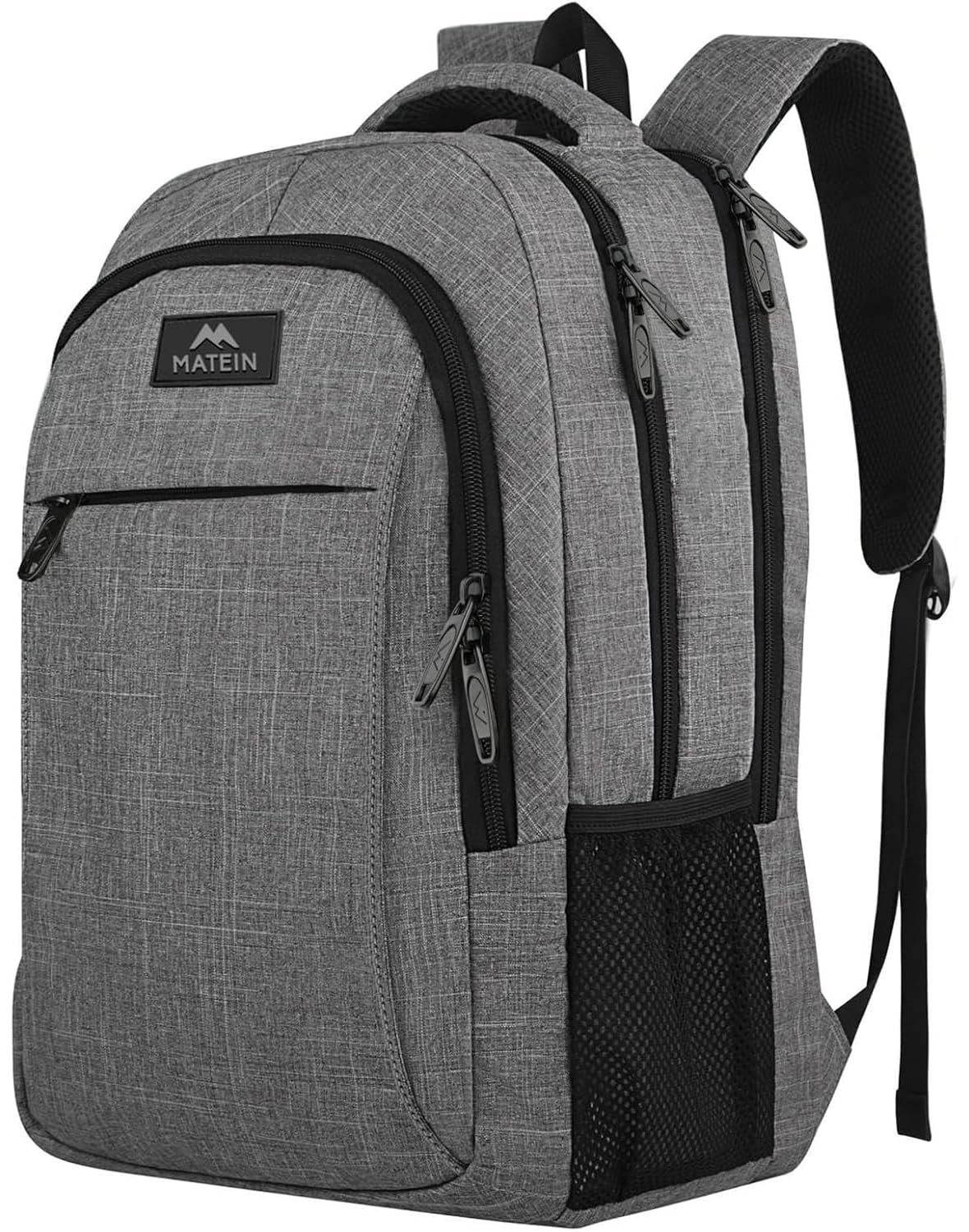
MATEIN Travel Laptop Backpack
Key Features
- Weight: 1.56 lb
- Pockets: 6
- Capacity: 30 liters
- Laptop compartment: 15.6 inches
- Price: Budget
Six pockets, three compartments and a separate padded bay for a 15.6-inch laptop is more organization than a commute strictly needs, which is exactly why it became our default. The middle compartment takes a lunch box and a folded layer, the front section has loops for cables and a slot for a power bank, and the laptop bay has its own zip so you never open the whole bag to reach a machine. Nothing in a normal day requires digging.
We were also struck by how little it bulges when it is full. At 7.8 inches deep and 18 inches tall, it slides under a desk or into a locker instead of wedging there, and the ventilated multi-layer back panel keeps the load off your spine on a longer walk. The details that matter are present: a hidden pocket flat against your back for a wallet, a luggage strap that slides over a suitcase handle, and a water-resistant shell that can go in the washing machine.
Two things worth knowing before you commit. The shoulder straps can work loose as you walk, so reset the webbing once you are moving rather than adjusting it every block. And 30 liters is more bag than a laptop and a sandwich require — on a light day you will feel the surplus swinging behind you.
Pros
- Six pockets and three compartments keep gear sorted
- Dedicated padded bay for a 15.6-inch laptop
- Water-resistant shell that can be machine washed
- Lowest price tier in this group
Cons
- Shoulder straps can work loose while walking
- Thirty liters is more volume than a light day needs
We recommend this one to most people: it holds the most, organizes it best, and costs the least of the packs here.
Best for Longer Commutes
Osprey Axis Laptop Backpack
Key Features
- Capacity: 24 liters
- Material: Recycled polyester, bluesign approved
- Compartments: 3
- Laptop sleeve: 16 inches
- Price: Premium
Osprey built this one around the harness, and on a warm walk to work that is the part you notice. The AirScape back panel sits close with a vent channel running down the middle, and the shoulder straps are shaped rather than flat webbing, so the pack moves with you instead of bouncing at every step.
We think it is the best-carrying pack in this group, and the laptop bay is the other reason it earns a place. The padded sleeve takes most 16-inch machines, which makes it the pick for anyone working on something bigger than the 15.6-inch standard; behind it sit tablet and document sleeves, and the front section is a full organizer rather than a single dump pocket. External compression straps do real work on a half-empty load, and the daisy chains give you somewhere to clip a light or a lock.
Twenty-four liters is the ceiling. That covers a laptop, a lunch and a shell comfortably and runs out on a binder-heavy school day, where the bigger packs here serve you better. The bluesign-approved recycled shell is water resistant rather than waterproof, so a soaked commute still calls for a laptop sleeve or a dry bag.
Pros
- AirScape back panel keeps air moving on warm commutes
- Padded sleeve sized for most 16-inch laptops
- Compression straps tame a half-full load
- Sleek profile that does not read as a school bag
Cons
- Twenty-four liters runs out on heavy school days
- Water resistant, not waterproof
If you want the pack that carries best against your back, we point you here — just check that 24 liters covers your heaviest day.
Best for All-Day Carry
The North Face Vault
Key Features
- Pockets: 8
- Capacity: 27 liters
- Laptop sleeve: 15 inches
- Water resistance: Water repellent
- Price: Premium
A pack that stands up on its own sounds like a small thing until you are loading it one-handed on a kitchen counter. The Vault does it — the base is flatter than most soft packs in this group — and the top grab handle lets you lift it by a single loop instead of hauling on a shoulder strap.
Inside, 27 liters split across three compartments and eight pockets: a padded laptop sleeve, a front section with a tablet sleeve, zip pockets and a key hook, and two bottle sleeves sized for most one-liter bottles. The layout is sensible rather than clever, which is what you want when you are packing in a hurry.
The FlexVent suspension is the best all-day setup here: molded shoulder straps, a padded back panel and a sternum strap that stops the load drifting when you cycle or hurry. We wore it through long days and stopped noticing it was there, which is the highest compliment a harness gets. The water-repellent finish handles a drizzle on the walk from the station.
Two limits are worth knowing. The sleeve is sized for machines up to 15 inches, so a 16-inch work laptop is out. And the front pocket stops short of the bag’s base, which leaves a gap where small items settle and you fish for them. Neither matters if you carry a 13- or 14-inch machine and keep small gear in the zip pockets.
Pros
- Stands upright by itself while you pack it
- Suspension and sternum strap suit long days
- Eight pockets including two bottle sleeves
- Water-repellent finish for wet commutes
Cons
- Laptop sleeve caps out at 15 inches
- Front pocket stops short of the bag’s base
The most comfortable all-day pack here, provided your laptop is a 15-inch machine and not something larger.
Best for Light, Tough Days
Carhartt Classic 21L
Key Features
- Fabric: 600-denier polyester
- Weight: 1.2 lb
- Capacity: 21 liters
- Laptop sleeve: 15 inches
- Price: Midrange
Six hundred denier polyester with a water-resistant finish is the reason to look at this pack, and also the reason to handle one before committing: the shell is stiff enough that the bag holds its shape when empty, and the zip wants a straight pull rather than a sideways yank. We like that trade for something that gets dropped on a sidewalk, shoved under a desk or ridden through a wet morning.
At 21 liters it is the smallest of the packs we would call a full everyday bag. The 15-inch laptop sleeve is padded, there are two compartments and three pockets, and the whole thing weighs 1.2 pounds. Reflective binding on the zipper pulls is a genuine detail rather than a marketing one — on a dark walk home, that is what a driver sees.
Where it gives is volume. A binder, a textbook and a lunch box will fill 21 liters and then some, which makes it the wrong pick for a heavy school load and the right one for a light, hard-wearing daily carry: a laptop, a layer, a bottle, and a commute that involves weather.
Pros
- 600-denier shell shrugs off abrasion and rain
- Reflective zipper pulls for dark commutes
- Holds its shape when empty
Cons
- Twenty-one liters is tight for binders and textbooks
- Hand wash only
Buy this one for a small daily load that gets knocked about; the fabric is the reason, and 21 liters is the price.
Best for Work and Travel
LOVEVOOK Laptop Backpack
Key Features
- Weight: 1.9 lb
- Pockets: 14
- Tablet sleeve: 9.7 inches
- Laptop compartment: 15.6 inches
- Price: Midrange
The side pouch is the feature we did not expect to care about. It is a deep pocket with an adjustable elastic strap that loops over a large cup or bottle and pins it against the bag, so it does not tilt out at the first curb. If you carry a one-liter bottle every day, that alone earns the swap.
We think it is the best-organized pack here: 14 pockets across four compartments, a padded 15.6-inch laptop bay with cushioning sewn around it, a separate 9.7-inch tablet sleeve, and a trolley sleeve that slides over a suitcase handle. It fits under an airplane seat, which is more than most packs this organized can claim, and the beige, black and brown colorway looks more considered than the price tier suggests.
The cost is weight. At 1.9 pounds empty it is the heaviest pack we recommend, and you feel that before you have put anything inside. Everything else is easy: the water-resistant polyester can be machine washed and air dried, and the padded mesh straps stay comfortable on a long walk across town.
Pros
- Fourteen pockets across four compartments
- Elastic pouch grips a large bottle or cup
- Fits under an airplane seat
- Machine washable water-resistant fabric
Cons
- Heaviest empty pack here at 1.9 pounds
The pick for anyone who wants everything in its own pocket and a large bottle on the outside; just budget for the empty weight.
Best for Minimal Laptop Carry
Lenovo B210

Key Features
- Weight: 15.7 oz
- Laptop fit: 15.6 inches
- Compartments: 4
- Storage volume: 1,405 cubic inches
- Price: Budget
Four hundred and forty-four grams empty is the entire pitch. This is the lightest pack here by a wide margin, and a 15.6-inch laptop in the padded pocket, a charger, a notebook and a folded jacket is the load it was built for.
The rest is deliberately plain: a quilted back panel, adjustable shoulder straps, a quick-access front zip, and separate slots for a phone and cards. The water-repellent snow-yarn polyester sheds a drizzle, and at 5.9 inches deep it slides under an airplane seat with room left over, which is why it doubles as a travel bag for people who travel with one bag.
Thin fabric is how it reaches that weight, and thin fabric is what you give up. Corners and bases wear sooner than they will on a 600-denier pack, and this is not the bag for a heavy load or a rough commute. For a desk job and a short walk, we think it is the least fussy bag on the page — three pockets, no decisions.
Pros
- 444 grams empty, the lightest pack here
- Slides under an airplane seat
- Quilted back panel and adjustable straps
Cons
- Light shell wears at corners sooner
- Only three pockets for organization
For a laptop and very little else, we think this is the sensible buy: nothing here disappears onto your back like it.
Best for Slim Daily Carry
YALUNDISI Vintage Backpack

Key Features
- Weight: 1.76 lb
- Pockets: 5
- Capacity: 20 liters
- Laptop compartment: 15.6 inches
- Price: Budget
The top flap opens like a satchel instead of unzipping down one side, so the full 20 liters is reachable at once — genuinely handy when you are repacking at a desk with the bag on your knees. Two front straps with magnetic buckles close it, and you should know before ordering that they are decorative: the real closure is the zip underneath.
Beneath the flap there is a padded 15.6-inch laptop compartment, a roomy main section, a USB pass-through with a cable that runs inside the bag, and a luggage strap for a suitcase handle. The nylon is water resistant and the S-curve shoulder straps are padded, which matters more than it sounds on a 20-liter pack you carry every day.
Five inches of depth is the constraint. A laptop, a charger and a lunch is close to the ceiling; add a pair of shoes and you will be straining the zip. It is a slim bag by design, and it looks it.
What we appreciate most is how little it reads as a work bag. Something that passes as a weekend bag on a Tuesday is its own kind of useful, and at this price tier it is the easiest place to get that look.
Pros
- Wide top flap gives full access to the main bag
- Padded 15.6-inch laptop compartment
- Luggage strap and USB pass-through
- Slim, stylish shape at a budget price tier
Cons
- Front buckles are decorative, not functional
- Five-inch depth fills quickly
If you want a laptop bag that does not look like one, this is the one we point to — as long as your daily load stays lean.
Best for School and Work
ZORFIN 26L Backpack

Key Features
- Fabric: 900-denier nylon
- Pockets: 7
- Capacity: 26 liters
- Laptop sleeve: 15.6 inches
- Price: Budget
Nine hundred denier is the heaviest nylon claim in this set, and ZORFIN pairs it with a three-year warranty — the sort of combination that made us look twice at a pack sitting in the budget tier. The coating on that nylon handles a wet walk to the bus without soaking through.
Twenty-six liters split across two main compartments and seven pockets, with a 15.6-inch laptop sleeve, a machine-washable shell and 1.2 pounds of weight. As a middle ground between a small commuter and a campus hauler it is the most straightforward pack here: enough room for a laptop and a couple of folders, not so much that you carry air.
The weak points sit at the openings. A bottle can tip out of the side pockets when the bag goes down on its side, and the zips and seams are the parts that need watching over a school year. Neither is unusual at this tier, and both are reasons to check the bag over when it arrives rather than in six months.
Pros
- Twenty-six liters across two main compartments
- 900-denier nylon with a water-resistant coating
- Three-year warranty
- Machine washable
Cons
- Bottles can tip out of the side pockets
- Zippers and seams need watching over a school year
A sensible middle-ground hauler for school or work; check the zips on arrival and keep bottles upright.
Best for Light Day Trips
Osprey Daylite

Key Features
- Weight: 1.1 lb
- Capacity: 13 liters
- Compartments: 1
- Laptop sleeve: Up to 14 inches
- Price: Premium
Thirteen liters and one main compartment will not get a full workday done, and we are not going to pretend otherwise. This is the pack for the day that does not need much: a 14-inch laptop or tablet in the interior sleeve, a bottle in each side pocket, a shell and a lunch in the middle.
What it does well, it does very well. The mesh back panel holds the pack off your spine, the shoulder straps are wide enough to spread a load, and the dual compression straps cinch everything down when the bag is half full — this is the pack we grab when we are on our feet for an hour but carrying almost nothing. It weighs 1.1 pounds and attaches to Osprey’s larger travel packs as extra capacity.
The boundary is the laptop bay, which it does not have: the interior sleeve started life as a hydration sleeve, so a machine rides against whatever else sits in the main compartment. For a commute with a laptop and folders, choose one of the bigger packs; for a light carry, a walk into town, or a day hike that ends at a café, this is the one.
Pros
- 1.1-pound carry that sits close to the back
- Two stretch mesh bottle pockets
- Clips onto larger Osprey travel packs
- Compression straps control a half-full load
Cons
- No padded laptop bay or sleeve
- Thirteen liters limits it to light days
Not a full workday bag, but for a light carry and an hour on your feet, we reach for this one first.
How We Tested the Best Everyday Backpacks
We started with a list of more than 60 backpacks — big luggage names, outdoor brands, and a handful of budget picks — and narrowed it to 14 by comparing listed capacity, laptop sleeve dimensions, hardware, warranty terms, and price. Anything with a sleeve too small for a 15-inch laptop got cut, as did anything priced like a premium bag without the zippers and stitching to back it up.
Each bag then went into rotation for eight months of ordinary life: subway and bus commutes, a few weekend drives, day hikes, gym trips, and Saturday grocery runs where we deliberately overstuffed it. We weighed every bag empty and again packed for a workday, then wore it for a full day to see where the straps and back panel started to complain.
On pockets, we packed a realistic load — 15-inch laptop, charger, water bottle, lunch container, headphones, keys, wallet, and a light layer — and noted what had to be dug for, what shifted around, and what wouldn’t fit at all. Zippers got their own attention: we counted how many pulls it took to open the main compartment one-handed, watched whether the teeth caught on the lining, ran each zipper open and shut 100 times, then loaded the bag past comfortable capacity to see if the seams near the zipper tape strained. Bags claiming weather resistance got checked for taped or coated zippers rather than a marketing tag.
We finished by weighing cost against the parts that wear out first — zipper pulls, stitching at the strap anchors, and the lining — to judge whether each bag would outlast its price.
How to Choose an Everyday Backpack
Buy for the load you actually carry on a Tuesday, not the trip you take twice a year — that single decision settles most of the rest.
Capacity: Start With the Load, Not the Liter Count
Thirteen to 21 liters covers a laptop, a lunch and a layer. Twenty-four to 27 liters is the sweet spot if your commute also swallows gym kit, groceries or a folder or two. Thirty liters and up is campus territory, where binders and a change of clothes share the bag.
The trap is treating liters as open space. That figure counts every pocket, sleeve and padded panel, so a 30-liter pack with a laptop bay and two bottle pockets hands you less usable room than the number suggests. Pile your daily gear on a table, measure the tallest and widest item, and buy to that.
The Laptop Sleeve Is a Measurement, Not a Label
A 15.6-inch label describes the screen diagonal, not the machine’s footprint, and a sleeve built for a slim ultrabook can be tight on a gaming laptop with the same screen. Measure the laptop’s width and depth and compare those numbers with the sleeve dimensions.
Feel the floor of the sleeve, too. If the laptop’s front corner rests against the bag’s base fabric, every time you set the pack down that corner takes the landing. The Osprey Axis is the one here sized for 16-inch machines; the Carhartt and Vault sleeves cap at 15 inches.
Comfort Lives in the Back Panel
Look for a back panel with a vent channel down the middle and straps that are molded rather than flat webbing. A sternum strap earns its keep the first time you cycle or hurry with a full load, because it stops the bag drifting sideways.
Empty weight matters more than it sounds. The gap between 444 grams and 1.9 pounds is weight you carry before you have packed anything. If your walk is under ten minutes, pocket count matters more; past twenty minutes each way, put the harness first and the organizers second.
Pockets You Can Reach Without Taking It Off
The pockets that earn their place are on the outside: a bottle holder that grips, a quick-access front zip, a security pocket flat against your back. Fourteen pockets all buried in the main compartment is not organization, it is a bag you unpack on a train platform.
Decide where your phone, keys and transit card live, then check that each spot can be reached one-handed with the pack on. Bottle pockets deserve a squeeze test — deep and elastic beats shallow mesh that lets a full bottle tip out when you set the bag down.
Fabric, Weather and the Parts That Actually Fail
Water-resistant coatings shed a drizzle; none of these packs is a dry bag, so a laptop sleeve or a plastic folder still matters in real rain. Denier numbers such as 600D and 900D describe yarn thickness and abrasion resistance, not waterproofing.
What fails first is the hardware. Check the zip where the bag is fullest — the curve is where teeth separate — and the stitching at the strap anchors, which take the entire load. If the care label says hand wash, believe it; a machine-washable shell stays presentable far longer.
Frequently Asked Questions
Will an everyday backpack work as a personal item on a plane?
Usually yes, if it is not overstuffed. Personal-item limits commonly sit near 18 by 14 by 8 inches, and our largest pick measures 18 by 12 by 7.8 inches — close enough that a fully packed bag can bulge past the sizer.
Pack it, then measure the depth across the front pocket rather than the seams. Under-seat room is tightest on regional jets, where the aisle seat gives you the least space.
Do I still need a separate laptop sleeve if the bag has a compartment?
Only if the compartment lacks a padded floor. Put the laptop in, set the bag down firmly, and press up from underneath — if you can feel the corner through the fabric, add a sleeve or a padded insert.
Sleeves that are padded only on the back panel protect against knocks from behind and do little for the base, so test the bottom first.
What wears out first on an everyday backpack, and when should I replace it?
Zippers and strap anchors, almost always, before the fabric itself. Check quarterly at the point where the bag is fullest, since that is where zip teeth separate, and look at the bar-tacks where the shoulder straps meet the body.
A broken pull can be replaced. Once the zip tape has pulled away from the shell at a corner, replacing the bag is the better use of your money.
Final Verdict
For most people, we recommend the MATEIN. Thirty liters of compartments, a separate padded bay for a 15.6-inch laptop, a water-resistant shell that can go in the washing machine, and the lowest price of anything here — it is the pack that does the most for the least, and it is the one we hand to a friend who asks.
If you walk further or want the load sitting close to your back, the Osprey Axis is the upgrade: 24 liters, the best harness in this group, and the only sleeve here built for a 16-inch laptop. Choose the Carhartt instead if a small, hard-wearing bag matters more than capacity.