This post contains affiliate links. We may earn a small commission when you buy through our links — at no extra cost to you.
You round a switchback, reach for a sip, and your water bottle is gone – bounced out of a too-shallow side pocket. It’s the most common complaint among day hikers, and it happens because many budget packs treat side pockets as an afterthought rather than a functional feature.
Stitching and strap durability are the other weak points. A pack that looks great under $30 can start fraying after a few rocky hikes, leaving you with loose threads and a busted chest clip. The real cost isn’t the price tag – it’s having to replace the pack mid-season.
The daypacks that earn a place on this list all pass a simple test: their side pockets hold a standard Nalgene through uneven terrain, and their seams survive repeated loading. No guessing which ones will hold up; the specs and user feedback make that clear.




Best for Day Hikers
SKYSPER 20L Daypack
Key Features
- Capacity: 20L
- Weight: 1.1 lbs
- Hydration: No sleeve
- Pockets: 10
- Price: $$
This 20L pack stands out for its pocket count: ten compartments spread across the main body, front panel, and hip belt let you separate a rain jacket, snacks, phone, and keys without digging. The 600D polyester body resists light rain, and the whole thing stays under 1.2 pounds — light enough for all-day carry without the flimsy feel of ultralight packables.
Wide, padded straps and a breathable mesh back reduce sweat buildup on warm hikes. The side bottle pockets are deep enough to hold 1L Nalgene bottles securely. On the downside, occasional stitching or seam defects have been noted after several months of regular use; this is typical for packs in this price range and usually limited to loose threads rather than structural failure.
This SKYSPER suits day hikers who want a structured, organized pack without spending premium dollars. It works well for travelers needing a compact daypack for sightseeing and light trails. If you require a built-in hydration bladder, this model isn’t for you — it relies on side pockets for bottles. The stitching tradeoff is worth checking upon arrival, but for the price it’s a solid match for moderate use.
Pros
- Ten pockets keep gear sorted without adding bulk.
- Wide straps and breathable back panel make it comfortable for full-day hikes.
- Water-resistant fabric and reinforced stress points hold up well for the price.
Cons
- Stitching or seam defects can appear after extended use, typical for this price tier.
- No hydration bladder included; side pockets fit standard bottles only.
For day hikers who value pocket layout and durability over ultralight packability, this SKYSPER delivers a cost-effective mix of structure and features.
Best for Long Day Hikes
Osprey Stratos 24L
Key Features
- Capacity: 24L
- Weight: 2.78 lbs
- Hydration: Sleeve, rain cover
- Pockets: 6
- Price: $$$
The Stratos 24L sets itself apart with its AirSpeed trampoline back panel, which creates a gap between your back and the pack to reduce sweating on hot climbs. Combined with an adjustable torso length and a padded hip belt, this pack distributes weight effectively for strenuous all-day hikes where comfort outweighs a few extra ounces.
This pack suits hikers who prioritize ventilation and load support over minimum weight. It handles moderate to heavy loads on long, sweaty trails without sagging. Note that it does not include a water bladder and at 2.78 lbs it’s heavier than many daypacks — the tradeoff is a structure that carries heavier gear comfortably over many miles.
Pros
- Mesh back panel keeps your back cool during hot hikes.
- Hip belt transfers load effectively, reducing shoulder fatigue on long days.
- High-quality zippers, stitching, and included rain cover hold up well.
Cons
- At 2.78 lbs, this pack is heavier than typical 24L daypacks — noticeable on quick, light excursions.
For hikers who value back ventilation and load support above all else, the Stratos 24L justifies its heft with day-long comfort — just budget for a bladder separately.
Best for Hydration Day Hikers
TETON 18/22L Hydration
Key Features
- Capacity: 18L or 22L
- Weight: 2 lbs
- Hydration: Includes 2L bladder
- Pockets: 6
- Price: $$
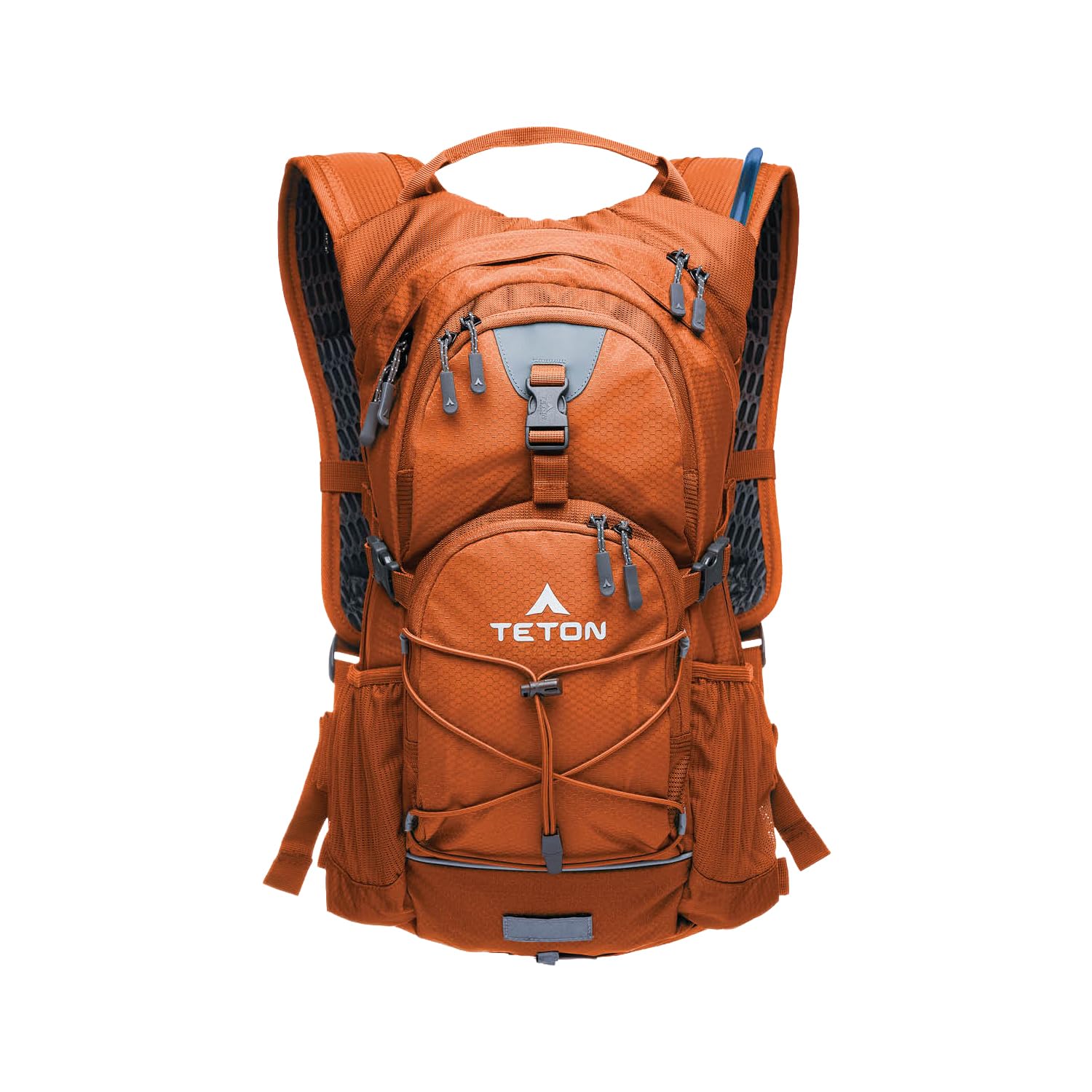
TETON Sports Oasis/Trailrunner comes with a 2L leakproof bladder and a sewn-in rain cover — two accessories that add significant value for day hikers. At 2 lbs, it’s heavier than ultralight packs, but you get a complete hydration system without buying extras. The 18L version offers enough space for a day’s worth of snacks, a jacket, and first aid, while the 22L adds a bit more room.
This pack suits day hikers who want a ready-to-go hydration solution and don’t mind a 2-lb carry. The fit works best for average body types — petite or very tall hikers may find the straps dig in, and the waist strap and seams may show wear sooner than premium alternatives. If you prioritize comfort over included accessories, a pack with adjustable torso length may be a better fit.
Pros
- Integrated 2L bladder is leakproof and includes a bite valve that delivers water reliably.
- Multiple pockets keep trail essentials like snacks, a jacket, and first aid organized.
- Included rain cover and bladder deliver better value than buying accessories separately.
Cons
- Straps can dig in for petite or very tall hikers — a fit issue worth checking before purchase.
- Waist strap and seams may fail after a few months of regular use, depending on load and terrain.
A strong value for budget-conscious day hikers who want a complete hydration setup, provided you confirm the fit and accept that the pack may not last as long as premium models.
Best for Ultralight Hikers
4Monster 16L Packable
Key Features
- Capacity: 16L
- Weight: 4 oz
- Hydration: No sleeve
- Pockets: 4
- Price: $
Weighing just 4 oz, this pack disappears on your back and stows into a fist-sized pouch. For its weight, it holds a surprising amount – jacket, snacks, and two water bottles.
This pack is designed for minimalist hikers carrying less than 5-6 lbs or travelers who need a spare daypack that tucks into a suitcase. The thin 30D nylon can tear under heavier loads, so it’s not suited for rugged trails or rocky terrain. Side pockets are too shallow for standard water bottles, making them better for small items.
Pros
- Extremely lightweight – barely felt on the back
- Packs into a fist-sized pouch for effortless carry-on storage
- Surprisingly roomy for the weight – holds jacket, snacks, and two water bottles
Cons
- Standard water bottles may fall out of the side pockets during active movement.
For ultralight hikers and travelers who prioritize weight savings over durability, this pack delivers unmatched packability and minimal carry – just respect its load limits.
Best for Minimalist Hikers
Osprey Daylite Cinch 15L
Key Features
- Capacity: 15L
- Weight: 0.75 lb
- Hydration: Sleeve only
- Pockets: 3
- Price: $$
The Osprey Daylite Cinch 15L brings the brand’s well-regarded build quality and a mesh back panel that helps reduce sweat buildup on warm hikes. An internal sleeve fits reservoirs up to 2L, making it a natural fit for mountain bikers and trail runners who carry a bladder rather than bottles. At 0.75 lb, it feels barely there on fast-paced outings.
This pack suits minimalist hikers who prioritize weight and back ventilation over quick access to small items. The single main compartment with drawstring closure is slower to open than a zipper pack, and there are no external water bottle pockets—you’ll clip a bottle to the daisy chain or rely entirely on the hydration sleeve. Buyers who need frequent access to snacks, maps, or a phone will find the layout limiting.
Pros
- Osprey build quality and mesh back panel keep airflow high on warm days.
- Lightweight and minimalist design suits fast-paced hikes and mountain biking.
- Internal hydration sleeve fits reservoirs up to 2L.
Cons
- No external water bottle pockets: you must use the internal bladder or clip a bottle to the pack.
- Drawstring closure is slower to access than a zipper, especially on the move.
Buy this if you rely on a hydration bladder and value Osprey’s comfort over pocket organization; skip it if you need quick side-pocket access to water bottles.
Best for Budget Day Hikers
SKYSPER 15/20L Foldable
Key Features
- Capacity: 15L or 20L
- Weight: 0.75 lb
- Hydration: No sleeve
- Pockets: 6
- Price: $
At 0.75 lb and foldable, the SKYSPER 15/20L offers more structure than most packable packs, including a functional chest strap and a built-in whistle. Deep side pockets hold water bottles securely, and the six pockets provide enough organization for a day hike’s essentials — phone, snacks, map, and light layers.
This pack suits budget-conscious day hikers who carry 5-10 lbs and want a compact backup that actually stays planted on the trail. The tradeoff: shoulder straps have minimal padding, so loads above 8 lbs become uncomfortable. Also, there is no hydration bladder sleeve — water bottles must go in the side pockets.
Pros
- Chest strap and whistle add trail-friendly features at this price point
- Stable and comfortable on short hikes with light loads
- Well-organized pockets for a packable pack
Cons
- Straps have thin padding — uncomfortable when carrying over 8 lbs
- No hydration bladder sleeve — side pockets hold bottles but not bladders
If you need a packable daypack for light loads and value chest-strap stability, this delivers. For heavier gear or hydration bladders, the structured top pick is a better fit.
Best for Short Day Hikes
BECOJADDE 15L Foldable

Key Features
- Capacity: 15L
- Weight: 0.68 lb
- Hydration: No sleeve
- Pockets: 10
- Price: $
The BECOJADDE 15L stands out with its shoulder strap phone pocket, making it easy to grab your phone mid-hike. It folds into a small pouch and weighs under a pound, ideal for short day hikes with light loads. However, the chest strap clip can loosen after a few uses, and the thin polyester fabric may not hold up to repeated rough terrain or loads over 5-6 pounds. These durability limitations keep it from being a primary pack for regular hiking, but for occasional light use or as a travel backup, it gets the job done.
Pros
- Shoulder strap phone pocket for quick access on the trail
- Lightweight and folds into a small pouch for easy packing
Cons
- Chest strap clip may come undone after a few uses
- Fabric can tear if overloaded or used on rough terrain
Suitable for day hikes where you carry only a phone, water, and a jacket – but not for regular rugged use.
Best for Infrequent Hikers
G4Free 20L Packable

Key Features
- Capacity: 20L
- Weight: 0.48 lb
- Hydration: Sleeve
- Pockets: 7
- Price: $
This pack disappears in luggage at half a pound, making it a practical emergency daypack for budget travelers. The 20L capacity holds water, food, and layers for occasional sightseeing. However, side pockets are too shallow for standard water bottles — bottles can fall out during walking. Strap and seam durability may not hold up to regular hiking use; straps can pull away after a few months. This suits infrequent hikers who want an ultralight backup, not those needing a reliable daypack for active outdoor trips.
Pros
- Incredibly lightweight and folds into its own pocket for storage
- Affordable price for occasional travel or emergency use
Cons
- Side pockets too shallow for standard water bottles — bottles can fall out while walking
- Strap and seam durability may degrade under regular hiking use
A good fit for travelers needing a packable backup, but not for day hikers who need reliable water bottle pockets and long-term durability.
Best for Day Hikers
Water Buffalo 22L Hydration
Key Features
- Capacity: 22L
- Weight: ~2 lbs
- Hydration: Includes 2L bladder
- Pockets: 6
- Price: $$
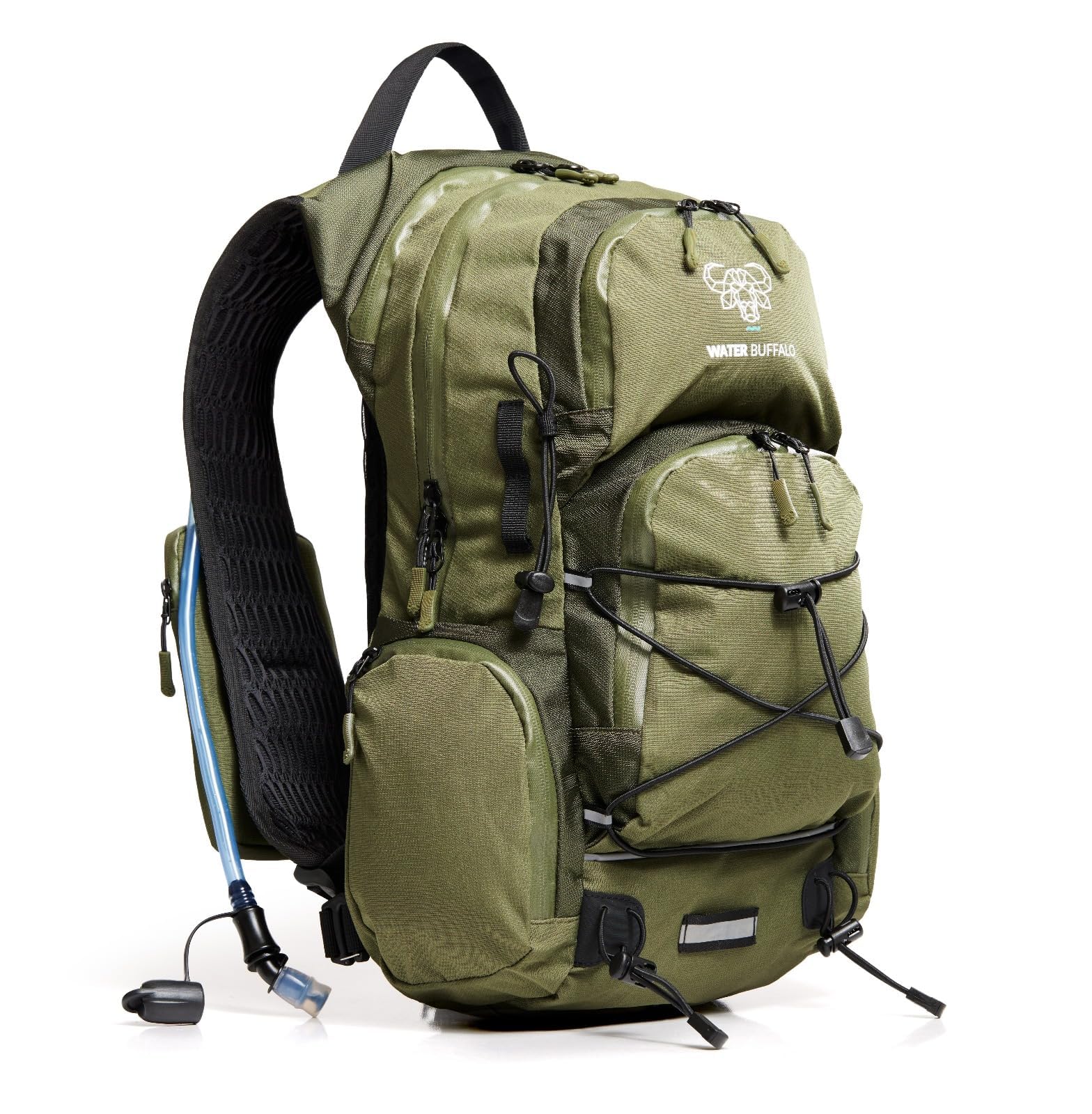
This pack comes with a leakproof 2L bladder and thoughtfully placed pockets for phone and sunglasses, making it easy to grab essentials mid-hike without stopping. The adjustable hip and chest straps keep the load comfortable for a day on moderate trails. Where it falls short is long-term build: zipper threads can fray and seams may separate after repeated trips, so this is a better fit for occasional hikers or travelers who value convenience over ruggedness rather than weekly trekkers or those who need bombproof construction.
Pros
- Dedicated phone and sunglass pockets for quick access on the trail
- Included 2L bladder is BPA-free and leakproof, comparable to premium options
Cons
- Zipper fraying and seam tears can occur after several trips, so it’s less suited for routine heavy use
Best for day hikers who prioritize pocket organization and included hydration over long-term durability, or as a travel pack that doesn’t get abused daily.
Best for Petite Hikers
sunhiker 20-25L Backpack

Key Features
- Capacity: 20–25L
- Weight: 12.3 oz
- Hydration: No sleeve
- Pockets: 5
- Price: $
This sunhiker pack is a budget-friendly option for petite hikers or children who value a compact size that slips under airplane seats. It keeps light loads organized with multiple zippered pockets. However, the waist strap can be too short for larger adult waists, and stitching durability may not hold up to frequent use, making it best suited for occasional day hikes with minimal weight.
Pros
- Fits under airplane seats – ideal for travel and short day hikes.
- Lightweight build with good weight distribution for small loads.
Cons
- Waist strap can be too short for larger adult builds.
- Stitching and fabric may show wear under regular hiking use.
A solid choice for petite hikers or children who need a compact, lightweight pack for light loads and occasional use – not for larger adults or frequent hiking.
Best for Travel Backup
WATERFLY 20L Packable

Key Features
- Capacity: 20L
- Weight: 10.2 oz
- Hydration: No sleeve
- Pockets: 4
- Price: $
This 20L pack folds into its own pouch and weighs just 10.2 oz, making it a convenient emergency daypack to keep in a suitcase. The padded straps are comfortable for light loads. However, strap and seam durability may not hold up to frequent hiking, so it’s best reserved for occasional use on easy trails rather than as a primary daypack.
Pros
- Folds into a small pouch – ideal as a backup bag.
- Surprisingly padded shoulder straps for a pack this lightweight.
Cons
- Strap and seam durability may show wear after moderate use.
Best suited as a suitcase emergency pack or for short, easy walks where weight matters more than long-term durability.
Best for Minimalist
SKYSPER 10L Packable

Key Features
- Capacity: 10L
- Weight: 0.6 lb
- Hydration: No sleeve
- Pockets: 3
- Price: $
This 10L pack compresses to pocket size, making it a smart choice for runners, cyclists, or as a travel backup. The hidden back pocket and multiple zippered compartments offer good organization for a few small items. However, its capacity falls short for day hikes requiring water, layers, and lunch – the side pockets fit only slim bottles, and there’s no hydration sleeve. It’s a capable minimalist pack for specific use cases, not a primary daypack.
Pros
- Fits in a pocket when folded – ideal as a backup bag
- Well-organized with hidden back pocket and multiple compartments for its tiny size
Cons
- 10L capacity may not accommodate water, layers, and lunch simultaneously – suitable only for ultralight excursions
Best for travelers or runners who need a backup pack that disappears when not in use; not a viable option for day hikers requiring a full load.
Best for Overnight
Maelstrom 40L Daypack

Key Features
- Capacity: 40L
- Weight: 2.16 lbs
- Hydration: Sleeve, hose port
- Pockets: Multiple
- Price: $$
The Maelstrom 40L daypack provides generous storage capacity and an included rain cover at a mid-range price, which suits budget overnight trips. Its multiple pockets and hip belt organize gear effectively. That said, it is too bulky for the typical day hike (15-30L range), and some seam or zipper durability concerns may appear over time. This pack fits a specific niche but is not the right choice for lightweight day hiking.
Pros
- Excellent storage capacity for overnight trips
- Good value for a 40L pack with rain cover
Cons
- Seam and zipper durability may be a concern with regular use
- Size exceeds typical daypack capacity (40L vs 15-30L), making it bulky for short hikes
This pack works well for budget overnight trips or as a carry-on, but day hikers should look for a smaller, more durable option.
Best for Overnight
SPEEDPARK 40L Backpack

Key Features
- Capacity: 40L
- Weight: 1.76 lbs
- Hydration: No sleeve
- Pockets: Many
- Price: $$
The SPEEDPARK 40L delivers a well-organized interior at just 1.76 lbs, with multiple zippered pockets that make packing for a weekend trip straightforward. However, at 40 liters it exceeds the typical daypack range (15–30L), and reports of zippers jamming and straps giving out under load suggest this pack is best reserved for light camp use or as a spare bag. For day hiking, look at a smaller 20–25L option instead.
Pros
- Numerous zippered compartments keep gear organized without adding bulk.
- Lightweight for its size at 1.76 lbs, making it easy to carry for short trips.
Cons
- 40L capacity is too large for most day hikes; better suited for overnight use.
- Zippers may jam and strap attachment points can break under heavier loads.
Consider this pack if you need a budget-friendly 40L organizer for weekend camping or as a backup bag, but skip it if day hiking is your primary use.
Best for Ultralight Overnight
IGOLUMON 40L Packable

Key Features
- Capacity: 40L
- Weight: 1.17 lbs
- Hydration: No sleeve
- Pockets: Wet pocket
- Price: $
This 40L pack folds small and weighs barely over a pound, with a wet pocket and multiple compartments that travelers and budget overnighters will appreciate. But the capacity is well outside the 15-30L day hike sweet spot, and seam and strap durability can be a concern under heavier loads — so it’s best left for lightweight weekend trips or as a carry-on backup, not as a daily hiking companion.
Pros
- Extremely lightweight for a 40L pack, easy to fold and stash
- Includes a wet pocket and several internal organizers for gear separation
Cons
- 40L capacity exceeds the typical 15-30L range for day hikes
- Seams and straps can pull away under regular load, limiting long-term durability
Best for budget-minded overnight backpackers who need a packable 40L option, but not for day hikers seeking a sub-30L pack with sturdy construction.
How to Choose
The single most overlooked factor in a daypack is the depth of its side pockets – shallow mesh will drop your water bottle on any uneven trail.
Capacity
Daypacks for hiking typically range from 15 to 30 liters. A 15L pack forces you to choose between a jacket and lunch; a 30L pack can carry extra layers and a first aid kit but may feel bulky on short scrambles.
The catch is that foldable packs lose usable volume when lightly loaded because the fabric collapses unevenly. A 20L packable may only hold 15L worth of gear if it lacks internal structure.
Weight
Every ounce on your back adds up over miles, but ultralight packs (under 1 lb) often achieve low weight by using thin 30D nylon that tears under hard use. A pack that weighs 1.2 lbs with 600D polyester will outlast a 4 oz pack many times over.
For day hikes under 5 miles, weight is less critical than pocket design. For full-day treks, shaving half a pound can reduce fatigue noticeably.
Hydration Compatibility
A hydration sleeve and hose port let you drink hands-free, but packs under $30 rarely include them. If you want a bladder, budget at least $50 for a pack with a dedicated sleeve that doesn’t bulge into the main compartment.
Without a sleeve, you can clip a bladder to the inside or carry bottles in side pockets – but side pockets must be deep enough to hold a bottle securely while you’re moving. Many budget packs fail this test.
Pockets
More pockets don’t always mean better organization. A pack with ten tiny compartments can waste time searching; a pack with three large ones and two deep mesh side pockets is often more practical.
The hidden trade-off is pocket depth vs. packability: foldable packs with thin side mesh can’t support standard water bottles. Check that your bottle fits with the pack fully loaded.
Strap and Back Panel Comfort
Padded shoulder straps and a breathable back panel reduce sweat and shoulder fatigue, but they add weight. A ventilated mesh back (like Osprey’s AirSpeed) can make a 2.8 lb pack feel lighter than a 1 lb pack with no airflow.
Chest straps and a hip belt help transfer load to the hips. On daypacks under 20L, hip belts are often thin or absent – fine for light loads, but if you carry more than 8 lbs, a padded hip belt becomes essential.
FAQ
Why do my water bottles keep falling out of my hiking daypack side pockets?
Most budget packs use shallow mesh pockets that are too short to hold standard 32 oz bottles. Look for packs with deep, elasticized side pockets that extend at least halfway up the bottle. Some packs also have a cinch cord over the pocket. If your pack lacks depth, secure bottles with a carabiner through a loop.
Are foldable hiking backpacks durable enough for regular day hikes?
Foldable packs under 1 lb are made from thin nylon (30D-70D) that can tear under loads over 5-6 lbs or on rocky terrain. They work fine as backups or for short, easy trails, but for weekly day hikes with 8+ lbs of gear, invest in a structured pack with 600D+ fabric. The SKYSPER foldable with chest strap (15/20L) offers better durability than most packable models.
What’s the best way to carry water if my daypack doesn’t have a hydration sleeve?
Use a wide-mouth Nalgene or a bottle with a carrying loop that can be clipped to the pack’s shoulder strap with a carabiner. Alternatively, tuck a collapsible water bottle inside the main compartment, but keep access in mind. Side pockets are preferable – just test that they hold your bottle securely before the hike.
How much should I spend on a day hiking backpack to get one that lasts?
For a pack that survives two seasons of regular use without seam failures or broken zippers, budget $35–$60. Packs under $25 often use low-grade stitching and thin webbing that fray quickly. The SKYSPER 20L (around $35) is the sweet spot – it delivers 600D polyester and reinforced stress points at a price that doesn’t hurt if you lose it.