This post contains affiliate links. We may earn a small commission when you buy through our links — at no extra cost to you.
Many compression socks are designed for stationary recovery or nursing shifts, not for the dynamic motion and abrasive trail conditions of hiking. That’s why you’ll find socks that slip down mid-descent, lose compression after a few washes, or just don’t grip uneven terrain.
The core trade-off is between compression strength and convenience. A firm 20-30 mmHg sock can dramatically reduce swelling and fatigue on a multi-day trek, but it takes serious effort to pull on. A milder 15-20 mmHg sock is easier to manage but may not provide enough support for steep descents or heavy packs.
This guide focuses on socks that balance these trade-offs with features hikers actually need: reinforced heels, moisture-wicking fabrics, and graduated compression that stays in place mile after mile. The right pair will keep you moving comfortably from trailhead to camp.


Best for Long-Distance Hiking
Physix Gear 20-30 mmHg
Key Features
- Compression Level: 20-30 mmHg
- Material Blend: Nylon/spandex
- Length: Knee-high
- Price: $$
True 20–30 mmHg graduated compression that reduces fatigue and swelling on multi-day hikes. The nylon/spandex blend breathes well without trapping heat, and the graduated design keeps blood moving during long ascents. Many hikers find the support sufficient to prevent shin splints and reduce foot swelling even after 10+ miles on rocky terrain.
Ideal for hikers with a history of shin splints or swelling, or anyone covering extended mileage on uneven ground. The firm compression comes with a time cost – pulling these on requires patience or a sock aid, making them less suited for quick trailside changes. Hikers with calves above 20 inches may find the top band restrictive, so careful measurement is advised.
Pros
- Effective 20–30 mmHg graduated compression reduces swelling and leg fatigue on long hikes.
- Durable construction holds up to heavy trail use without losing elasticity.
- Supportive design keeps legs feeling fresh on full-day treks.
Cons
- Difficult to put on due to high compression – may require a sock aid or significant effort.
- Calf band can feel tight on larger legs; measuring precisely helps avoid fit issues.
The most effective compression sock for hikers who want firm leg support on demanding trails – provided you’re prepared for the effort to get it on.
Best for Day Hiking Comfort
Iseasoo 8-Pack Copper 15-20 mmHg
Key Features
- Compression Level: 15-20 mmHg
- Material Blend: Nylon/polyester/copper
- Length: Knee-high
- Price: $
This eight-pack gives hikers a week’s worth of consistent 15-20 mmHg graduated compression at a per-pair cost that undercuts most single-sock options. Comfort and circulation support are well-documented, and the socks are easier to put on than firmer compression models. Sizing can vary between individual socks, so measuring both calf and foot carefully is essential; the fit works best for average to slim legs. For those tackling steep multi-day treks, the top pick delivers firmer 20-30 mmHg support, but this set provides solid daily leg recovery for less.
Pros
- Affordable multi-pack that covers a full hiking week without sacrificing compression quality.
- Reduces foot and calf fatigue during long trail days.
- Smoother on/off than many compression socks in this pressure range.
Cons
Budget-conscious hikers who want adequate compression for day hikes without the hassle of washing socks mid-week will find this set practical. Just be prepared to measure carefully.
Best for Leg Circulation
SB SOX 20-30 mmHg
Key Features
- Compression Level: 20-30 mmHg
- Material Blend: 80% nylon, 20% spandex
- Length: Knee-high
- Price: $$
SB SOX delivers the widest calf fit among compression socks at this compression level, with a sizing chart that accommodates calves up to 24 inches. That fit comes with a tradeoff: the high compression makes them a genuine challenge to pull on, and hand washing is required. For hikers with circulation concerns or larger calves who are willing to use a sock aid, the swelling reduction on long trails justifies the effort. The 20-30 mmHg graduated compression holds up well over repeated use, reducing fatigue on multi-day backpacking trips.
Pros
- Effective swelling reduction on long flights and hikes.
- Wide calf sizing accommodates legs up to 24 inches.
- Holds up well over repeated use with quality materials.
Cons
- Extremely difficult to pull on, especially for those with limited hand strength.
- Sizing may still be too tight in the calf band for some, despite careful measuring.
SB SOX is the go-to for big-legged hikers who prioritize leg recovery over convenience – the fit is unmatched, but be ready for the effort.
Best for Cushioned Day Hikes
FITRELL 3-Pack 20-30 mmHg
Key Features
- Compression Level: 20-30 mmHg
- Material Blend: Nylon/spandex
- Length: Knee-high
- Price: $
The FITRELL 3-Pack stands out by pairing 20-30 mmHg graduated compression with a cushioned sole that absorbs impact on rocky terrain — a combination rarely found at this price. The compression stays effective through a day hike, and the socks are easier to pull on than other firm compression models. However, the top band can pinch for hikers with larger calves, and the lighter material may show wear sooner than heavier-duty alternatives.
Pros
- Cushioned sole adds comfort on rocky terrain
- Graduated compression reduces fatigue throughout the day
- Easier to put on than other 20-30 mmHg socks
Cons
- Top band can be too tight for some users
- Limited durability under heavy trail use
A cost-effective option for day hikers who value cushion and compression over long-term ruggedness.
Best for Moderate Compression Style
QUXIANG 8-Pack 15-20 mmHg
Key Features
- Compression Level: 15-20 mmHg
- Material Blend: Copper-infused nylon
- Length: Knee-high
- Price: $
QUXIANG’s 8-pack delivers consistent 15-20 mmHg graduated compression that stays put on uneven trails, with a comfortable copper-infused nylon blend that breathes well. The patterns are a welcome break from clinical-looking socks – they actually look like normal athletic socks, making them easy to wear in camp or town.
This set suits hikers who prefer moderate compression for all-day wear on moderate terrain, without needing the highest level of tightness. The eight-pair pack offers a full week’s supply at a per-pair cost that beats most single-pair alternatives. It’s worth noting that occasional durability issues (such as toe holes) have been reported, but the low per-pair cost makes replacement straightforward.
Pros
- Very comfortable and stay in place on uneven terrain.
- High quality for the price with an 8-pack that covers a full week.
Cons
- Compression may feel lighter than expected for those accustomed to firmer support.
For hikers who value comfort, style, and a budget-friendly multi-pack with moderate compression, this set is a solid fit – just not for those requiring firm medical-grade support.
Best for Light Compression Comfort
Dickies Light Compression

Key Features
- Compression Level: Light (no mmHg)
- Material Blend: Cotton/nylon
- Length: Knee-high
- Price: $
The Dickies Light Compression sock delivers plush cushioning and soft fabric for comfortable all-day wear, and the build quality holds up well for the price. However, the compression is so light it lacks graduated support, making it more of a cozy everyday sock than a hiking compression sock.
Pros
- Very comfortable with thick cushioning for all-day wear.
- Great build quality at a budget-friendly price.
Cons
- Compression is too light for hiking support; functions as a regular knee-high sock.
Best for casual walking or everyday use where cushioning and comfort matter more than compression support.
Best for Small Calves Budget
FuelMeFoot 3-Pack Copper

Key Features
- Compression Level: 15-20 mmHg
- Material Blend: Copper-infused nylon
- Length: Knee-high
- Price: $
These socks deliver comfortable 15-20 mmHg compression at a budget-friendly price, and reviews indicate strong results for circulation and swelling. But the sizing runs very small – only suitable for calf circumferences under 13 inches – and the toes and heels can wear through quickly, making them better suited for short, gentle day hikes than rugged multi-day outings.
Pros
- Three pairs at entry-level pricing with effective circulation support
- Comfortable fabric with 86% positive feedback on comfort
Cons
- Calf fit is too tight for most hikers – runs small even after sizing up
Works for hikers with very slim legs who only need light support on mellow trails, but skip it if your calves are average or larger.
Best for Infrequent Hiking Rotation
Sooverki 8-Pack 15-20 mmHg
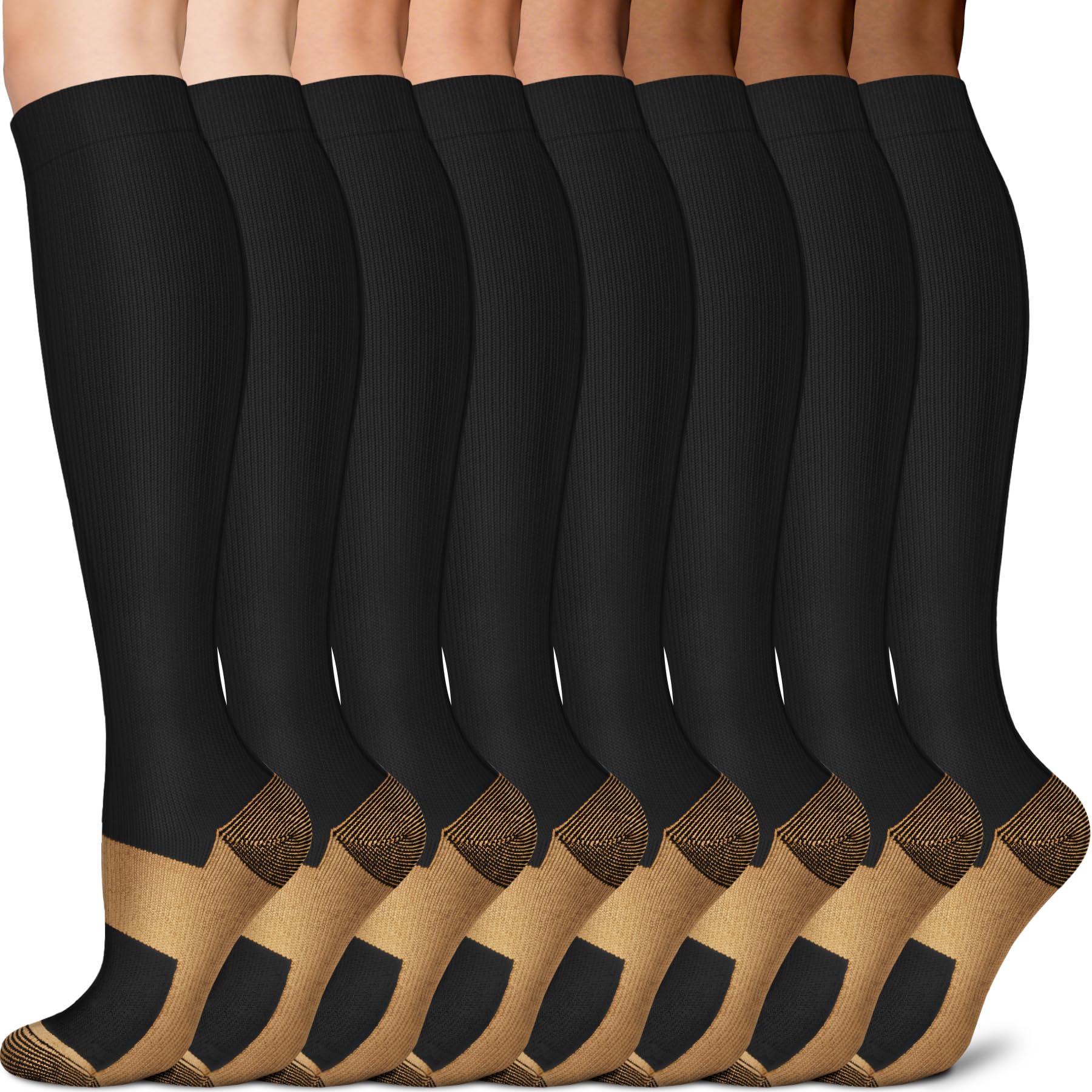
Key Features
- Compression Level: 15-20 mmHg
- Material Blend: Nylon/polyester/copper
- Length: Knee-high
- Price: $
This sock delivers 15-20 mmHg compression and easy-on fit at a per-pair cost that undercuts most single pairs – ideal for packing a week’s worth for travel or recovery days. However, the fabric can develop holes in the toes after limited use, and compression may feel lighter than expected. These limitations make it a poor pick for regular hiking but a reasonable budget choice for occasional wear or non-trail use.
Pros
- Affordable 8-pack with comfortable fit for everyday wear.
- Easy to pull on and stays put during activity.
Cons
- Holes can develop in the toes after limited use – best for occasional wear.
Keep these in your rotation for travel days or short, easy walks rather than rugged trail use.
Best for Fashionable Light Support
COOLOVER 6-Pack Copper
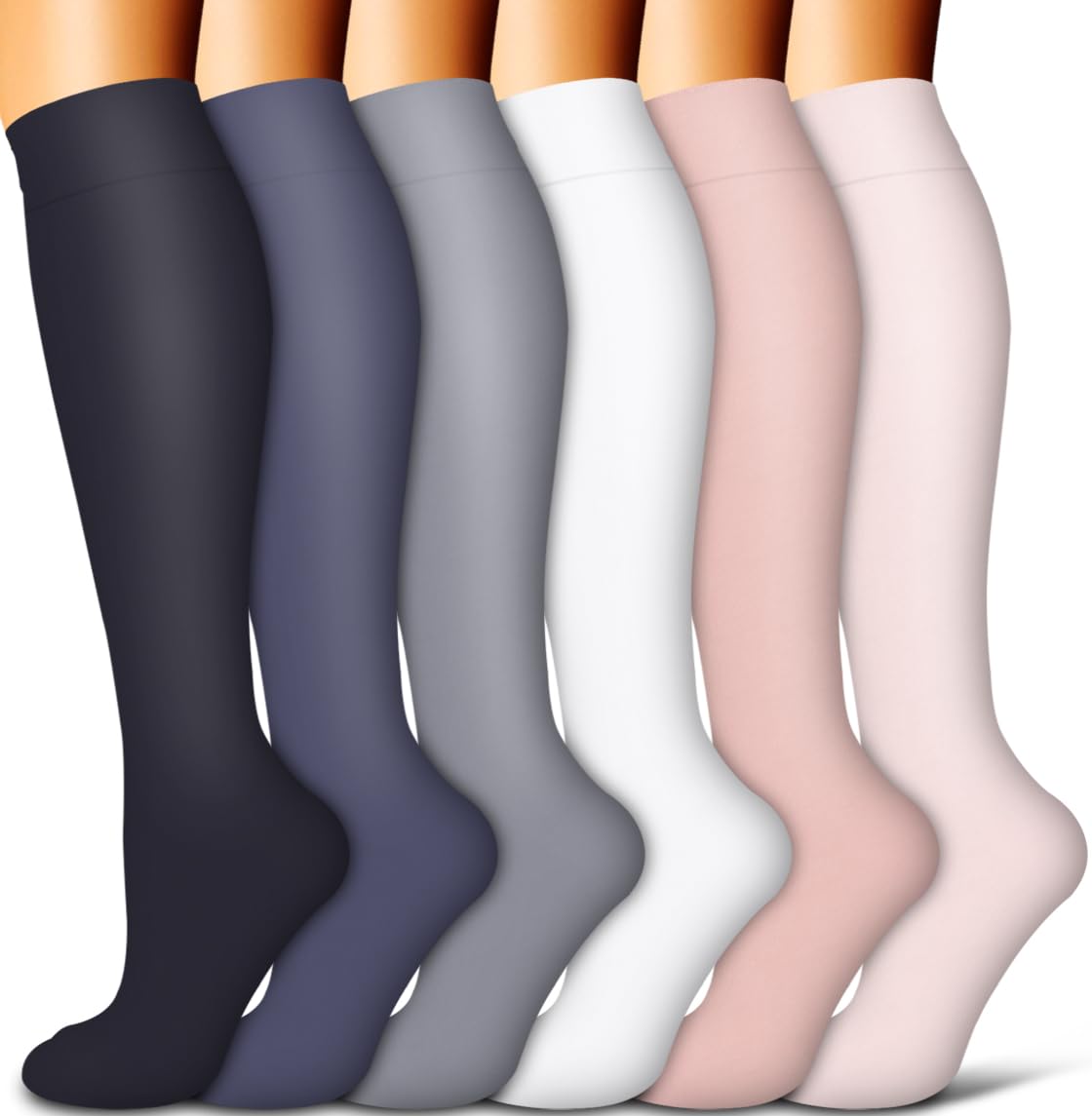
Key Features
- Compression Level: 15-20 mmHg
- Material Blend: Copper-infused nylon
- Length: Knee-high
- Price: $
Stylish patterns and generous calf room make these comfortable for casual wear, but compression is light – more like a regular sock than a graduated support. Pattern imprints may leave marks on legs, and the lack of firm compression means they won’t provide hiking recovery benefits.
Pros
- Stylish patterns that look great and are comfortable for everyday wear.
- Generous calf room accommodates larger legs comfortably.
Cons
- Compression is too light for hiking support – more like a standard sock than a graduated compression garment.
Best for casual daily wear, short walks, or recovery days – not for serious hiking.
Best for Small Calves Only
Laite Hebe 3-Pack Medical

Key Features
- Compression Level: 15-20 mmHg
- Material Blend: Nylon/spandex
- Length: Knee-high
- Price: $
This 3-pack delivers budget-friendly compression that effectively reduces swelling on light walks, but the sizing runs very small. The nylon/spandex material is comfortable for narrow feet and small calves. However, the compression is light (15-20 mmHg) and the fit is too tight for average or larger calves, limiting its use to short, low-intensity hikes.
Pros
- Very affordable – three pairs at a budget price.
- Comfortable for narrow feet and effective at reducing swelling on shorter walks.
Cons
- Sizing runs small – may be too tight for anyone with average or larger calves.
Best for hikers with very narrow calves who need an affordable option for short, easy trails.
How to Choose
The most important factor for hiking compression socks is graduated compression that actually stays higher at the ankle than the calf – without that gradient, you’re just wearing tight socks.
Compression Level
Compression socks are rated in mmHg, with 15-20 mmHg offering moderate support and 20-30 mmHg providing firm medical-grade pressure. For hiking, the extra firmness of 20-30 mmHg significantly reduces swelling and fatigue on long descents, but it also makes the socks harder to pull on and can feel restrictive for beginners.
If you’re new to compression or stick to short, gentle trails, 15-20 mmHg is sufficient and much easier to manage. For multi-day backpacking or if you have circulation concerns, the higher level pays off in recovery.
Material Blend
Most compression socks use nylon, polyester, and spandex blends. Nylon provides durability against trail debris, spandex gives stretch and recovery, and polyester wicks moisture. Copper-infused fabrics are common but there’s little evidence they improve performance – focus on the nylon/spandex ratio and moisture-wicking properties.
Cotton blends, like in Dickies, feel soft but hold sweat and dry slowly, leading to blisters on long hikes. Stick to synthetics for active use.
Knee-High Length
Knee-high length covers the entire calf, which is essential for graduated compression to work properly. On uneven terrain, the sock also protects the lower leg from brush and rocks. A common problem is socks that are too short and slip below the calf bulge, losing compression effectiveness.
Look for socks that reach just below the knee and have a non-slip silicone band at the top to prevent rolling down during uphill sections.
Cushioning
Cushioning in the footbed absorbs shock from rocky trails and reduces pressure on the balls of the feet and heels. However, extra padding reduces breathability and can make the sock bulkier inside your boot, potentially causing fit issues.
For day hikes on moderate terrain, a cushioned sole adds comfort without overheating. For technical or fast-paced hiking, thinner socks with less padding allow better boot connection and moisture management.
Durability
Hiking compression socks face constant abrasion from dirt, rocks, and boot friction. Weak toe seams and thin fabric lead to holes after a few hikes. Look for reinforced toe and heel areas, and avoid ultra-light materials if you plan to use them regularly.
Many budget multi-packs sacrifice durability to hit a low price point. Expect to replace them every 3-6 months with heavy use, while higher-end pairs can last a year or more.
FAQ
Why do my compression socks roll down after a few hours of hiking?
Rolling down is usually caused by a loose top band that lacks silicone grippers, or socks that are too short for your calf length. Look for knee-high socks with a wide, silicone-lined cuff. Also, if the sock is too large in the calf, it will shift. Measure your calf circumference accurately and choose a size that fits snugly at the top.
Can I wear 20-30 mmHg compression socks for hiking or is that too strong?
20-30 mmHg is perfectly safe for hiking and is often recommended for long days on the trail. It provides significant swelling reduction and leg support. The main downside is difficulty putting them on – you may need a sock aid. If you have no circulation issues and are new to compression, start with 15-20 mmHg. But for steep, multi-day hikes, the firmer level delivers real recovery benefits.
How often should I replace compression socks used for hiking?
Replace them when you notice a loss of compression, usually after 3-6 months of regular hiking. Signs include the sock feeling looser than when new, visible thinning at the heel and toe, or holes appearing. Hand washing and air drying extends their life significantly. Budget multi-packs often need replacement sooner than premium single pairs.
Are copper compression socks actually better for hiking or just marketing?
Copper-infused socks are primarily a marketing claim. There’s little evidence that copper provides additional compression or health benefits beyond what a standard nylon/spandex sock offers. The compression and fit matter far more than the copper content. Focus on graduated compression, material quality, and durability rather than copper claims.