This post contains affiliate links. We may earn a small commission when you buy through our links — at no extra cost to you.
Many riders discover that a wide, plush-looking saddle doesn’t guarantee comfort, and cheap padding can go flat within months. The real challenge is finding a saddle that matches your riding position, sit-bone width, and tolerance for firmness.
Marketing often highlights memory foam and gel, but real-world comfort depends more on shape and suspension than material type. A saddle that works for a beach cruiser may cause thigh rub on a hybrid bike.
This guide cuts through the claims to highlight which saddles deliver lasting comfort for casual rides, commutes, or longer outings, so you can buy with confidence the first time.



Best for Budget Recreation
LCYMD Dual Shock Saddle
Key Features
- Padding Material: Memory foam, faux leather
- Dimensions: 9.7 x 8 x 3.7 in
- Suspension: Dual rubber balls
- Weight Capacity: 250+ lbs
- Price: $
The dual shock-absorbing rubber balls and thick memory foam work together to eliminate soreness even on rides past 25 miles. Installation takes under 10 minutes with the included tools, so you can upgrade a stock saddle without a trip to the shop.
This saddle is a strong fit for recreational riders and short-distance commuters who prioritize cushion over weight or long-term build. The first weeks deliver impressive plushness, but the cover and stitching may peel or split after several months — a known tradeoff at this price point. Riders expecting an oversized platform should also note the 9.7-by-8-inch dimensions are narrower than some budget competitors.
Pros
- Plush memory foam and dual shock balls prevent soreness on extended rides.
- Complete installation in under 10 minutes with the included tools.
- Cost-effective upgrade that delivers comfort comparable to premium saddles.
Cons
- Cover material may peel or stitching may split after several months of use.
- Width may feel narrower than expected for riders used to oversized saddles.
Best suited for recreational riders and short-distance commuters who want maximum comfort per dollar and accept that the saddle may need replacement sooner than a premium option.
Best for Cruiser Riders
Cloud-9 Cruiser Gel
Key Features
- Padding Material: Dual-density gel foam
- Dimensions: 10.5 x 10.5 x 6.75 in
- Suspension: Chrome coil springs
- Weight Capacity: 250 lbs
- Price: $$
The Cloud-9 Cruiser Gel delivers plush comfort on a 10.5-inch wide platform with dual-density gel foam and chrome coil springs that absorb bumps effectively. The combination of wide platform and coil springs delivers a smooth ride on paved paths. That generous width makes it a natural fit for beach cruisers and step-through bikes, but riders on narrower frames may experience thigh rub. This saddle suits larger riders up to 250 lbs who want a springy seat for short casual rides, but not for mountain bikers or those with narrow sit bones. It installs easily on standard seat posts, making it a straightforward upgrade for cruiser-style bikes.
Pros
- Coil springs absorb road vibrations effectively
- Extra-wide platform supports upright posture for larger riders
- Easy installation on standard seat posts
Cons
- Springs may become unbalanced or break after extended use
A dedicated cruiser saddle for upright riders who prioritize width and spring suspension over long-term durability.
Best for Touring Cyclists
Brooks B17 Leather
Key Features
- Padding Material: Full-grain leather
- Dimensions: 10.8 x 6.9 x 2 in
- Suspension: None (leather flex)
- Price: $$$
The Brooks B17 delivers a riding experience that grows better with every mile — but it demands patience. Unlike plush foam saddles that offer instant softness, this full-grain leather saddle requires 100–500 miles of break-in to conform to your sit bones. Once shaped, it provides exceptional support for all-day rides, though the payoff only comes with regular Proofide treatment and covered storage. This is for the dedicated randonneur or touring cyclist who values a custom fit and classic aesthetics over grab-and-go convenience.
Pros
- Exceptional long-term comfort once the leather molds to your sit bones.
- High-quality craftsmanship with full-grain leather and steel rails built to last.
- Classic, timeless appearance that enhances any bike’s look.
Cons
- Requires a 100–500 mile break-in period and ongoing Proofide maintenance; initial firmness is expected.
- Rail snap has been noted in a small number of units over extended use.
This saddle rewards riders willing to invest time in break-in and care with a fit no foam saddle can match — but it’s not a solution for instant comfort seekers.
Best for Night Commuters
DAWAY C99 with Light
Key Features
- Padding Material: Memory foam, faux leather
- Dimensions: 10.6 x 8.7 x 5.9 in
- Suspension: Dual spring rubber ball
- Weight Capacity: 330 lbs
- Price: $$
The integrated taillight with three modes gives the DAWAY C99 a clear safety edge for commuters who ride after dark. The memory foam padding offers decent support for trips under 10 miles, though some find it firmer than plush cruiser saddles. The light battery may drain within months, and the seat cover can tear over time. This saddle fits short commutes best, not all-day touring or riders wanting a pillow-soft feel.
Pros
- Built-in taillight improves visibility in low light
- Comfortable padding for recreational rides under 10 miles
- Easy installation with included tools and cover
Cons
- Light battery may drain within months of regular use
- Seat cover can tear under normal wear
Worth considering if night visibility is a priority and your rides are short, but check the firmer padding and light battery against your needs.
Best for Mountain/gravel
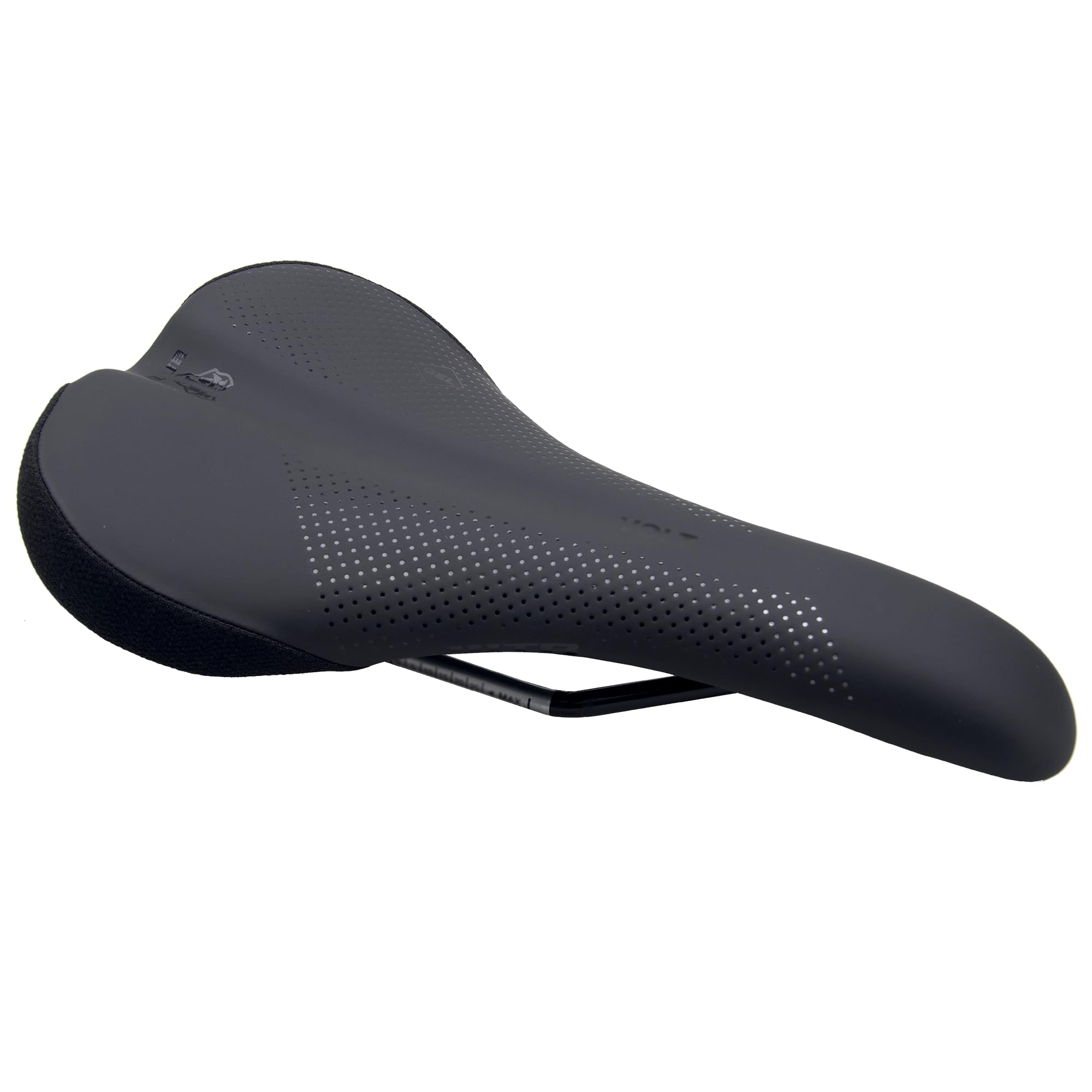
WTB Volt Medium
Key Features
- Padding Material: DNAx padding
- Dimensions: 12 x 8 x 2 in
- Suspension: None (shell flex)
- Price: $$
The WTB Volt is available in three widths (narrow, medium, wide) to match sit-bone spacing — a level of fit precision rare in the mid-range saddle market. This makes it a strong candidate for riders who already know their sit-bone width and prioritize pedaling efficiency over cushioning. However, the medium-thickness padding feels firm without padded shorts, so casual commuters expecting a plush seat will find it lacking. The DNAx padding and flex shell provide support for hours on gravel or mountain trails, but the steel rails can bend under heavier riders on aggressive terrain.
Pros
- Multiple width options ensure precise sit-bone fit for comfortable extended riding.
- Firm, supportive padding promotes efficient pedaling without excessive pressure.
- High-quality build with a respected brand reputation.
Cons
- Padding is firm enough that riders without padded shorts may find it uncomfortable.
- Steel rails may bend on rough trails for riders over 220 lbs.
Best for cyclists who wear padded shorts and value a precise, supportive fit over plush comfort — not a cruiser saddle.
Best for Wide Riders
WUVOP Oversized
Key Features
- Padding Material: Memory foam, faux leather
- Dimensions: 11 x 10.5 x 4.5 in
- Suspension: Dual shock balls
- Weight Capacity: 250 lbs
- Price: $
At 11×10.5 inches, this saddle offers the broadest platform in this comparison — a clear advantage for larger riders on upright beach cruisers or electric bikes who want maximum padding. The dual shock balls absorb road vibration during short trips. However, the long nose can interfere with pedaling for riders who bring their knees close to the frame, and some find the cushioning less supportive after 20 minutes. This is a budget-friendly option best suited to casual, relaxed riding where width matters more than pedal clearance or long-distance endurance.
Pros
- Generous 11×10.5 inch surface provides ample support for larger riders.
- Solid build quality and budget-friendly price for an oversized saddle.
- Universal clamp makes swapping out the original seat quick and easy.
Cons
- Long nose can cause thigh interference for riders with tight pedal arcs.
- Cushioning loses effectiveness on rides longer than 20 minutes for some.
A cost-effective choice for casual cruising and e-bike commutes, provided you don’t mind checking the nose clearance.
Best for Stationary/short
Xmifer Oversized

Key Features
- Padding Material: Memory foam, faux leather
- Dimensions: 10 x 8 x 4 in
- Suspension: Dual anti-shock rubber balls
- Price: $
The Xmifer saddle provides comfortable padding for upright riding at a budget-friendly price, making it a suitable upgrade for stationary bikes or short commutes under five miles. However, the mounting rails may separate under heavier loads, and the actual width runs narrower than the ‘oversized’ label suggests, limiting its fit and durability to lighter, casual use.
Pros
- Comfortable memory foam padding for upright riding posture
- Easy to install with included tools
Cons
- Mounting rails may detach on heavier riders or longer distances
Best for stationary bikes or short, smooth commutes where weight and distance are minimal, and comfort on a budget is the priority.
Best for Budget Spares
Gincleey Memory Foam

Key Features
- Padding Material: Memory foam, faux leather
- Dimensions: 10.2 x 8.2 x 4 in
- Suspension: Dual anti-shock rubber balls
- Price: $
This seat is a cost-effective choice for upgrading a kid’s bike or a spare loaner. Installation is quick with basic tools. However, the cushion may feel firmer than expected, and the cover can separate at the seams under regular use — better suited for occasional, light riding.
Pros
- Good value for money with decent comfort
- Easy to install with standard tools
Cons
- Cover material may separate at seams under normal use.
Works fine as a temporary or low-mileage seat — not for anyone needing it to hold up over months of daily riding.
Best for Budget Recreation
ROCKBROS 3-Zone

Key Features
- Padding Material: Memory foam, PU leather
- Dimensions: 10.2 x 8.6 x 3.9 in
- Suspension: Dual shock balls
- Weight Capacity: 220 lbs
- Price: $
This saddle adds a convenient carrying handle and reflective strip at a budget price, with decent padding for rides up to 25 miles. The cover may rip after a few months, and the 220 lb weight limit restricts use for heavier riders — best for light recreational or stationary bike use.
Pros
- Integrated handle and reflective strip improve convenience and low-light visibility.
- Good padding and shock absorption for medium-distance rides at a budget price.
Cons
- Cover may rip after a couple months with regular use.
A decent pick for casual indoor cycling or short commutes where cover lifespan matters less than upfront cost.
Best for Firm Support
Wittkop 5-Zone

Key Features
- Padding Material: Memory foam, gel
- Dimensions: 10 x 8.5 x 3.2 in
- Suspension: None (foam/gel only)
- Weight Capacity: 300 lbs
- Price: $$
This saddle distributes pressure effectively, which helps reduce soreness on longer rides. The firm foam supports wide sit bones but can feel too hard for those wanting plushness. Some units have experienced rail breakage, which makes durability a variable.
Pros
- Pressure distribution reduces soreness on long rides
- Good value for a mid-range saddle with a well-made build
Cons
- Firm padding can feel too hard for those accustomed to softer saddles
A viable option for commuters who want a firm, supportive seat and are willing to accept potential durability risks.
Best for City Commuters
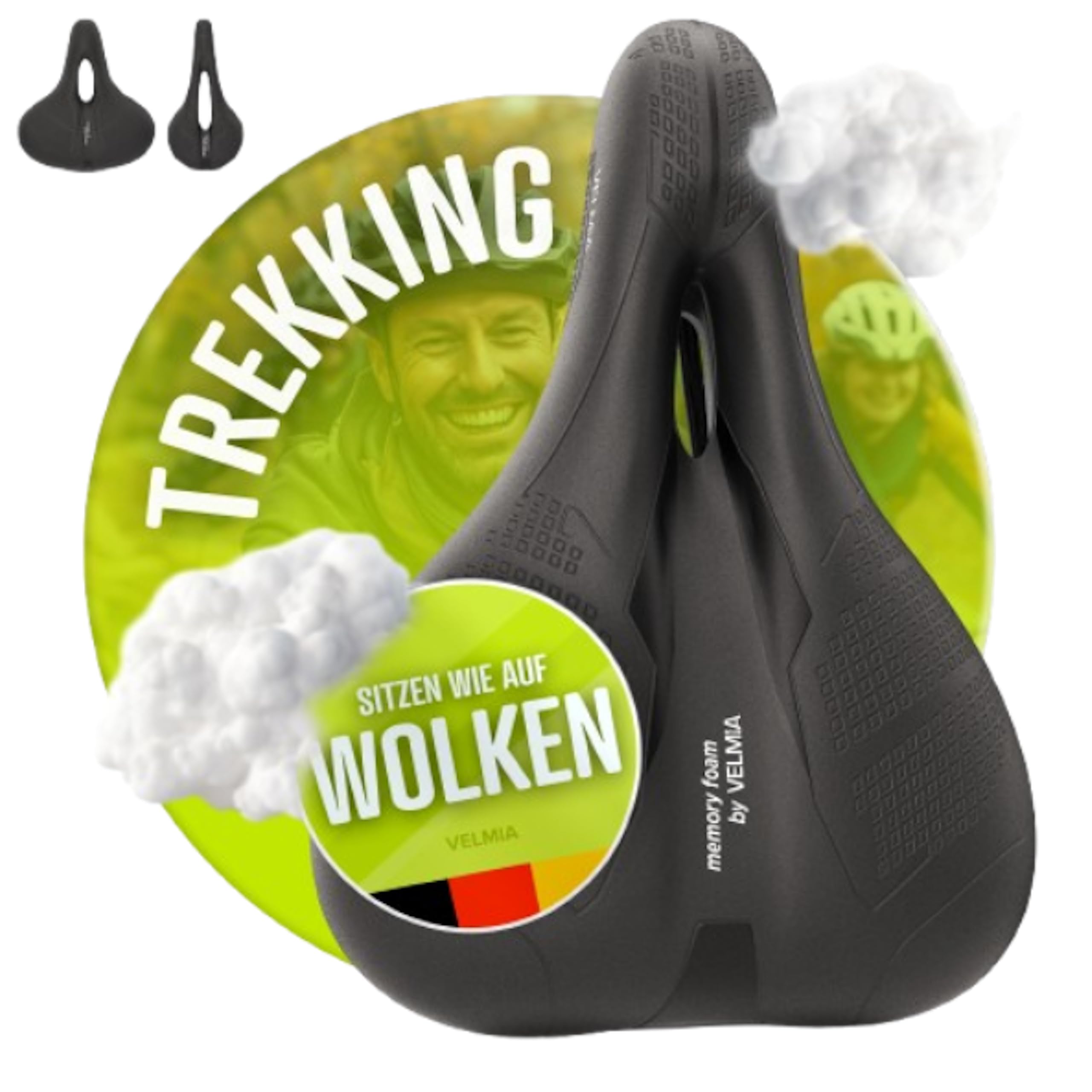
VELMIA 3-Zone
Key Features
- Padding Material: Memory foam, gel
- Dimensions: 10 x 8 in (est)
- Suspension: None (foam/gel only)
- Weight Capacity: 250 lbs (est)
- Price: $$
The VELMIA 3-Zone offers decent comfort for upright city bikes with a quality look and easy installation. Its firm feel suits those expecting some give rather than plush cushioning, and the design works best for average-weight riders on hybrids or commuters. However, the platform is narrower than expected for a ‘wide’ saddle, and some units have shown rail weakness over time — making it less competitive than similarly priced options with broader fit and stronger build.
Pros
- Good comfort for upright riding position
- High-quality appearance and materials
Cons
- Rail structure can weaken with extended use, especially under heavier loads
A passable option for lighter commuters on upright bikes who value a firmer saddle, but look elsewhere if you need a truly wide seat or want more assurance about long-term rail integrity.
Best for Occasional Riders
IPOW Dual Silicone

Key Features
- Padding Material: Memory foam, silicone balls
- Dimensions: 10.5 x 8 in (est)
- Suspension: Dual silicone balls
- Price: $
This saddle provides solid comfort for 1-2 hour rides with minimal road vibration, and the included wrench makes installation quick. The main limitation is durability: the artificial leather cover can tear along the seams after a few months of use, making this a short-term option for occasional riders on a tight budget who plan to replace a stock seat without spending much.
Pros
- Comfortable cushioning for rides up to two hours with little road buzz.
- Budget-friendly price that undercuts most padded saddles.
Cons
- Cover material may tear along seams after a few months of use.
Works well for occasional riders who want short-term comfort at a low cost and are comfortable replacing it within a season.
Best for Retro Cruiser
Schwinn Quilted

Key Features
- Padding Material: Foam
- Dimensions: 10 x 10 x 6 in
- Suspension: Coiled springs
- Price: $
The Schwinn Quilted saddle offers a classic retro look with its quilted cover and coil springs, ideal for short neighborhood cruises. However, the padding is firmer than expected, and the springs can break early, especially under heavier riders. Best for casual, style-focused riders on gentle rides under 30 minutes.
Pros
- Retro quilted design adds visual appeal to cruiser bikes.
- Installation is quick with the included hardware.
Cons
- Not recommended for riders over 200 lbs due to spring reliability concerns.
Choose this if you value the classic quilted appearance for short, gentle rides and are willing to accept firmer padding and potential spring issues.
Best for Tailbone Relief
BLUEWIND Noseless

Key Features
- Padding Material: High-density foam
- Dimensions: 13 x 9 x 5 in
- Suspension: Dual rubber balls
- Weight Capacity: 300 lbs
- Price: $$
This saddle’s wide, padded platform eliminates pressure on sensitive areas — a genuine solution for riders dealing with tailbone or prostate pain. The tradeoff comes in stability: the seat can slide or tilt even when tightened, and the outer material may separate from the foam over time. These limitations make it a narrow-use option rather than a daily driver.
Pros
- Relieves pressure on tailbone and prostate effectively.
- Very wide platform distributes weight well, helping larger riders.
Cons
- Stability issues: seat can slide forward or tip despite tightening.
Best for riders with chronic tailbone pain who can accept occasional seat adjustments and potential material separation after months of use.
Best for —
Cloud-9 Ariflow CS

Key Features
- Padding Material: Multi-stage memory foam
- Dimensions: 10.5 x 10.75 in
- Suspension: Coil spring with elastomer
- Price: $$
Cloud-9’s Ariflow CS uses multi-stage memory foam and coil spring suspension for plush cushioning on upright cruisers and commuters. Verified rider feedback is unavailable, so comfort and durability across different body types and bikes remain uncertain — a gap when competing saddles offer more data to guide a purchase.
Pros
- Multi-stage memory foam and coil spring suspension provide substantial cushioning on rough pavement.
- Soft touch vinyl cover resists weather and wipes clean easily.
Cons
- Without broad rider feedback, long-term comfort consistency across different body types and bikes remains unverified.
This saddle fits riders who trust Cloud-9’s specifications over user experience data, or those willing to test fit at their own risk.
How to Choose
The most important factor in saddle comfort is not padding thickness but how the shape and suspension match your riding position and sit-bone width.
Padding Thickness and Material
Memory foam compresses under weight and flattens over time — typically after 3-6 months of regular use. Gel inserts are heavier but retain their shape longer. High-density foam strikes a balance between initial softness and longevity.
If you ride fewer than 10 miles per trip, memory foam is fine. For longer commutes or weekend rides, look for dual-density foam or a gel-foam hybrid.
Suspension System
Coil springs absorb large bumps well but add weight and can squeak or break over months. Rubber ball suspension is quieter and lighter but provides less damping. Some saddles rely only on shell flex, which works best on smooth pavement or with padded shorts.
For beach cruisers and upright city bikes, coil springs are a good match. For hybrids or e-bikes, rubber balls offer a solid middle ground. For mountain bikes, skip suspension and focus on shell design.
Width for Sit-Bone Support
A wider saddle isn’t automatically more comfortable. The key is matching the width to your sit-bone spacing: too narrow and you sink onto soft tissue; too wide and you get thigh rub. Most riders need a saddle between 140-170 mm wide.
Measure your sit bones at home or test a few widths. Brands like WTB offer multiple width options for a reason.
Cutout or Channel
A center cutout or channel relieves perineal pressure by removing material where nerves and blood vessels are compressed. This can help riders who experience numbness, but it also reduces the saddle’s structural support area.
If you don’t have pressure issues, a solid saddle is simpler and often more durable. Avoid cutouts if you ride in rain often, as water and dirt collect in the channel.
Weight Capacity and Rail Quality
Steel rails are strong and affordable but heavy. Chromoly steel offers a good strength-to-weight ratio. Carbon rails are lighter and absorb vibration but cost more and can crack under impact. Saddles with a listed weight cap above 250 lbs typically use thicker rails and denser foam.
If you weigh over 200 lbs or ride rough terrain, prioritize rail quality over padding. A saddle that snaps mid-ride is a safety risk.
FAQ
How long does a memory foam bike saddle last before it flattens?
Most budget memory foam saddles start flattening after 3-6 months of regular use. Higher-density foams and closed-cell foams last longer. For daily commuting, consider a saddle with dual-density foam or gel inserts to extend life — expect 6-12 months before noticeable loss of support.
Can a comfort bike saddle be used on a mountain bike for trail riding?
Not recommended. Comfort saddles are shaped for upright riding positions and their wide profile interferes with thigh clearance when pedaling out of the saddle. For trails, choose a performance saddle like the WTB Volt that balances padding with pedaling efficiency.
Why does my new wide bike seat keep tilting forward even after tightening?
Tilting often results from a mismatch between the seat post clamp and the saddle rail diameter, or from lubricant on the rails. Clean the rails, apply a friction paste, and torque the clamp to manufacturer specs. If it still tilts, the saddle’s rail shape may be incompatible with your post.
Is a noseless bicycle saddle better for tailbone pain?
Noseless saddles can provide significant relief by removing pressure on the coccyx. However, they often introduce stability issues and lack of support for pedaling efficiency. They work best for upright, slow-speed riding on e-bikes or cruisers, not for distance or sport riding.