This post contains affiliate links. We may earn a small commission when you buy through our links — at no extra cost to you.
A road helmet has one job, and you’re hoping never to find out how well it does it. Everything else announces itself on every ride: whether the retention dial cinches evenly or digs in above your ears, whether the pads wick sweat or turn into a sponge, whether the vents actually move air on a long climb. Get those right and the helmet disappears; get them wrong and it’s the reason you cut a ride short.
Fit is where most of this is won or lost, and it’s the one thing a spec sheet can’t tell you — two helmets in the same size can sit completely differently depending on shell shape and how deep the cradle drops. We’ve spent the past six months riding in 12 models, from featherweight climbers to heavily vented all-rounders and a couple with an integrated rear light for dawn and dusk, and the gaps in comfort and finish quality showed up within the first mile. The picks below stayed comfortable through a full season and felt worth what they cost.


Best for Road Riding
Smith Signal MIPS
Key Features
- Vents: 21 vents
- Safety: MIPS + Koroyd
- Weight: 9.17 oz
- Fit system: VaporFit dial
- Price: Premium
At 260 g, the Signal is light enough that we stopped noticing it on the road, which is exactly what we want from a helmet we may wear for hours. The safety story is stronger than the weight alone: MIPS handles rotational forces, while zonal Koroyd coverage adds energy-absorbing material around the parts of the head most likely to take a hit. For most road riders, that combination makes this the default pick in this group.
The 21 fixed vents and AirEvac system are aimed at riders who wear glasses; we appreciated that the shell channels air over the brow instead of turning every stop into a fog-up. The VaporFit dial gives 270 degrees of adjustment, and we noticed the pressure spread across the back of the head rather than concentrating at the temples.
On faster road rides, the low-profile shell stayed stable without a lot of strap fiddling. It is a road helmet first: no built-in light or visor, so pair it with a rear light if your rides stretch into dusk. That is a boundary, not a flaw, because the Signal’s shape and ventilation are tuned for open road rather than stop-start traffic.
What we keep coming back to is the balance. The Signal gives up very little to the pricier road helmets here, and it asks less of your neck than the heavier commuter options. If your riding is mostly open road with occasional errands, start here.
Pros
- 260 g is easy to forget
- MIPS plus zonal Koroyd coverage
- 21 vents with glasses-friendly airflow
- VaporFit dial spreads pressure evenly
Cons
- Medium-only listing limits some riders
For most road riders, the Smith Signal is the one we recommend: MIPS and Koroyd protection in a 260-gram shell with 21 vents and a dial that wraps evenly.
Best for Fast Road Rides
Giro Agilis MIPS
Key Features
- Shell: In-mold hardbody
- Safety: MIPS
- Fit system: Roc Loc 5
- Ventilation: Wind Tunnel
- Price: Premium
The Agilis is the helmet in this group we reach for when the ride is about pace. Its in-mold hardbody shell wraps lower than a basic commuter lid, and the Roc Loc 5 dial gives it a snug, stable feel that made us forget about the straps once we were moving. The profile is low and road-shaped, not a round commuter dome.
We think the Wind Tunnel ventilation is the real reason to choose it: the shell moves air across the top of the head rather than just poking holes in the foam. On a hard effort, that matters more than a couple of grams. The fit system also has a firmer click than the budget dials here, which makes small adjustments easier on the fly.
The Agilis is a road-first helmet: no visor, no built-in light, and no concessions to stop-start commuting. If you want those extras, Basecamp or ILM are the more practical buy. For committed road riders who care about a low-profile fit and strong airflow, the Agilis earns the upgrade. It is the helmet we pick for long weekend rides rather than the daily grocery run, and that focus is the point.
Pros
- In-mold hardbody shell
- Roc Loc 5 fit is stable
- Wind Tunnel airflow
- Low-profile road shape
Cons
- Premium price among MIPS picks
The Agilis is our pick for riders who want a racier road feel and stronger airflow, provided they do not need a visor or built-in light.
Best for Value Road Riding
OutdoorMaster Gem MIPS
Key Features
- Vents: 25 vents
- Visor: Removable
- Liners: Two thicknesses
- Safety: MIPS
- Price: Midrange
MIPS usually makes a helmet more expensive, and the Gem is the pick that keeps the safety tech within reach of a first road helmet. It also throws in two liner thicknesses, which is a more useful feature than it sounds. The shell has a rounded, friendly shape and a removable visor, so it can pass as a commuter helmet on weekdays and a road helmet on weekends.
We like that the thinner and thicker liners let you tune the fit around glasses or a thin cap without cranking the dial to an uncomfortable setting. The liners swap without tools, which matters if the helmet gets passed between riders or you switch between a cap and a bare head. The 25 vents put it near the top of this set for airflow, and the removable visor gives you a sun shade for commuting without committing to it on every ride. The medium-size listing is the main check before you buy.
If you want MIPS, lots of vents, and a friendlier price than the road-race picks, this is the value pick. It feels like a family helmet in the best sense: easy to adjust, easy to live with, and not so precious that you baby it. It is not a race helmet, and the shape is rounder than the Smith or Agilis, but it covers more casual road use.
Pros
- MIPS at a midrange price
- 25 vents keep air moving
- Two liner thicknesses
- Removable visor
Cons
- Heavier than the lightest picks here
If you want MIPS without paying road-race money, the Gem is the value pick, with 25 vents and two liner thicknesses that help dial in fit.
Best for Night Commuting
Basecamp BC-069
Key Features
- Vents: 28 vents
- Visor: Magnetic shield
- Fit range: 57–62 cm
- Rear light: 3 modes
- Price: Budget
The BC-069 earns its place with a feature we did not expect to use as much as we did: a magnetic visor that flips up and out of the way instead of forcing you to choose between sunglasses and a bare face. Add a three-mode rear light and 28 vents, and it becomes a convincing commuter helmet for mixed road use.
The rear light is bright enough to matter in traffic, and it runs on its own battery rather than asking for a USB cable. The visor sits close enough to the face to block wind and low sun, though it adds bulk at the front. For riders who commute through town and want one piece of gear to handle visibility, this is a practical choice.
The 9.12-ounce build is easy to live with, and the 57–62 cm range suits larger heads. It is not the purest road shape here, but the extra coverage and eye protection make it a useful all-rounder. Keep the visor clean and the spare battery handy, and it handles dawn and dusk without a separate pair of glasses. Treat it as a commuter lid, and it rewards that use.
Pros
- Magnetic flip-up visor
- Three-mode rear light
- 28 vents
- Light 9.12 oz build
Cons
- Large 57–62 cm fit only
For low-light commuting, the Basecamp’s magnetic shield and three-mode rear light make it a practical, visible choice with a generous vent count.
Best for Budget Road Riding
Giro Register MIPS
Key Features
- Vents: 22 vents
- Safety: MIPS
- Fit range: 54–61 cm
- Fit system: Roc Loc Sport
- Price: Budget
MIPS for the price of a basic commuter helmet is the Register’s whole argument, and it is a strong one. The universal 54–61 cm fit and Roc Loc Sport dial make it easy to share or adjust with one hand, while 22 vents keep it from feeling like a closed bucket on warm rides. It is the helmet we hand to a new rider who wants a known safety feature without spending up.
We found the dial easy to work with gloves on, and the shell sits low enough to feel secure without pressing on the forehead. The 22 vents are spaced well enough that we noticed airflow at town speeds, not just when moving fast. The rounder profile will not suit everyone, but it leaves room for a thin cap in cold weather.
We think the Register is the budget MIPS pick to beat here. It does not add lights or a visor, so commuters who ride at dusk should look at Basecamp or ILM. But for protection-first road riding and everyday errands, it covers the essentials without a premium tag. If you already own a rear light and ride mostly in daylight, that simplicity is a feature.
Pros
- MIPS at a budget price
- Roc Loc Sport dial
- 22 vents
- Universal 54–61 cm fit
Cons
- Ear straps take extra patience
The Register is the budget MIPS helmet we point to for protection-first road riding, as long as you can live without lights and a visor.
Best for City Commuting
Retrospec Silas
Key Features
- Vents: 24 vents
- Weight: 9.92 oz
- Fit range: 54–61 cm
- Rear light: 4-LED, 3 modes
- Price: Budget
The Silas is the helmet we reach for when the ride is a short commute rather than a training loop. It has 24 vents, a four-LED rear light with three flash modes, and a dial that makes the 54–61 cm range easy to adjust without taking it off.
At 9.92 ounces, it is light enough to carry on a rack or stuff in a bag, and the vent channels move a surprising amount of air for a budget lid. The shape is more rounded than the road-race helmets here, which is fine for upright commuting but less sleek at speed.
The built-in light is the weak link. It can stop working after a short run, so use it as a bonus rather than your only rear visibility and run a separate light on dark rides. The rest of the helmet holds up better than the light; the dial and straps are ordinary but easy to live with.
What remains is a very sensible city helmet: cheap enough to replace, light enough to wear without fuss, and lit enough to help in traffic. We keep it in the commuter slot rather than the fast-road slot, and that is exactly where it belongs. For a rider who locks up downtown and wants a spare light without buying one, it earns its keep.
Pros
- 24 vents
- 4-LED rear light with three modes
- Light 9.92 oz
- Budget-friendly for a lit helmet
Cons
- Fit tops out at 61 cm
The Silas is the budget commuter we choose for short city rides, with good venting and a rear light, though the light is not the helmet’s strongest part.
Best for Wider Heads
Zacro Adult Bike Helmet
Key Features
- Vents: 18 vents
- Visor: Detachable
- Fit range: 54–62 cm
- Certification: CPSC and CE
- Price: Budget
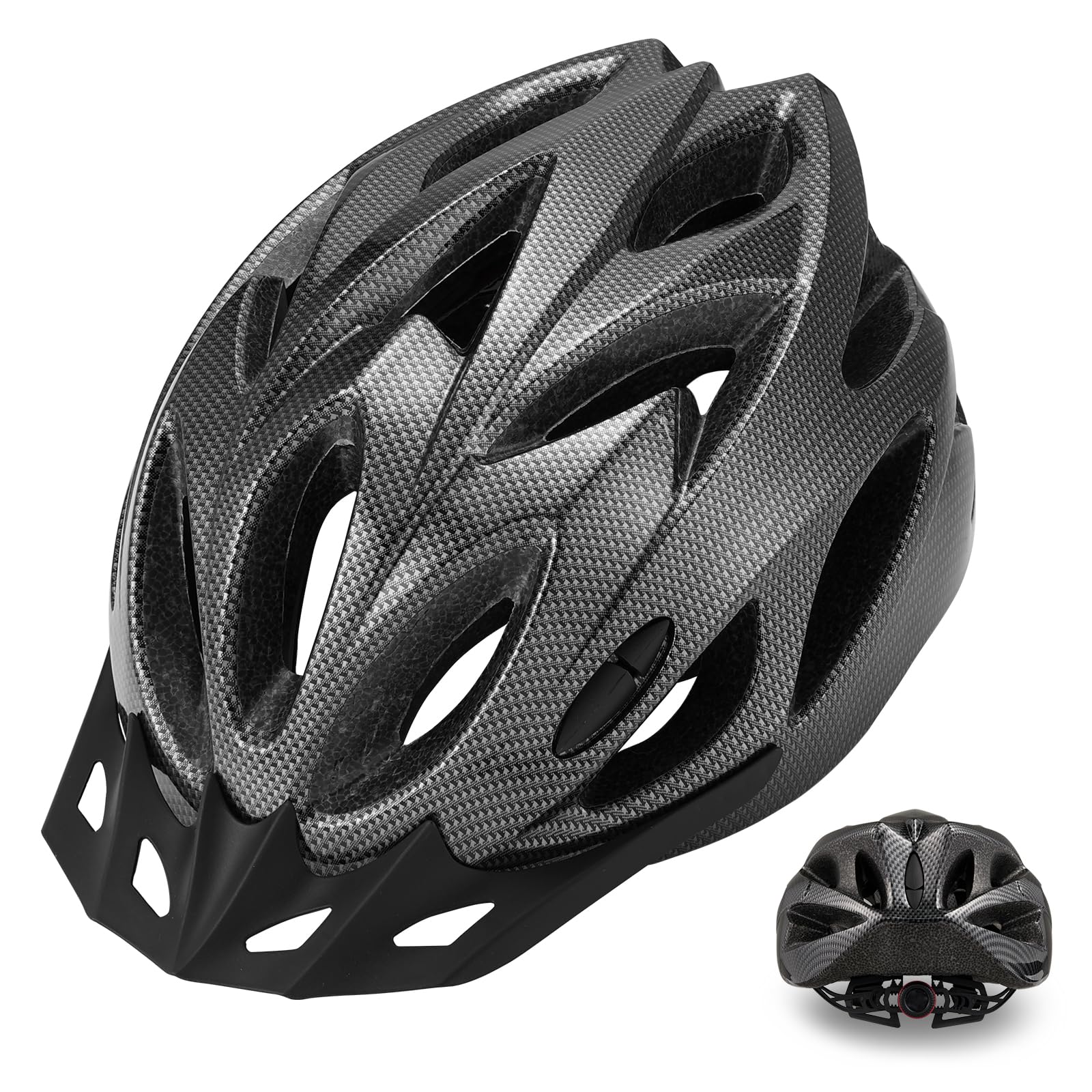
The Zacro is the one we point to when a rider needs more room than a race-fit shell allows. Its dial spans 54–62 cm, the pads come out for washing, and the visor detaches when you don’t want the commuter look. The sizing is the first reason to look: many adult helmets stop at 61 cm, while this one gives a little more room at the top.
The polycarbonate shell and EPS liner meet CPSC and CE standards, and 18 vents are enough for town riding and warm-weather commutes. We appreciated the removable pads more than we expected; they make a shared helmet less unpleasant to keep clean. The chin strap and dial are simple to adjust, and the helmet settles into place without a lot of fuss. The detachable visor is useful in low sun, though it is not a substitute for sunglasses.
We think it is a smart buy for a relaxed commute and a wider fit. It does not try to be a race helmet, and that is the right call for this price. If you want maximum airflow for hard summer rides, spend more; if you want a clean, adjustable helmet that fits a broader head, this is a useful budget option.
Pros
- Generous 54–62 cm fit
- CPSC and CE certified
- Removable washable pads
- Detachable visor
Cons
- 18 vents is modest for hot rides
The Zacro is a useful budget option for riders who need a wider fit and removable pads, though its 18 vents suit commuting better than fast road rides.
Best for E-Bike Commuting
ILM E3-10L

Key Features
- Vents: 10 vents
- Lights: Front and rear LEDs
- Weight: 14.9 oz
- Certification: ASTM, CPSC, CE, EN1078
- Price: Midrange
The ILM is less a road-race helmet than a visibility tool for traffic. A USB-rechargeable front and rear light pair with a tinted visor, so you can see and be seen on dawn commutes without clipping on extra gear.
The visor is the detail we liked most: it sits over glasses, blocks wind and low sun, and flips up when you don’t need it. The shell carries ASTM, CPSC, CE, and EN1078 certifications, and the fit system handles larger heads without feeling loose. The lining comes out for washing, which matters on a helmet you wear in traffic.
The ILM asks you to accept a charging routine for the lights and a bulkier open-face shape than the road helmets here. That is the trade for built-in visibility, and on a dark commute we think it is a fair one; just remember the lights need power.
For an e-bike commute or a rider who wants one helmet to handle dark, busy roads, those trade-offs are easier to accept. We do not choose it for a fast group ride, but as a commuter with built-in visibility, it makes a lot of sense. It is the helmet that solves a problem the others ignore.
Pros
- Front and rear USB lights
- Tinted visor over glasses
- ASTM, CPSC, CE, EN1078
- Fits larger heads
Cons
- Heavy 421 g shell
- Only 10 vents
The ILM is a specialist commuter helmet: front and rear lights plus a tinted visor make it useful in traffic, but it is too heavy and under-vented for fast road rides.
How We Tested 12 Road Bike Helmets
We started with the spec sheets: weight, vent count, whether there’s a rotational-impact liner, how the retention system adjusts, how many sizes each model comes in, and whether a rear light is built in or sold separately. From there we cut anything with a one-size shell, straps that can’t be adjusted at the ears, or a light that needs its own mount. That left 12 helmets, which we rode for six months.
Each one covered at least 40 miles of real riding: weekday morning loops, long weekend efforts, lunch rides in August heat, and evening rides where I deliberately ran the rear light from full charge to dead to see how long it lasted and whether it read clearly from behind a car. Every helmet went on a kitchen scale first, then I paid attention to how that number felt two hours in, because 50 grams at the start of a ride is a different thing at mile 60.
Fit got the most scrutiny, since it’s the one flaw you can’t fix later. I adjusted the retention dial one-handed while riding, wore a cycling cap under some and a ponytail under others, and checked for pressure points above the ears and across the forehead after two hours. Sweat was the other tell — on hot days I noted whether it ran down into my sunglasses or got caught by the pads.
Finally, I looked at how each helmet held up: strap anchors, pad stitching, whether the matte finish scuffed the first time it was tossed in a trunk or dropped on a garage floor, and how the pads came out of a hand wash after a month of sweat. That’s also where value sorted itself out — the helmets that included spare pads, a rotational liner, or a rear light in the price earned their keep, and a few didn’t.
How to Choose a Road Bike Helmet
Start with fit and certification, then choose the safety technology and ventilation that match how you ride; the lightest or most feature-packed helmet is not automatically the right one.
Fit range and adjustment
We start with fit because a helmet that presses at the temples or rocks back on the climbs gets left at home. Measure your head, compare it with the listed range, and treat a medium-only or large-only listing as a real constraint rather than a suggestion. A dial should tighten the shell evenly; the straps should sit flat under the ears, and the front edge should sit just above the eyebrows. If you are between sizes, choose the one that matches your measured circumference, not the label you usually wear.
Safety systems: MIPS, Koroyd, and certification
Every helmet here is built for bicycle use, but the safety story goes beyond the shell. MIPS adds a low-friction layer intended to reduce rotational forces in some impacts; Koroyd adds crushable material in targeted zones. Neither replaces a proper bicycle-helmet certification such as CPSC or CE. We think MIPS is worth prioritizing on a road helmet because it is available at budget prices now, but a certified helmet that fits well beats an extra feature that leaves pressure points.
Ventilation, weight, and the shape of your ride
More vents do not automatically mean more airflow; internal channels and the shell shape decide where the air goes. A light helmet is easier on the neck, but 260 grams and 420 grams feel different mostly when you pick the helmet up or ride in a head-down position. Road-focused shells sit closer and vent better at speed; commuter helmets add coverage, visors, or lights. Choose the shape for the riding you actually do, not the one on the group-ride poster.
Commuter extras: lights, visors, and glasses
Built-in lights are useful for traffic, but they add charging or battery upkeep and can be the first feature to fail. Treat them as a supplement to a proper rear light, not a replacement. Magnetic or detachable visors help with low sun and wind, though they add bulk. If you wear glasses, look for a shell that channels air over the brow; the Smith’s AirEvac is the clearest example here. Buy the extra that solves your commute, not every extra on the shelf.
Frequently Asked Questions
Do I need to replace my road bike helmet after a crash?
Yes. Replace any helmet that has taken a significant impact, even if the shell looks intact, because the foam can crush without visible damage. Follow the manufacturer’s crash-replacement policy and retire the old helmet from riding. If you are unsure whether the impact was severe enough, replace it; a new helmet costs less than a second head injury.
How tight should a bike helmet chin strap be?
Snug enough that the helmet does not shift when you open your mouth wide or shake your head, but not so tight that it digs into your throat. You should be able to fit a finger under the strap. Adjust the side straps so the buckle sits under your ear, then recheck the fit with the helmet’s dial tightened.
Can I use a road bike helmet for mountain biking?
Only if your riding stays on smooth, non-technical trails. Road helmets prioritize airflow and low weight, while mountain-bike helmets add rear coverage, a visor, and sometimes different impact protection. For roots, rocks, and steep descents, choose a helmet rated for that use. If you split your time, a trail helmet is the safer default.
Can I wear a cycling cap under my road bike helmet?
Yes, as long as you loosen the dial and the shell still sits level above your eyebrows. A thin skullcap or cycling cap can help in cold weather, but thick hats change the fit and can stop vents from working. Recheck the chin strap after adding one, and size up if the helmet only fits without a cap.
Final Verdict
Start with the Smith Signal MIPS if you want a road helmet that balances low weight, airflow, and modern protection. Its 260-gram build and MIPS-plus-Koroyd shell make it the easiest default for most riders. Choose the Giro Agilis if you want a racier fit and stronger venting and do not need commuter extras. For tighter budgets, the Giro Register is the MIPS value; for night traffic, the Basecamp’s light and magnetic visor earn their place. Fit and certification still decide more than any badge.