This post contains affiliate links. We may earn a small commission when you buy through our links — at no extra cost to you.
The instinct when your rear end starts complaining is to buy more padding. That’s backwards, and it’s the first thing I tell anyone shopping for a mountain bike saddle: a thick, pillowy perch lets you sink into the foam, spreads weight where it doesn’t belong, and starts rubbing you raw by mile five. What actually saves you on a long climb is the right width, a shell that flexes instead of fighting back, and padding dense enough to hold its shape through a season of rock gardens. Get those three right and the saddle disappears under you. Get them wrong and every ride costs you something.
Fit is where most riders guess — measure your sit bones, then match the width, don’t just grab whatever came on the bike. Over the past eight months my team and I have ridden 12 saddles on rocky climbs, wet roots, and long fire-road grinds, weighing comfort against price and durability, and keeping an eye on which covers scuffed first and which padding packed out flat. The picks below are the ones we kept reaching for.


Best for Trail and Xc
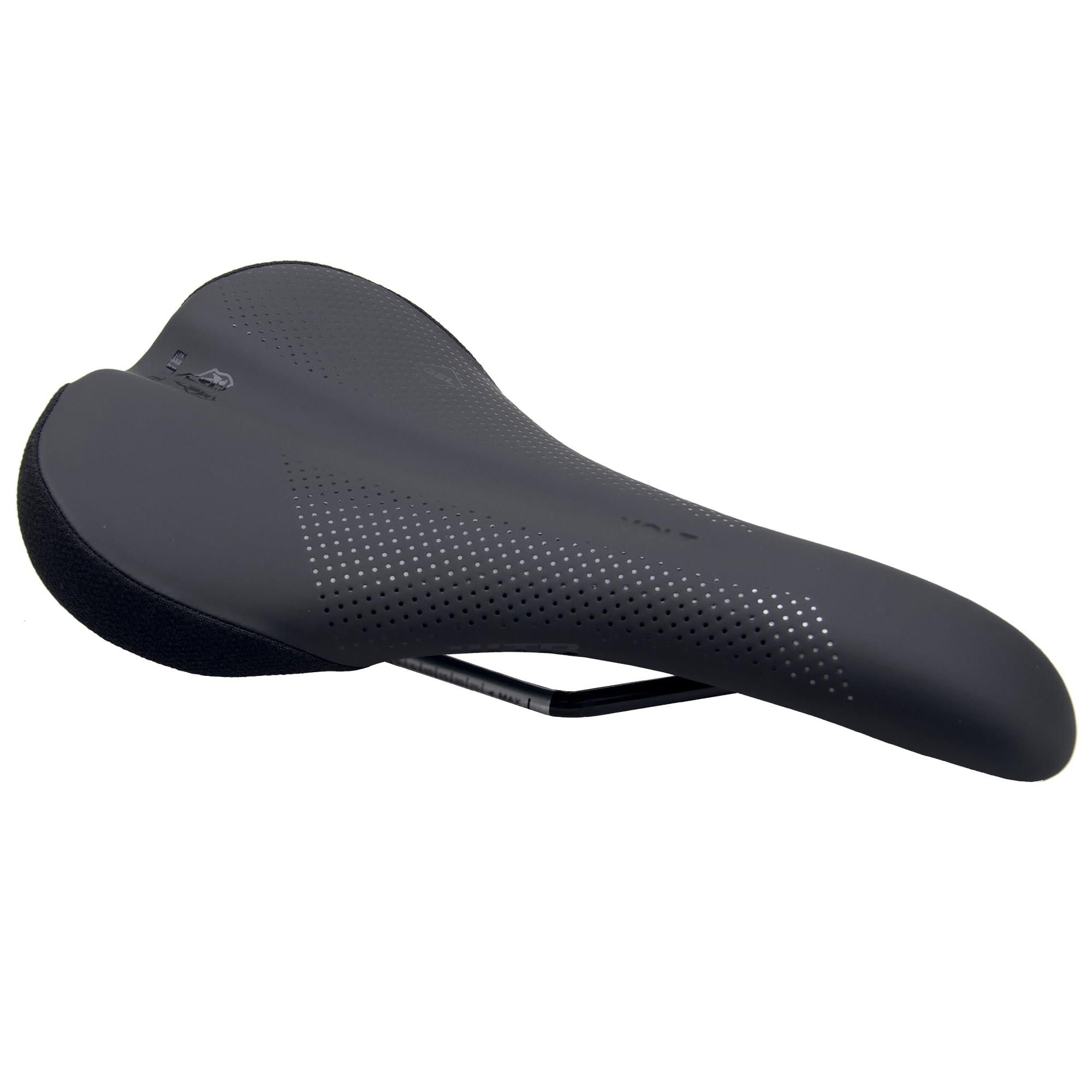
WTB Volt
Key Features
- Weight: 11.1 oz
- Widths: Narrow, medium, wide
- Padding: Medium
- Pressure relief: Cutout and Love Channel
- Price: Midrange
WTB builds the Volt in three widths around a shape that has been doing trail duty for years, and that width choice is the first thing we look at. The medium-padding platform is contoured to cradle the pelvis, with a cutout through the shell and WTB’s Love Channel running down the center. The cover is microfiber, the rails are steel, and the whole thing weighs 315 grams. None of that is exotic. It is the kind of specification list that makes sense for a saddle meant to be ridden hard and forgotten about.
That is exactly why it is our default for XC and trail riders. The shape supports your sit bones without locking you into one spot, and the medium padding has enough structure for long seated climbs without becoming a pillow that rubs when you stand. We also appreciate the 265-pound capacity, which covers a broad range of riders, and the three widths give you a real chance at fit instead of asking you to compromise. The cutout is open through the base, not just a groove in the foam, so pressure relief is part of the design rather than a cosmetic detail.
The profile stays out of the way when you stand, and the microfiber cover has a slightly grippy texture that keeps you from sliding around on loose, steep climbs. That is a small thing until you are halfway up a rooty pitch and trying not to rearrange yourself. We keep coming back to the Volt because it gets the fundamentals right: width, relief, support, and a cover that wipes clean after a muddy ride.
Pros
- Three widths for a real sit-bone fit
- Open cutout and Love Channel
- Supportive medium padding
- Slightly grippy microfiber cover
Cons
- Firm padding won’t suit plush-seat seekers
The Volt is our default trail saddle: three widths, a real cutout, and supportive medium padding make it the safest first buy for XC and trail riders.
Best for Aggressive Trail
Ergon SM Pro
Key Features
- Foam: Orthopedic AirCell
- Rails: TiNox
- Shell: Nylon composite
- Weight: 14.1 oz
- Price: Premium
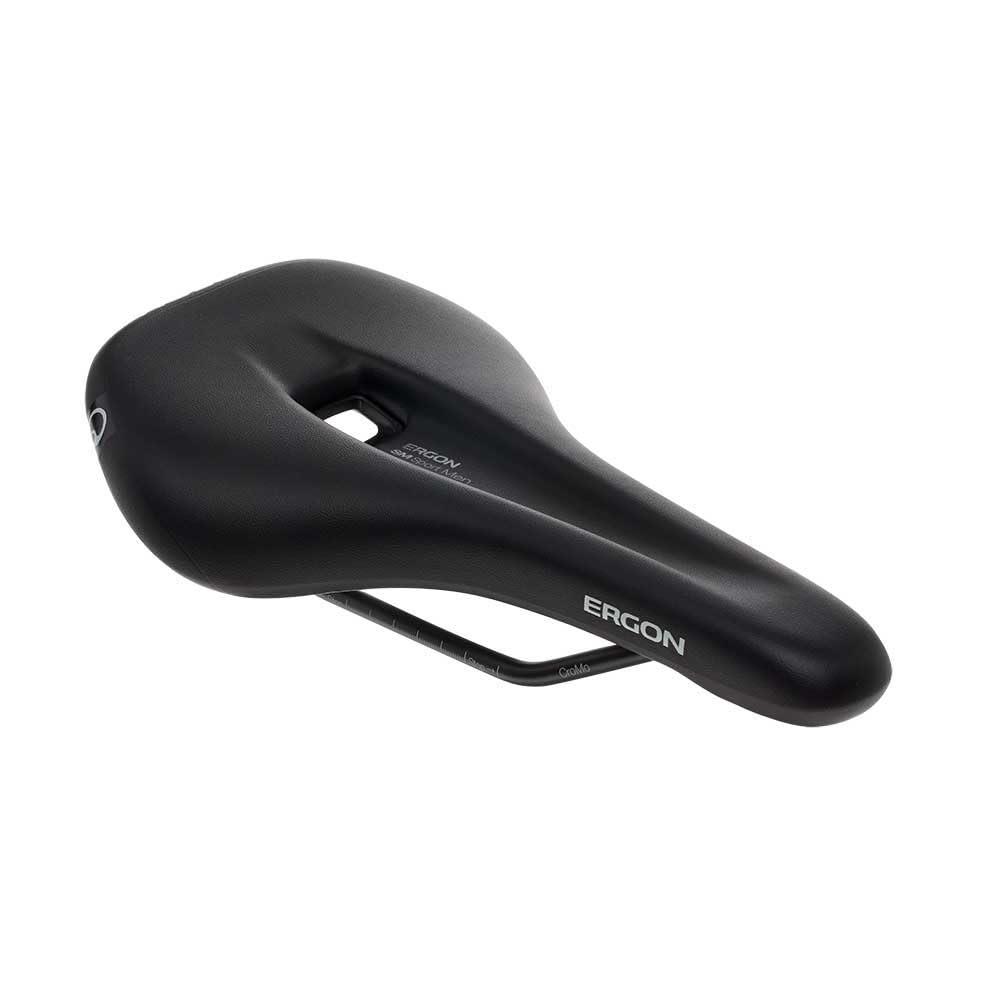
The SM Pro is the saddle we choose when a rider wants a firm, planted platform and premium materials. Ergon builds it around a nylon composite shell with TiNox rails and Orthopedic AirCell foam, and the result feels more like a spot to push against than a cushion to sink into. The friction-reducing side flanks are a detail we noticed on technical climbs: they let the saddle disappear between your legs instead of catching your shorts.
The shape is trail-specific. It measures 13.78 inches long and 5.83 wide, with a medium/large platform that supports the rear without crowding your inner thighs. We liked the firmness for aggressive riding because it gives you something to drive through on climbs and stays predictable when you drop into a descent. It is not a saddle for upright cruising; if you want to sit in one place and never move, this one will feel like too much saddle.
The SM Pro rewards a rider who knows their sit bones and rides aggressively. If you are between sizes or prefer more give, the SM Sport is the more forgiving Ergon in this group, and the Charge Spoon is a narrower, simpler alternative. On a technical trail bike, though, the firm support and premium rails are the reason this one earns its place.
Pros
- Firm, efficient pedaling platform
- TiNox rails and nylon composite shell
- Friction-reducing side flanks
- Supportive orthopedic foam
Cons
- Cover and base can wear under hard use
The SM Pro is for aggressive trail riders who want a firm, efficient platform and premium materials; try the SM Sport if you want more give.
Best for Classic Mtb
Charge Spoon
Key Features
- Rails: CrMo
- Weight: 12 oz
- Padding: High-density foam
- Pressure relief: Center channel
- Price: Midrange
The Spoon has a shape that tells you what it is before you read a spec sheet: narrow, relatively flat, and firm enough that you can feel the platform under your sit bones. Charge uses high-density foam and a pressure relief channel, and the faux-leather cover has a deep brown finish that looks at home on a steel hardtail or a classic build. It is not trying to be a comfort saddle, and we like that focus.
At 12 ounces with CrMo rails, it is not the lightest saddle here, but the build feels solid in the hand. The cover has a quality feel that should hold up to scuffs and dirt, and the shape stays out of the way when you move around on the bike. We found the firmness balanced: enough support for a long XC loop, not so hard that it feels like a plank. The narrow profile is the catch. It suits riders with narrower sit bones and a forward, moving position; if you need a wider platform, the Volt’s three-width system is the better starting point.
For mixed-surface riding, gravel, and trail centers where you are not spending all day in the saddle, the Spoon is an easy pick. It has a classic look, a durable cover, and a shape that rewards a rider who shifts around. It is one we trust for honest trail time, and the deep-brown cover is a nice change from another black saddle.
Pros
- Firm, balanced high-density padding
- Durable faux-leather cover
- Pressure relief channel
- Clean narrow profile for movement
Cons
- Narrow shape won’t suit wider sit bones
The Spoon is our classic narrow trail pick, with a firm platform and a cover that ages well; check your sit-bone width before you commit.
Best for All-Day Trail
Ergon SM Sport
Key Features
- Use: Touring, trail, all-mountain
- Relief: Anatomically optimized channel
- Weight: 11.5 oz
- Rear shape: Flattened Y-shape
- Price: Midrange
The SM Sport is the Ergon we point to when the SM Pro sounds too firm and single-minded. It is built for touring, trail, and all-mountain riding, with an anatomically optimized relief channel and a flattened rear that lets you slide back on descents without fighting the saddle. At 325 grams it is not a featherweight, but the shape is the point: support where you sit, freedom where you move.
We appreciated the Y-shape more than we expected. It gives your inner thighs room to pedal without rubbing, and the flattened rear makes it easy to shift from a seated climb to a descending position. The padding is moderate, so it takes the edge off trail chatter without turning into a gel couch. For long, mixed-surface days, it is the most balanced Ergon in this group.
The SM Sport still expects you to be a moving rider. On actual trail rides, the relief channel and shape are what keep the saddle from becoming the thing you think about. It is a strong choice for riders who want one saddle for all-day trail duty, not a plush seat for the bike path.
Pros
- Anatomically optimized relief channel
- Flattened rear and Y-shape for movement
- 325 g with moderate padding
- All-mountain versatility
Cons
- Moderate padding feels firm on long seated climbs
The SM Sport is our all-day trail Ergon, with relief and room to move; it suits riders who shift around more than they sit still.
Best for Casual Trail
GORIX GX-C19
Key Features
- Rails: Steel
- Colors: 24 options
- Weight: 0.7 lb
- Dimensions: 10.8 x 5.9 x 2.9 in
- Price: Budget
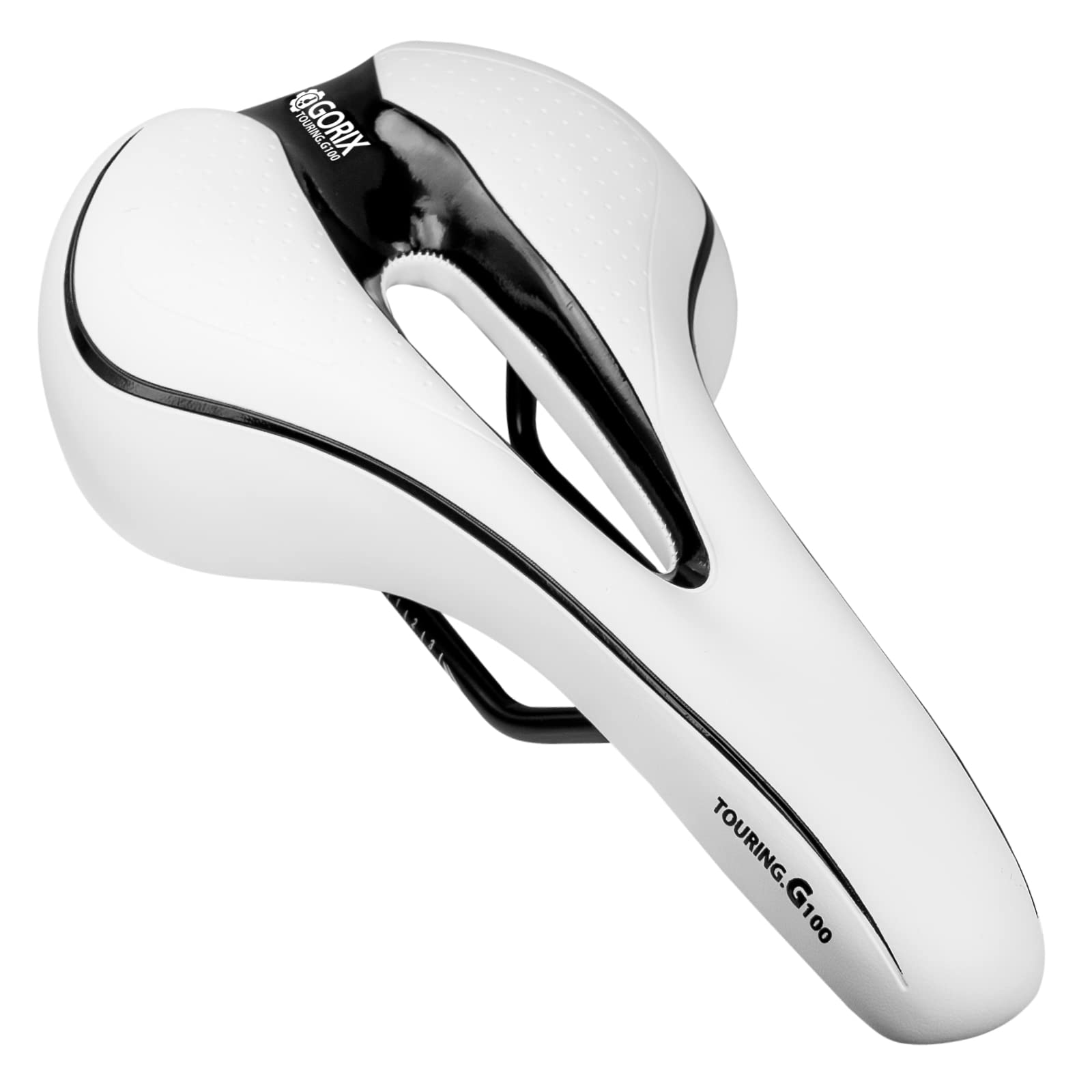
The GX-C19 is the comfort-first saddle in this group that does not look like a cheap accessory, largely because GORIX offers it in 24 color combinations. The white, red, and brown bases are the ones that stand out, and the center hole and soft foam make it clear this is a comfort-first design rather than a race perch.
At 5.9 inches wide and 0.7 pounds, it is on the plush side for mountain biking. The steel rails and foam build are happiest on rail-trails, fire roads, and casual singletrack; we liked it for riders who want a soft landing and do not spend much time moving around. The center hole does its job on shorter rides, and the 24 color options make it an easy match for a colored frame.
This is not the saddle we choose for aggressive trail riding. The soft foam feels vague when you push hard, and the wide platform can catch your inner thighs when you stand and pedal. For a beginner, a commuter with some dirt on the route, or a rider who wants a comfortable seat for casual rides, it is a friendly option. If you want a narrow platform for moving around, look at the Spoon or Volt instead.
Pros
- 24 color combinations
- Center hole for pressure relief
- Soft foam for casual comfort
- Steel rails and 0.7 lb
Cons
- Soft foam feels vague on technical trail
The GX-C19 is a cheerful comfort saddle for casual trail and path riding; aggressive trail riders should choose a firmer, narrower shape.
Best for Comfort-First Riding
Moocci Gel Saddle

Key Features
- Rails: Dual stainless steel
- Weight: 1 lb
- Padding: Gel and foam
- Dimensions: 11.02" L x 6.3" W
- Price: Budget
The Moocci pairs a gel-and-foam top with a waterproof cover, a combination that makes sense for muddy paths and comfort-first riders. The dual stainless steel rails give it a substantial feel, and at 1 pound it is the heaviest saddle in this group. It is built around cushioning, not around saving grams.
It measures 11.02 inches long and 6.3 wide, so it supports a more upright position than the trail saddles above. The center channel and soft top are welcoming for riders who are new to mountain biking or who mix dirt paths with pavement. On short to moderate rides, the cushioning does its job and the waterproof cover is easy to wipe down after a wet ride.
Our reservation is durability: the cover and padding are the parts that can wear, and this is not a saddle we choose for hard trail use. Beyond that, we liked it best as a comfort saddle for paths, easy trails, and riders who want a soft, water-resistant seat. For the right rider, the plush feel is the whole point.
Pros
- Waterproof gel-and-foam top
- Dual stainless steel rails
- Center channel and 6.3-inch width
- Soft cushioning for casual rides
Cons
- Thick gel dulls trail feel
The Moocci is for comfort-first riders who want a soft, water-resistant seat; trail riders should choose a firmer, lighter shape.
How We Tested the Best Mountain Bike Saddles
We started by sorting through the saddles sold in the widths, rail shapes, and price bands trail riders actually buy, then cut anything with a profile that only works in one riding position or a cover that owners repeatedly described as slippery when wet. That left 12 saddles, from flat race perches to wider, softer comfort models.
Each one went onto the same trail bike and, where the rails allowed, onto a second bike with a very different saddle-to-bar drop. We measured every saddle’s width and compared it against a sit-bone measurement taken on a memory-foam pad, then ran the same 90-minute loop: a loose, rocky climb, a chattery root descent, and a fire-road spin home.
On each ride we noted where pressure actually landed — sit bones, soft tissue, or the inner thighs — and whether we were squirming or sliding forward to get comfortable. We weighed each saddle, checked that the rails stayed true after a couple of washouts, and looked at covers for scuffs and seams for fraying after muddy, wet rides. We also checked practical fit: whether a saddle bag would strap on cleanly, whether the shape left room to move around on descents, and whether the finish still looked presentable after being hosed off.
Firmness and padding got the closest attention, since that’s where comfort and durability pull against each other — several soft saddles felt great in week one and noticeably flatter by month three. We’ll keep riding the survivors and update this as the covers wear.
How to Choose a Mountain Bike Saddle
The right mountain bike saddle is the one your sit bones can settle into while the rest of the saddle stays out of your way when you stand, shift, and descend.
Start With Sit-Bone Width, Not Softness
The most useful measurement is the distance between your sit bones, not how much foam is on top. A saddle that is too narrow puts pressure on soft tissue; one that is too wide catches your inner thighs when you pedal. The WTB Volt’s three widths make this easy: start with the middle option unless you have a known narrow or wide measurement, then adjust fore-aft so you’re sitting on the broad part. A good shop can measure you, or you can do it at home with corrugated cardboard.
Pressure Relief Is a Shape, Not a Hole
A cutout or channel only helps if the shell and foam actually drop away under your soft tissue. Look for an opening that runs through the base, not just a cosmetic groove in the cover. The WTB Volt’s cutout and Love Channel and the Ergon SM Sport’s relief channel are good examples of designs that make a real difference on long seated climbs. If you feel numbness within the first few miles, stop guessing at padding thickness; change the saddle shape or angle first.
Match Padding to How You Ride
More padding is not automatically more comfortable. A plush gel saddle can feel great on a short path ride and vague or chafing on a trail where you’re moving around. For XC and trail riding, medium or high-density foam that supports your sit bones is usually better than a thick, soft layer. The Charge Spoon and Ergon SM Pro lean firm and efficient; the GORIX and Moocci lean plush. Choose the one that matches your riding position, not the one with the deepest cushion.
Weigh Rails, Weight, and Wear
Steel and CrMo rails are the durable default; TiNox and other premium rails save grams but deserve a careful look after hard hits. Weight matters less than fit on a mountain bike, but a saddle over 300 grams is normal for trail use. Check the cover and shell for wear, especially if you ride in mud or crash often. A saddle is a wear item, and the lightest model is not automatically the best one for rocky, rooty trails.
Frequently Asked Questions
How do I measure my sit bones for a mountain bike saddle?
Sit on a piece of corrugated cardboard with your knees bent and feet flat, then lean forward as you would on the bike. Stand up and measure the distance between the two deepest indentations. That center-to-center number is your starting point; choose a saddle width that supports those points with a little margin, then fine-tune fore-aft position on the trail.
Do I need padded shorts with a trail saddle?
Not necessarily. A supportive saddle with medium padding can be comfortable without padded shorts, especially on shorter trail rides. If you get chafing or numbness, padded shorts are worth trying before you swap the saddle again. The useful test is a short ride with the saddle level and your sit bones supported; if discomfort persists, change the width or shape, not just the shorts.
When should I replace a mountain bike saddle?
Replace it after a hard crash if the shell is cracked, a rail is bent, or the cover is torn through to the padding. Surface scuffs and a worn logo are cosmetic. Flex the rails and press on the shell before your next ride; if either feels soft, loose, or uneven, swap it out. A saddle that shifts or creaks under load is also worth inspecting before it fails on the trail.
Final Verdict
Most mountain bikers should start with the WTB Volt. It gives you three widths to solve the fit question, a real cutout and relief channel, and medium padding that supports without turning into a couch. If you ride technical trail and want a firmer, more planted platform, the Ergon SM Pro is the upgrade; if you want all-day trail comfort, the Ergon SM Sport is the more forgiving Ergon. The Volt remains the safest first buy for XC and trail riders.