This post contains affiliate links. We may earn a small commission when you buy through our links — at no extra cost to you.
Merino wool base layers are prized for their warmth, softness, and natural odor resistance. But if you’ve ever pulled a shirt from the wash only to find a new hole near the shoulder seam, you know the material’s biggest weakness: fragility.
The reality is that all merino, even from premium brands, will degrade faster than synthetics if not handled carefully. The smart approach isn’t to avoid merino — it’s to match the garment to your actual use case and care habits.
This guide focuses on the models that balance comfort, warmth, and realistic longevity, so you can pick the layer that fits your hiking style without expecting a lifetime of abuse.


Best for Serious Hikers
Minus33 Men’s Crew
Key Features
- Fabric Weight: Midweight
- Material: 100% Merino
- Type: Separate top
- Price: $$$
The Minus33 Men’s Crew delivers warmth that adapts across a wide temperature range — comfortable in brisk cold without overheating during active movement. The 100% merino wool feels smooth against the skin, with no itchiness even on full-day wear. Its construction is notably robust: reinforced seams and consistent knitting give it a longevity edge over many base layers at lower price points. This shirt maintains its shape after repeated washes when cared for properly.
This base layer is best suited for men who demand performance on serious outdoor adventures — from backcountry skiing to winter camping. It rewards those who prioritize quality and are willing to invest in a shirt that holds up over years of use. A key caveat: the fit can be inconsistent. Some find the sleeves a bit short or the neck too tight, so careful reference to the size chart is necessary. Men with longer torsos or larger necks should check measurements closely. It is not the most budget-friendly option, nor ideal for those with very tall frames.
Pros
- Provides warmth across a broad temperature range without adding bulk.
- Superior build quality with durable stitching and materials.
- Soft against skin with no itchiness, even during extended wear.
Cons
- Sleeve length and neck fit may be too short or tight for some body types — careful size selection is needed.
- Price is higher than many alternatives — best for those who prioritize longevity over initial cost.
For men who want a merino base layer that delivers on warmth and durability year after year, this shirt is a sound investment.
Best for Active Hikers
MERIWOOL Men’s Shirt
Key Features
- Fabric Weight: Midweight
- Material: 100% Merino
- Type: Separate top
- Price: $$
This shirt provides excellent warmth and moisture management for high-output activities, with a soft feel and well-proportioned fit that layers comfortably under a shell. It suits men who want a high-performing base layer for year-round hiking, skiing, or daily wear. The tradeoff: occasional seam issues or pilling can appear after washing, so this rewards careful handling rather than total neglect.
Pros
- Excellent warmth and moisture management for active use.
- High-quality construction with a soft, comfortable feel.
- Comfortable fit with good sleeve length for layering.
Cons
- Seam issues or pilling may occur after washing.
For men who want premium merino performance without the premium price, this shirt delivers — just be prepared for the occasional quality inconsistency.
Best for Winter Hiking
MERIWOOL Women’s Pants
Key Features
- Fabric Weight: Midweight
- Material: 100% Merino
- Type: Separate bottom
- Price: $$
These pants provide strong warmth for sub-freezing conditions and a soft, smooth fabric that feels comfortable against the skin. The merino wool manages moisture well during active hiking. The fit, however, may not suit everyone – the waist can feel short for longer torsos, and the knees may sag on some leg lengths. Sizing up is a common workaround. Occasional seam issues have been reported, consistent with many merino products.
Pros
- Provides warmth for sub-freezing conditions
- Soft and silky fabric that feels smooth against skin
- Comfortable and non-bulky fit under outer layers
Cons
- Waist may feel short for longer torsos; knees can sag on some leg lengths
- Seam separation or small holes may appear after repeated washing
For winter hikers who want dependable warmth and softness without a premium price, these pants deliver – just plan to size up for a better fit.
Best for First-Time Buyers
Merino.tech Men’s Shirt
Key Features
- Fabric Weight: Lite, Mid, Heavy
- Material: 100% Merino
- Type: Separate top
- Accessories: Socks
- Price: $
Offers notable warmth and softness at a budget-friendly price, with a free pair of socks adding to the value. Durability is a trade-off: seams may separate or holes can appear after a few months, particularly if machine dried. This shirt suits everyday wear and casual outings, not heavy-duty use. First-time merino buyers will appreciate the low cost of entry, but those needing a long-lasting layer should consider the premium-priced top pick.
Pros
- Exceptional warmth and temperature regulation for its price.
- High-quality feel and fabric softness out of the box.
- Great value – includes a free pair of merino socks.
Cons
- Seams may separate or holes can develop after several washes, especially with machine drying.
A cost-effective way to experience merino wool’s warmth and softness, best for casual use where long-term durability isn’t critical.
Best for Extreme Cold
MERIWOOL 400g Pants
Key Features
- Fabric Weight: Heavyweight 400g
- Material: 100% Merino
- Type: Separate bottom
- Price: $$$
The MERIWOOL 400g pants deliver severe-cold insulation that lighter base layers cannot match, with a thick, durable fabric that feels substantial. Sizing runs large — most buyers find ordering one size down necessary for a secure fit. These are best for men needing maximum warmth for stationary cold-weather activities like ice fishing or extreme-weather camping, where bulk is acceptable and price is secondary to performance.
Pros
- Extreme warmth for sub-zero temperatures, tested in conditions as low as -30°F.
- Thick, dense fabric that feels durable and resists wear better than lighter merino options.
- Comfortable against the skin with no itch, despite the heavy weight.
Cons
- Sizing runs large — the waist and length may be too loose even after washing, requiring a size down.
- Premium price point for a single pair of base layer pants, reflecting the heavy wool content.
A niche cold-weather specialist: order one size down and you have a bunker-grade base layer for the worst winter conditions.
Best for Cold Weather
MERIWOOL Men’s Pants

Key Features
- Fabric Weight: Midweight 200gsm
- Material: 100% Merino
- Type: Separate bottom
- Price: $$
These merino pants deliver plenty of warmth and a soft, itch-free feel for cold-weather hikes. The fit and material quality are generally good for the price. However, the fabric can develop holes in the knee or thigh area after regular use — a tradeoff that makes them better suited for occasional or moderate use rather than daily heavy wear.
Pros
- Warmth that holds up in cold conditions
- Very soft and non-itchy against skin
Cons
- Fabric may develop holes in knee or thigh areas after repeated wear
A fair-priced option for moderate cold-weather use, but buyers prioritizing longevity should consider the Minus33 pants.
Best for Very Cold Weather
Minus33 Men’s Pants

Key Features
- Fabric Weight: Midweight 200gsm
- Material: 100% Merino
- Type: Separate bottom
- Price: $$$
These merino bottoms provide excellent warmth for extreme cold, feel incredibly soft, and are well-constructed. Some users find that holes can develop in the knee area after a few washes, so handle with care. The premium price means the runner-up MERIWOOL pants offer similar warmth for less.
Pros
- Exceptional warmth without bulk for severe cold weather.
- Very comfortable and non-itchy against the skin.
Cons
- Holes can appear in the knee area after repeated washing – requires careful handling.
Best for those who prioritize warmth and softness over longevity and budget – consider the MERIWOOL pants if durability and price are more important.
Best for Budget System
Merino.tech Men’s Set

Key Features
- Fabric Weight: Lite, Mid, Heavy
- Material: 100% Merino
- Type: Set
- Accessories: Socks
- Price: $$
This set delivers good warmth and softness for cold-weather hikes, with the convenience of a bundled top, bottom, and socks. Durability is the main tradeoff — high-friction areas may develop holes after limited use, making it a practical choice for moderate or occasional use rather than heavy daily wear.
Pros
- Full set with included socks and multiple weight options for warmth and comfort.
- Cost-effective way to get a complete merino layering system.
Cons
- Holes can develop in high-friction areas under regular use.
Best for moderate-use hikers and campers who want a complete set without stretching their budget, but not suited for daily wear or heavy outdoor activity.
Best for Budget Women
Merino.tech Women’s Shirt

Key Features
- Fabric Weight: Lite, Mid, Heavy
- Material: 100% Merino
- Type: Separate top
- Accessories: Socks
- Price: $
This Merino.tech shirt undercuts every other women’s merino option and comes with socks. The price is hard to beat for a casual layer or indoor lounging. However, without detailed buyer reports to confirm fit, warmth, or durability, it’s a gamble — especially compared to established options. If you need proven performance, look elsewhere.
Pros
- Lowest price for a women’s merino top with socks included.
- Extra pair of socks adds warmth for the same cost.
Cons
- No customer reviews available to verify the shirt’s quality or fit — a risk for first-time merino buyers.
Best only if you’re willing to accept an unknown — for casual use on a tight budget, it might work, but there’s no data to back it up.
Best for Women’s Set
Merino.tech Women’s Set

Key Features
- Fabric Weight: Lite, Mid, Heavy
- Material: 100% Merino
- Type: Set
- Accessories: Socks
- Price: $$
This set delivers warmth and softness from natural merino fabric, and the fit works under jeans and sweaters for daily wear. The durability tradeoff is real: holes can develop under the armpits after limited use, so this suits moderate use like a winter commute rather than heavy outdoor activity.
Pros
- Warm and comfortable without itchiness.
- Includes top, bottom, and socks for a single purchase.
Cons
- Holes may appear under the armpits after a few wears, especially with active use.
Best for daily cold-weather commuting or casual layers where durability is a secondary concern.
Best for Long Arms
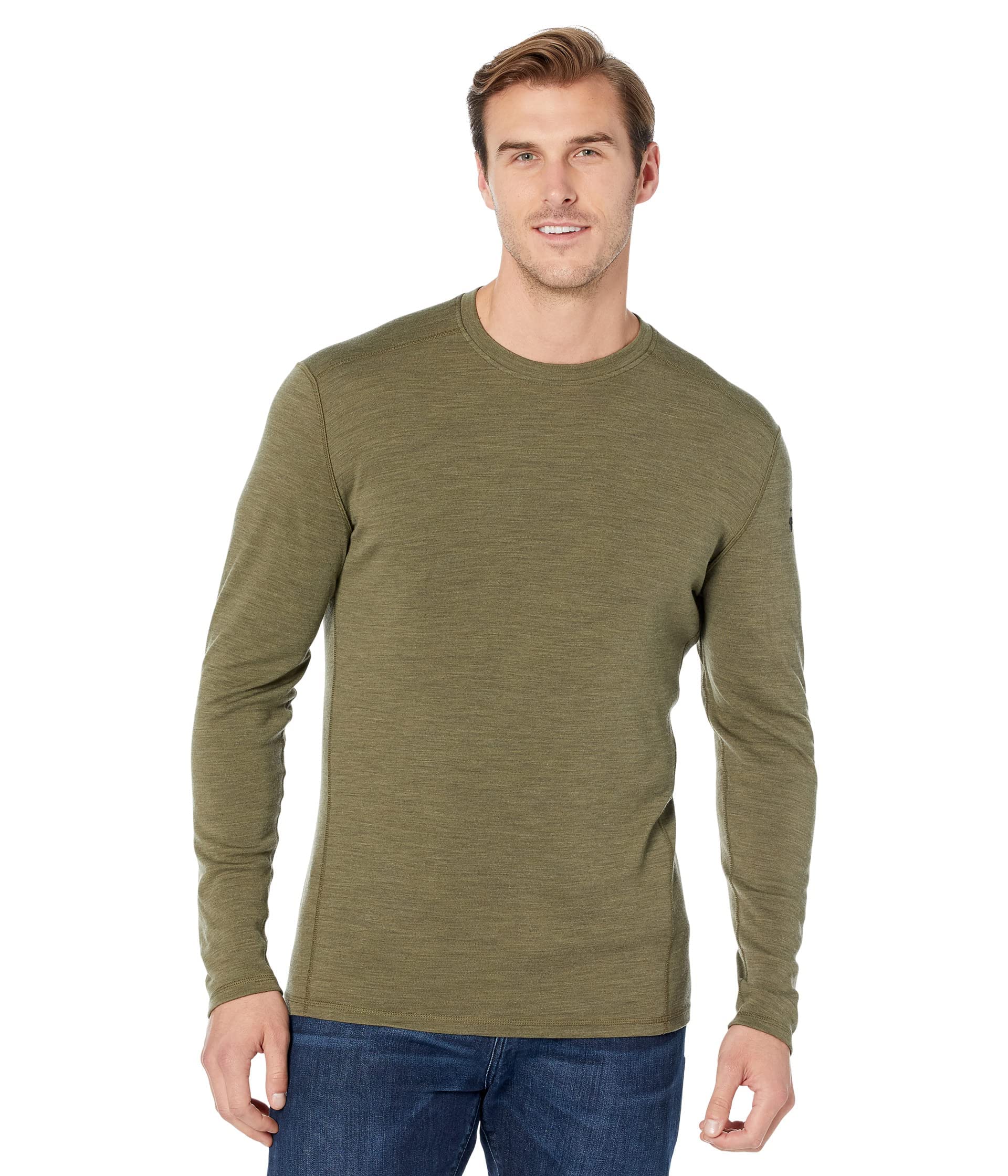
Smartwool Men’s Crew
Key Features
- Fabric Weight: Midweight
- Material: Merino Wool
- Type: Separate top
- Price: $$$$
The Smartwool crew provides outstanding sleeve reach for tall frames, with soft merino comfort. Its premium cost is hard to justify when similarly performing mid-range options like Minus33 or MERIWOOL cost less, and some owners have noted holes after washing, especially in high-friction areas.
Pros
- Sleeve and torso length accommodate tall frames well
- Soft merino wool feels comfortable against skin
Cons
- Durability can be a concern – some owners have noted holes appearing after washing
Ideal for tall men who value sleeve length and brand reputation over price and long-term durability.
How to Choose
Merino wool’s natural delicacy means care routine matters as much as fabric weight for longevity.
Fabric Weight
Fabric weight determines warmth and breathability. Lightweight (150–180 gsm) works for high-output activity in mild cold, while midweight (200–250 gsm) is the most versatile for hiking and skiing. Heavyweight (300–400 gsm) traps maximum heat but adds bulk and dries slowly — best for stationary use in sub-zero conditions.
Thicker wool also feels more durable initially, but the extra weight doesn’t prevent the fiber breakage that causes holes. Choose weight based on activity intensity and temperature range, not perceived toughness.
Material: 100% Merino vs Blend
Pure merino offers unmatched softness and odor resistance, but it’s prone to abrasion and pilling. Blends with nylon or polyester add stretch and durability at the cost of some natural performance.
For a base layer worn next to skin under a pack, a 15–20% synthetic blend can double the garment’s lifespan. However, most budget ‘merino’ blends still claim 100% on the label — a quick burn test (synthetic melts, wool chars) is the only way to verify.
Set vs Separate
Buying a set (top + bottom + sometimes socks) typically saves 20–30% over individual pieces. The trade-off is that you’re locked into one weight option for both layers, which may not match your layering needs — a heavyweight top with a midweight bottom is often more practical.
Sets also bundle socks that may not fit well. If you value flexibility, separate purchases let you mix weights and sizes, but cost more upfront.
Fit Style
A snug, athletic fit wicks moisture efficiently and layers easily under shells. A relaxed fit adds comfort for lounging but can bunch under hiking pants, creating friction points that accelerate wear.
Look for flatlock seams and gusseted armpits — these reduce chafing and stress on the fabric. Avoid baggy cuts if you plan to wear the layer under a pack.
Included Accessories
Socks are a common free add-on with budget merino shirts and sets. While they add perceived value, these socks are often thin and may not match the quality of dedicated merino hiking socks.
If you need reliable socks for long hikes, consider buying them separately. The included pair is fine for casual use or as a backup.
FAQ
Why does my merino wool base layer get holes after only a few wears?
Merino wool fibers are thin and delicate. Holes commonly appear in high-friction areas like shoulders (under pack straps), knees, or seams. Machine washing and drying accelerate breakage. To prevent holes, hand wash in cold water or use a delicates bag on a gentle cycle, then air dry flat.
Is a merino wool base layer set better than buying top and bottom separately?
Sets save money (20–30%) and guarantee matching weights, but they limit flexibility. If you plan to use the top and bottom in different conditions, separate pieces let you choose different weights. Sets also often include socks that may not fit well, so consider your layering needs first.
Can I machine dry merino wool base layers, or will they shrink?
Merino shrinks and weakens in any dryer heat. Even low-temperature cycles can cause felting, shrinking, and fiber breakage. Always line dry flat, away from direct heat or sunlight. If you must use a dryer, choose the no-heat air-only setting and remove while slightly damp.
How do I know if a merino base layer is genuine 100% wool and not a polyester blend?
Check the label for fiber content by weight — ‘100% merino wool’ is required by law. If you suspect a fake, perform a burn test on a loose thread: wool smells like burning hair and leaves ash, while polyester melts into a plastic bead. Avoid brands with suspiciously low prices or vague descriptions.