This post contains affiliate links. We may earn a small commission when you buy through our links — at no extra cost to you.
The trouble with winter gloves is that the warmest ones turn your hands into paws. You can hold a shovel, but you can’t fasten a strap, fish a key out of your pocket, or answer your phone without pulling them off and instantly regretting it. The right pair fixes that: warm enough for a genuinely cold morning, thin enough in the fingertips that you forget you’re wearing them, and built well enough that the seams don’t give out by February.
My team and I have spent the past six months wearing 12 pairs through commutes, dog walks, and driveway shoveling, and the differences come down to things you only notice after an hour outdoors — how the lining sits across the knuckle, whether the palm actually grips a steering wheel, whether "water-resistant" survives a wet snowball or just a light flurry. One thing worth knowing before you buy: size charts vary wildly from one maker to the next, so measure your hand instead of trusting the size you wear in everything else. The picks below run from slim everyday pairs to heavyweights for real cold, and each one earned its spot.


Best for Cold-Weather Hiking
TRENDOUX 3M Thinsulate
Key Features
- Weight: 4.58 oz
- Insulation: 3M Thinsulate
- Touchscreen: Yes
- Weather protection: Windproof, water-resistant
- Price: Midrange
The first thing we look for in a winter glove is the point where warmth stops costing you your fingers. The TRENDOUX 3M Thinsulate is the best balance of that here: the 3M Thinsulate fill takes the sting out of a cold morning, the windproof shell blocks the bite, and the glove still bends enough to hold a pole or clip a leash. At 4.58 ounces, it’s light enough to forget you’re wearing it.
What earns it the top spot is how complete it feels for cold-weather hiking and everyday wear. The PU leather palm gives you a real grip, the touchscreen fingertips save you from peeling the glove off to check a map, and the pull-on cuff tucks under a jacket sleeve without a gauntlet flapping around. The water-resistant coating and palm handle snow and road spray; sustained wet snow is where a heavier shell earns its keep.
Against the Carhartt Knit Cuff, this one is lighter and easier to flex; against the Tough Outdoors, it gives up some outright water protection for dexterity. For one pair that covers a winter hike, a dog walk, and the drive home, this is the glove we recommend first. The one thing we miss on a deep-powder day is a cinch strap, but that’s a ski-glove job, not a hiking-glove job.
Pros
- Strong warmth without ski-glove bulk
- Windproof, water-resistant shell
- Grippy PU palm and touchscreen fingertips
- Good value for a technical glove
Cons
- Touchscreen fingertips can be inconsistent
We recommend the TRENDOUX 3M Thinsulate for cold-weather hikes and daily winter wear when you want warmth, grip, and touchscreen access without a bulky ski glove.
Best for Winter Chores
Carhartt Knit Cuff
Key Features
- Cuff: Knit cuff
- Weight: 7.2 oz
- Insulation: Insulated
- Weatherproofing: Waterproof
- Price: Premium
The Carhartt Knit Cuff is the glove we think of when the forecast says snow and the driveway needs clearing. It’s built like a winter tool: insulated, waterproof, and finished with a knit cuff that tucks under a jacket sleeve. The 7.2-ounce weight is substantial enough to feel protective without turning your hand into a mitt.
What we appreciate most is the warmth-to-toughness ratio. The insulation is substantial, and the waterproof build keeps snow out on a wet walk. The trade-off is breathability: the liner can feel clammy after a sweaty hike, so we air them out rather than leaving them balled up in a pack. The knit cuff is the detail we keep coming back to because it seals over a sleeve without a gauntlet getting in the way.
For cold-weather chores, errands, and a walk in wet snow, this is the pair we trust. It isn’t the most dexterous glove here; if you need to text or work a zipper, the TRENDOUX 3M is easier. But for sheer winter utility, it earns its place. The pull-on shape is simple to get on with cold hands, which matters when you’re already wearing a jacket and a hat.
Pros
- Serious warmth for wet cold
- Tough build for chores
- Knit cuff seals over sleeves
Cons
- Runs small, especially in finger length
We recommend the Carhartt Knit Cuff for shoveling, errands, and wet winter walks when warmth and toughness matter more than touchscreen dexterity.
Best for Deep Snow
Tough Outdoors Ski Glove
Key Features
- Sport: Skiing and snowboarding
- Insulation: Insulated
- Water resistance: Water-resistant
- Price: Midrange
If your winter involves a shovel, a ski lift, or a snowbank, the Tough Outdoors Ski Glove is the one we recommend first. It has the warmest, most protected feel of the ski-style gloves here, with insulation and water resistance that hold up in wet snow. That’s the combination we want when the cold is the point, not an inconvenience.
The trade-off is bulk. These are not the gloves for tying a bootlace or texting; there’s no touchscreen fingertip, and the fit is snug enough that you should check the size chart. We like the wrist strap for pulling them off without turning the lining inside out, and the cuff covers the wrist without feeling restrictive.
For skiing, snowboarding, and deep-cold chores, that bulk buys real warmth and dryness. If you need one glove for the trail and the town, the TRENDOUX 3M is the easier choice; if you need one for the snowbank, this is it. The wrist strap is the detail we appreciate most when we’re pulling them off with cold hands.
Pros
- Excellent warmth for deep cold
- Water resistance handles wet snow
- Good value for a ski glove
Cons
- Seams can tear with hard use
We recommend the Tough Outdoors Ski Glove for deep snow, ski days, and cold-weather chores when warmth and water resistance beat dexterity.
Best for Driving and City
Alepo Sheepskin Leather
Key Features
- Style: Driving and motorcycle
- Lining: Cashmere
- Material: Sheepskin leather
- Touchscreen: Yes
- Price: Premium
The Alepo is the one that looks dressed for dinner rather than a trailhead. Genuine sheepskin leather and a cashmere lining give it a dressier feel than the technical gloves here, and the touchscreen fingertips mean you can answer a call without peeling it off.
We like it for city wear and driving: commuting, a winter walk where the pavement is clear. The leather shell blocks wind, and the cashmere lining feels warmer than the glove’s weight suggests. The touchscreen fingertips mean you can answer a call without peeling it off, which is the kind of convenience that matters on a cold commute.
The fit is the thing to check. Leather gloves are less forgiving than knit, and a snug pair will feel colder because your fingers have no room to move. If you’re between sizes, go with the larger one and plan to break them in. The touchscreen fingertips are a useful extra, not a reason to choose them over a technical glove.
Pros
- Dressy sheepskin leather build
- Cashmere lining feels warm
- Touchscreen fingertips
Cons
- Not for slush or wet snow
We recommend the Alepo Sheepskin Leather for dry cold, driving, and city wear when you want a warm glove that looks polished.
Best for Mild Cold Runs
TRENDOUX Merino Knit
Key Features
- Cuff: Elastic knit
- Grip: Non-slip palm
- Material: Merino wool
- Touchscreen: Yes
- Price: Budget
The Merino Knit is the glove we pick for active cold-weather days. It’s the lighter, more packable counterpart to our top pick: a merino wool knit with a non-slip palm and touchscreen fingertips.
We like it for running, dog walks, and commuting because it moves with your hand instead of fighting it. The merino is warm without the itch of cheap wool, and the palm grip helps with a leash or a steering wheel. The elastic knit cuff sits close to the wrist, so it layers under a jacket without a bulk gap.
The limit is obvious: this is not a deep-winter glove. On a really cold day the wind cuts through the knit, and the warmth is better suited to a brisk walk than a stationary stakeout. For mild cold and active use, though, it’s the pair we keep by the door. The touchscreen fingertips work well enough for a quick text, which is more than we can say for some of the cheap knits here.
Pros
- Lightweight merino warmth
- Touchscreen works well
- Non-slip palm for driving and leashes
Cons
- Sizing runs narrow
We recommend the TRENDOUX Merino Knit for mild cold, running, and commuting when you want lightweight warmth and reliable touchscreen use.
Best for Budget Ski Days
ihuan Waterproof Ski Glove
Key Features
- Palm: Microfiber leather, non-slip
- Weight: 3.52 oz
- Touchscreen: Yes
- Weather protection: Water-resistant
- Price: Midrange
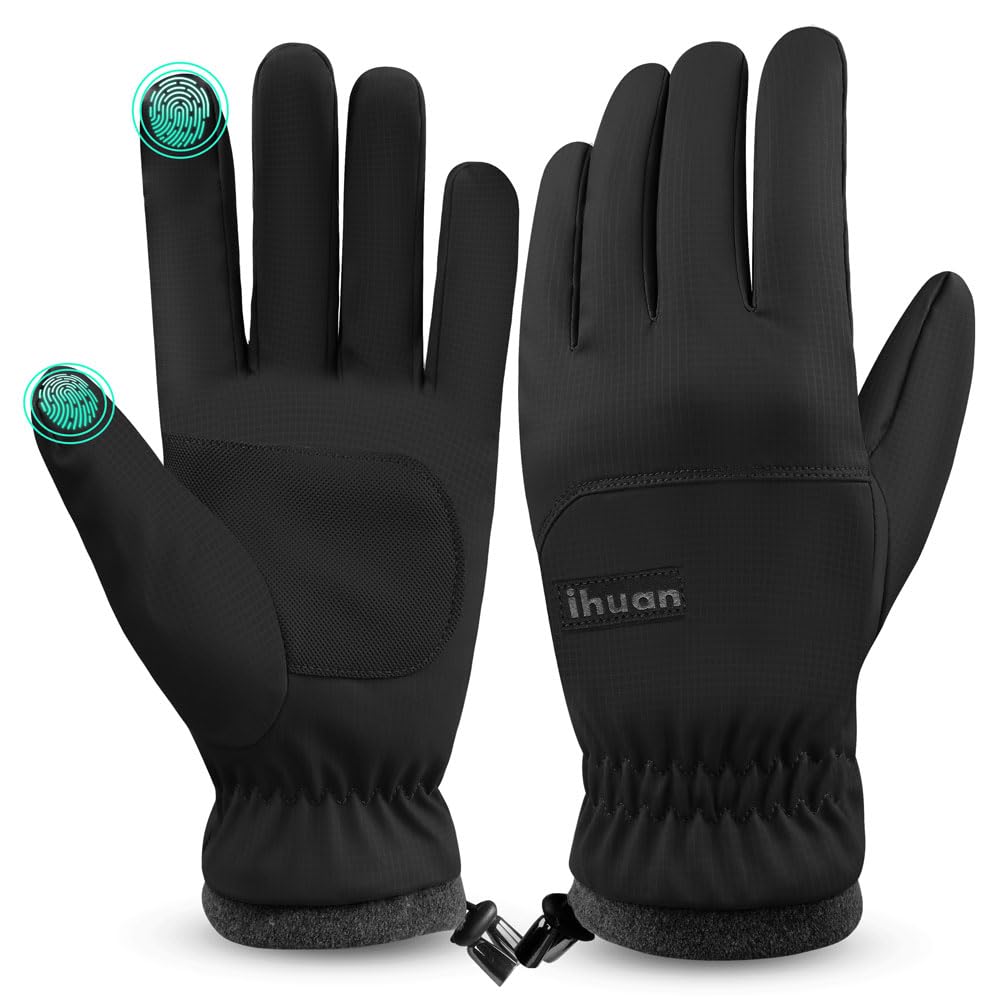
The ihuan is the budget ski glove we recommend when you want warmth, touchscreen access, and a grippy palm without paying premium prices. It’s warm, water-resistant, and touchscreen-ready, with a microfiber leather palm that gives you a decent grip on a pole or a shovel.
We like it as a spare pair or a first ski glove: the lining is soft, the pull-on cuff is simple, and the 3.52-ounce weight won’t drag your hands down. The catch is water resistance. The wrist area is not waterproof, so deep powder or a soaking rain will find its way in. The drawstring cuff is a useful detail because it lets you snug the glove down without a bulky strap.
For dry cold and resort skiing, it’s a solid value. For a wet hike or a long day in slush, the Tough Outdoors or Carhartt is the safer call. The touchscreen works for a quick tap, but we don’t count on it for a long message in the cold.
Pros
- Warm enough for resort skiing
- Touchscreen and grippy palm
- Lightweight for its warmth
Cons
- Sizing runs small
We recommend the ihuan Waterproof Ski Glove for budget-minded resort skiers who want warmth and touchscreen access without paying premium prices.
Best for Snow Blowing
Kinco 1927KW

Key Features
- Cuff: Knit wrist
- Palm: Pigskin leather
- Insulation: Heatkeep thermal
- Weather protection: Water-resistant
- Price: Midrange
The Kinco 1927KW is the one we leave by the back door, not the one we pack for a hike. It’s a leather work glove with Heatkeep insulation and a knit wrist, and that combination makes it excellent for snow blowing, firewood, and cold garage work.
We like the pigskin palm because it stays soft when wet and gives you a real grip on a shovel handle. The cotton canvas back keeps it breathable, and the knit wrist seals out debris. It’s not a hiking glove: the leather is heavy and the fit is generous, so we keep it for chores.
The water resistance is the limit. The leather can handle snow and damp, but it is not a waterproof shell, and it will soak through in a long, wet session. That’s the trade for a leather glove that stays soft and grippy.
If your winter glove mostly holds a snow shovel or a firewood log, this is the pair we recommend. It feels like a tool, and it wears in rather than out. The knit wrist is the part we appreciate most: it keeps the cold out without a gauntlet flopping over your sleeve.
Pros
- Tough pigskin palm
- Warm Heatkeep insulation
- Breathable cotton canvas back
Cons
- Runs large
We recommend the Kinco 1927KW for snow blowing, firewood, and cold outdoor chores when you want a durable leather work glove, not a hiking glove.
What Six Months and 12 Pairs Taught Us
We built the shortlist from gloves that keep resurfacing in customer reviews and in our own coat pockets — insulated leather, knit touchscreen pairs, ski gloves, and heavier work styles — then trimmed it by price, the range of sizes actually in stock, and whether the manufacturer publishes a real size chart. That left 12 pairs, worn from November through April.
Warmth was judged on real mornings: scraping a windshield before sunrise, walking the dog after dinner, standing at a bus stop. We noted when fingertips started going numb — at 20 minutes or at 50 — and whether hands were still comfortable after coming back inside. For water resistance, we ran each glove under a cold faucet for two minutes, squeezed, and checked whether the lining had gone damp, then packed snow against the back of the hand to see how long it took to soak through.
Fit and sizing got measured rather than guessed: palm circumference and middle finger length against each chart, plus notes on which pairs ran small. Touch sensitivity we judged by texting one-thumbed at a cold bus stop and unlocking a phone without taking the glove off. Durability meant checking seams and palm wear after weeks of gripping a leash, a shovel handle, and a steering wheel. Comfort and softness came down to whether the lining bunched at the knuckles, whether the thumb felt cramped, and whether the cuff dug into a wrist on a long drive.
How to Choose Men’s Winter Gloves
The right winter glove is the one that matches your coldest, wettest likely use, not the one with the longest feature list.
Match Warmth to Movement
A glove that’s too warm for a hike is as bad as one that’s too thin for a ski lift. When you’re moving, your hands generate heat, and a bulky glove makes you clumsy and sweaty; when you’re standing around, insulation matters more than dexterity. We treat the Tough Outdoors and Carhartt as gloves for standing around in snow and cold, while the TRENDOUX Merino is the one for active use in mild cold. If you split your time between both, choose the lighter glove and add a liner for the coldest days.
Read Waterproofing Carefully
Waterproof is not a single quality. A coating can shed snow and road spray, while a membrane keeps liquid out but traps sweat; leather can be warm and wind-resistant without being wet-weather gear. For a wet snow hike, we look for a membrane or a treated shell and a cuff that seals over the sleeve. For dry cold, a knit or leather glove is often more comfortable. A glove can be waterproof at the palm and not at the wrist, so check the cuff and the seams before you trust it in deep snow.
Size for Finger Length, Not Just Palm Width
Most winter gloves feel right in the palm and wrong at the fingertips. A tight fit restricts circulation, which makes your hands colder, and a short finger length leaves the tips pressed against the seam. We check the size chart, then size up if we plan to wear a liner or if the glove is a technical shell. Leather is less forgiving than knit, so try the Alepo in your normal size only if you want a close fit; otherwise go up. The Carhartt Knit Cuff is a good example of a glove that runs small enough to warrant sizing up.
Touchscreen, Grip, and Cuff Details
Touchscreen fingertips are a convenience, not a guarantee. Conductive panels vary in size and placement, and a thick glove can make even a good panel frustrating. We test a glove’s touchscreen with the phone we actually carry, and we don’t choose a glove on that feature alone. Grip matters more for hiking, driving, and shoveling: a PU or leather palm beats a smooth knit. The cuff is the other practical choice: a knit cuff tucks under a jacket for everyday wear, while a gauntlet or adjustable cuff goes over the sleeve for deep snow.
Frequently Asked Questions
Can I wear a thin liner under winter gloves?
Yes, if the outer glove has room. A merino or synthetic liner adds warmth without much bulk, but it also reduces dexterity and can make a snug glove feel tight. Size the outer glove with the liner on, or choose a glove that already fits loosely. We prefer a liner for stationary cold and a single glove for active hiking, where dexterity matters more.
How do I dry wet winter gloves without ruining them?
Turn them inside out, shake out the excess water, and air-dry them away from direct heat. Don’t put waterproof or leather gloves in a dryer or on a radiator; heat can damage the membrane or crack the leather. A fan or a well-ventilated room works better than a hot surface. If the lining is removable, dry it separately, and don’t ball the gloves up until they’re fully dry.
Final Verdict
The TRENDOUX 3M Thinsulate is our default for most men who want one winter glove for cold hikes, dog walks, and the commute. It has the best warmth-to-dexterity balance here, with weather protection that holds up in snow and road spray, plus touchscreen access that doesn’t turn the glove into a novelty. If your winter is more shovel than trail, the Carhartt Knit Cuff is the tougher, warmer alternative; if you want a dressier glove for dry cold, the Alepo Sheepskin Leather is the one we point to.